

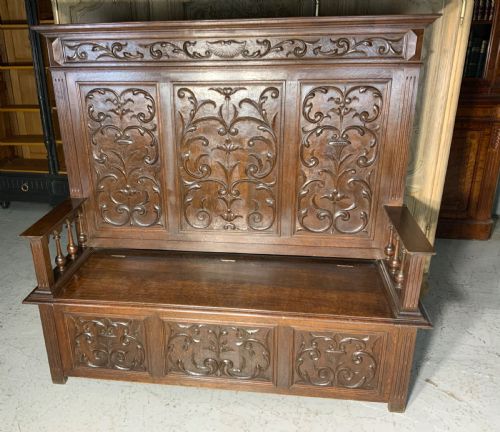
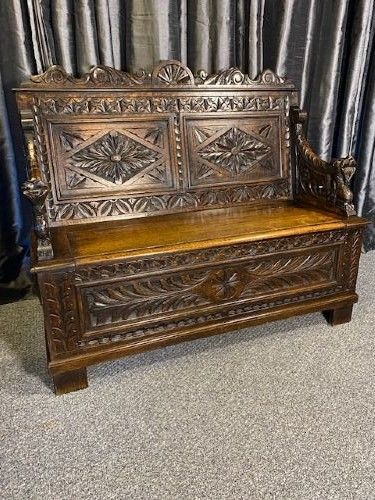
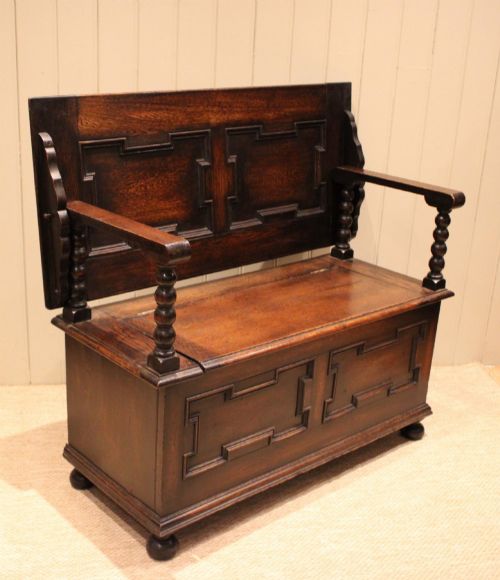
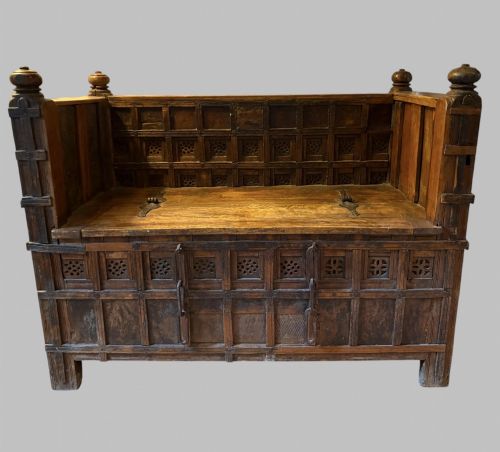
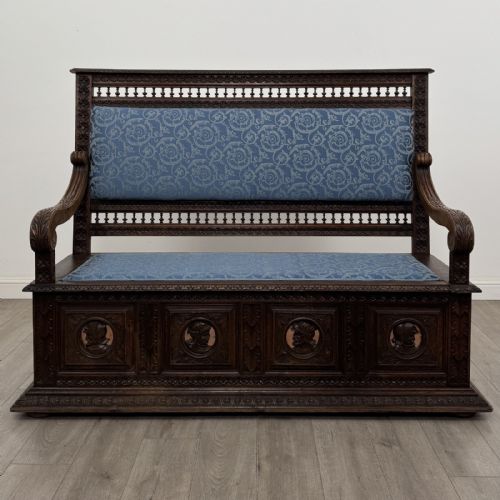
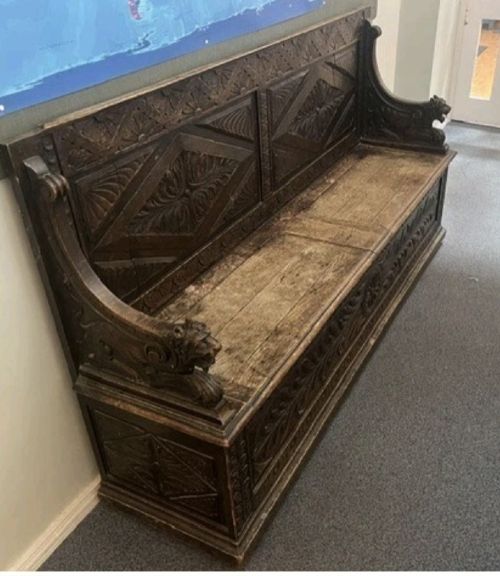
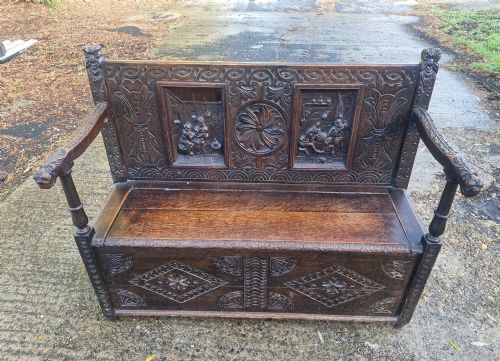
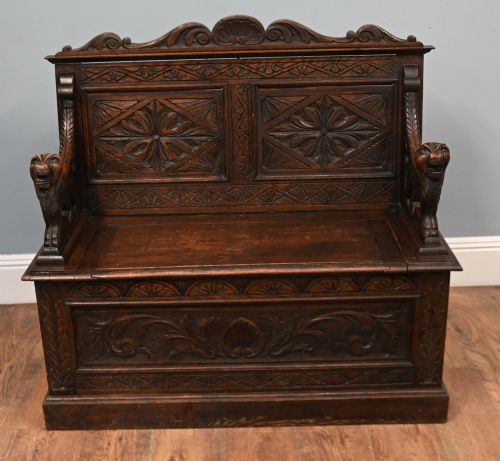
Carved Wooden Storage Bench
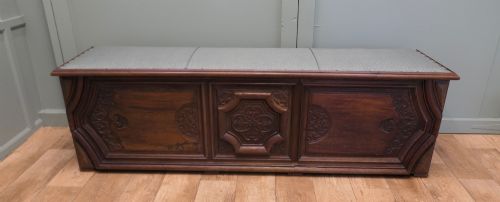
A carved wooden storage bench brings functional seating and concealed compartment space into an entrance hall or living room.
Carved Wooden Storage Bench
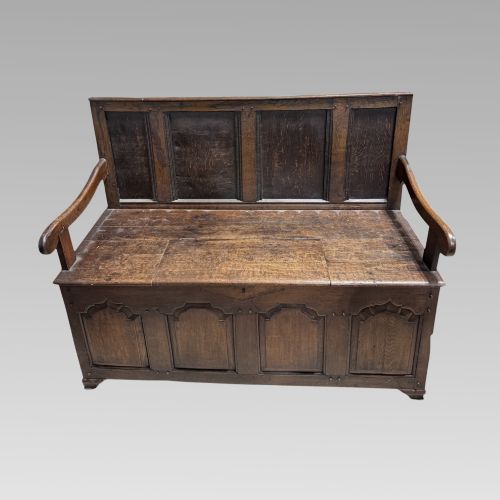
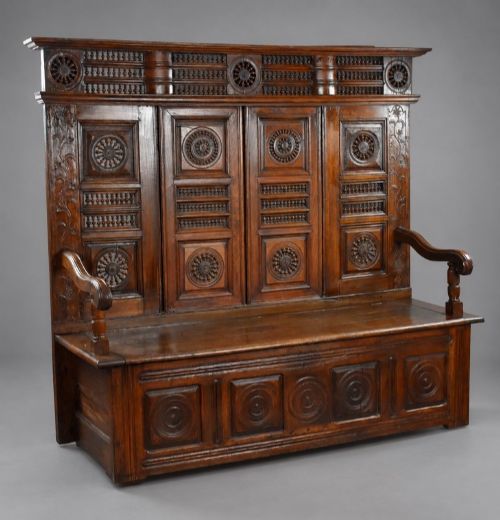
A carved wooden storage bench combines a seat with a hidden compartment beneath the lid or within a cabinet base. Pieces matching this description span from the 17th century through the Edwardian period and the 1920s.
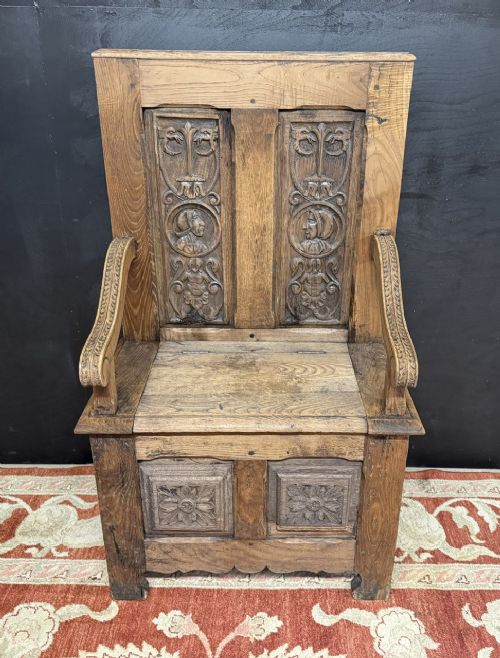
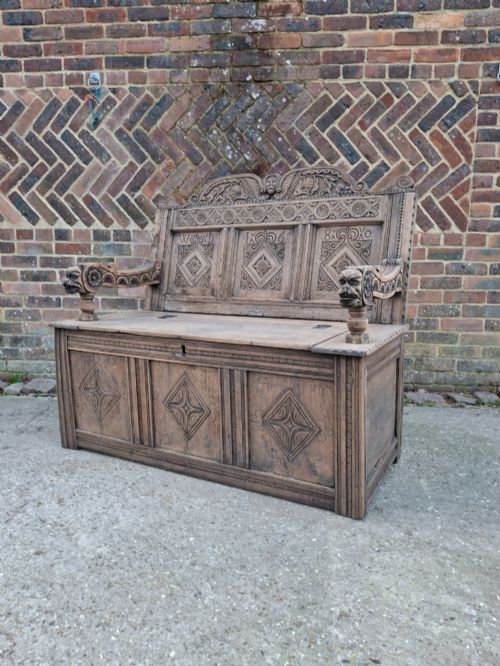
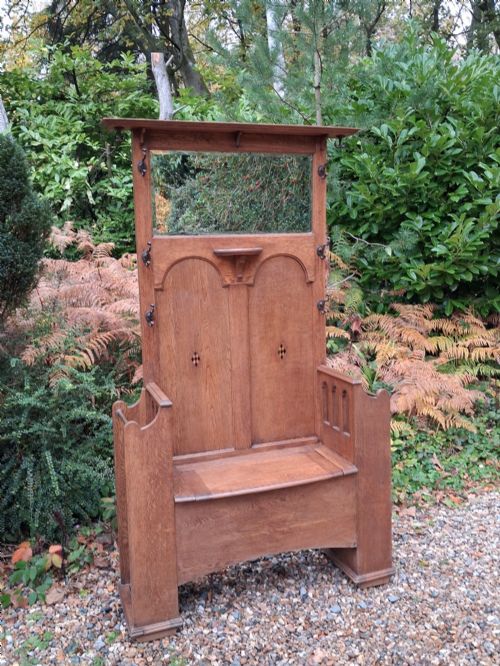
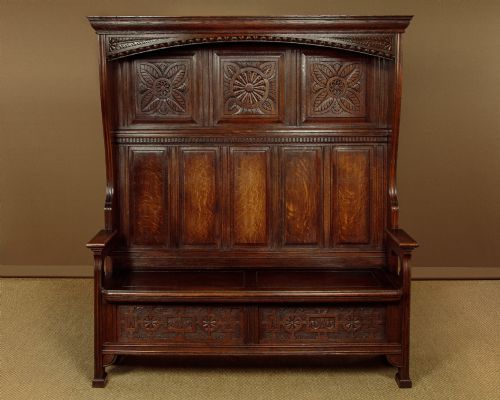
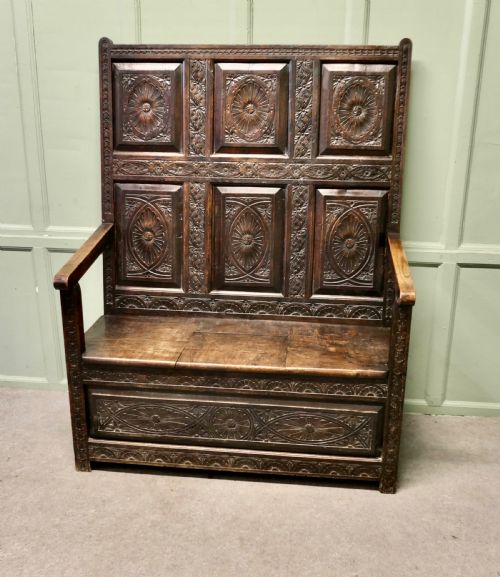
The most common version found here is the oak hall settle or box settle, often shaped by revival styles such as Jacobean, Gothic, and Renaissance. Examples also appear in walnut, mahogany, pine, and hardwood with hinged seats or blanket box bases.
Materials and construction
Makers relied predominantly on solid oak, complemented by walnut, mahogany, pine, and exotic hardwoods. Iron, brass, and fabric also appear as structural or decorative elements.
Joinery techniques involve pegged mortise and tenon frames alongside panelled construction for high backs and box bases. Carving is executed directly into the timber, sometimes incorporating inlaid decoration.
Carved Wooden Storage Bench Retail Price Guide 2026
Typical asking prices for carved wooden storage bench among the pieces listed under this phrase on Sellingantiques today, from the lower quarter to the upper quarter. They describe what is for sale here now, not the wider market.
Several Victorian oak benches feature carved Green Man motifs watching over your hallway.
Distinctions in grade
The distinction between standard utility furniture and superior examples lies in the depth and crispness of the carved ornamentation. Finer pieces display carefully proportioned linenfold, floral, or figurative motifs across panels and high backs.
Timber selection and structural integrity define the upper tier of these seats. Heavy, dense heartwood with minimal later alteration commands attention, whereas heavily adapted or mismatched timber reduces the integrity of the piece.
The Carved Wooden Storage Bench Glossary
- Settle
- A wooden bench with a high back, solid arms, and a box compartment beneath the seat. This form protected sitters from draughts in older hallways.
- Monks bench
- A convertible piece featuring a hinged back that folds down to form a table top over a box base. These date predominantly to later revival periods.
- Linenfold
- A style of wood carving representing folded linen, frequently seen on Tudor and revival panels. It creates a textured surface across flat timber.
Carved Wooden Storage Bench: Frequently Asked Questions
How were box settles used historically?
Box settles served primarily as seating near the entrance of a home while storing outdoor garments, boots, and blankets.
The high back acted as a barrier against cold draughts from front doors in larger halls and country rooms.
Where should I place a hall bench?
These pieces suit entrance halls, boot rooms, and wide corridors where seating and concealed storage are practical.
Ensure adequate clearance for the hinged seat lid or cabinet doors to open fully without obstruction.
How do I identify a 17th century settle?
Early pieces display pegged frame construction, hand-carved oak panels, and timber surfaces showing deep patination from age.
Later revival versions from the Victorian era or 1920s often utilise machine tooling and exhibit less natural wear.
What maintenance does a waxed oak bench need?
Apply a traditional beeswax polish occasionally to nourish the timber and maintain a soft sheen on the surface.
Keep wooden furniture away from direct heat sources and sudden humidity changes to prevent timber splitting.