
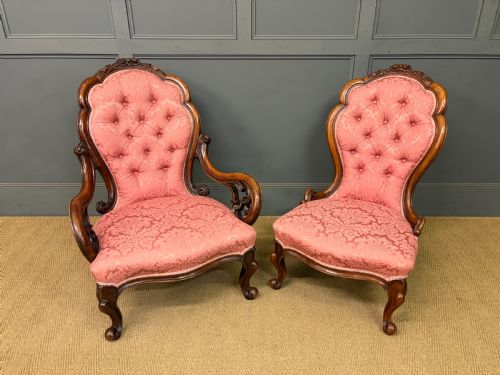


Carved Wooden Slipper Chair
A carved wooden slipper chair brings low, compact seating to a bedroom or fireside, pairing sturdy timber frames with rich upholstered comfort.
Carved Wooden Slipper Chair
A carved wooden slipper chair is a low-slung seat designed for bedrooms and dressing rooms, allowing individuals to comfortably put on footwear without obstruction. The examples found here primarily date from the nineteenth century, including Victorian and Georgian periods, alongside Aesthetic Movement pieces.
Buyers will encounter various forms described as nursing chairs, salon chairs, and bedroom fireside chairs. These low seats often feature walnut or rosewood frames paired with button back upholstery, fabric, velvet, or wool tapestry.
How they were made
Frames are constructed from dense hardwoods such as walnut and mahogany, carved to create curved profiles and decorative wooden details. Ebonised wood and rosewood also appear across the selection, providing dark, polished surfaces.
Upholstery methods involve traditional stuffing secured with brass elements and finished with durable textiles including velvet, wool tapestry, and patterned fabric. Some pieces incorporate ceramic castors to aid mobility on carpeted floors.
Periods represented span from Georgian times through the Victorian era and the Aesthetic Movement.
What varies in quality
Quality rests upon the crispness of the timber carving and the integrity of the underlying hardwood frame. Finely shaped walnut or rosewood structures exhibit superior joinery and more ambitious sculptural flourishes.
The sophistication of the upholstery finish and the choice of covering material distinguish standard examples from finer parlor and salon pieces. Retaining original ceramic castors and balanced proportions elevates the status of a chair.
Maple & Co
The Carved Wooden Slipper Chair Glossary
- Slipper chair
- A low-seated chair traditionally used in dressing rooms or bedrooms for changing footwear. These chairs stand closer to the floor than standard dining seats.
- Nursing chair
- A low-backed or low-seated chair historically designed to assist mothers with feeding infants. They share similar low proportions with slipper chairs.
- Aesthetic Movement
- A late nineteenth-century design style focusing on visual and material beauty over heavy moral narratives. Pieces from this movement often display refined carving and distinct artistic influence.
- Button back
- An upholstery technique where buttons are pulled deep into the padding to create a quilted diamond pattern. This method secures the internal stuffing while adding texture to the backrest.
Carved Wooden Slipper Chair: Frequently Asked Questions
Why are slipper chairs so low?
Slipper chairs were designed with low seats specifically to make putting on stockings and shoes easier in the bedroom. Their compact height also suited dressing rooms and intimate sitting spaces.
Over time, this practical domestic function evolved into a decorative preference for low-slung occasional seating in bedrooms and firesides.
How do I identify a Victorian chair?
Victorian chairs often feature dark hardwoods like walnut or rosewood, combined with elaborate carved wooden details. They frequently utilise button back upholstery and ceramic castors.
Pieces from this era span from the mid to late nineteenth century, reflecting evolving domestic fashions in British homes.
Where should I place this chair?
These compact chairs suit bedrooms, dressing rooms, and quiet corners of a living room where full-sized armchairs overwhelm the space. Their low height makes them ideal for firesides and bedroom dressing areas.
Pairing a carved wooden frame with existing antique or traditional furniture allows the timber and upholstery to complement the room.