


Carved Wooden Nursery Chair
A carved wooden nursery chair offers small-scale charm and historic craft, providing low seating suited for children and collectors alike.
Carved Wooden Nursery Chair
Buyers will encounter items spanning from the Georgian period through the Victorian era up to the 1930s. Woods such as mahogany, elm, walnut, beech, and oak predominate, often accompanied by cane, fabric, or leather inserts.
Evaluating craftsmanship and design
The hierarchy of quality rests upon the selection of timber, the crispness of carved detail, and the complexity of the form. Standard vernacular chairs contrast with metamorphic high chairs and pieces showing distinct stylistic movements such as the Aesthetic Movement or folk art traditions.
Proportion and structural retention dictate the standing of individual examples. Integrated stands, sophisticated turning work, and the survival of original surface patination distinguish finer items from simpler utilitarian seating.
Listings incorporate woods such as mahogany, walnut, elm, oak, and beech alongside upholstered fabric, leather, and cane.
The Carved Wooden Nursery Chair Glossary
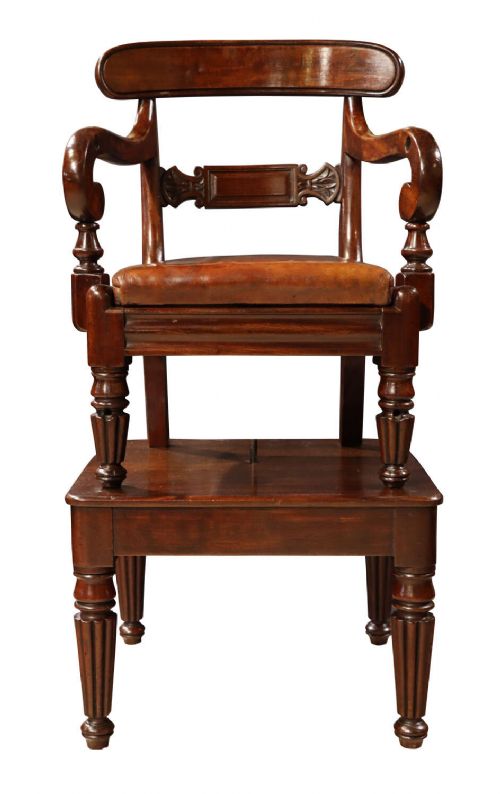
- Metamorphic high chair
- A convertible piece of furniture that transitions from a high chair into a low child's chair or play table. This clever dual-purpose design served nineteenth-century nurseries efficiently.
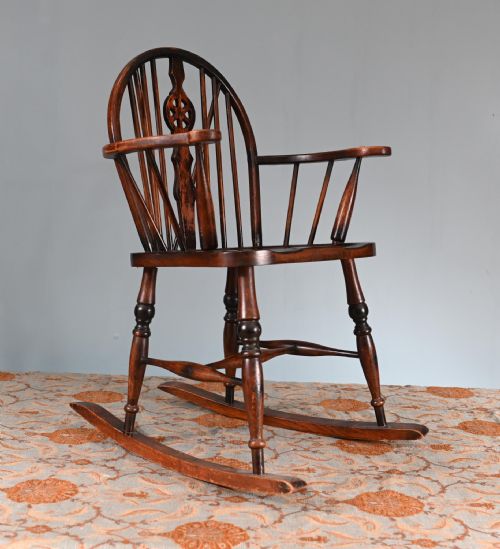
- Windsor chair
- A wooden chair constructed with a solid saddle-shaped seat into which pierced legs and a back of spindles are wedged. These vernacular seats often incorporate wheelbacks or bow backs.
- Bergere
- A cane-panelled upholstered wooden armchair of French origin. The technique involves woven cane work fitted into a wooden channel within the frame.
- Commode chair
- A piece of seating furniture enclosing a chamber pot or pan beneath a removable seat. These practical objects appeared frequently in Victorian domestic interiors.
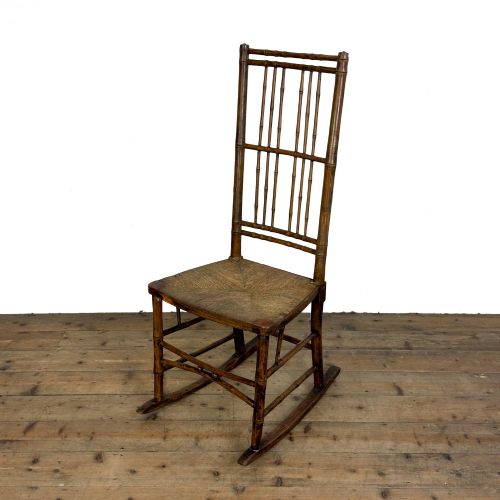
- Faux bamboo
- Wood turned and carved to imitate the segmented stalks of natural bamboo. This decorative technique enjoyed popularity during the Victorian and Aesthetic periods.
Carved Wooden Nursery Chair: Frequently Asked Questions
What were nursery chairs used for?
These small chairs provided functional seating for young children in domestic nurseries and parlours. Many designs accommodated feeding, rocking, or daily seated tasks.
Some specialised forms doubled as commodes or transformed into low play tables to suit the practical demands of nineteenth-century households.
How do I date a wooden child's chair?
Dating relies on observing timber choices, construction techniques, and stylistic markers associated with specific periods. Georgian and Victorian examples display distinct turning patterns, joinery methods, and decorative motifs.
Comparing the structural joinery and overall form against documented examples helps narrow down the decade of manufacture.
Are these chairs safe for children today?
Antique nursery chairs are primarily intended for display, collection, and historical appreciation rather than modern nursery use. Their historic construction may not meet contemporary safety standards for active toddlers.
Collectors generally place these smaller scale pieces in living areas as decorative items or use them to display antique dolls and bears.
What is a metamorphic high chair?
A metamorphic high chair is a convertible piece designed to change its configuration for different uses. The upper section often detaches from a base to form a low chair and table combination.
This ingenuity saved space in historic homes while accommodating a growing child's changing needs throughout the day.
How should I care for antique wood?
Maintain antique wooden furniture by keeping it away from direct heat sources and fluctuating humidity levels. Gentle dusting with a dry cloth preserves the aged surface patination.
Avoid applying modern silicone polishes, as traditional wax formulations protect historic finishes more appropriately over time.