
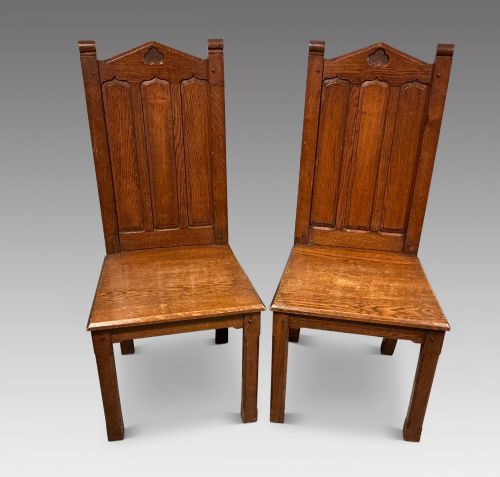


Carved Wooden Entry Chairs
Carved wooden entry chairs are firm timber seats for reception areas, bringing sculptural form and period character directly to a hallway.
Carved Wooden Entry Chairs
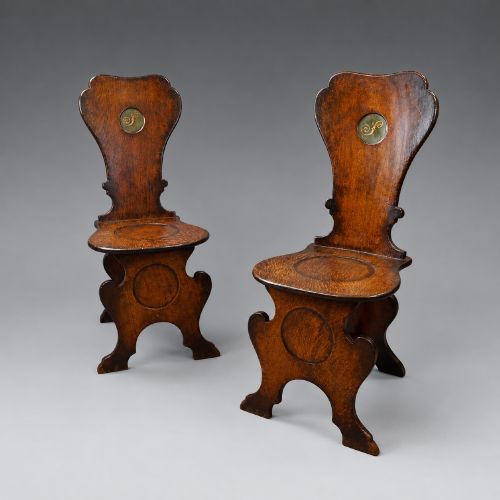
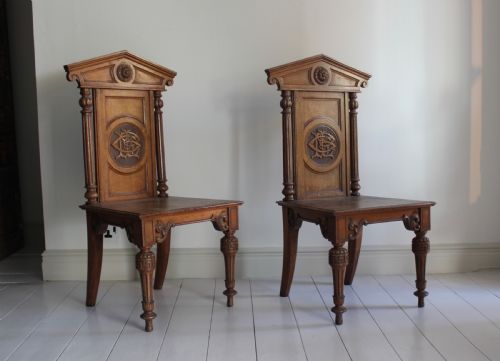
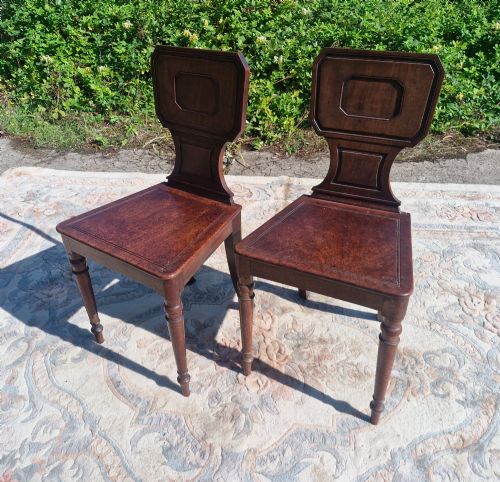
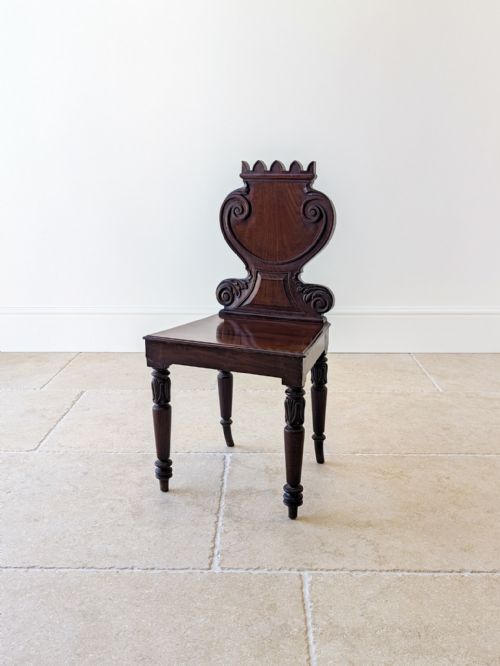
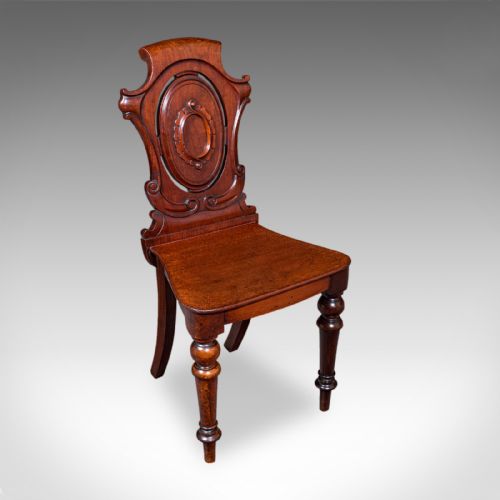
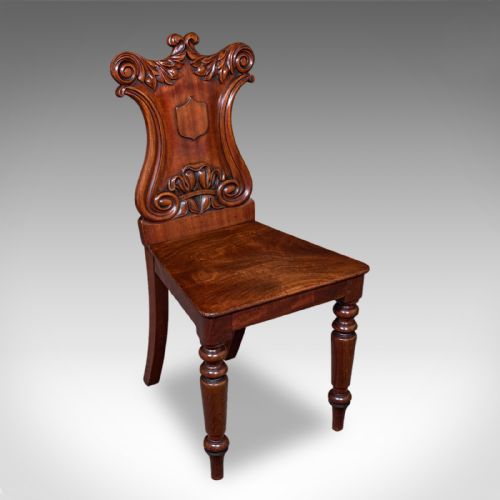
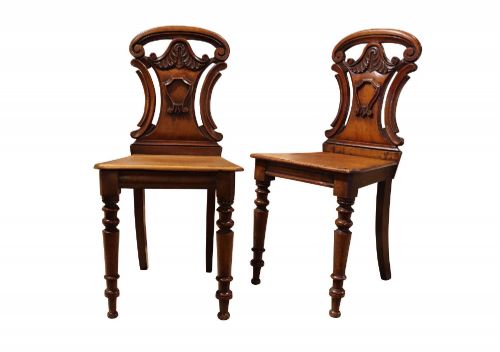
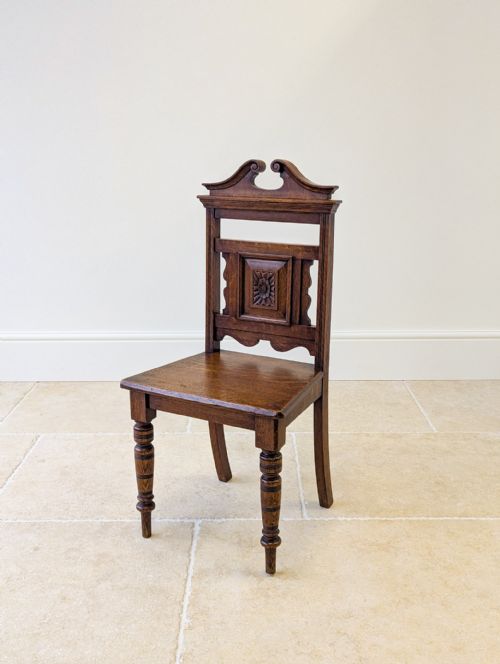
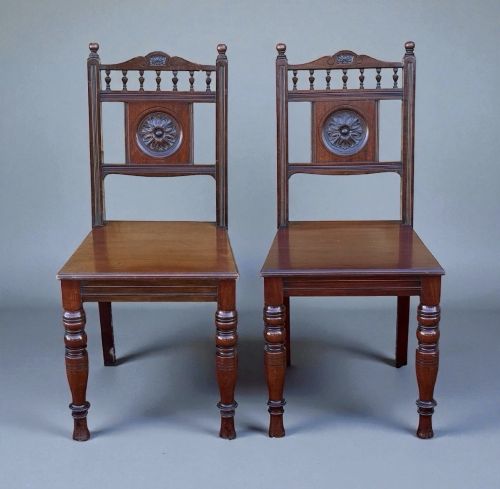
Carved wooden entry chairs function primarily as decorative reception seating in hallways, corridors and entrance spaces, taking the form of rigid side seats with solid wooden backs and carved details. Most pieces encountered in this selection span the nineteenth century and the Georgian era, encompassing Victorian, Regency and William IV stylistic influences.
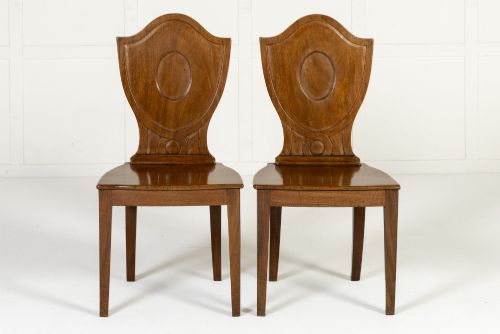
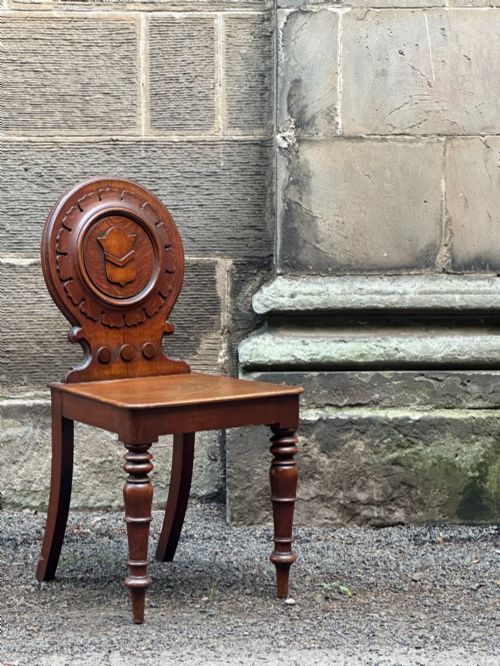
The objects frequently appear as matched pairs and single seats, designed originally for the edges of grand rooms rather than long sitting. Makers utilised specific regional variations, producing Scottish reception seats alongside English examples with distinct regional carving traditions.
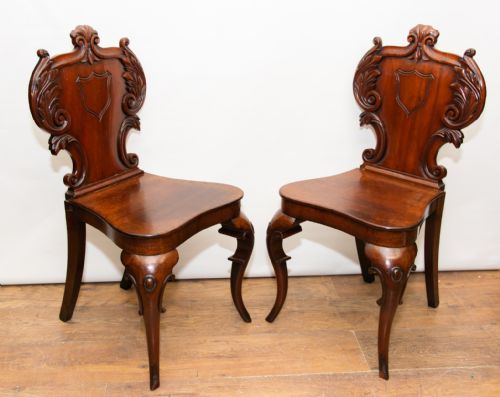
Object types on this page overlap closely with traditional hall chairs and sgabello forms, often incorporating armorial crests or carved shell motifs into the solid wood backplates.
Craftsmanship and Proportion
Quality separates ordinary utility seating from exceptional reception pieces through the crispness and depth of the timber carving. Superior examples exhibit sharp, well-defined edges on armorial crests and shell motifs rather than soft or rounded details.
Proportion and timber selection dictate the upper tier of the range, where finely figured mahogany or quarter-sawn oak displays rich grain patterns across solid wooden seats. The integration of structural integrity with ambitious Gothic or Renaissance revival styling marks the distinction between standard workshop output and master-carved seating.
Gillows
The Carved Wooden Entry Chairs Glossary
- Hall chair
- A rigid wooden seat placed in an entrance hall, typically featuring a solid timber back and minimal upholstery. These pieces prioritize sculptural presence and heraldic display over physical comfort.
- Sgabello
- A Renaissance-style chair form featuring two carved trestle boards for legs and a narrow wooden seat. This Italianate style experienced strong revivals during the nineteenth century.
- Shield back
- A chair back shaped like a heraldic shield, frequently embellished with carved crests or painted armorial bearings. This silhouette dominated late Georgian and Regency seating design.
- Armorial
- A decorative motif displaying a family crest, coat of arms or heraldic symbols. These carvings indicate bespoke commissions for landed estates.
- Gothic revival
- An architectural and decorative style utilising pointed arches, trefoils and heavy carved tracery. Pieces bearing these elements often date from the mid-nineteenth century.
Carved Wooden Entry Chairs: Frequently Asked Questions
Where were these chairs placed?
These chairs stood rigidly against the walls of grand entrance halls, corridors and reception spaces rather than around dining tables. Their primary purpose was to display heraldic crests and greet visitors.
Because they were meant for brief waiting periods rather than lounging, the wooden seats lack plush padding or deep cushioning. Their narrow profiles kept hallways clear of obstruction.
How do I spot a Regency period chair?
Regency pieces often display classical motifs, sabre legs and refined mahogany timbers inspired by ancient Greek and Roman designs. Shield backs and crisp linear carving frequently mark this era.
Makers working in this period balanced classical restraint with bold decorative elements, distinguishing their output from the later, heavier Victorian Gothic revival styles.
Are these seats comfortable for daily use?
Solid wooden seats and upright carved backs encourage an erect posture, making them unsuitable for prolonged sitting or relaxing. They function best as accent furniture and sculptural statements.
Placing one in a hallway provides a practical spot for putting on shoes or dropping keys, retaining its historical utility as an entrance seat.
What timber types should I expect?
Mahogany and oak dominate the selection, with walnut and pitch pine appearing in specific regional or later nineteenth-century pieces. Each timber brings distinct grain patterns and weight to the structure.
Oak suits the heavier Gothic revival forms, while mahogany allows for sharp, crisp carving on Regency and Victorian shield backs.