





Carved Wooden Dressing Desk
A carved wooden dressing desk combines practical workspace with traditional craftsmanship, offering sturdy timbers and historic character for any room.
Carved Wooden Dressing Desk
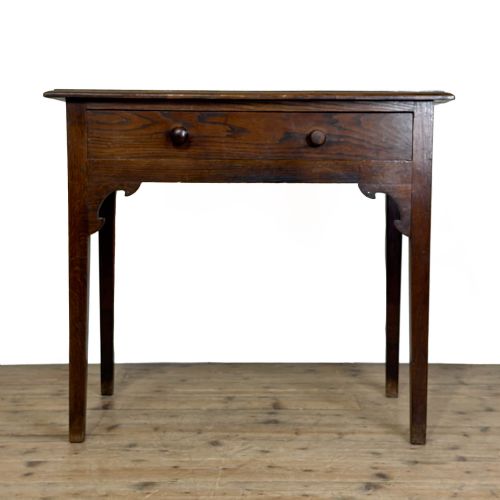
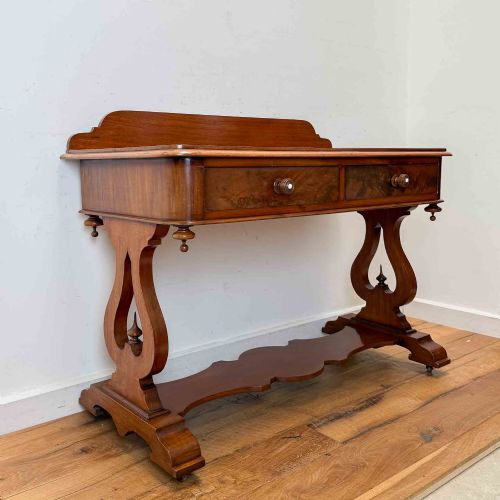
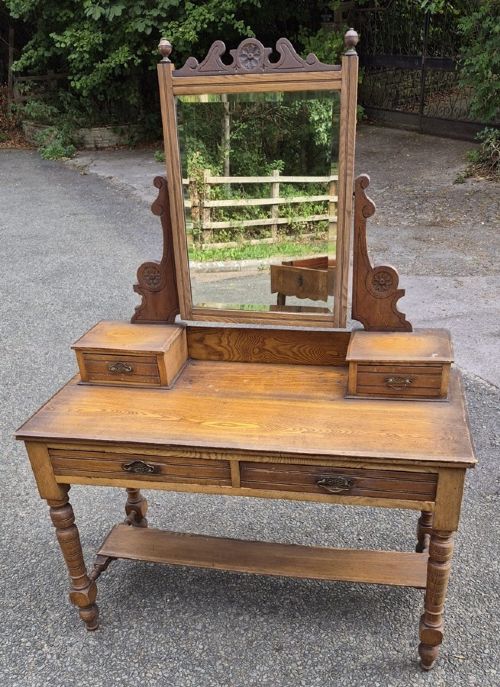
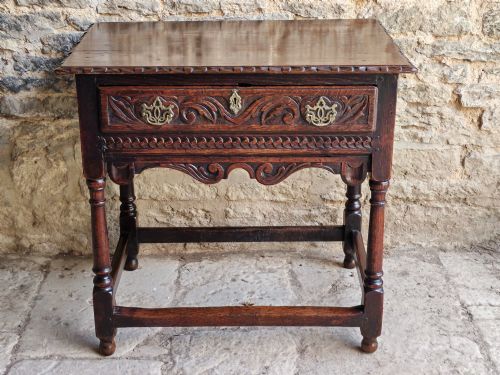
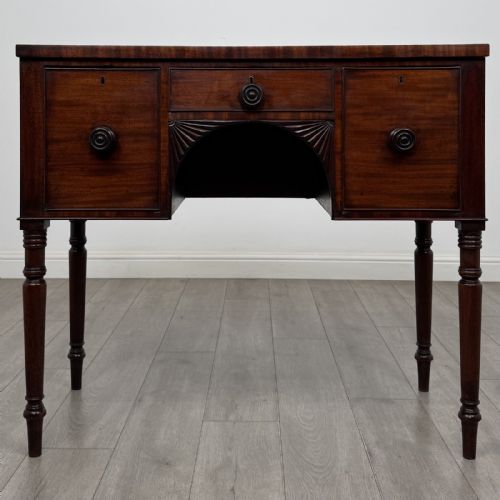
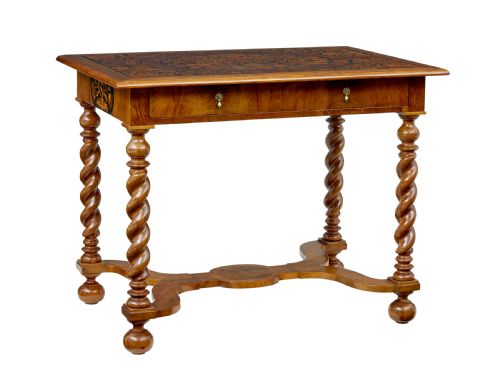
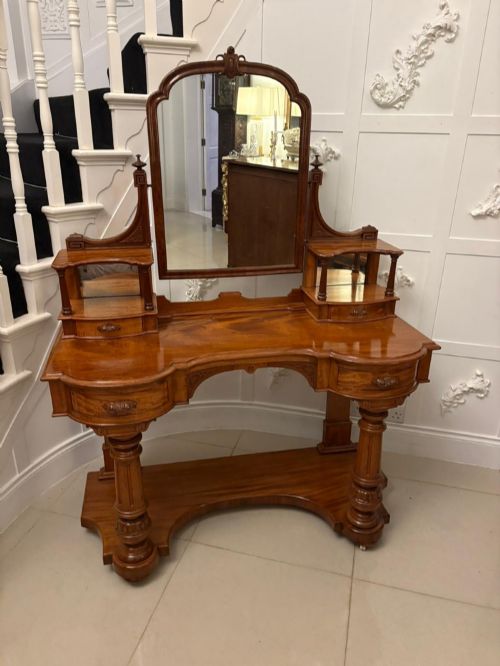
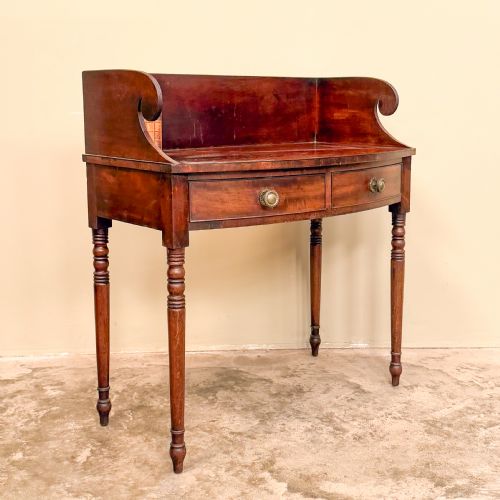
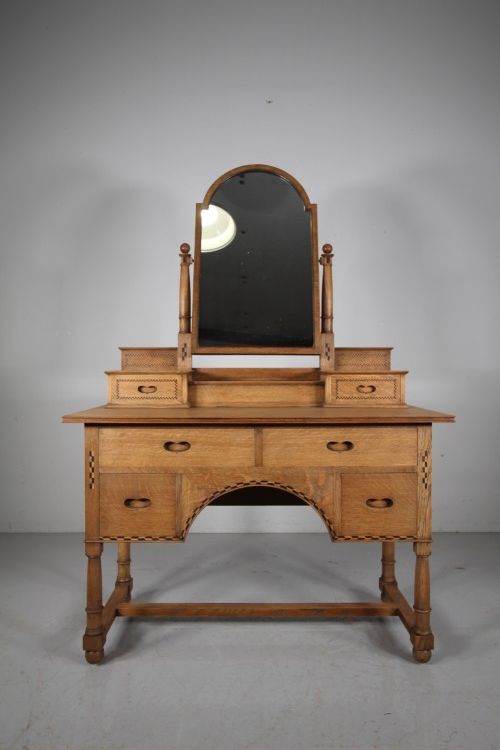
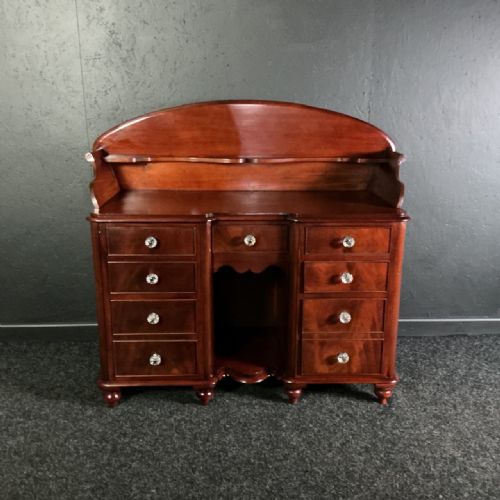
A carved wooden dressing desk is a multi-functional antique piece designed for personal grooming and writing, often appearing as a lowboy, dressing table, or writing desk across this selection.
Buyers encounter variations spanning from the seventeenth century through to the Edwardian period, with eighteenth-century lowboys and Victorian mahogany tables forming a substantial part of the available range.
Makers utilised timber such as oak, mahogany, walnut, and fruitwood, shaping forms that reflect Georgian, Victorian, and Edwardian design sensibilities.
How they were made
Craftsmen built these pieces using solid hardwoods like oak, mahogany, and walnut, frequently incorporating burr walnut veneers and fruitwood for decorative contrast.
Construction involved traditional joinery techniques, paired with carved details, brass hardware, glass mirrors, and occasional marquetry inlay.
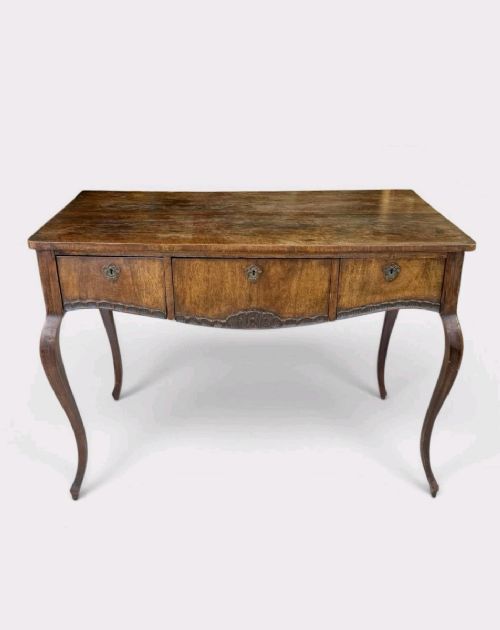
Workshops shaped cabriole legs, serpentine fronts, and drawer structures by hand, relying on period woodworking methods.
Carved Wooden Dressing Desk Retail Price Guide 2026
Typical asking prices for carved wooden dressing desk among the pieces listed under this phrase on Sellingantiques today, from the lower quarter to the upper quarter. They describe what is for sale here now, not the wider market.
A turned circular mahogany box sits quietly among the heavy desks and washstands.
What varies in quality
Quality depends upon the selection of timber and the crispness of the carved details executed by the maker.
The integrity of original drawer linings, brass fittings, and structural joinery distinguishes finer examples from simpler utilitarian pieces.
Heals·Shoolbred and Co·John Gregory London
The Carved Wooden Dressing Desk Glossary
- Lowboy
- A small dressing table or side table featuring drawers, typically raised on four legs. These pieces date frequently from the eighteenth century and often employ oak or walnut.
- Cabriole leg
- A furniture leg that curves outward and then tapers inward, finishing in a pad, claw, or hoof foot. This style appears frequently on Georgian period furniture.
- Marquetry
- Decorative patterns formed by inserting thin pieces of wood into a veneered surface. Artisans utilised this technique to create intricate designs on table tops and drawer fronts.
- Serpentine front
- A curved furniture front characterised by a convex centre flanked by concave ends. This contour adds movement and visual interest to desks and dressing tables.
Carved Wooden Dressing Desk: Frequently Asked Questions
What is a lowboy?
A lowboy is a small table with drawers, commonly used as a dressing table or side table in eighteenth-century bedrooms.
They sit low to the ground and frequently feature cabriole legs and solid oak or walnut construction.
How do I date a wooden dressing desk?
Dating relies on examining the timber species, construction methods, and hardware style. Eighteenth-century pieces often use oak or fruitwood with hand-cut dovetails.
Victorian and Edwardian examples introduce machine-sawn elements, denser mahogany, and attached or pivoting dressing mirrors.
Where should I place a dressing desk?
These desks suit bedrooms, studies, or living areas where a compact surface with storage is useful. Their finished backs and carved wooden facades allow them to stand away from walls.
Pairing them with a matching side chair or stool creates a functional writing or dressing station.
What woods were used for these desks?
Cabinet makers utilised native and imported hardwoods including mahogany, oak, walnut, burr walnut, and fruitwood. Each timber offers distinct grain patterns and weight.
Secondary woods like oak or pine often appear inside drawer boxes and internal framing.