

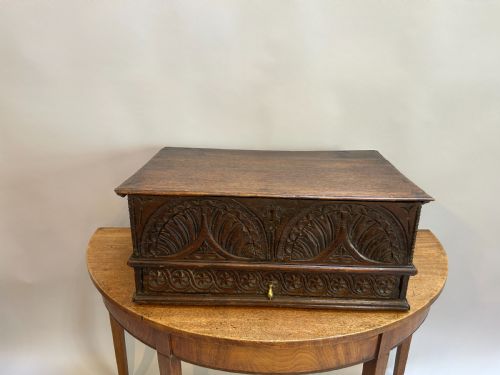
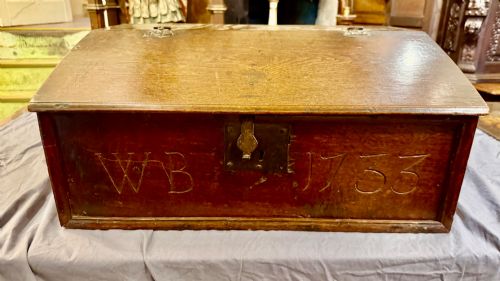
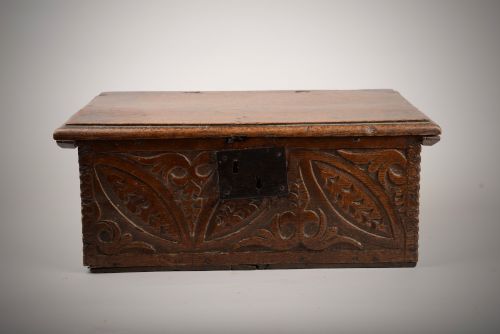

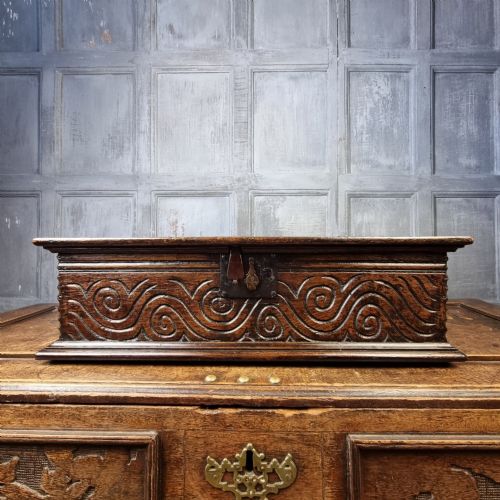


Carved Wooden Desk Box
A carved wooden desk box is a sturdy lidded container meant for keeping papers, scripture and letters safe on a table.
Carved Wooden Desk Box
When you search for a carved wooden desk box, you encounter pieces designed to hold personal documents, letters and household records upon a table or writing surface. These objects range from early church and domestic containers to later lidded receptacles fashioned for stationery and tobacco.
You are most likely to meet seventeenth century examples rendered in solid timber alongside later nineteenth century interpretations incorporating decorative carving and fitted interiors. The selection spans utilitarian storage vessels made for daily record keeping as well as ornamental containers intended for parlour display.
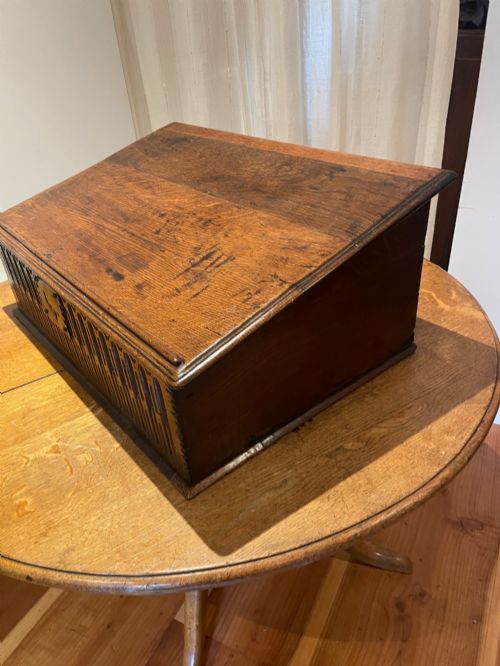
The forms encompass Bible boxes with sloping lids, flat top document chests, and specialised writing boxes constructed to house ink, quills and paper. Many exhibit hinged lids, internal divisions, or small drawers tucked beneath the writing deck.
How they were made
Carpenters and cabinet makers constructed these containers predominantly from solid timbers such as oak, mahogany, walnut and burr walnut, utilising regional woods appropriate to the period of origin. Oak dominates the earlier pieces, joined with pegged mortise and tenon joints to withstand heavy domestic or ecclesiastical use.
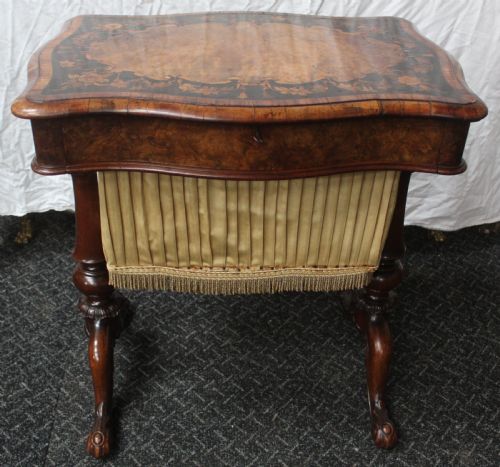
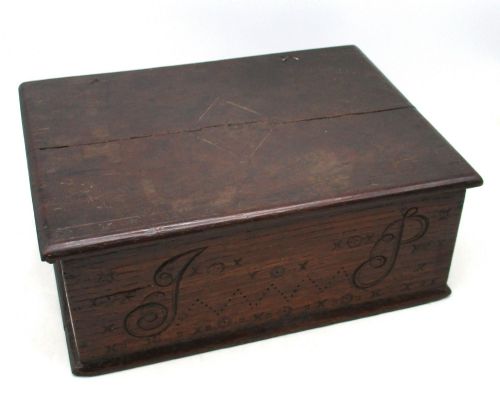
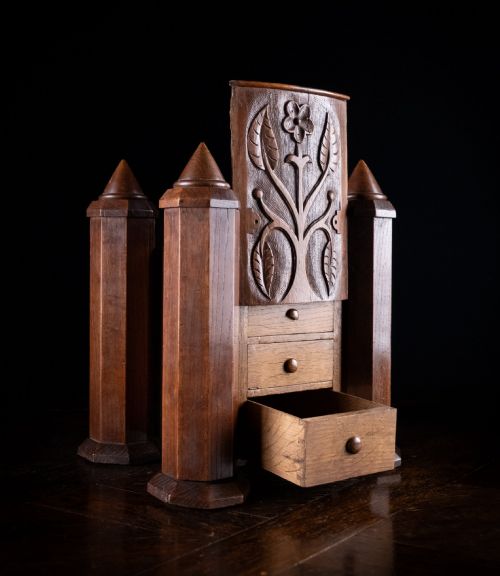
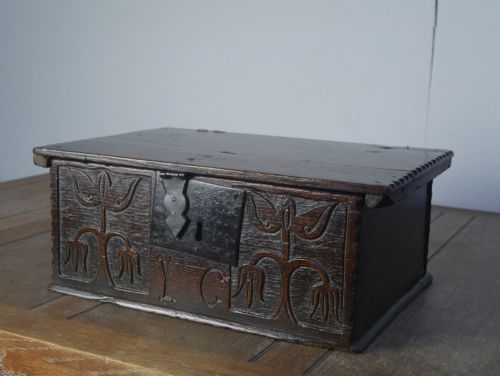
Carving technique defines the surface treatment, executed directly into the wood using gouges and chisels to create geometric strapwork, floral motifs and heraldic devices. Later nineteenth and twentieth century pieces incorporate applied veneers, bone inlay, or relief carving derived from regional traditions.
Iron and brass hardware including hinges, lock plates and carrying handles were hand forged or cast to secure the contents. Linings of fabric or fitted compartments were introduced in subsequent periods to organise stationery, tobacco or small valuables.
Carved Wooden Desk Box Retail Price Guide 2026
Typical asking prices for carved wooden desk box among the pieces listed under this phrase on Sellingantiques today, from the lower quarter to the upper quarter. They describe what is for sale here now, not the wider market.
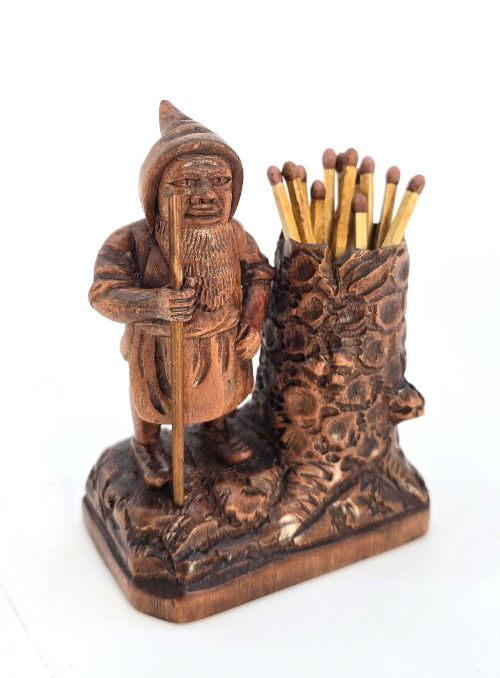
A carved limewood match striker shaped as a grinning gnome watches over the collection from nineteen sixteen.
What varies in quality
The degree of artistic ambition in the carving separates standard utilitarian containers from exceptional examples. Skilled relief work, balanced proportions and crisp detailing demonstrate the hand of a more accomplished artisan.
The selection of timber significantly influences the character of the piece, with figured grains like burr walnut or dense hardwoods commanding greater visual presence than plain utility boards. Original surfaces and patination earned through centuries of handling distinguish untouched pieces from heavily restored ones.
The integrity of internal fittings, original iron or brass locks, and stable construction determine the overall coherence of the container. Pieces retaining their original hinges, internal tills and operable locks represent a higher standard of preservation.
The Carved Wooden Desk Box Glossary
- Bible box
- A sloping or flat topped lidded wooden container originally made to store sacred texts and personal manuscripts. These portable chests sat upon tables during the seventeenth and eighteenth centuries.
- Document box
- A compact storage chest designed to hold legal deeds, letters and important papers. They often feature simple rectangular proportions and a hinged lid.
- Writing slope
- A portable desk featuring an angled writing surface that typically folds open to reveal compartments for stationery, inkwells and pens. They are frequently lined with fabric or leather.
- Strapwork
- A carved decorative motif resembling interlaced bands or leather straps, commonly found on seventeenth century oak panels. This ornament gives texture to the front and sides of early boxes.
- Burr walnut
- A prized timber veneer sourced from walnut tree growths, characterised by swirling, knotty grain patterns. Cabinet makers utilised this material on nineteenth century luxury boxes.
Carved Wooden Desk Box: Frequently Asked Questions
What was a Bible box used for?
These lidded containers served to protect sacred scriptures and important domestic papers from dampness and loss in seventeenth and eighteenth century households. Their portable nature allowed families to transport or secure valuable texts safely.
Many doubled as portable writing desks when placed upon a table or lap, providing a firm surface for correspondence. The sloping lid design directed light onto the page while keeping the interior contents hidden.
How do I date an antique wooden box?
Dating relies on observing the timber species, construction joints, and decorative carving styles present on the piece. Early examples predominantly utilise oak with hand-pegged joints and seventeenth century strapwork.
Later Victorian and Edwardian versions often employ mahogany, walnut or exotic woods with machine-cut elements and fitted fabric interiors. Hardware like hinges and lock mechanisms also provides reliable clues to the period of manufacture.
Are these boxes suitable for daily use?
Solid wooden containers from earlier centuries remain robust enough to hold letters, stationery or modern documents on a desk. Their durable timber construction allows them to function practically in a contemporary home.
Care should be taken to maintain stable humidity levels and protect antique polished surfaces from moisture. Using them for storage connects modern interiors with traditional craftsmanship.