


Carved Wooden Collector Chest
A carved wooden collector chest brings order to small treasures, offering compartments housed in richly grained timber.

Carved Wooden Collector Chest
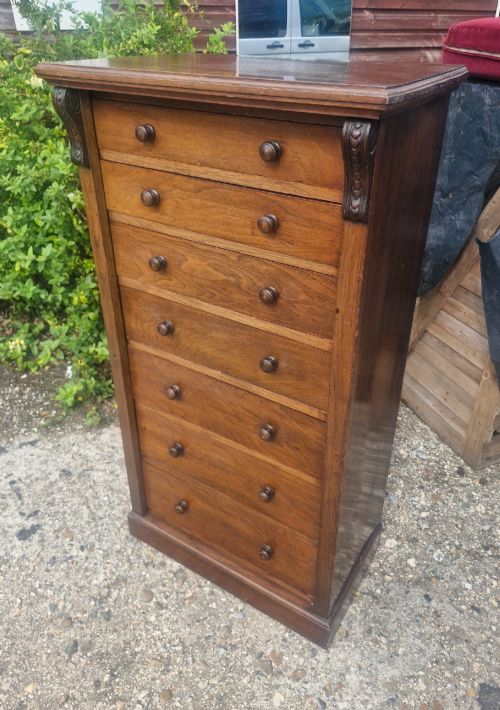
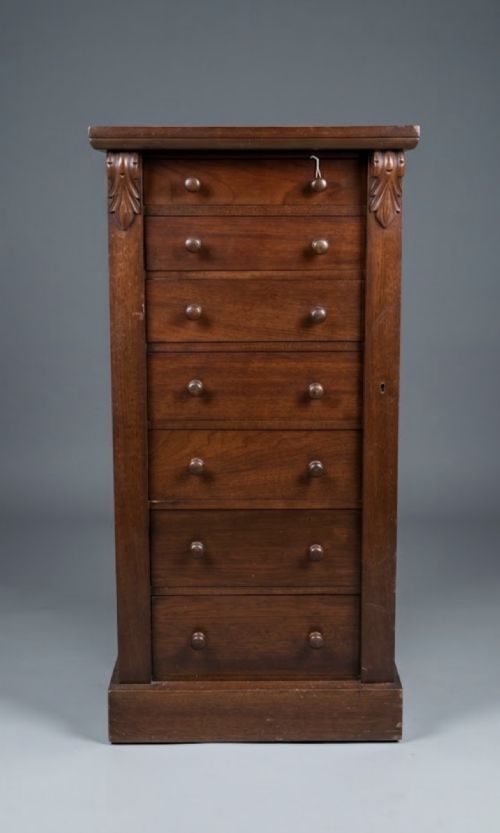
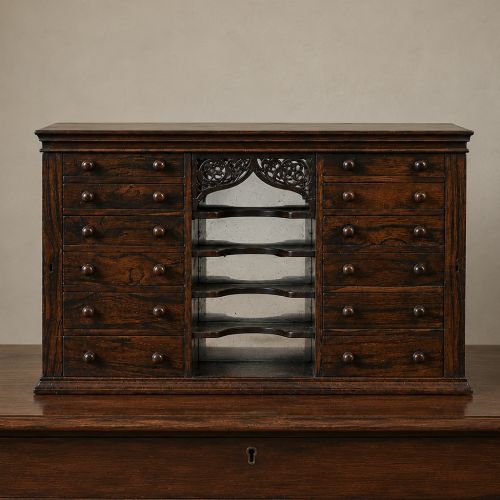
A carved wooden collector chest provides secure storage for small valuables, coins, or specimens within compact drawers and compartments. When you search for a carved wooden collector chest, you encounter a variety of forms including Wellington chests, miniature chests of drawers, and cabinets on stands. These pieces originate from periods spanning the seventeenth century through to the late Victorian era.
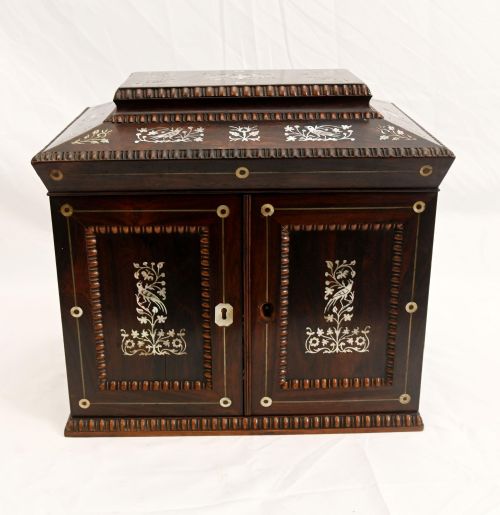
The selection on this page ranges from seventeenth-century olive wood oyster veneer cabinets to nineteenth-century walnut banks of drawers and Regency rosewood collector cabinets. You will also find specialised items such as watch and clock repairer chests, jewellery chests with mother of pearl, and small soft wood table cabinets. Each form serves the collector by keeping specialised items organised and secure.
How they were made
Cabinet makers utilised dense hardwoods such as mahogany, walnut, burr walnut, rosewood, oak, and olive wood to construct these chests. Techniques such as oyster veneering created intricate circular patterns across surfaces, particularly seen on seventeenth-century examples.
Makers integrated brass hardware for locks, hinges, and carrying handles, while interior elements sometimes incorporate mirror glass or delicate small drawers. Carving and inlay work decorate the exterior structures, ranging from German baroque designs to Portuguese baroque and folk art styles.
The listings span from the 17th century to the late Victorian period, featuring walnut, mahogany, olive wood, and rosewood.
What varies in quality
The choice of timber and veneer determines the visual impact of a carved wooden collector chest, with burr walnut and olive wood oyster veneers representing higher complexity in cabinet work. The crispness of the carving and the precision of the drawer joints indicate the skill of the original maker.
Intact original hardware, functioning locks with working keys, and preserved surface patination elevate the standing of a piece. The survival of specialised internal layouts, such as multiple graduated drawers or fitted compartments, distinguishes standard storage from finer collector cabinets.
The Carved Wooden Collector Chest Glossary
- Wellington chest
- A tall, narrow chest of drawers secured by a locking hinged side pilaster that fastens the drawers shut. This design originated in the nineteenth century.
- Cabinet on stand
- A cabinet designed to sit upon a separate supporting table frame or stand. These elevated pieces often display baroque carving and figured timbers.
- Bank of drawers
- A multi-drawer unit intended for sorting and storing small items or documents. These industrial or domestic pieces utilise durable hardwoods like walnut.
- Specimen chest
- A specialised cabinet containing shallow drawers built for holding natural history or coin collections. They provide secure, dust-free storage for delicate items.
Carved Wooden Collector Chest: Frequently Asked Questions
What were collector chests originally used for?
These chests stored valuable small items such as coins, medals, geological specimens, or specialised tools. Collectors kept their prized objects organised and protected within the multiple small drawers.
Over time, owners adapted them for jewellery, watches, or general keepsakes while retaining their secure locking mechanisms.
Are these chests suitable for modern daily use?
Yes, their compact size and numerous drawers make them practical for organising jewellery, desk accessories, or small collections today. The sturdy hardwood construction handles everyday opening and closing.
Placed on sideboards or desks, they function as decorative storage points that fit neatly into contemporary rooms.
How should I care for timber surfaces?
Dust the wood regularly with a dry, soft cloth and avoid placing the chest in direct sunlight or near heat sources. Maintaining stable room humidity prevents the timber and veneers from splitting.
Apply traditional beeswax polish occasionally to nourish the grain and protect the historical finish.
What is an oyster veneer?
Oyster veneering involves slicing small tree branches across the grain to create decorative round or oval patterns. Craftsmen arranged these cross-sections closely together to cover cabinet surfaces.
This technique creates distinctive swirling patterns frequently observed on seventeenth-century furniture.