
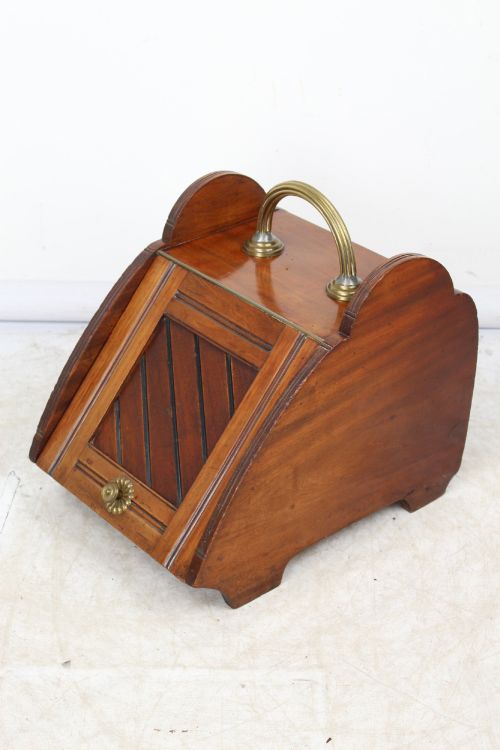
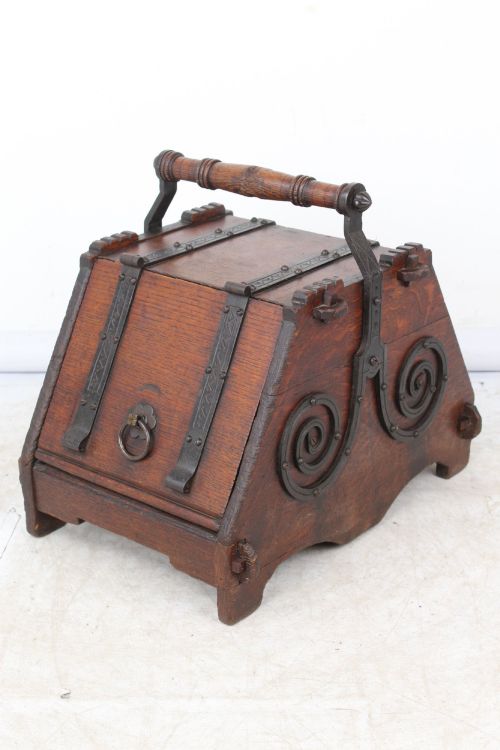
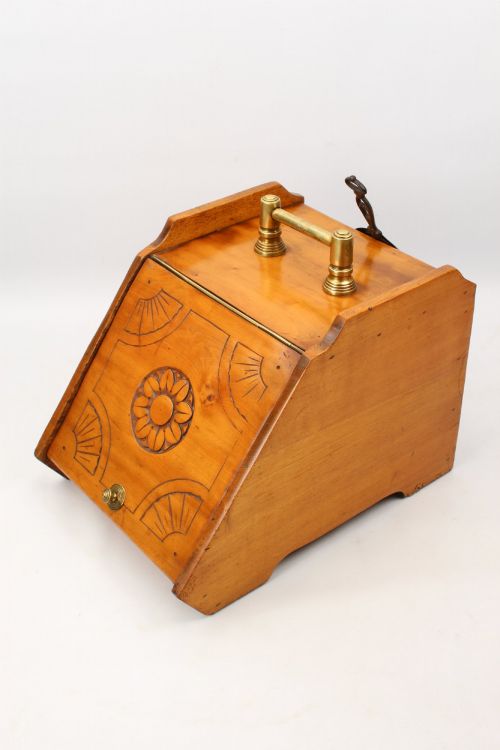


Carved Wooden Coal Purdonium
These carved wooden coal purdonium examples combine practical fireside fuel storage with ornate period craftsmanship for the hearth.
Carved Wooden Coal Purdonium
A carved wooden coal purdonium is a dedicated domestic container designed to store and transport solid fuel to the fireplace. These pieces appear primarily from the Victorian and Edwardian eras, spanning the nineteenth century and the opening years of the twentieth century. Forms range from traditional coal boxes and scuttles to formal cabinet purdoniums and coal depots.
The selections available here showcase regional varieties, including Scottish walnut pieces alongside standard English oak and mahogany designs. Many examples incorporate fitted shovel compartments and internal metal liners to manage the fuel cleanly. Stylistic influences extend from standard Victorian and Edwardian tastes to Gothic Revival and Louis XV Revival aesthetics.
Buyers frequently encounter pieces featuring detailed carved decoration on the front panels, complemented by metal handles and hinges. Some items function as part of a broader fireside companion set or storage group. These containers bridge the gap between utilitarian hearth equipment and refined domestic furniture.
Materials and Construction
Cabinetmakers constructed these purdoniums using dense hardwoods such as oak, mahogany, pollard oak, and walnut. Carved ornamentation adorns the exterior surfaces, particularly the drop-front doors or sloping lids characteristic of the form. Wood selection dictates the primary grain pattern and colour tone of each box.
Metal components form an essential part of the construction, utilising brass for handles, hinges, mounts, and decorative plaques. Wrought iron and standard metal also appear on structural elements and companion fittings. Galvanized or metal liners fit inside the wooden housing to contain coal dust and prevent moisture damage.
Listings for carved wooden coal purdonium examples span the Victorian and Edwardian periods, utilising oak, mahogany, walnut, and brass.
Assessing Quality and Execution
The depth and clarity of the carving separate standard utilitarian boxes from finer pieces. Superior examples display crisp, hand-chiselled details on the timber rather than shallow machine moulding. The choice of figured woods, such as pollard oak or rich walnut, elevates the visual presence of the furniture.
Hardware quality marks another distinction between output tiers. Substantial cast brass handles, original metal liners, and matching shovels indicate a higher grade of manufacture. Structural joinery and the smooth operation of drop-front mechanisms reflect the underlying standard of the workshop.
Christopher Dresser
The Carved Wooden Coal Purdonium Glossary
- Purdonium
- A specialised cabinet or box designed to hold household coal near a fireplace. This term gained popularity in the Victorian period for front-tilting fuel containers.
- Drop-front
- A hinged panel at the front of a cabinet that tilts forward to grant access to the interior storage space. It allows easy scooping of fuel from the box.
- Pollard oak
- Timber taken from trees that have been pollarded, producing a heavily knotted and highly figured grain pattern. Cabinetmakers utilised this wood for decorative veneer and solid panels.
- Gothic Revival
- An architectural and decorative style drawing inspiration from medieval forms, featuring pointed arches and heavy carved tracery. Pieces in this style display austere or ecclesiastical motifs.
- Louis XV Revival
- A decorative style characterised by asymmetric curves, rococo scrollwork, and naturalistic motifs adapted from eighteenth-century French design. Mahogany items often display these flowing contours.
Carved Wooden Coal Purdonium: Frequently Asked Questions
What is a coal purdonium?
A coal purdonium is a domestic piece of furniture built to hold coal beside a fireplace. It keeps fuel neatly enclosed rather than sitting in an open bucket.
Most versions feature a hinged front or lid that opens to reveal a metal liner. This design allows users to scoop fuel efficiently while containing dust.
How do I tell Victorian from Edwardian pieces?
Victorian examples tend to feature heavier proportions and dense, ornate carvings influenced by Gothic Revival or high Victorian tastes. Woods like walnut and dark mahogany appear frequently in this era.
Edwardian pieces often present lighter oak construction with restrained decorative carving. The overall lines lean towards simpler domestic utility while retaining quality brass hardware.
Why do some have metal liners?
Metal liners protect the surrounding wooden structure from moisture, dirt, and direct impact from heavy lumps of coal. They can be lifted out independently for emptying and cleaning.
Finding a purdonium with its original metal liner intact preserves the historical utility of the object. Many pieces were designed specifically around these removable internal buckets.
How were they used historically?
Servants or homeowners used these boxes to transport coal from outdoor storage cellars to the main living rooms. They sat permanently by the hearth as functional furniture.
The integrated shovel and compartment provided a tidy method for stoking the fire throughout the day without cluttering the hearth.
Can I still burn coal in them?
While technically functional, most owners today use these pieces for dry storage, kindling, or as decorative interior accents. Modern fuel storage requirements differ from nineteenth-century practices.
Using them for logs or kindling protects the interior metal liners and historical timber from heavy wear and abrasive damage.