


Carved Wooden Bear Stand
A carved wooden bear stand brings vigorous Black Forest character and practical purpose to an entrance hall.
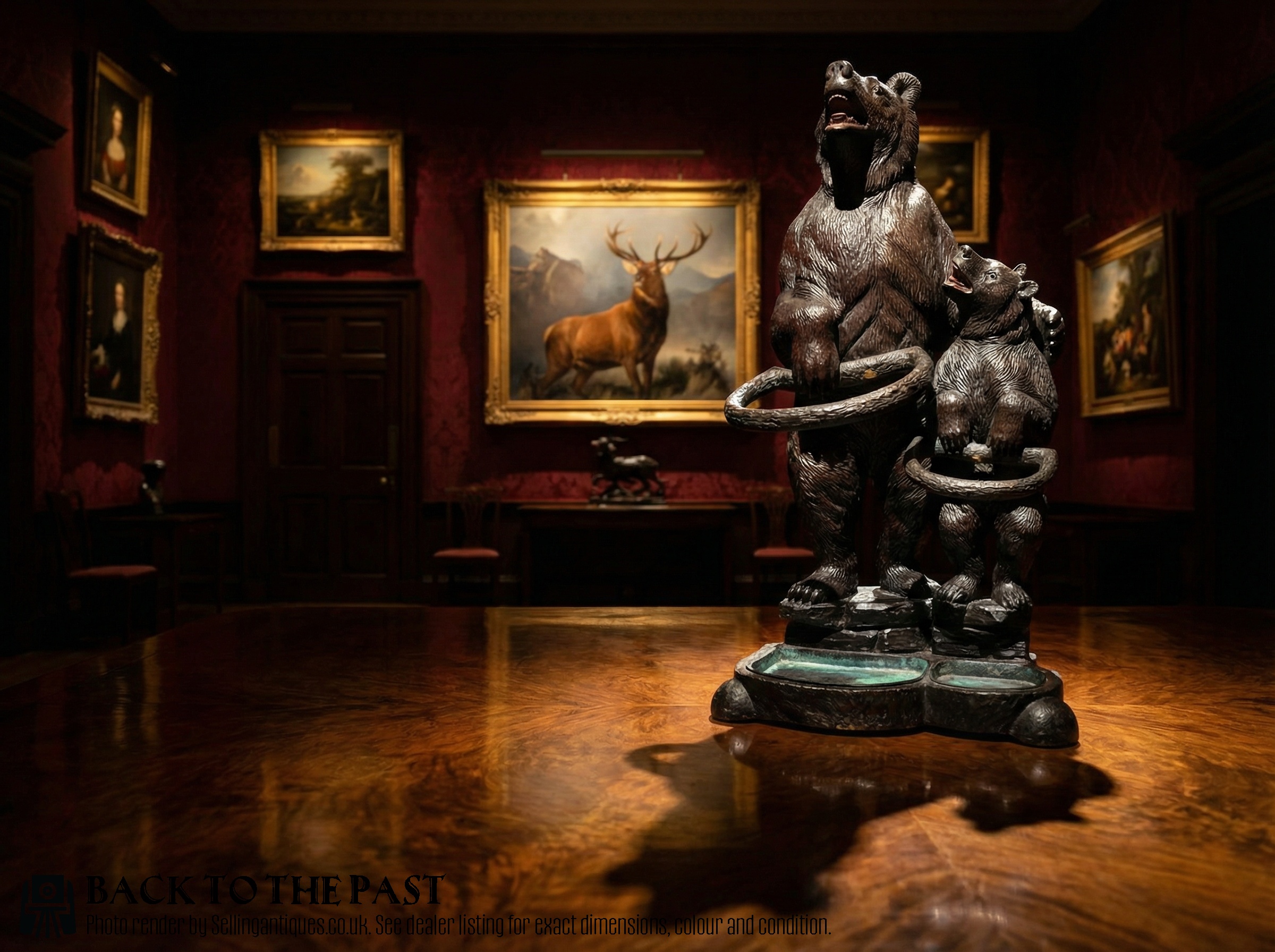
Carved Wooden Bear Stand
A carved wooden bear stand serves as an imposing hall centrepiece designed to hold walking sticks, umbrellas, or lighting. The listings on this page consist primarily of nineteenth-century and early twentieth-century Black Forest hall stands, stick stands, and umbrella stands.
Makers shaped these functional sculptures from linden wood and other carved hardwoods to depict realistic bears engaged in everyday tasks or playful poses. Alongside full hallstands and stick stands, the category includes related Black Forest forms such as floor lamps and condiment sets.
How they were made
Carvers utilised linden wood and carved hardwoods for their cooperative grain and suitability for deep, sculptural detail. Artisans combined hand-carving techniques with applied elements such as glass eyes and metal drip pans or backing mirrors.
The Black Forest tradition relied on skilled woodcarvers who rendered anatomical textures like fur and claws with striking realism. Workshops integrated functional hardware like hooks and umbrella wells directly into the carved wooden structures.
Carved Wooden Bear Stand Retail Price Guide 2026
Typical asking prices for carved wooden bear stand among the pieces listed under this phrase on Sellingantiques today, from the lower quarter to the upper quarter. They describe what is for sale here now, not the wider market.
Some bears hold a stick so convincingly that guests might hesitate before handing over an umbrella.
What varies in quality
Structural complexity also dictates worth, as multi-functional hall stands with original mirrors, trays, and hooks require superior joinery. The integration of functional metal components and glass elements without clumsy replacement marks finer craftsmanship.
The Carved Wooden Bear Stand Glossary
- Black Forest
- A style of ornate woodcarving originating from the Brienz region of Switzerland and the Black Forest in Germany. Pieces typically depict woodland animals, most notably bears, rendered with high realism.
- Hall stand
- A piece of hallway furniture combining hooks for coats, a shelf or mirror, and a base for umbrellas and sticks. These items served as practical utility pieces for visitors in large homes.
- Stick stand
- A designated holder for walking sticks and canes, often featuring a metal liner at the base to catch rainwater. They form a core part of the bear carving repertoire.
- Linden wood
- A pale, fine-grained timber favoured by Swiss and German carvers for its softness and lack of splintering. It allows for intricate, deep-relief carving without fracturing.
- Condiment set
- A small table accessory modelled in the likeness of animals, holding salt, pepper, or mustard containers. These novelty figures bring the Black Forest bear motif to the dining table.
Carved Wooden Bear Stand: Frequently Asked Questions
How were these stands used originally?
In large nineteenth-century homes, these stands greeted visitors in the main hallway. Guests placed wet umbrellas and walking sticks into the carved paws or wells provided.
Some versions also incorporated mirrors for checking appearance and hooks for hanging heavy coats or hats before entering the main house.
What wood are these bears carved from?
Most of these pieces are carved from linden wood, which was chosen for its smooth texture and ease of handling. Carvers also utilised various dense hardwoods to ensure the structural parts could bear the weight of heavy canes.
The choice of timber allowed artisans to carve deep, tactile fur and lifelike facial expressions.
How do I date a carved bear stand?
Dating relies on examining the construction methods, the presence of original metal drip trays, and the style of any integrated mirrors. Most examples originate from the nineteenth century up to the early twentieth century.
Stylistic shifts and material choices, such as the inclusion of glass eyes, help place items within the Victorian and Edwardian eras.