


Black Forest Stick Stand
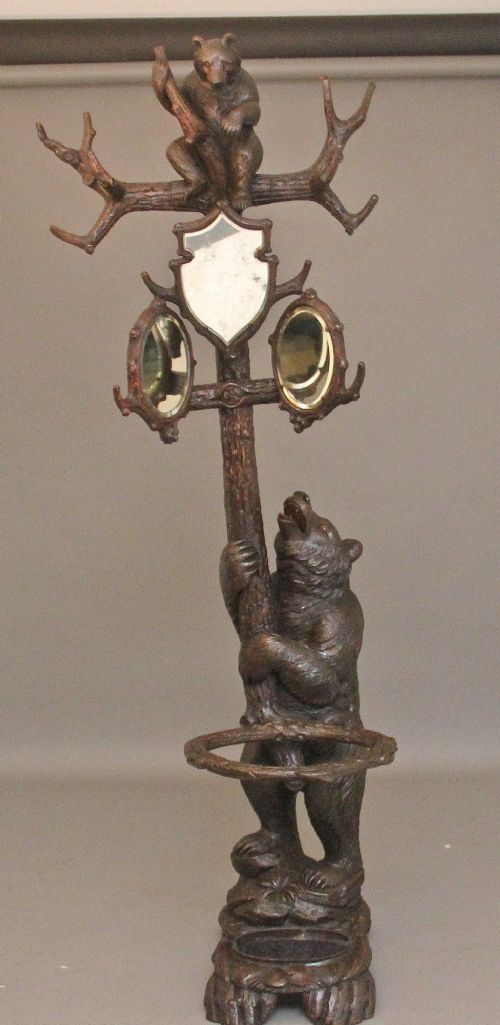
A black forest stick stand brings heavy Victorian woodland character into an entrance hall through animated carved bear figures.
Black Forest Stick Stand
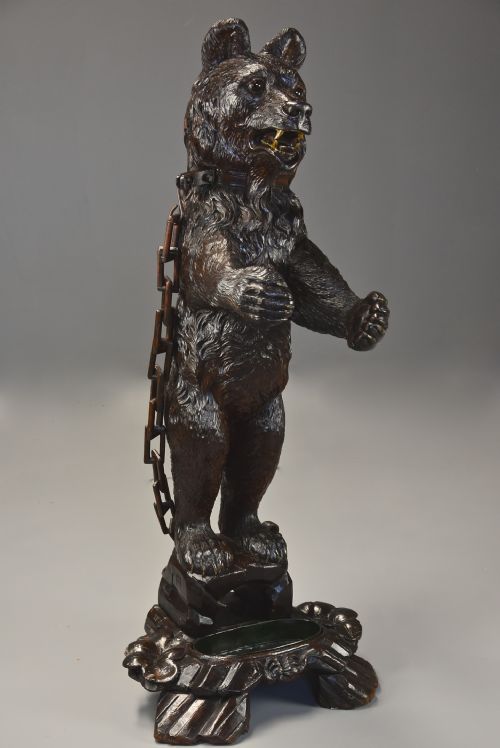
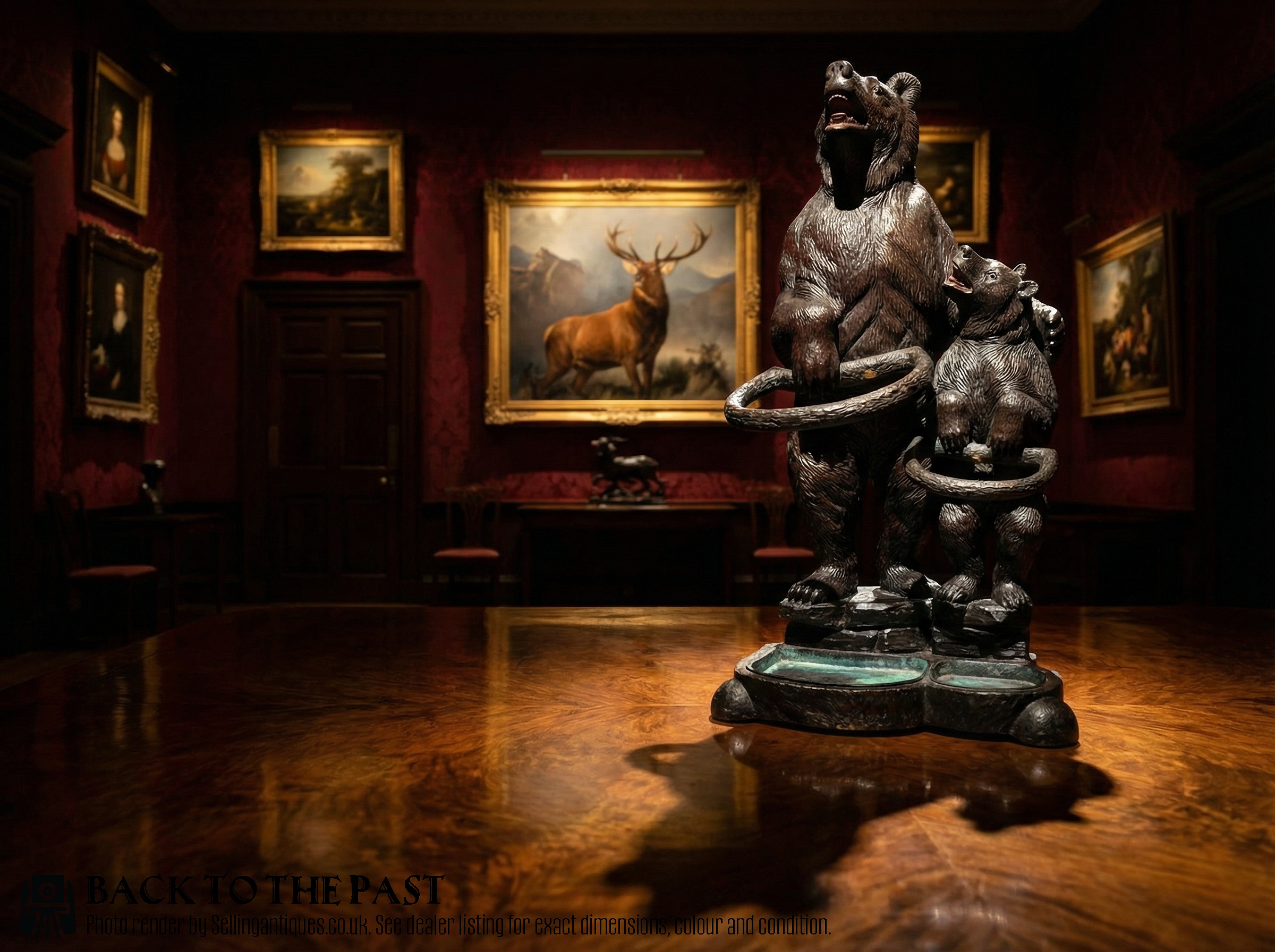
A black forest stick stand is a hall furniture piece designed to hold umbrellas and walking canes, most commonly taking the form of a carved wooden bear holding a trough or branch. The pieces seen across these listings date from the nineteenth century into the early twentieth century, spanning Victorian and folk art styles.
The standard form encountered here is the bear hall stand or stick stand, often incorporating metal drip pans to catch water from wet umbrellas. Larger exhibition pieces combine the bear motif with oak tree carvings to serve as coat and hat racks alongside the stick receptacles.
Makers in this tradition utilised local timber to produce both compact umbrella holders and tall hallstands featuring standing or seated bears. These items functioned as practical hallway furniture while displaying the distinct regional woodcarving skills of European artisans.
How they were made
Carvers utilised lindenwood, lime wood, and general carved hardwoods to shape the substantial bear figures and structural oak tree elements. These soft and hard timbers allowed intricate detailing of fur, facial expressions, and naturalistic tree bark textures.
Metal components such as internal liners or drip trays were integrated into the wooden bases to handle moisture from wet walking sticks and umbrellas. Glass and mirror elements occasionally appeared in larger hallstand configurations to complete the hallway furniture.
What varies in quality
The ambition of the carving separates standard workshop production from exhibition pieces, where anatomical detail in the bear and depth in the foliage distinguish superior examples. Finer pieces demonstrate meticulous hand-tool work on the fur texture and realistic glass eyes.
Scale and complexity dictate the hierarchy of these stands, ranging from compact single-bear stick holders to large hallstands combining bears, oak trees, and coat hooks. The inclusion of signed signatures from notable workshops adds distinction to surviving pieces.
Ruef
The Black Forest Stick Stand Glossary
- Lindenwood
- A pale, fine-grained timber favoured by European woodcarvers for its cooperative working qualities and smooth finish. This wood permitted the deep undercut carving seen on nineteenth-century bear figures.
- Drip pan
- A removable metal tray fitted into the base of a stick stand to collect water from wet umbrellas. These utilitarian inserts protected the surrounding wooden floor from moisture damage.
- Hall stand
- A combined item of furniture providing hooks for coats, a mirror, and a base receptacle for walking sticks. In this category, the form is dominated by carved bear motifs.
- Folk art
- Regional decorative objects produced outside academic traditions by local craftspeople. These pieces emphasise functional utility and direct regional character over formal academic design.
Black Forest Stick Stand: Frequently Asked Questions
How do I clean a carved bear stick stand?
Dust the intricate fur carvings regularly using a soft-bristled brush to prevent buildup in the recesses.
Avoid liquid polish or water, applying only a microcrystalline wax sparingly if the wood appears dry.
Were these stands made for daily use?
Victorian households placed these items in entrance halls to hold wet walking sticks and umbrellas.
Metal drip trays inside the wooden bases managed the moisture from daily weather.
How can I tell a nineteenth-century piece apart?
Examine the construction methods, timber type, and the hand-carved details of the bear's fur.
Nineteenth-century examples typically utilise lindenwood or lime wood with traditional joinery and patination.