

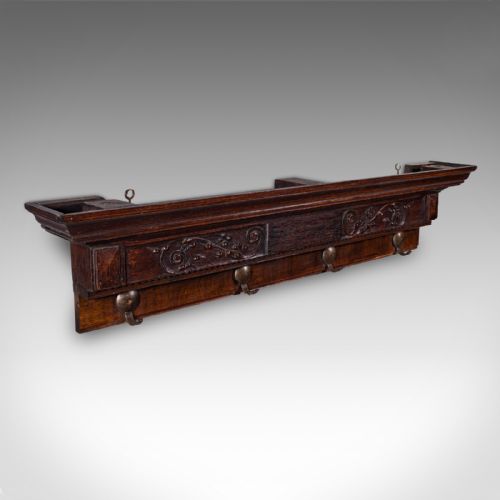
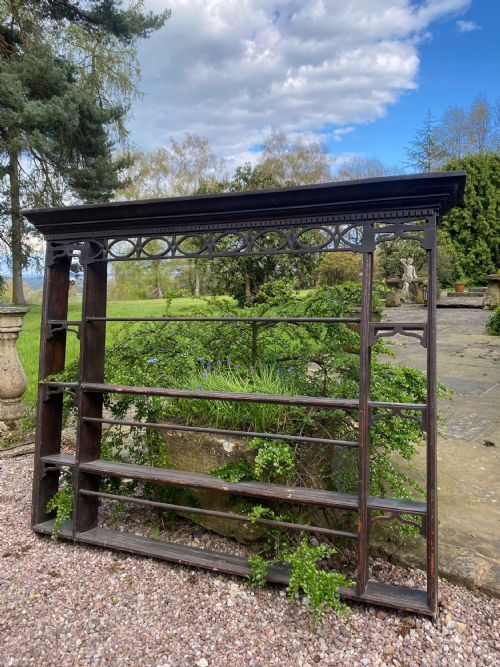
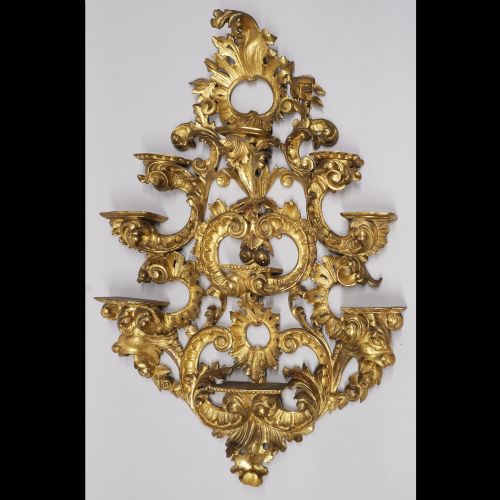
Carved Wood Wall Shelves
These carved wood wall shelves bring architectural depth and practical display to any room, drawing on centuries of craftsmanship in mahogany, oak and walnut.
Carved Wood Wall Shelves
Carved wood wall shelves span several centuries of domestic interior design, appearing as hanging bookshelves, display brackets, and overmantel ledges. Buyers searching for carved wood wall shelves typically encounter Victorian and Edwardian examples alongside pieces dating back to the eighteenth century.
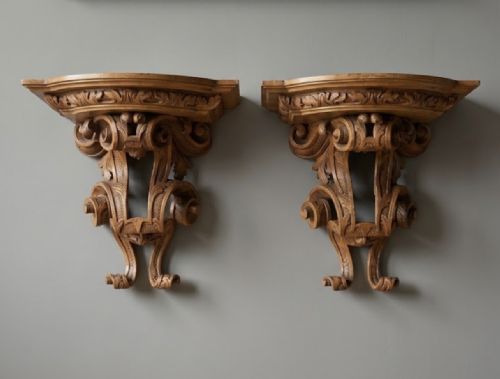
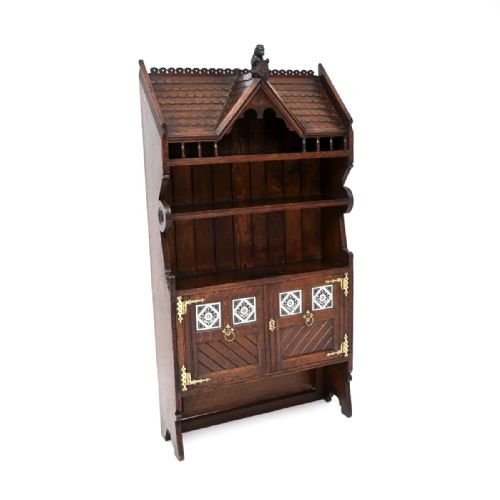
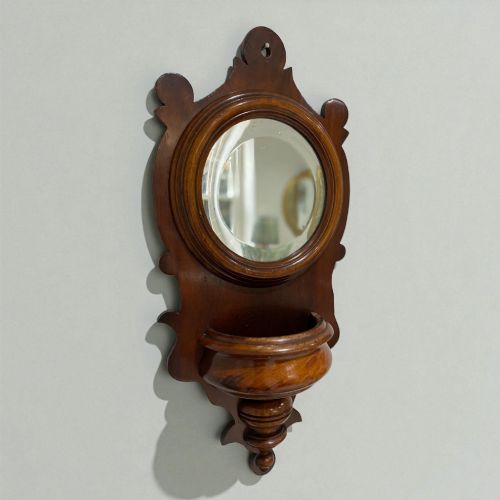
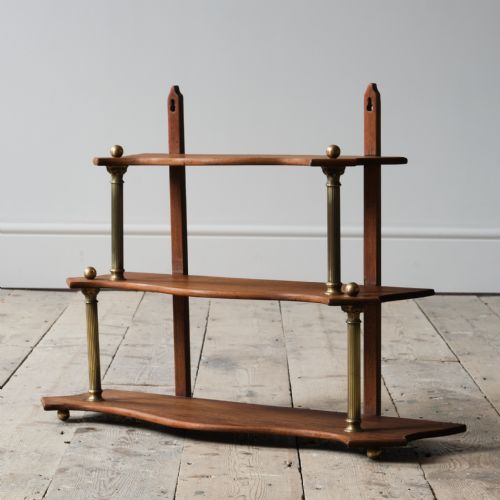
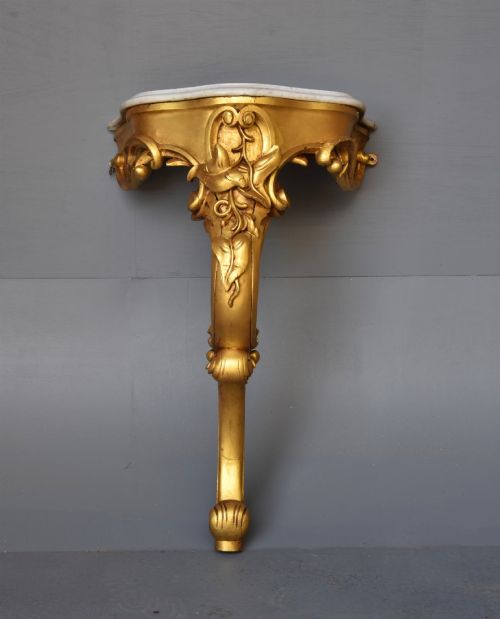
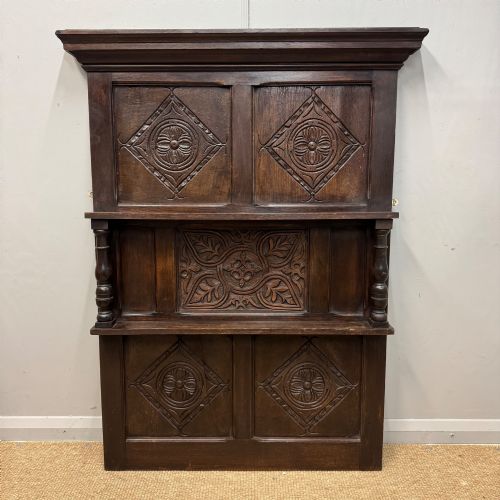
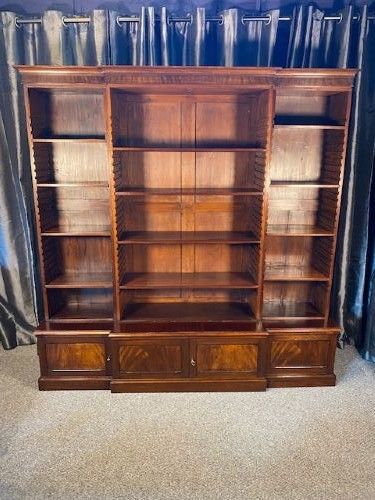
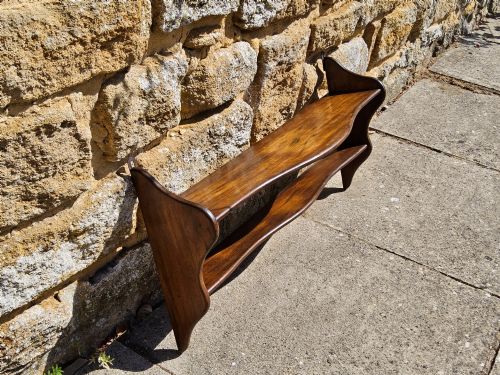
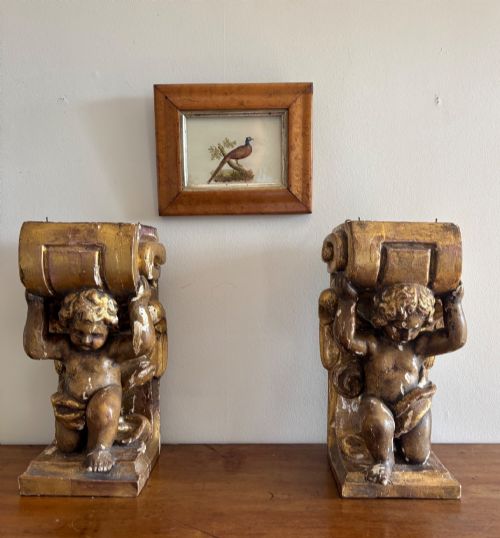
The form ranges from simple oak and mahogany hanging boards to elaborate giltwood brackets and walnut cabinets with integrated ledges. Workshops across Britain and continental Europe produced these items to maximise wall storage in reception halls, bedrooms, and parlours.
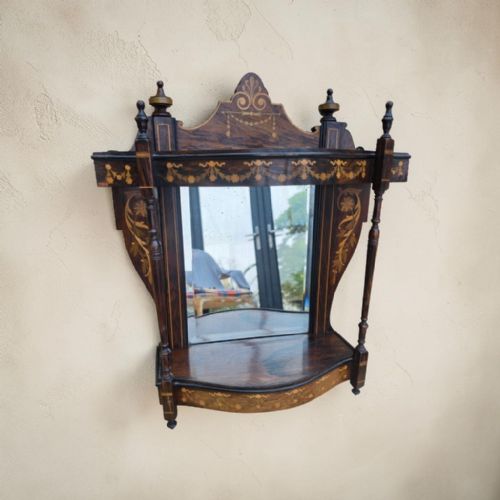
Moorish Revival, Rococo Revival, and Gothic Revival styles dominate the aesthetic repertoire, bringing ornate pierced carving and shaped brackets into domestic spaces. Many pieces incorporate functional additions such as mirrors, brass hooks, or small cabinets alongside the primary display surface.
How they were made
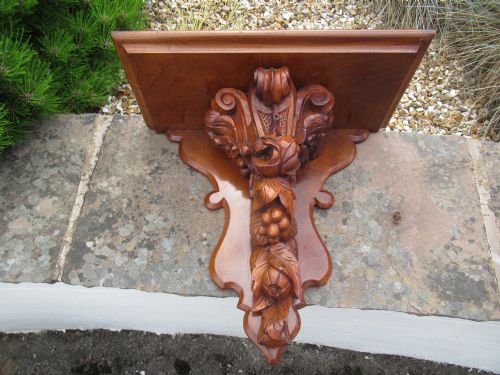
Cabinetmakers utilised solid timbers including mahogany, walnut, and oak, often selecting planks with rich grain patterns to form the main boards and brackets. Secondary woods like beech appear in structural elements, while specialised pieces feature olive wood or satin birch.
Carvers shaped the decorative brackets and pediments by hand using gouges and chisels, applying gesso and gold leaf to giltwood surfaces for a luminous finish. Joinery relied on traditional housing joints, dovetails, and sturdy brass screw fixings to ensure the loaded shelves remained secure against the wall.
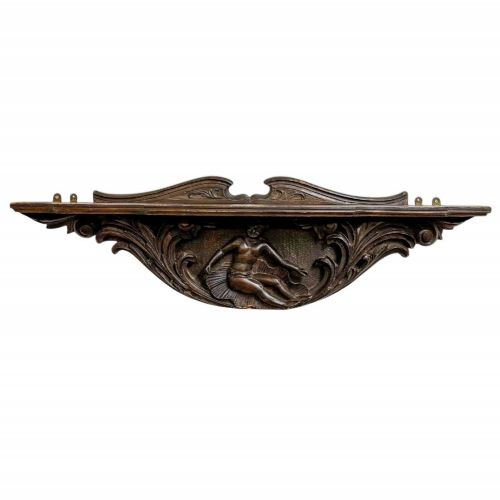
One exceptional nineteenth century master carver portrayed the devil himself within a striking wall bracket.
What varies in quality
The depth and crispness of the hand-carved detail separate ordinary production pieces from exceptional works of craftsmanship. Crisp undercut foliage, balanced symmetry in matched pairs, and articulate rendering of figures or scrollwork indicate superior workshop origin.
Material selection and surface preservation dictate the standing of a piece within its period. Intact original giltwood surfaces, well-figured mahogany or walnut timbers, and robust structural joinery distinguish the finest examples from heavily restored or utilitarian items.
Liberty & Co·Luigi Frullini
The Carved Wood Wall Shelves Glossary
- Giltwood
- Timber that has been coated with fine gold leaf over a prepared layer of gesso. This finish is typical of decorative brackets and ornate wall mirrors from the eighteenth and nineteenth centuries.
- Bracket
- A projecting architectural support fixed to a wall to carry a shelf or heavy load. Carved wood examples often feature scroll or acanthus leaf motifs.
- Overmantel
- A decorative structure placed directly above a fireplace mantelpiece. These frequently incorporate integrated shelving, carved panels, and mirrors.
- Corbel
- A structural piece of stone or timber projecting from a wall to weight-bear. In interior woodwork, carved wooden corbels function as decorative shelf supports.
- Gesso
- A plaster-like material applied to wood surfaces as a smooth base for gilding or paint. It allows carvers to achieve sharp, intricate relief details before applying gold leaf.
Carved Wood Wall Shelves: Frequently Asked Questions
How do I hang antique wall shelves safely?
Check the original hanging loops or brackets on the reverse to ensure the timber remains sound around the fixings. Use appropriate wall anchors matched to your wall type and the weight of the dense hardwood.
Distribute weight evenly across the tiers, placing heavier display items on the lowest shelf closest to the primary wall supports.
What is the difference between wall shelves and wall brackets?
Wall shelves feature a continuous horizontal board supported by ends or brackets, designed to hold multiple books or decorative objects. Wall brackets are singular, highly decorative supports that project from the wall to hold a smaller standalone display surface.
Brackets lean heavily into sculptural carving styles like Rococo or Baroque Revival, whereas shelves prioritize extended surface area for storage.
How do I clean antique giltwood and carved wood?
Dust carved surfaces gently with a dry, soft-bristled artist brush to lift dirt from deep recesses without abrading the patina. Avoid all commercial liquid polishes, water, and chemical sprays, which damage historic wax finishes and delicate gold leaf.
For unpolished timber, an occasional application of microcrystalline wax preserves the moisture and natural sheen of the wood.
How can I tell a Victorian shelf from an Edwardian one?
Victorian pieces often display heavier proportions, darker finishes, and dense ornamentation rooted in Gothic, Renaissance, or Rococo Revival styles. Walnut and mahogany dominate this era, alongside deep hand-carved relief work.
Edwardian examples frequently exhibit lighter woods, satin birch, or painted black lacquer finishes, reflecting a shift toward cleaner lines and multi-functional hallway furniture.