


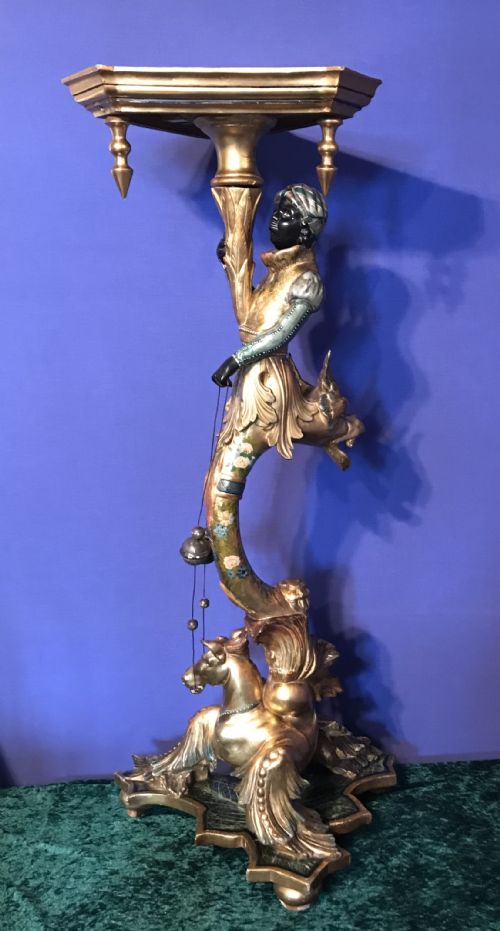


Carved Wood Torchere Figure
These carved wood torchere figure works bring dramatic Italian style and sculptural presence into a room, serving as striking functional stands.
Carved Wood Torchere Figure
A carved wood torchere figure combines sculptural artistry with practical utility, often taking the form of a blackamoor, a gondolier, or a young woman holding a light or serving surface. These pieces frequently double as stands, tables, or pedestals designed to hold lamps, planters, or decorative objects.
The items found here span the Victorian era and the nineteenth century, with strong roots in Venetian Baroque, Rococo, and Renaissance revival traditions. Buyers searching for a carved wood torchere figure encounter works originating primarily from Italian workshops, dating from eighteen-fifty through the early twentieth century.
Forms vary from life-size or large floor-standing figures on pedestals to smaller table-standing waiter figures and crouching stands. Original surfaces frequently display elaborate combinations of polychrome paint, gold leaf, gesso, and ebonised wood finishes.
Materials and construction methods
Artisans carved these figures from solid timber, applying layers of gesso to smooth the surface before intricate detailing and sculptural work took place. This preparation allowed for the sharp relief seen in drapery, facial expressions, and ornate base structures.
Makers finished the carved wood surfaces using gold leaf, parcel-gilt, and polychrome paint, sometimes pairing these with ebonised wood or glass elements. The original paintwork and gilding were applied by hand, creating rich, layered colour combinations typical of Venetian craftsmanship.
Some figures double as waiters or gondoliers, holding platforms ready to serve tea or support a stray planter.
Distinguishing quality in craftsmanship
The integrity of the original surface finishes determines the visual power of a piece. Works retaining their initial polychrome paint and gold leaf without heavy modern overpainting command greater interest from collectors who value period authenticity.
The Carved Wood Torchere Figure Glossary
- Torchere
- A tall ornamental stand or floor lamp designed to carry a light source. The form originates from seventeenth-century lighting supports.
- Polychrome
- Decorated in several colours. This finish technique involves applying various paint hues to the carved wooden surface.
- Gesso
- A plaster mix applied to wood surfaces as a base for paint or gilding. It provides a smooth ground for intricate carved details.
- Parcel-gilt
- Partially gilded with gold leaf. This treatment highlights specific carved elements against a painted wood background.
- Ebonised
- Wood finished to resemble ebony. Artisans achieve this dark, polished appearance through staining and polishing processes.
Carved Wood Torchere Figure: Frequently Asked Questions
What is a carved wood torchere figure?
It is an antique sculptural stand carved from timber, often depicting a human figure holding a tray, light, or platform.
These pieces function as decorative pedestals or side tables within a room.
Where were these figures made?
The pieces originate mainly from Italy, with a strong concentration of Venetian craftsmanship from the nineteenth century.
Italian workshops produced them in styles ranging from Baroque revival to Victorian interpretations.
How were they used originally?
Wealthy households utilised them as functional decorative art to hold lighting, plants, or serving trays in reception rooms.
They served both as illumination supports and as displays of exoticism and artistic wealth.
How do I care for the original paint?
Keep the pieces away from direct sunlight and fluctuating humidity to protect the underlying gesso and delicate gold leaf.
Dust gently with a dry, soft cloth without applying liquid cleaning products to the polychrome surfaces.