



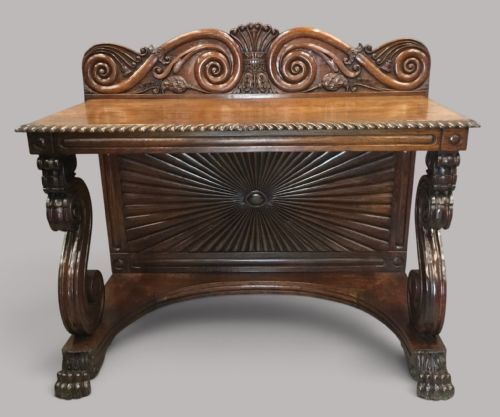
Carved Wood Sunburst
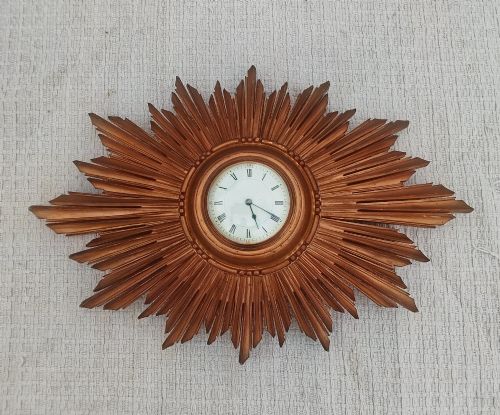
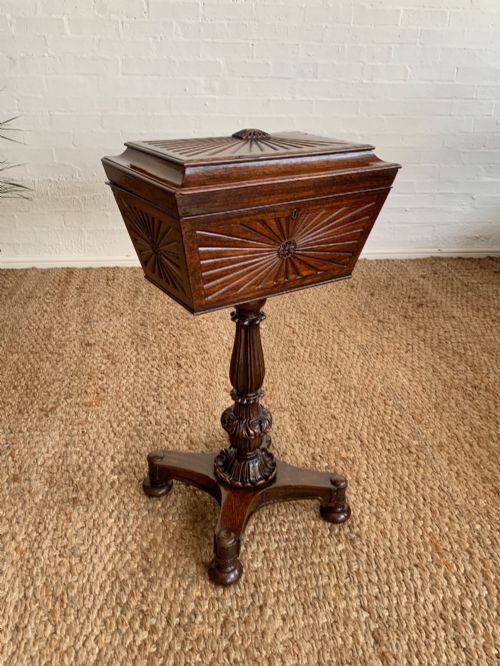
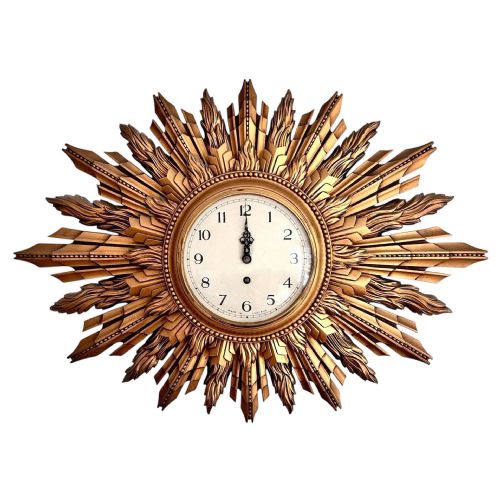
A carved wood sunburst brings radiant energy to a room, taking the form of clocks, mirrors, and occasional tables.
Carved Wood Sunburst
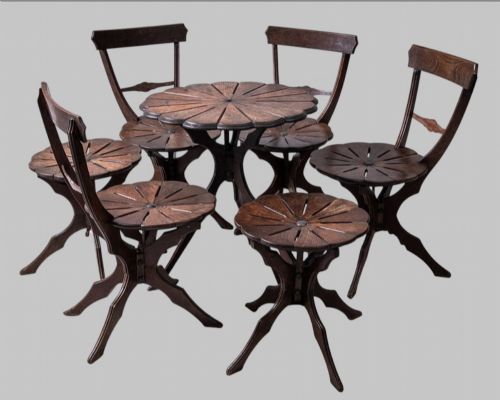
The selection on this page relies heavily on giltwood and rosewood surfaces, demonstrating how makers adapted radial motifs for both timepieces and furniture. Wall clocks dominate the offerings, spanning early twentieth-century examples to mid-century creations.
Buyers also encounter occasional tables and parlour suites carrying this carved detailing, showing that the motif extended far beyond wall ornamentation. Origins stretch from English workshops, such as Smiths, to Alpine folk art traditions and French ateliers.
How they were made
Makers shaped these pieces primarily from oak, rosewood, and padouk, often applying giltwood or gilded wood finishes to catch the light. Skilled hands carved the radiating beams directly into the timber or built up intricate radial veneers.
Glass, brass, and metal components integrate into the wooden frames, particularly in the construction of wall clocks and sconces. Traditional joinery and gilding techniques ensure the stability of these complex, multi-part wooden rays.
Carved Wood Sunburst Retail Price Guide 2026
Typical asking prices for carved wood sunburst among the pieces listed under this phrase on Sellingantiques today, from the lower quarter to the upper quarter. They describe what is for sale here now, not the wider market.
The object types span wall clocks, wall mirrors, occasional tables, parlour suites, dining tables, wall sconces, and console tables.
What varies in quality
The distinction between ordinary and exceptional pieces lies in the crispness of the carving along each individual ray and the depth of the gilding. Superior examples maintain structural symmetry and precise radial geometry without losing the warmth of the natural wood grain.
Makers who utilised dense timbers like rosewood or padouk achieved sharper detail in their carved sunbursts compared to softer woods. The integration of mechanical elements, such as clock movements by known makers, further elevates the standing of an individual piece.
Smiths England
The Carved Wood Sunburst Glossary
- Giltwood
- Wood that has been covered with a thin layer of gold leaf or gilt. This finish provides a luminous surface that enhances the radiating effect of carved sunburst designs.
- Radial veneer
- Wood veneer pieces arranged in a circular pattern spreading out from a central point. This technique creates a natural sunburst effect on table tops and flat surfaces.
- William IV
- A British design period spanning the 1830s characterised by robust forms and classical revival motifs. Furniture from this era often incorporates bold carved details like sunbursts.
- Alpine folk art
- Regional decorative traditions originating from mountain communities, utilising local timbers such as oak. Pieces from this tradition display straightforward, vigorous carving styles.
Carved Wood Sunburst: Frequently Asked Questions
Where should I hang a sunburst clock?
These wall clocks demand a prominent position where their radiating wooden rays can serve as the primary visual anchor in a room.
They pair well above mantels or on expansive plain walls that allow the circular design to stand out clearly.
How do I care for giltwood frames?
Giltwood requires gentle dusting with a soft, dry brush to protect the delicate gold leaf application from abrasion.
Keep these pieces away from direct sunlight and damp environments to preserve the integrity of both the wood and the gilt finish.
What rooms suit a sunburst table?
Occasional tables and side tables with radial veneer or sunburst carving fit comfortably into sitting rooms or hallways as accent pieces.
Their detailed tops work best when left unobstructed by heavy objects, allowing the woodwork to remain visible.
How can I date a carved sunburst?
Dating relies on identifying the underlying timber, the fastening methods, and stylistic cues associated with periods like the nineteenth century or Art Deco.
Examining the backboards and movement types, particularly in clocks, helps confirm the era of manufacture.