


Carved Wood Sheet Holder
These carved wood sheet holder designs serve as elegant repositories for newspapers, folios, and music, bringing period practicality to any room.
Carved Wood Sheet Holder
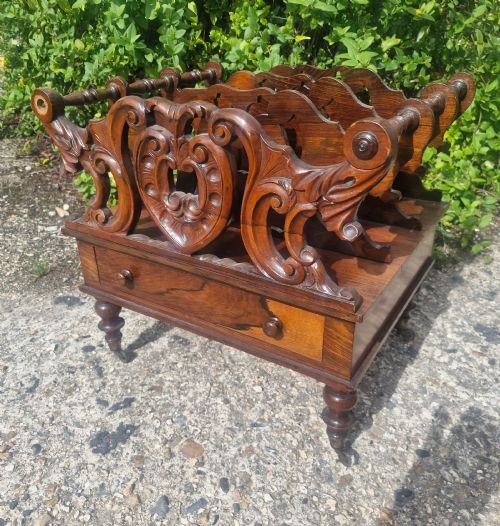
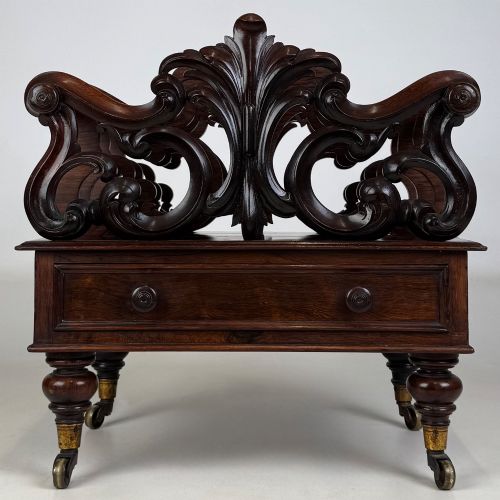
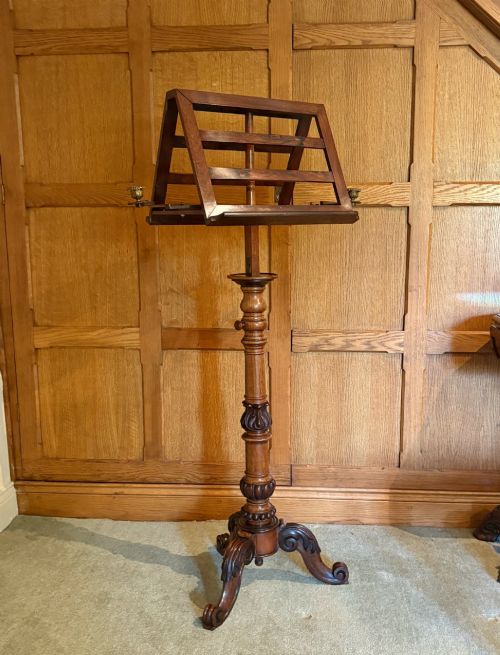
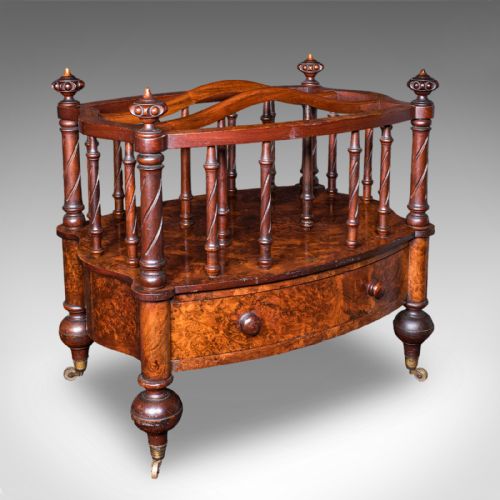
A carved wood sheet holder principally takes the form of a Canterbury, a dedicated stand designed to organise sheet music, newspapers, and periodicals within the home. These pieces emerge predominantly from the Regency, Georgian, and Victorian periods, reflecting the domestic habits of the nineteenth century.
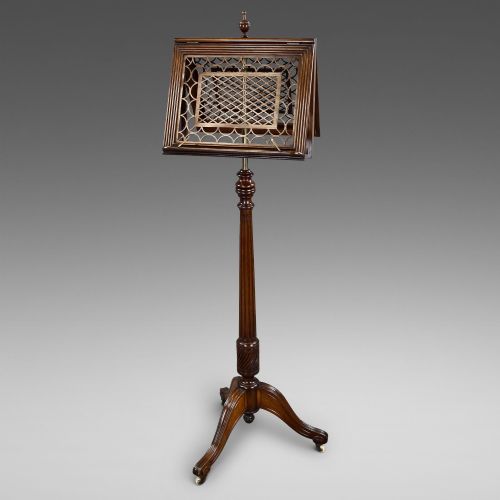
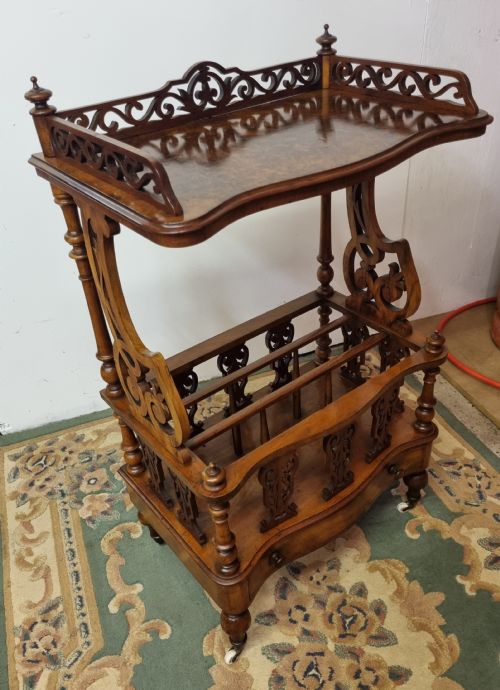
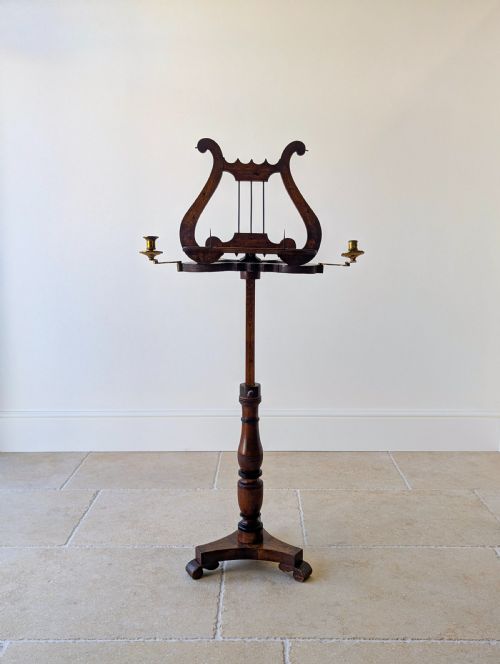
The listings here show forms ranging from multi-division newspaper racks and music stands to side tables incorporating storage and specialised portfolio stands. Rosewood and mahogany dominate the offerings, frequently accompanied by walnut and burr walnut iterations.
Buyers most commonly encounter Victorian and Regency examples featuring pierced scroll divisions, lyre motifs, and occasionally integrated work tops or drawers. These items function equally well beside a modern piano or as standalone side pieces holding contemporary magazines.
Materials and construction
Cabinet makers utilised dense, richly figured timbers such as rosewood, mahogany, walnut, and exotic gonçalo alves to build these stands, often selecting burr walnut for decorative veneer surfaces. Brass castors and ceramic components frequently appear on the feet of floor-standing models to aid mobility across carpets.
Carving and joinery define the construction, from the pierced scroll divisions of a Canterbury to the wreath-carved details and foliate designs executed by hand. Patent mechanisms and specialised fittings also feature in the material record, notably in music leaf turners and duet stands.
The selection includes Regency and Victorian pieces constructed from rosewood, mahogany, walnut, and burr walnut.
Factors of quality
Quality rests upon the selection of timber and the crispness of the carved ornamentation, such as foliate motifs or Prince of Wales feathers. Finely figured rosewood and burr walnut veneers set finer examples apart from plainer mahogany versions.
Structural integrity in the dividers and the subtlety of the turned or carved supports distinguish superior pieces. The presence of documented design influences, such as the manner of J C Loudon, elevates the standing of a piece within its period.
J C Loudon·Padbury
The Carved Wood Sheet Holder Glossary
- Canterbury
- A low stand with partitioned uprights used originally for holding sheet music and newspapers. The form dates from the eighteenth century and remained popular throughout the Victorian era.
- Duet stand
- A music stand designed to accommodate two players reading from a shared sheet or book. These often feature adjustable heights and pivoting desks.
- Lyre-form
- A decorative motif shaped like an ancient musical instrument, frequently utilised in the central splats or supports of music stands and racks.
- Gonçalo Alves
- A dense, heavily figured exotic hardwood sometimes used in Regency furniture making. It provides distinctive contrasting grain patterns.
- Serpentine shape
- A undulating curved outline applied to the tops or shelves of cabinets and stands. This contour adds visual movement and sophistication to the piece.
Carved Wood Sheet Holder: Frequently Asked Questions
What is a Canterbury used for?
A Canterbury serves primarily to hold sheet music, newspapers, and periodicals within a parlour or sitting room. The partitioned sections keep loose papers upright and accessible.
Today, buyers utilise them beside pianos or as decorative side tables for contemporary magazines and folios.
How do I date a mahogany Canterbury?
Dating relies upon observing the stylistic characteristics and timber choices associated with Georgian, Regency, and Victorian periods. Regency examples often display crisp rosewood or mahogany reeding, whilst Victorian pieces might incorporate heavier foliate carving.
Checking for construction methods, such as hand-cut dovetails or secondary timbers, further assists in narrowing down the decade of manufacture.
Are Black Forest stands different from English ones?
Black Forest stands originate from Switzerland and Germany, featuring deeply carved naturalistic motifs such as foliage, animals, or rustic branches. English pieces from the Regency and Victorian eras generally adhere to classical cabinet-making traditions with symmetrical scrolls and polished veneers.
Both styles provide sturdy storage, but their decorative carving reflects distinctly different regional aesthetics.