
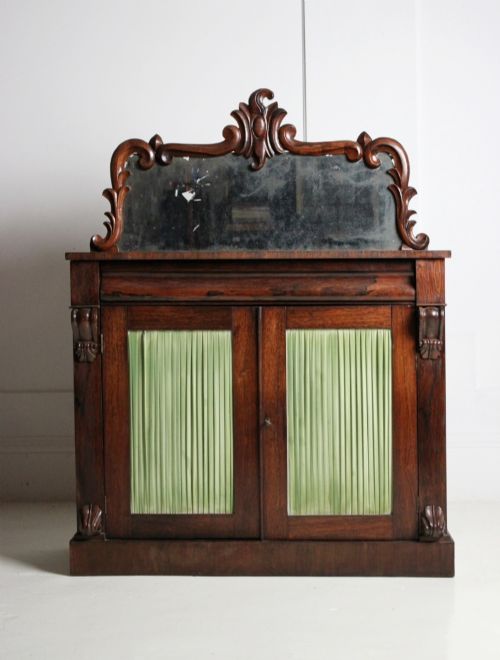
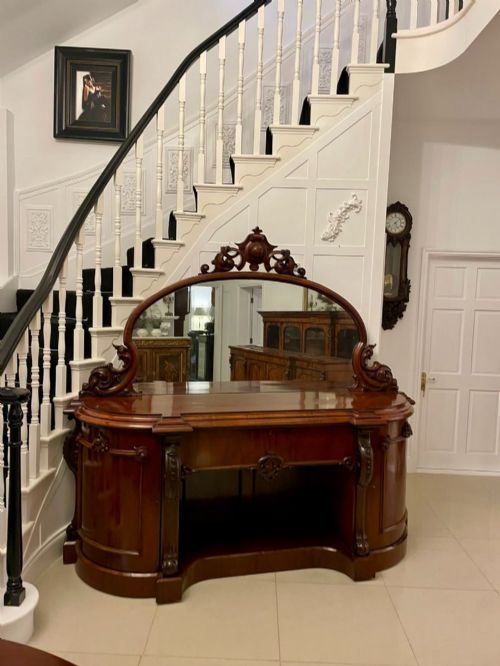
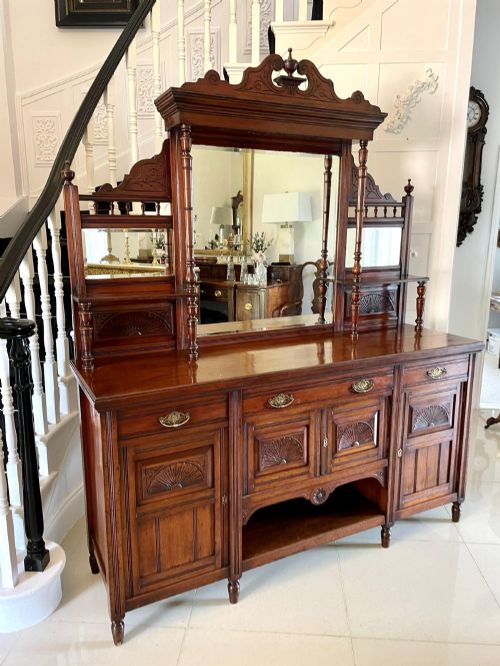
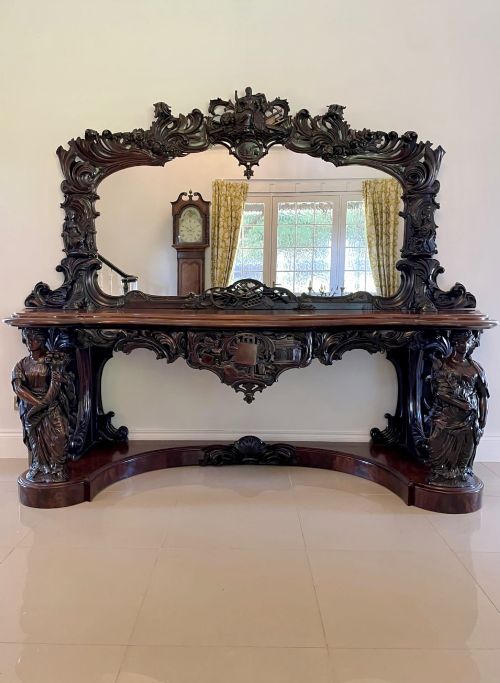
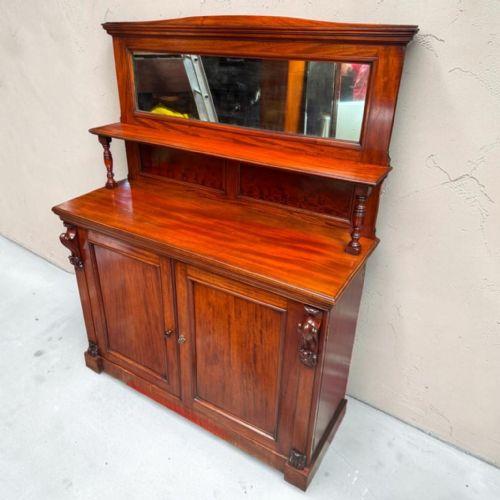
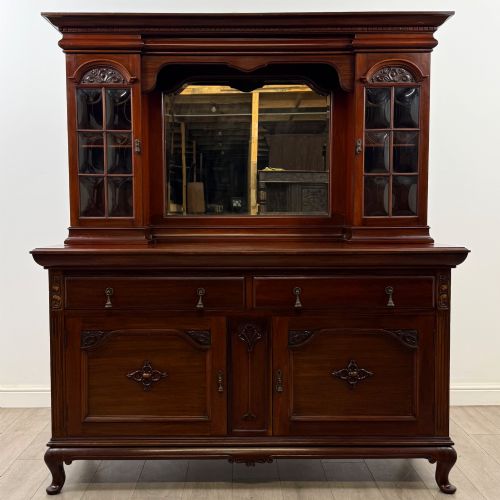
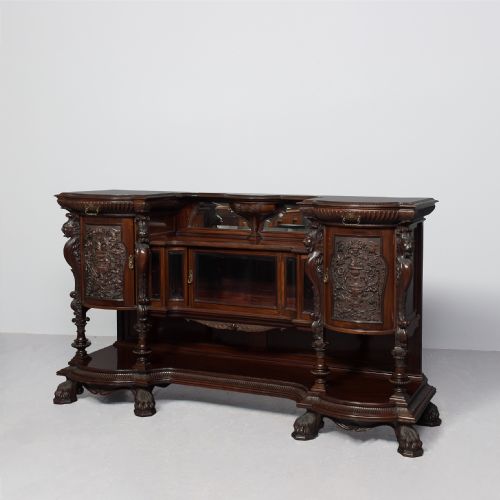
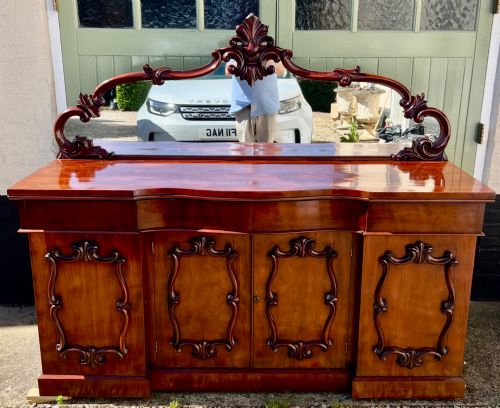

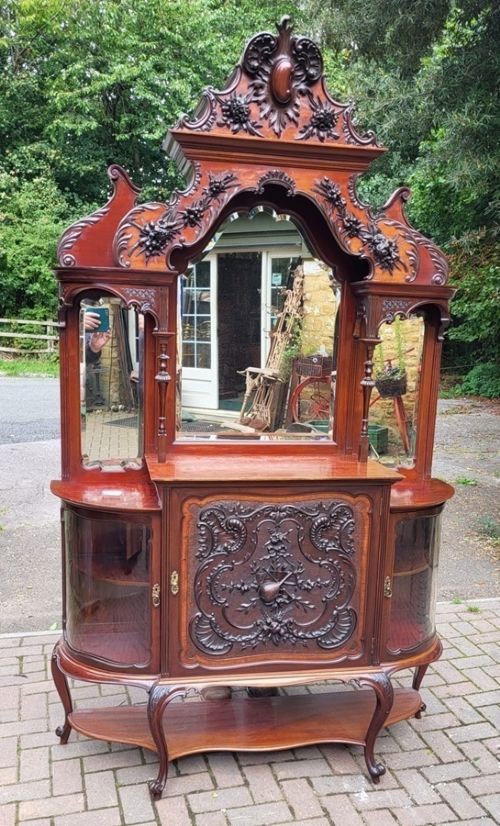


Carved Wood Mirror Back Credenza
A carved wood mirror back credenza combines deep timber carving and reflective glass to anchor a formal dining room or parlour.
Carved Wood Mirror Back Credenza
When you search for a carved wood mirror back credenza, you encounter substantial Victorian and Edwardian dining room furniture designed to display silver and store service ware. These pieces range from mid nineteenth century walnut and mahogany forms to later Edwardian interpretations.
The primary version met on this page is the Victorian mirror back sideboard or credenza, which pairs a lower cabinet base with an integrated upright mirror. Origins span British and French workshops, utilising dense hardwoods fitted with panelled doors and shelved interiors.
Object types frequently overlap in terminology with sideboards, chiffoniers, and console tables. The defining element remains the combination of carved timber framing and a central mirror plate.
Materials and construction methods
Cabinetmakers constructed these pieces primarily from solid and veneered mahogany, walnut, oak, and rosewood over sturdy secondary timbers. Dense hardwoods allowed craftsmen to carve deep relief ornamentation along cornices, drawer fronts, and mirror frames without compromising structural integrity.
Mirror glass was set into carved wooden backboards, often secured with pegged joints and brass fixings. Secondary materials included marble tops, brass hardware, and specialised inlays of pollard oak or specimen woods.
Some Victorian oak sideboards feature fierce Green Man carvings glaring out from the woodwork to protect the family dining room.
Distinctions in construction and design
The upper tier of these pieces is distinguished by the depth and crispness of the hand carving rather than machine moulding. Heavier proportions, exhibition grade timbers, and intricate Gothic or Rococo detailing separate superior examples from standard utility furniture.
Integration between the mirror back and the lower cabinet reveals the maker's skill, with better examples employing seamless joints and high grade bevelled mirror glass. The choice of figured veneers, such as pollard oak or walnut, further elevates the status of a piece.
Maple & Co
The Carved Wood Mirror Back Credenza Glossary
- Credenza
- A low dining room cabinet or sideboard, frequently featuring cupboards and a display surface. In later Victorian usage, the term often merges with mirror back sideboards.
- Chiffonier
- A compact sideboard or low cabinet equipped with a raised shelf or mirror back. These pieces were developed in the nineteenth century for smaller reception rooms.
- Gothic Revival
- An architectural and decorative style drawing on medieval motifs. Pieces in this tradition display pointed arches, trefoils, and heavy carved oak.
- Breakfront
- A piece of furniture where the central section projects forward from the flanking cabinets. This configuration creates architectural depth in large sideboards.
- Pollard Oak
- Timber taken from trees that were cut back to the trunk to encourage dense, highly figured branch growth. Cabinetmakers valued this wood for dramatic decorative veneers.
Carved Wood Mirror Back Credenza: Frequently Asked Questions
What is a carved wood mirror back credenza?
A carved wood mirror back credenza is a nineteenth or early twentieth century low storage cabinet featuring an integrated upright mirror and decorative timber carving. They were principally placed in dining rooms and formal parlours.
These items served both a practical storage function and a decorative role, reflecting light around the room while displaying household silver and ceramics.
How do I date a mirror back credenza?
Dating relies on identifying the prevailing stylistic revivals, timber choices, and construction methods recorded across Victorian and Edwardian periods. Mid nineteenth century pieces often show heavier mahogany or walnut with deep Rococo carving.
Later Edwardian examples tend to exhibit lighter proportions and simplified Arts and Crafts influences. Examining the backboards and mirror fixings also provides clues to the manufacturing decade.
Where were these pieces used in a home?
These pieces traditionally occupied the dining room or principal parlour of a large Victorian or Edwardian residence. They stood against main walls to provide surface space during formal meals.
The lower cupboards and drawers held linens, cutlery, and serving dishes, while the top surface supported decorative objects beneath the mirror.
How should I care for a historic timber credenza?
Maintenance involves keeping the furniture away from direct heat sources and fluctuating humidity to protect the solid hardwoods and delicate wood veneers. Regular dusting with a dry, soft cloth preserves the polished surface.
Avoid commercial silicone polishes and treat the timber occasionally with appropriate wax to nourish the grain. Mirror glass should be cleaned with a minimal amount of glass cleaner applied to a cloth rather than sprayed directly.