

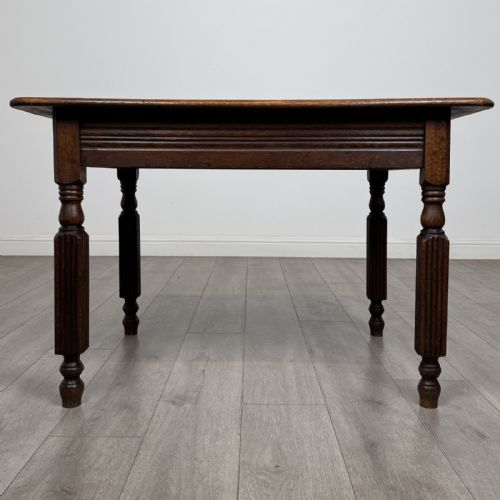
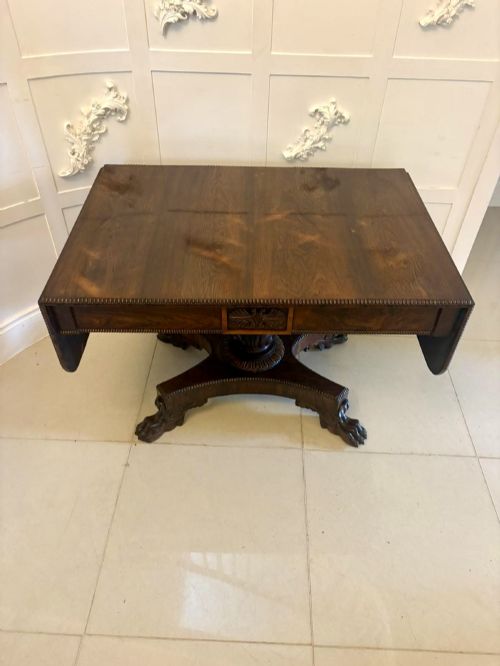
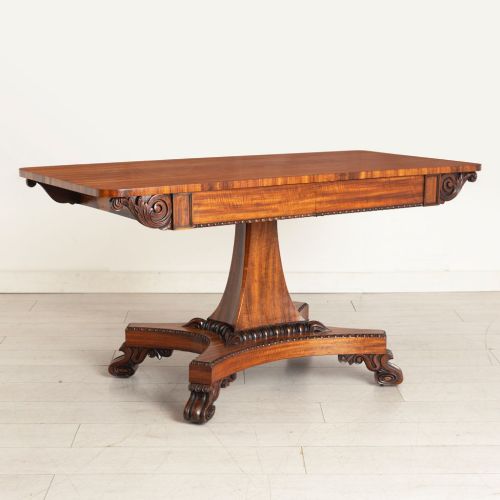
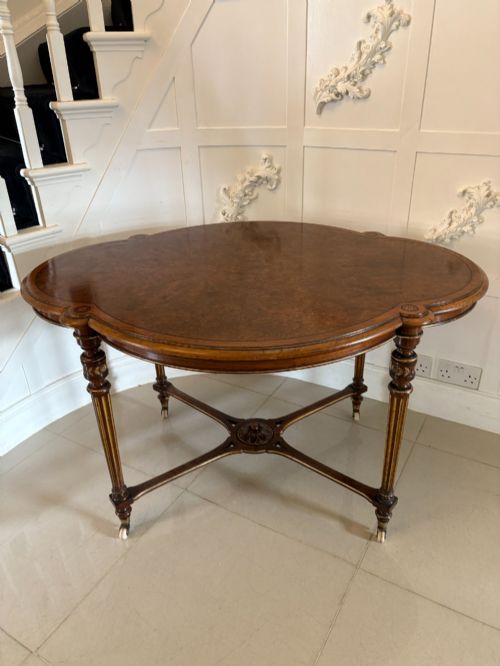
Carved Wood Library Table
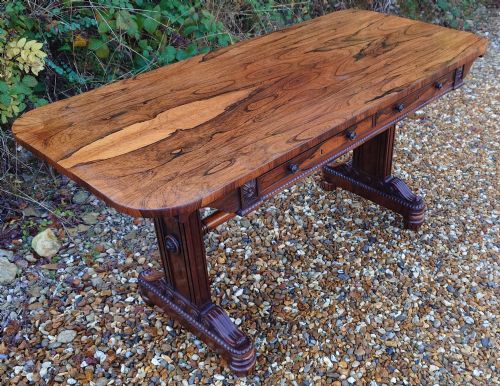
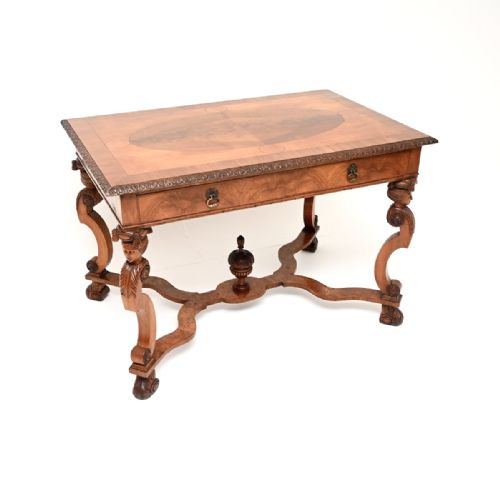
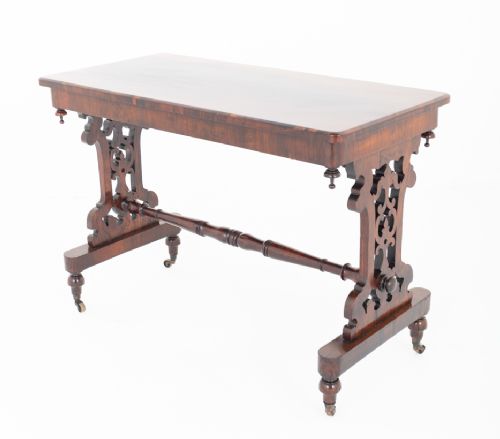
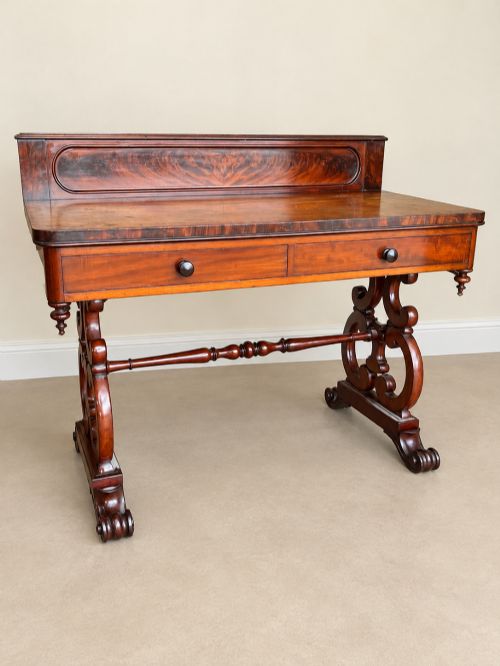
A carved wood library table brings substance and rich timber grain to a study, offering a generous writing surface supported by robust period craftsmanship.
Carved Wood Library Table
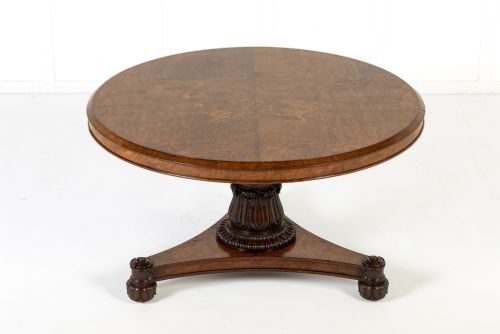
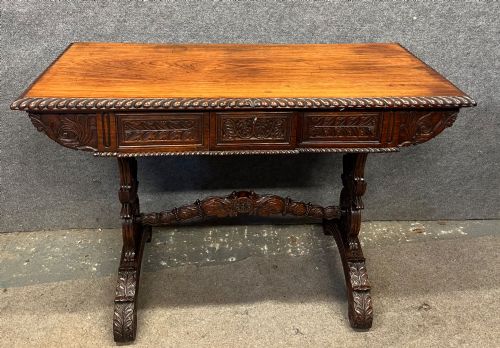
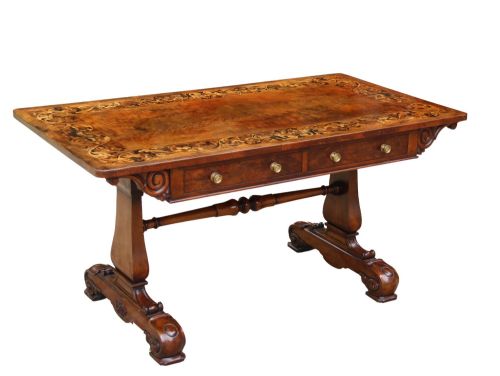
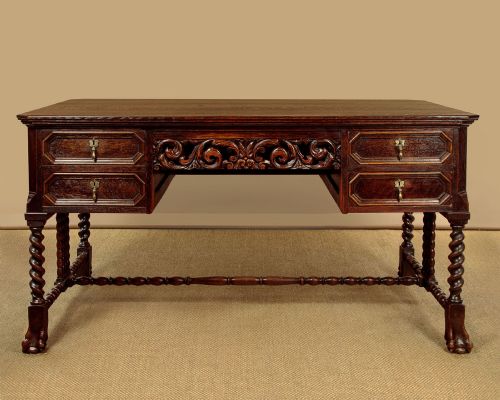
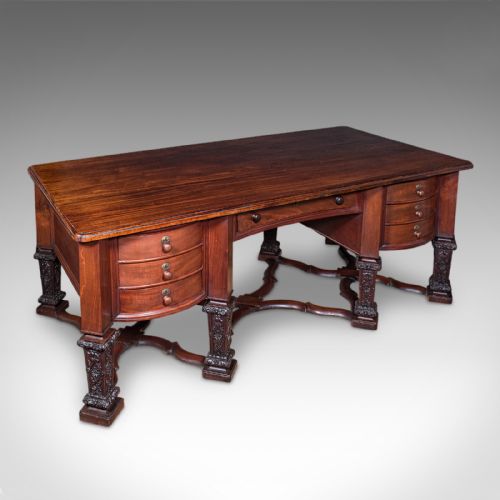
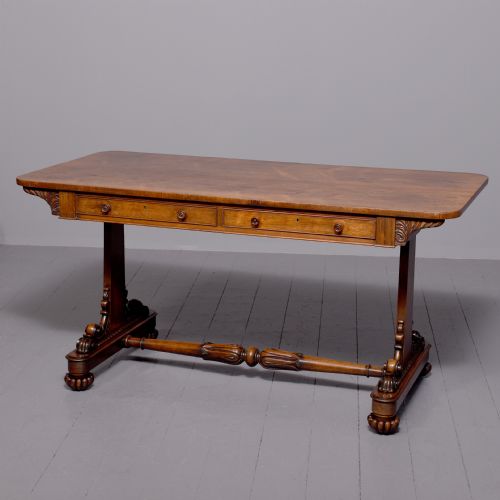
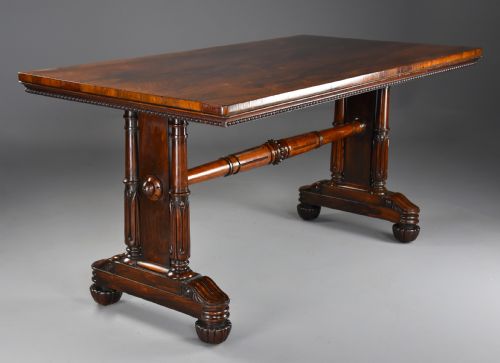
A carved wood library table is a substantial freestanding piece designed for working, reading and displaying books within a grand interior. These tables span several distinct eras, stretching from Georgian and Regency models through to Victorian, Edwardian and early twentieth century examples.
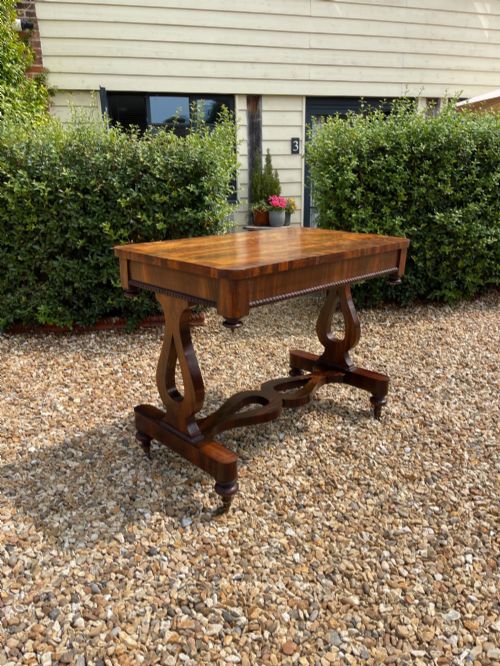
The form encompasses centre tables, writing desks, partner tables and sofa tables. Many of these surfaces feature leather inserts, carved pedestals, or turned legs intended to sit proudly in the middle of a room rather than against a wall.
Victorian and nineteenth century pieces dominate the selection, often rendered in dense hardwoods with detailed carving. Alongside these are earlier Georgian and Regency designs, plus later Edwardian interpretations built for domestic studies and home offices.
Materials and Construction
Makers utilised a rich palette of timbers, relying heavily on mahogany, rosewood, walnut, burr walnut and oak. Exotic tropical hardwoods such as goncalo alves and padauk also appear, prized for their striking grain patterns and natural warmth.
Joinery techniques relied on solid timber framing, dovetailed drawer construction and sturdy stretcher bases. Brass accents, leather writing surfaces and hand-carved decorative motifs such as lions paw feet completed the fabrication.
Carved Wood Library Table Retail Price Guide 2026
Typical asking prices for carved wood library table among the pieces listed under this phrase on Sellingantiques today, from the lower quarter to the upper quarter. They describe what is for sale here now, not the wider market.
Several tables disguise clever secret compartments within their carved frieze drawers for hiding confidential correspondence.
Gradations of Excellence
The standard of a carved wood library table rests upon the choice of timber and the depth of its figuring. Well-selected burr walnut, flame mahogany or figured rosewood elevate a piece significantly above plain or secondary woods.
Hand-carved details show the hand of a skilled artisan, where crisp execution on pedestal mounts or frieze drawers reveals superior workshop execution. The presence of secondary woods, stable construction and retained original brass or leather inserts further separate standard furnishing items from exceptional cabinet work.
Edwards & Roberts·Gillows·Gill & Reigate·Sir John Bennett
The Carved Wood Library Table Glossary
- Partner's Desk
- A large double-sided desk designed for two people to work opposite one another, featuring drawers and cupboards on both faces. These pieces often stand centrally in a library.
- Goncalo Alves
- A dense, highly figured tropical hardwood displaying dark brown and golden tones. Cabinet makers selected this exotic timber for fine Regency and nineteenth century tables.
- Sofa Table
- A small freestanding table with drop leaves at either end, traditionally placed in front of a sofa. They frequently incorporate trestle supports or twin pedestals.
- Patina
- The deep sheen and surface character acquired by timber and leather over decades of use and polishing. Good original patina indicates gentle ageing without harsh chemical stripping.
Carved Wood Library Table: Frequently Asked Questions
How do I care for the leather top on an antique table?
Leather writing surfaces require gentle cleaning with a slightly damp cloth, avoiding harsh chemical cleaners or excess moisture that could crack the hide. Regular application of specialist leather balm preserves suppleness and prevents drying.
Keep these tables away from direct heat sources and strong sunlight, which can fade both the leather insert and the surrounding wood polish.
Can a library table be used as a modern desk?
These tables adapt readily to contemporary home offices, providing ample surface area for laptops and paperwork. Their freestanding nature allows placement in the centre of a room rather than pushed against a wall.
Consider the height and kneehole clearance of nineteenth century models, as older chairs or modern ergonomic seating may require careful measurement against the table frieze.
How can I tell a Regency table from a Victorian one?
Regency tables, dating from the early nineteenth century, tend to display cleaner classical lines, rosewood or mahogany veneers, brass inlay, and sabre or pillar supports. Victorian pieces from the mid to late nineteenth century often feature heavier proportions, darker walnut or mahogany, and much more exuberant hand-carving.
Examining the secondary woods inside the drawers and the style of the turnings helps confirm the manufacturing era.