





Carved Wood Lacquer Panels
Carved wood lacquer panels are intricate East Asian and Chinoiserie artworks defined by layered surface finishes and relief carving, prized for bringing rich texture and history into a room.
Carved Wood Lacquer Panels
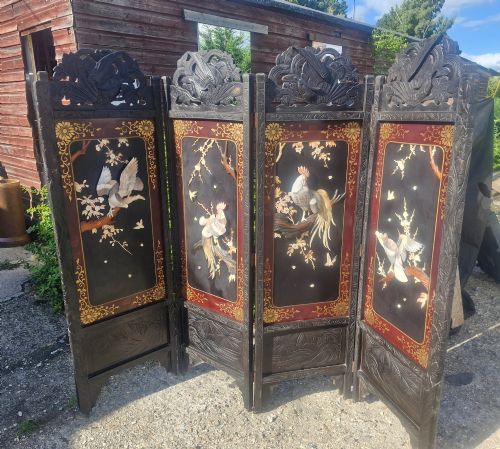
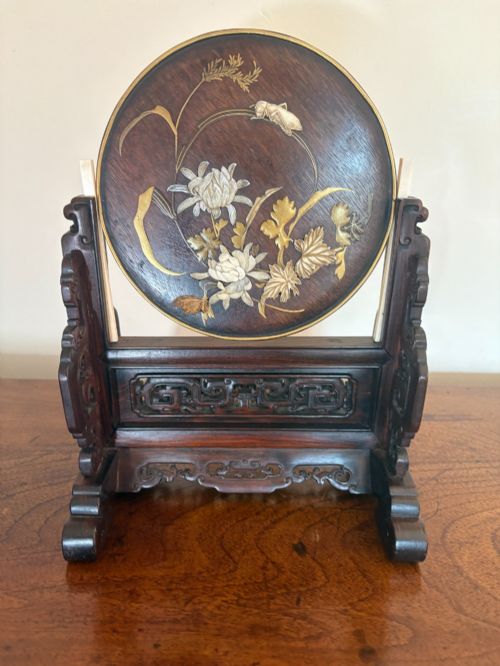
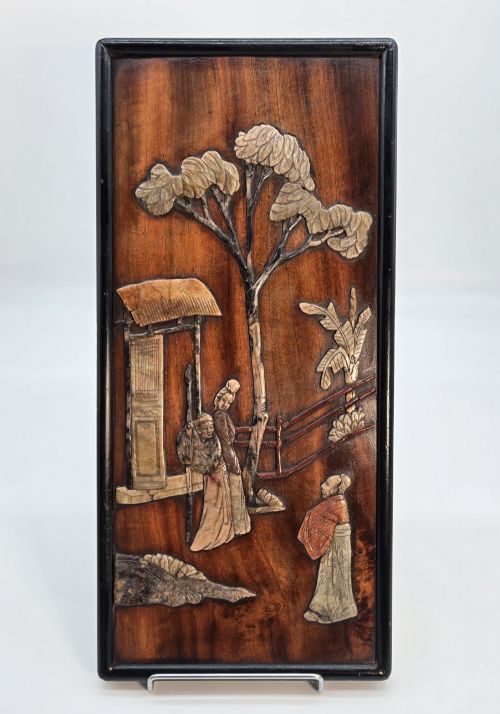
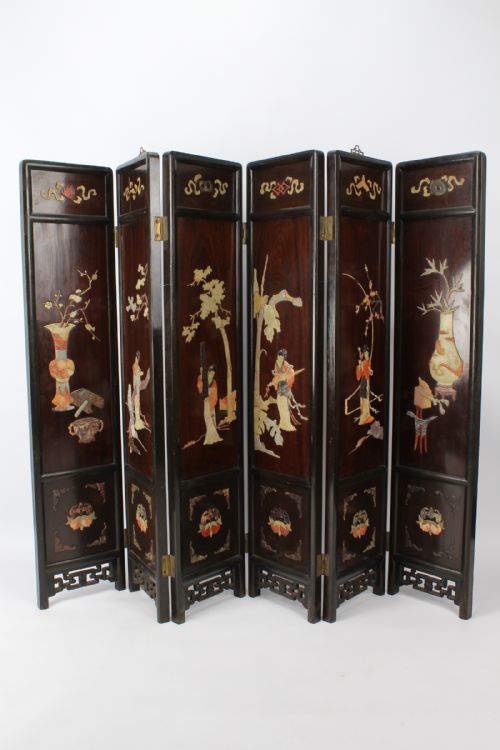
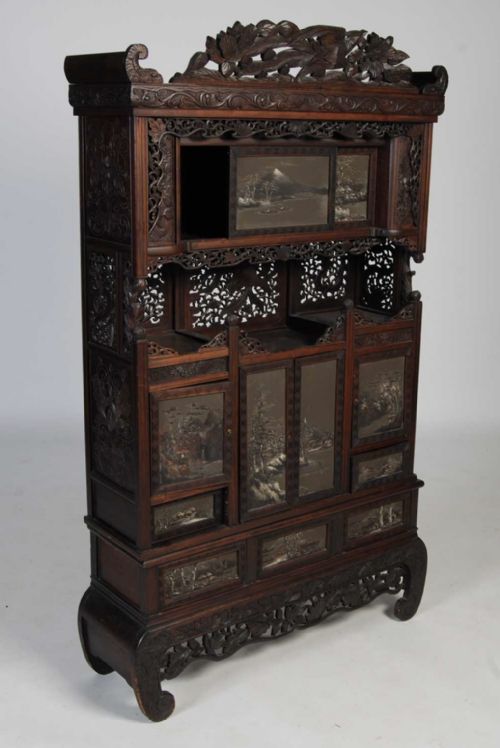
Carved wood lacquer panels encompass folding screens, wall plaques, table screens, and temple panels originating from Chinese, Japanese, and Burmese traditions. These pieces range from eighteenth-century works to mid-twentieth-century examples, showing styles such as Qing Dynasty, Meiji Period, and Chinese export Coromandel work.
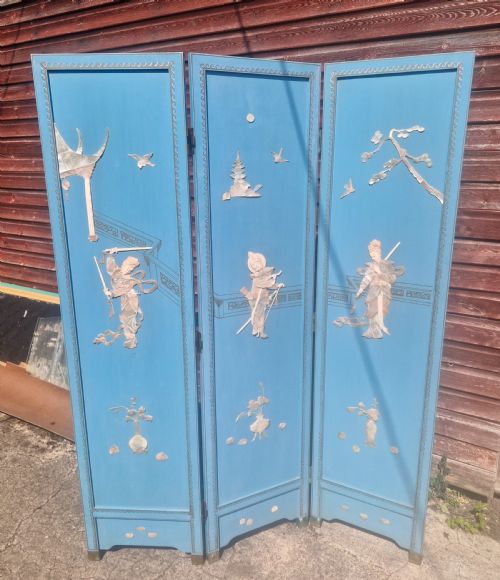
The most common forms on this page are folding screens and wall plaques, often constructed in sets of multiple panels or leaves. You will frequently encounter nineteenth-century and early twentieth-century interpretations, alongside decorative dressing screens and smaller tabletop displays.
Materials and construction
Makers utilised hardwood and various timbers as the primary substrate, applying multiple layers of lacquer to build a durable, lustrous surface. This base then received deep relief carving, revealing contrasting layers or providing a textured ground for further decoration.
Many examples incorporate inlaid elements such as bone, mother-of-pearl, hardstone, and brass to create pictorial depth and chromatic contrast. Gilding with gold leaf frequently highlights specific figures and motifs against the dark lacquer.
Listings span from 1750 to 1950, featuring materials like bone, gold leaf, and mother-of-pearl across forms from table screens to trunks.
Distinguishing quality
The distinction between standard pieces and the finest work lies in the depth and precision of the carving. Superior panels display crisp, undercut relief in the wood and meticulous detail in the applied lacquer layers.
The sophistication of the inlays also separates the range, with skilled placements of bone, hardstone, and mother-of-pearl creating expressive figural scenes. Furthermore, the coherence of the overall design, whether in a large multi-leaf screen or a paired wall plaque, determines the standing of the piece.
The Carved Wood Lacquer Panels Glossary
- Coromandel
- A type of Chinese incised lacquer ware where the design is carved into a ground of lacquer and filled with pigments or gold. This technique is also known historically as Bantam work.
- Shibayama
- A Japanese decorative technique utilising inlay of materials such as ivory, shell, and bone to form intricate pictorial subjects on a lacquer or wood base.
- Meiji Period
- The era in Japanese history spanning from 1868 to 1912, characterised by opening to Western trade and exceptionally refined craftsmanship in metalwork, lacquer, and screen production.
- Qing Dynasty
- The final imperial dynasty of China, lasting from 1644 to 1912, noted for elaborate decorative arts, rich hardwood furniture, and deep relief carving.
- Shodona
- A Japanese cabinet or display stand featuring multiple shelves, drawers, and compartments, often integrated with lacquer and carved panels.
Carved Wood Lacquer Panels: Frequently Asked Questions
How do I hang a heavy panel?
Wall plaques and temple panels require secure fixing to solid wall studs or appropriate masonry anchors due to their substantial hardwood and lacquer weight. Professional framing or hanging battens help distribute the load evenly across the structure of the panel.
Avoid hanging pieces in direct sunlight or areas subject to high humidity changes, as fluctuating environmental conditions can affect the stability of the wood and lacquer.
What is Coromandel lacquer?
Coromandel work involves coating a wooden substrate in numerous layers of dark lacquer, carving the design into the surface, and filling the recesses with colours or gold leaf. The style became popular for export screens and panels shipped through European trading companies.
These pieces often feature pictorial narratives, landscapes, or court scenes rendered with distinct layered depth.
Can folding screens be separated?
Folding screens consist of multiple panels joined by hinges, designed to function as an integrated whole. Disabling the hinges to separate them alters the original format and can compromise the edge finish of individual leaves.
Most buyers display them fully extended or partially folded to appreciate the continuous narrative across the panels.
How do I date a Japanese screen?
Dating relies on stylistic markers, construction methods, and materials, with Meiji period pieces often showing distinct naturalistic carving and refined bone inlay. Examining the joinery and the condition of the lacquer layers helps distinguish nineteenth-century production from later twentieth-century interpretations.
Documentation or historical trade labels, where present, provide additional chronological context.