






Carved Wood King Bed
A carved wood king bed brings substantial scale and historic hand-carved detail into a modern bedroom, drawing on centuries of European and colonial design.
Carved Wood King Bed
A carved wood king bed is a substantial sleeping platform defined by decorative woodwork, large proportions, and historic styling. When searching for a carved wood king bed, buyers encounter a mix of continental European bedsteads and grand British colonial pieces.
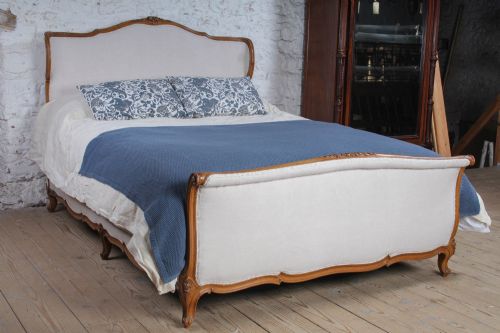
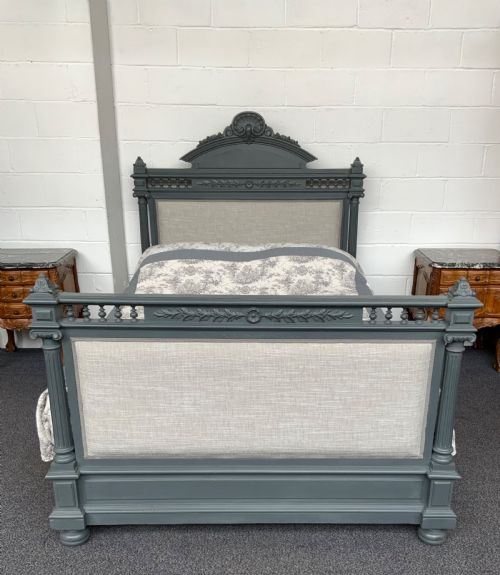
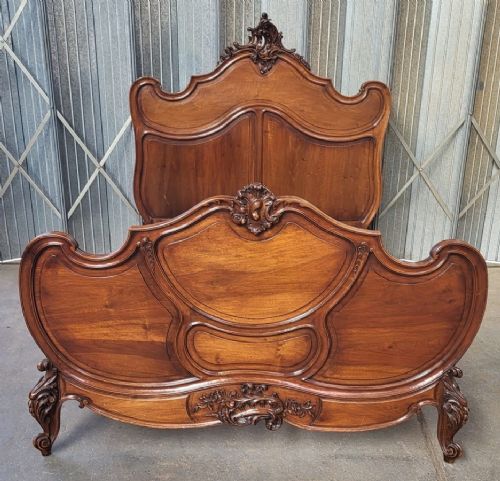
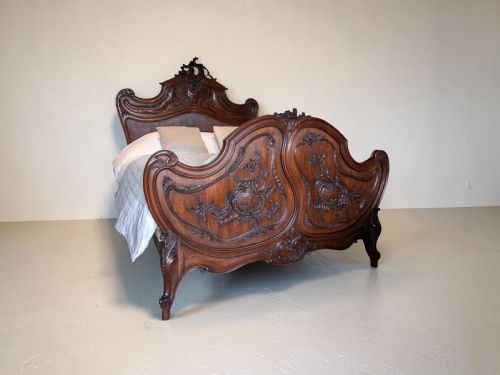
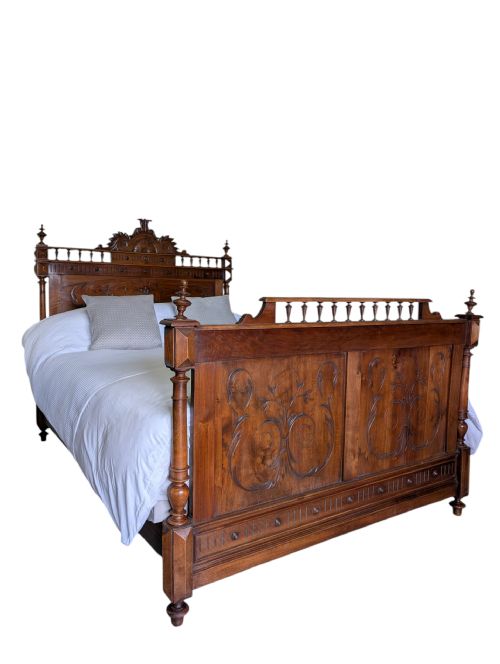
The most common versions on this page originate from French workshops spanning the late nineteenth and early twentieth centuries, particularly in Louis XV and Louis XVI styles. These continental forms frequently feature elaborate crests, painted finishes, or caned panels.
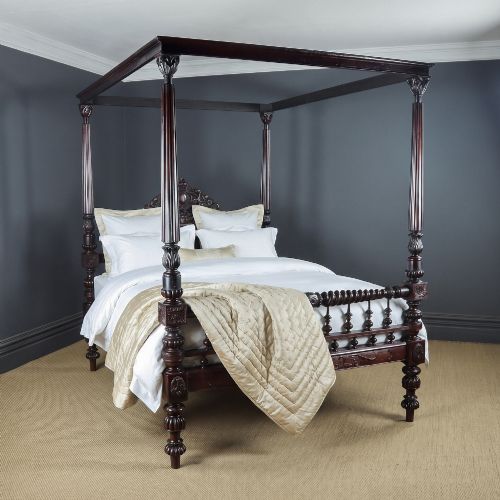
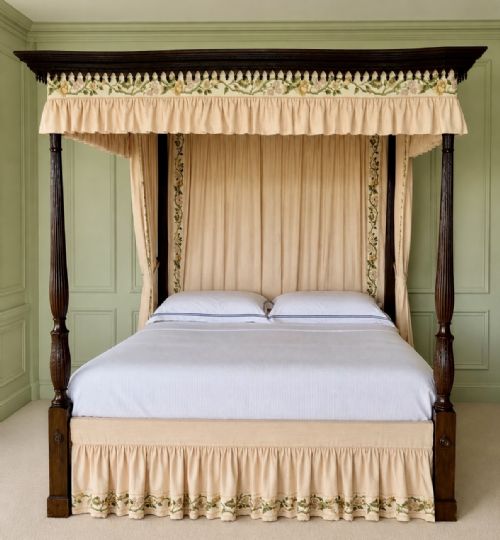
Alongside continental designs, the selection includes substantial nineteenth-century Anglo-Indian colonial four-poster beds in dense tropical timbers. English and Italian walnut or mahogany frames also appear, offering varied headboard heights and decorative carving.
How they were made
Cabinetmakers constructed these beds using dense hardwoods such as walnut, mahogany, oak, and rosewood, chosen for their structural strength and ability to hold crisp hand-carvings. Selected sections often display figured grain patterns or gilt accents applied directly to the carved timber.
Many continental frames combine solid wood structural posts with carved applied mouldings and woven cane panels. Upholstered versions utilise traditional stuffing and fabric facings, while painted or parcel-gilt examples rely on layered surface finishes over wood.
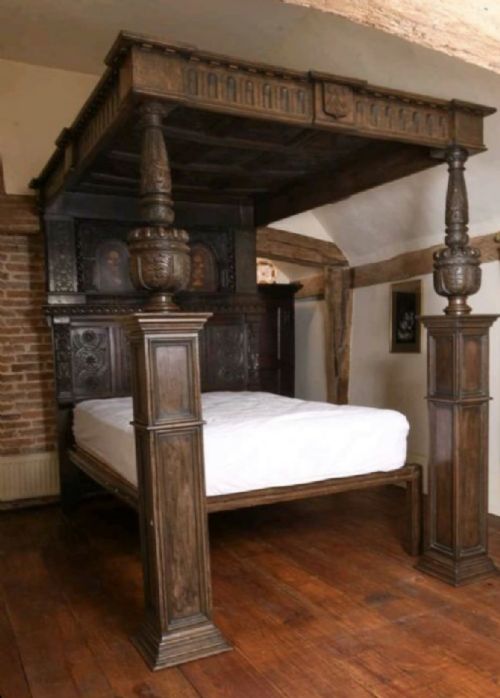
Four-poster and tester variations incorporate heavy structural posts supporting upper wooden frames, joined through traditional cabinetmaking joints to sustain the scale of the timber canopy.
Listings range from seventeenth-century oak frames to early twentieth-century French walnut and painted pieces.
What varies in quality
Quality in these beds rests primarily on the depth and crispness of the hand-carving executed by the cabinetmaker. Sharply defined acanthus leaves, scrollwork, and moulded floral motifs indicate superior craftsmanship compared to soft or mechanical shallow milling.
The selection of timber significantly influences the tier of the piece, with richly figured walnut, dense rosewood, and solid mahogany representing high-status commissions. Finer beds also maintain integrated proportions where the footboard, side rails, and headboard share a cohesive decorative language.
The Carved Wood King Bed Glossary
- Four Poster Bed
- A bed featuring four vertical corner columns that support an upper rectangular panel known as a tester.
- Tester
- The wooden canopy or ceiling structure positioned above a four-poster bed.
- Bergere
- A closed-arm French armchair style, occasionally referenced in bed designs through integrated woven cane side or headboard panels.
- Parcel Gilt
- A decoration technique where selected carved details are highlighted with thin layers of gold leaf over painted or natural wood.
- Louis XV Style
- A decorative style characterised by asymmetrical curves, naturalistic plant motifs, and rocaille ornamentation.
Carved Wood King Bed: Frequently Asked Questions
What mattress size fits these antique beds?
Many historic bedsteads were constructed to measurements that differ slightly from modern standard sizing. Buyers often adapt standard king or super king mattresses to fit within the historic wooden side rails.
Custom mattress cutting or adjustable modern slatted bases are frequently utilised to ensure contemporary comfort within antique frames.
How do I assemble a wooden bedstead?
Antique bedsteads typically rely on iron bed bolts or traditional side-rail slot fixings to join the headboard and footboard. Careful alignment of the rails ensures the frame remains square and stable.
Professional installation is often recommended for heavy four-poster structures and large timber canopies.
Can I use modern bedding with these frames?
Standard modern duvets, sheets, and pillows integrate easily with the generous proportions of these large wooden frames. The expansive headboards provide a suitable backdrop for contemporary scatter pillows and throws.
Drop-in modern slatted wooden bases sit inside the antique rails to support contemporary mattresses securely.
How do I identify French styles?
French styles like Louis XV and Louis XVI are distinguished by their carved decorative vocabulary. Louis XV designs feature flowing cabriole legs and asymmetrical scrollwork.
Louis XVI pieces display stricter geometric symmetry, straight fluted columns, and classical ribbon or floral carvings.