


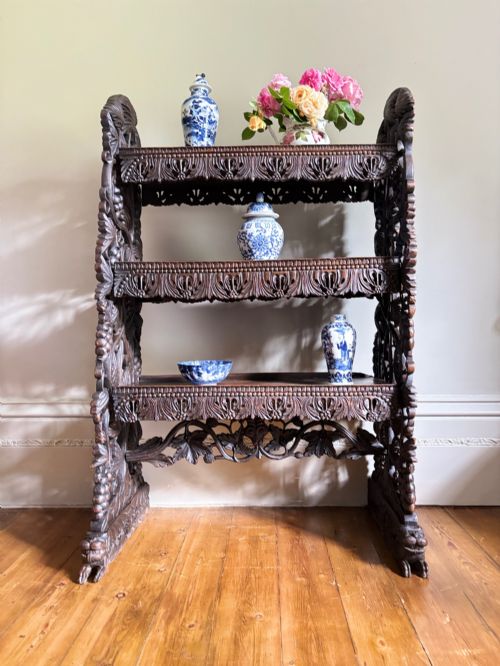
Carved Wood Display Shelf
A carved wood display shelf brings architectural interest and practical surface area to plain walls through tiered ledges.
Carved Wood Display Shelf
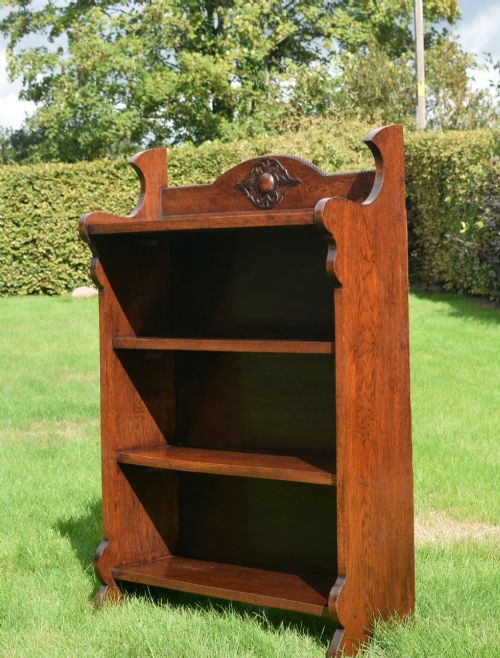
A carved wood display shelf offers a designated platform for holding books, plates, and small ornaments within domestic rooms. These items range from compact wall-hanging brackets to substantial floor-standing whatnots and bookcases.
The selections encountered here span the nineteenth and early twentieth centuries, encompassing Victorian, Edwardian, and Regency periods. Mahogany, oak, and walnut emerge as the dominant timbers among these listings.
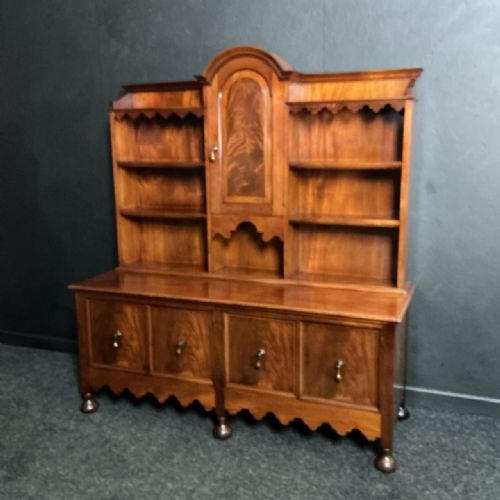
Makers and workshops utilised various regional styles, producing everything from simple pine dressers to elaborate Anglo-Indian padauk shelves and Japanese-influenced shodonas. Buyers will find both corner configurations and flat wall-mounted versions designed to maximise interior space.
Materials and construction methods
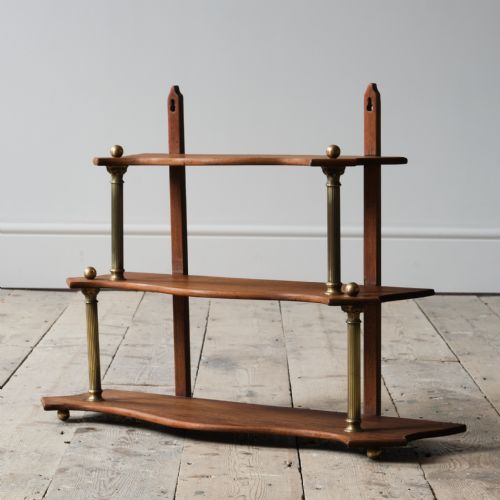
Cabinetmakers relied on dense hardwoods such as mahogany, walnut, rosewood, and oak to support the weight of books and display items over decades of use. Brass fittings and gilt highlights occasionally supplemented the timber frameworks on decorative brackets.
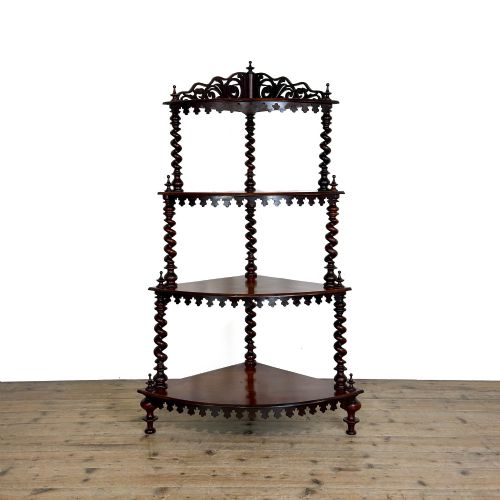
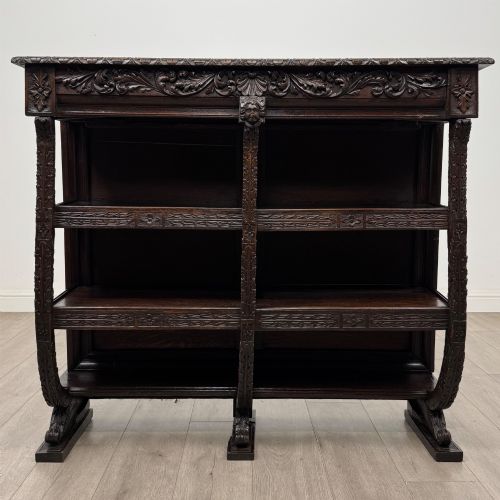
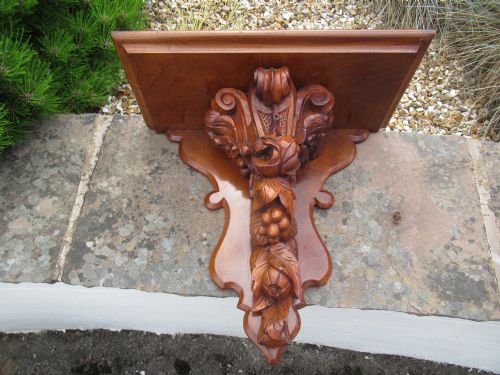
Surviving examples display manual carving techniques, with craftsmen utilising chisels to shape barley twist columns, foliate motifs, and figurative details into the solid wood. Joints were typically pegged, dovetailed, or secured with traditional adhesives depending on the period.
Listings feature items spanning the eighteenth century through the Edwardian period, utilising mahogany, walnut, oak, and rosewood.
Markers of quality and craftsmanship
Superior items separate themselves through the selection of finely figured timbers, such as burr walnut or select mahogany, rather than plain utility cuts. The depth and crispness of the hand-carving on brackets and friezes indicate the tier of workmanship involved.
Structural integrity also defines the better pieces, seen in tight joinery and stable tier alignments that prevent sagging under load. Original surfaces and patination undisturbed by modern stripping distinguish pieces preserved with care.
Trevor Page & Co·Gabriel Viardot·Edwards & Roberts
The Carved Wood Display Shelf Glossary
- Whatnot
- A moveable piece of furniture with multiple open shelves for displaying small objects or books. These units typically feature three or more tiers supported by turned columns.
- Étagère
- A French term for an open tiered shelving unit used for ornaments. It functions similarly to a whatnot but often incorporates more decorative stylistic elements.
- Shodona
- A Japanese-style display cabinet featuring asymmetrical shelving compartments and sliding doors. These pieces reflect late nineteenth-century interest in East Asian design.
- Wall bracket
- A small architectural shelf projecting from a vertical surface to support a single object. They frequently incorporate carved wood figures or scrolling foliage.
- Barley twist
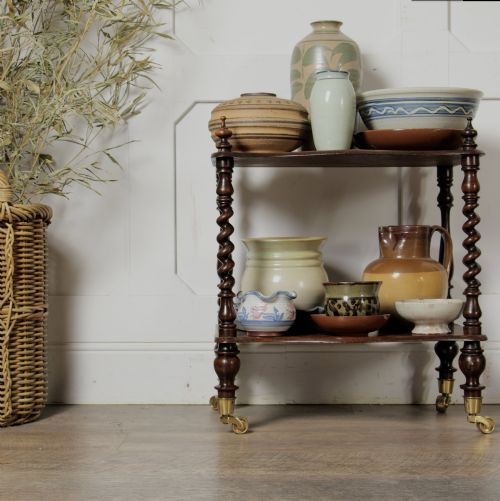
- A spiral turning technique applied to wooden columns and upright supports. This decorative form appears frequently on nineteenth-century stands.
Carved Wood Display Shelf: Frequently Asked Questions
How do I hang a wall shelf safely?
Check the weight of the timber and locate solid wall studs or masonry before attempting installation. Use appropriate fixings suited to the specific wall type to ensure secure support.
Distribute weight evenly across the tiers once mounted to maintain long-term stability and prevent strain on the historical fixings or brackets.
Were these shelves used for books?
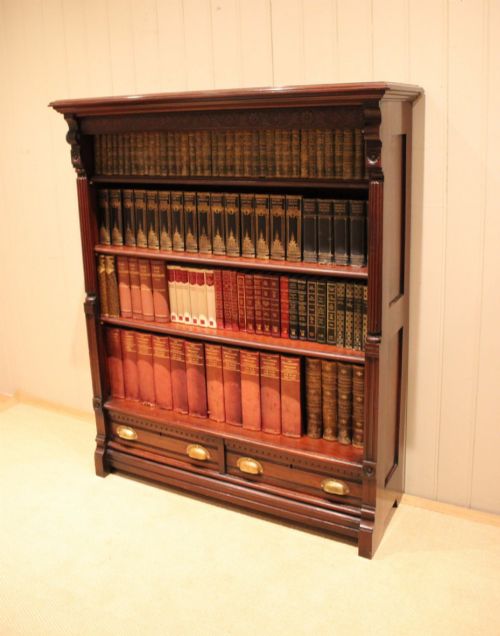
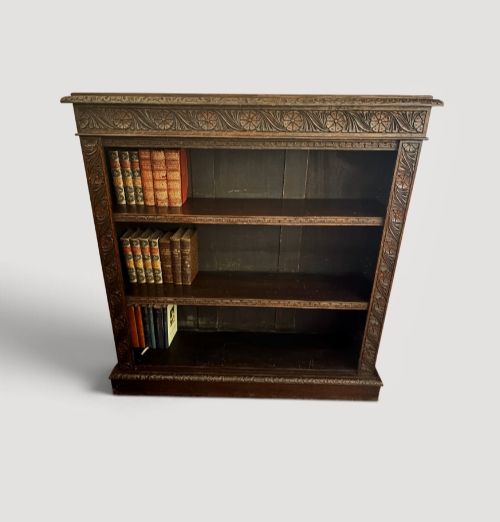
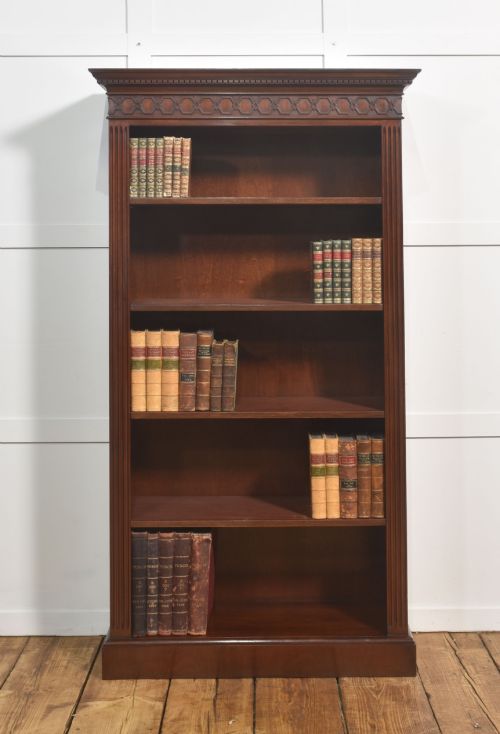
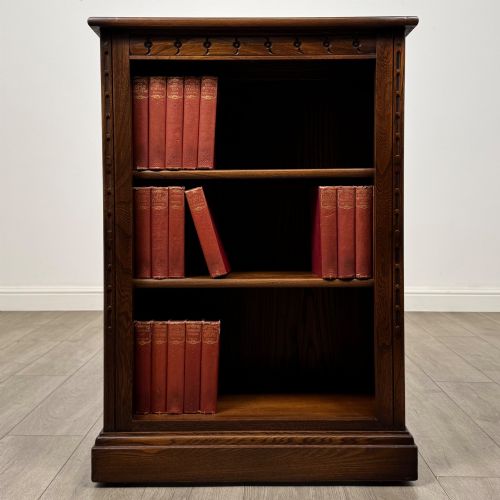
Many sturdy open bookcases and multi-tiered units from the nineteenth century were constructed specifically to hold circulating libraries and heavy volumes. Adjustable shelving systems allowed owners to customize shelf heights for varying book sizes.
Smaller bracket shelves and corner whatnot units were generally intended for decorative ceramics, clocks, or small ornaments rather than heavy literature.
How do I care for antique wood?
Dust the carved surfaces regularly with a soft, dry cloth to prevent particulate buildup within intricate recesses. Avoid placing wooden items near direct heat sources or strong sunlight to prevent warping and fading.
Apply traditional wax polish sparingly only when the timber appears dry, buffing gently to maintain the natural finish without creating a heavy buildup.
How do I tell Victorian from Edwardian?
Victorian pieces often display heavier timber sections, darker finishes, and dense ornamentation such as elaborate carving or barley twist columns. Walnut and rosewood frequently feature prominently in these mid-to-late nineteenth-century examples.
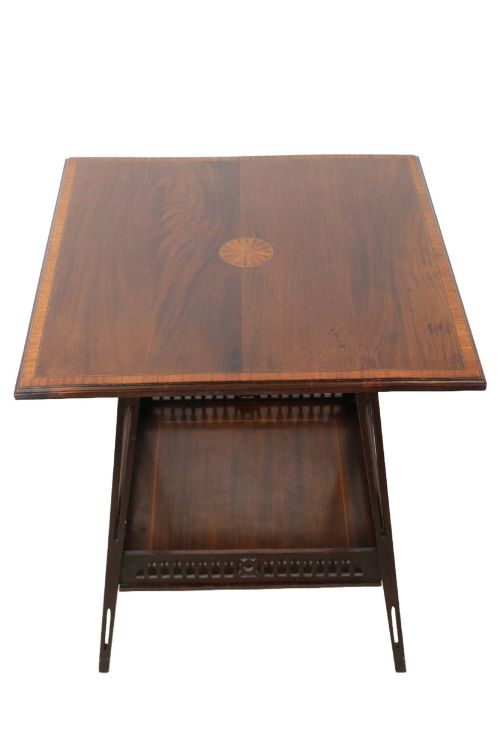
Edwardian items tend to present lighter proportions, brighter mahogany tones, and occasionally inlaid stringing reflecting a shift toward neoclassical revival styles at the turn of the century.