


Carved Wood Cellarette
A carved wood cellarette is a substantive piece designed for holding wine and spirits, appearing here primarily in mahogany across Georgian, Regency, and Victorian periods.
Carved Wood Cellarette
When searching for a carved wood cellarette, a buyer encounters substantial low-slung vessels and cabinets designed to hold bottles near the dining table. The pieces on this page span the 18th century through to the early 20th century, encompassing Regency sarcophagus forms and Victorian iterations.
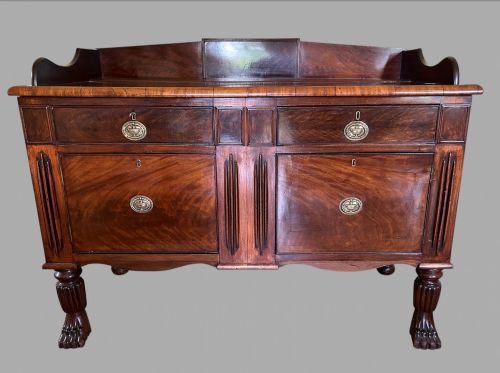
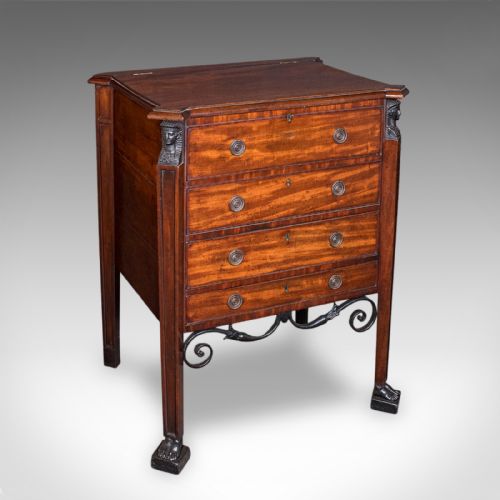
Mahogany dominates the offerings, appearing alongside flame mahogany, burr maple, burr elm, and padouk. Forms range from classical sarcophagus shapes with paw feet to sideboards, teapoys, and cocktail cabinets.
Origin points lean towards English workshops, alongside specific regional variations such as Scottish examples and Anglo-Indian pieces. These vessels served the practical domestic function of keeping wine cool or storing spirits securely before the general adoption of fitted dining room cellars.
How they were made
Cabinet makers utilised dense hardwoods like mahogany and padouk, selected for their stability and capacity to take crisp carving. Timber preparation involved careful selection of figured grains, including flame mahogany and burr maple veneers.
Structural integrity relied on solid framing supplemented by brass linings, iron hardware, and occasionally lead inserts to hold ice and bottles. Joinery matched the heavy service demands placed upon wine coolers, integrating robust feet and applied mouldings.
Listings span from the 18th century through to the 1920s, featuring mahogany, burr maple, padouk, and iron elements.
What varies in quality
The standard of carving and the selection of timber dictate the distinction between standard utilitarian pieces and those of finer execution. Figured veneers, such as flame mahogany or burr elm, indicate greater attention to aesthetic presentation by the maker.
Proportion and the integration of classical details, such as paw feet or Egyptian revival motifs, separate routine workshop output from distinguished examples. Original hardware and internal linings preserve the integrity of the piece more effectively than later replacements.
Freemans of Norwich·Maples & Co
The Carved Wood Cellarette Glossary
- Cellarette
- A lockable container used for holding bottles of wine or spirits in the dining room. They often stood on the floor beneath a sideboard or possessed their own integrated stand.
- Sarcophagus form
- A monumental container shape tapering slightly towards the base, inspired by ancient stone coffins. This style gained popularity during the Regency period for large wine coolers.
- Teapoy
- A small stand or table fitted with containers for holding tea or spirits. These pieces frequently feature decorative timber veneers and internal compartments.
- Padouk
- A heavy tropical hardwood valued for its durability and rich reddish-brown colour. It appears in Anglo-Indian furniture forms.
- Flame mahogany
- Timber cut to reveal a flickering, undulating grain pattern. Cabinet makers used this veneer on prominent exterior surfaces to create visual movement.
Carved Wood Cellarette: Frequently Asked Questions
What is a cellarette?
A cellarette is a specialised container built to store bottles of wine and spirits safely within the dining room.
Historically, these pieces kept provisions close at hand before the widespread installation of built-in dining room storage.
How were cellarettes used?
They functioned as portable cellars, holding wine bottles either upright or on their sides, sometimes packed with ice.
Servants accessed the locked contents during meals to replenish decanters on the dining table or sideboard.
Where should I place a cellarette?
These substantial wooden pieces sit well in a dining room or hallway, functioning as standalone focal points or serving surfaces.
Their low profile makes them suitable for positioning beneath windows or alongside larger sideboards and buffets.
How do I distinguish Regency styles?
Regency examples frequently adopt classical sarcophagus proportions, incorporating architectural motifs, paw feet, and bold mahogany veneers.
Later Victorian versions often display heavier carving and more exuberant ornamentation influenced by revival tastes.