



Carved Wood Candelabra
Carved wood candelabra bring warmth and sculptural presence to a room, offering tactile artistry that mass-produced metalwork simply cannot replicate.
Carved Wood Candelabra
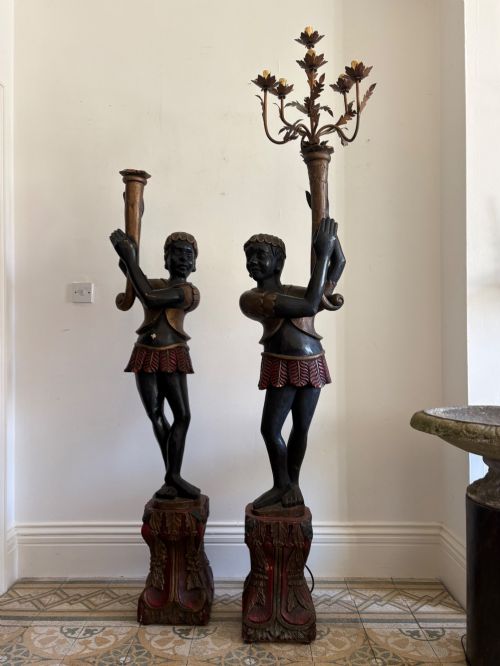
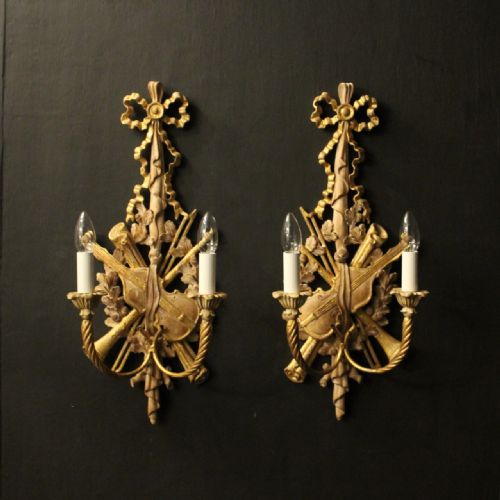
When you search for carved wood candelabra, you encounter a diverse range of lighting and decorative objects spanning the eighteenth, nineteenth, and early twentieth centuries. These pieces appear frequently as matched pairs, taking forms from wall sconces and twin-arm wall lights to table-standing candelabra and figural supports.
The aesthetic reaches across distinct European regional traditions, drawing on Italian Baroque, Venetian Rococo, Florentine, French Chateau, and Gothic Revival styles. Alongside functional candle holders, the selection includes related items such as pricket chandeliers, architectural panels, and Black Forest garnitures.
On this page, you are most likely to meet nineteenth-century Italian and French examples, particularly giltwood wall lights and carved figures adapted for lighting. These items combine utility with elaborate ornamentation, reflecting the interior tastes of their respective periods.
How they were made
Maker workshops relied fundamentally on timber as a substrate, shaping it through manual carving to achieve intricate foliage, scrolls, and figural details. Artisans often applied a layer of gesso over the wood to create a smooth, refined surface suitable for subsequent decoration.
Surface finish defines much of the visual character in these listings, utilising gold leaf, silver giltwood, polychrome paint, and tole elements. Metal components frequently reinforce the structural arms and candle sockets, combining durability with decorative timber work.
Carved Wood Candelabra Retail Price Guide 2026
Typical asking prices for carved wood candelabra among the pieces listed under this phrase on Sellingantiques today, from the lower quarter to the upper quarter. They describe what is for sale here now, not the wider market.
Design styles represented include Venetian Rococo, French Chateau, Italian Baroque, and Gothic Revival across various wall lights and candelabra.
What varies in quality
The distinction between ordinary and exceptional pieces lies primarily in the depth and precision of the manual carving. Finer examples exhibit crisp undercut foliage, balanced proportions, and expressive figural work that show the distinct hand of a skilled artisan rather than mechanical replication.
The integrity and application of the original surface finishes also dictate overall quality. Pieces retaining well-preserved gold leaf, authentic polychrome paint, or undisturbed gesso command greater appreciation than those with heavy overpainting or compromised patination.
The Carved Wood Candelabra Glossary
- Giltwood
- Timber that has been coated with fine gold leaf or gilt powder over a prepared gesso ground. This technique creates a luminous, reflective surface characteristic of high-status furnishings from the baroque and rococo periods.
- Gesso
- A plaster-like mixture applied to wood surfaces to prepare them for gilding or painting. It fills grain and allows artisans to carve or stamp fine relief details before finishing.
- Polychrome paint
- Decoration executed in multiple colours directly onto the carved wooden surface. It appears frequently on Italian and folk-art pieces to simulate naturalism or enhance decorative schemes.
- Pricket
- A sharp metal spike set in the centre of a candle plate to secure a large candle, rather than a socket that holds the base. This format often appears on ecclesiastical or earlier nineteenth-century chandeliers and candelabra.
Carved Wood Candelabra: Frequently Asked Questions
Are these candelabra wired for electricity?
Many historical wall lights and candelabra have been adapted for electric lighting over time while retaining their original wooden bodies. Some examples remain purely for candle use, so checking individual listings clarifies the current wiring status.
Conversion back to candles or updating electric fittings should be done carefully to preserve the surrounding carved wood.
How do I clean carved giltwood surfaces?
Dusting requires a very soft, dry brush or feather duster to avoid disturbing delicate gesso and gold leaf layers. Moisture and chemical cleaners can strip historic finishes and should be strictly avoided.
Professional conservators handle deeper cleaning if grime obscures the original surface patination.
How can I tell Italian pieces from French ones?
Italian pieces often lean towards exuberant Baroque or Florentine giltwood scrollwork and polychrome finishes. French examples frequently display refined Rococo Revival or chateau elegance, sometimes incorporating silver gilt or distinct figural motifs like cherubs.
Comparing the specific carving style and decorative palette helps differentiate regional workshops.