
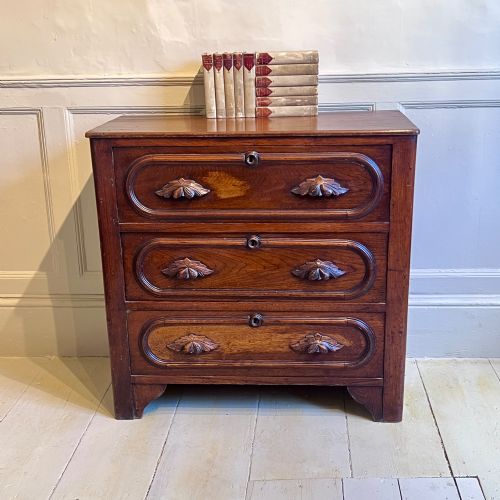
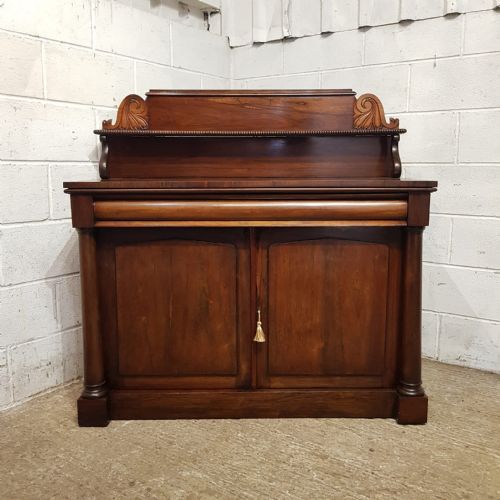

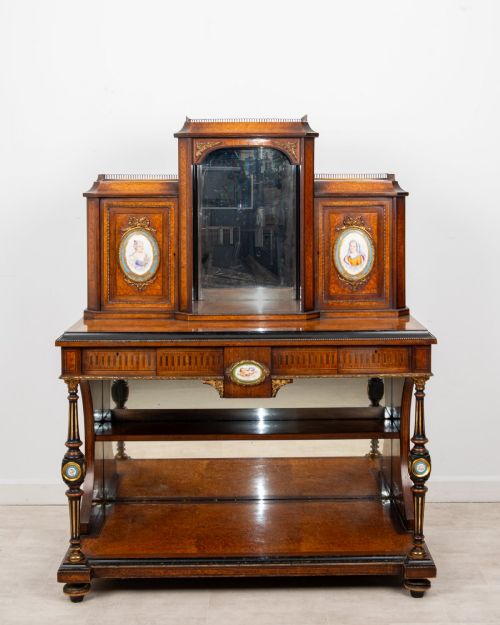
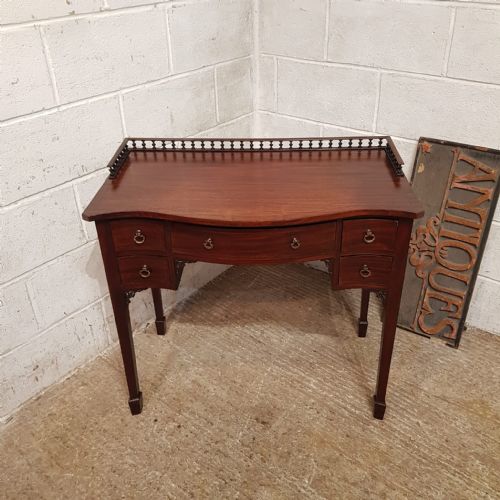


Carved Wood Bureau
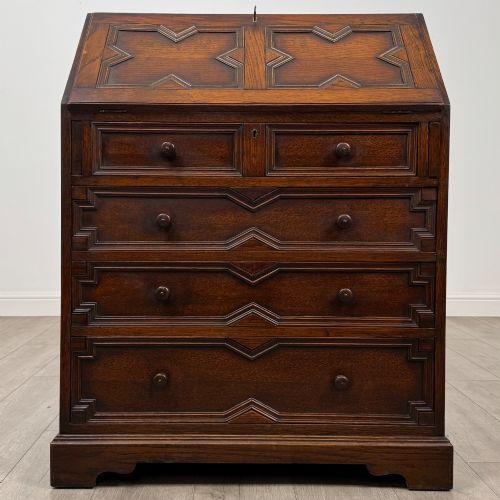
A carved wood bureau combines a sloping writing flap with storage, offering a practical writing space that conceals correspondence.
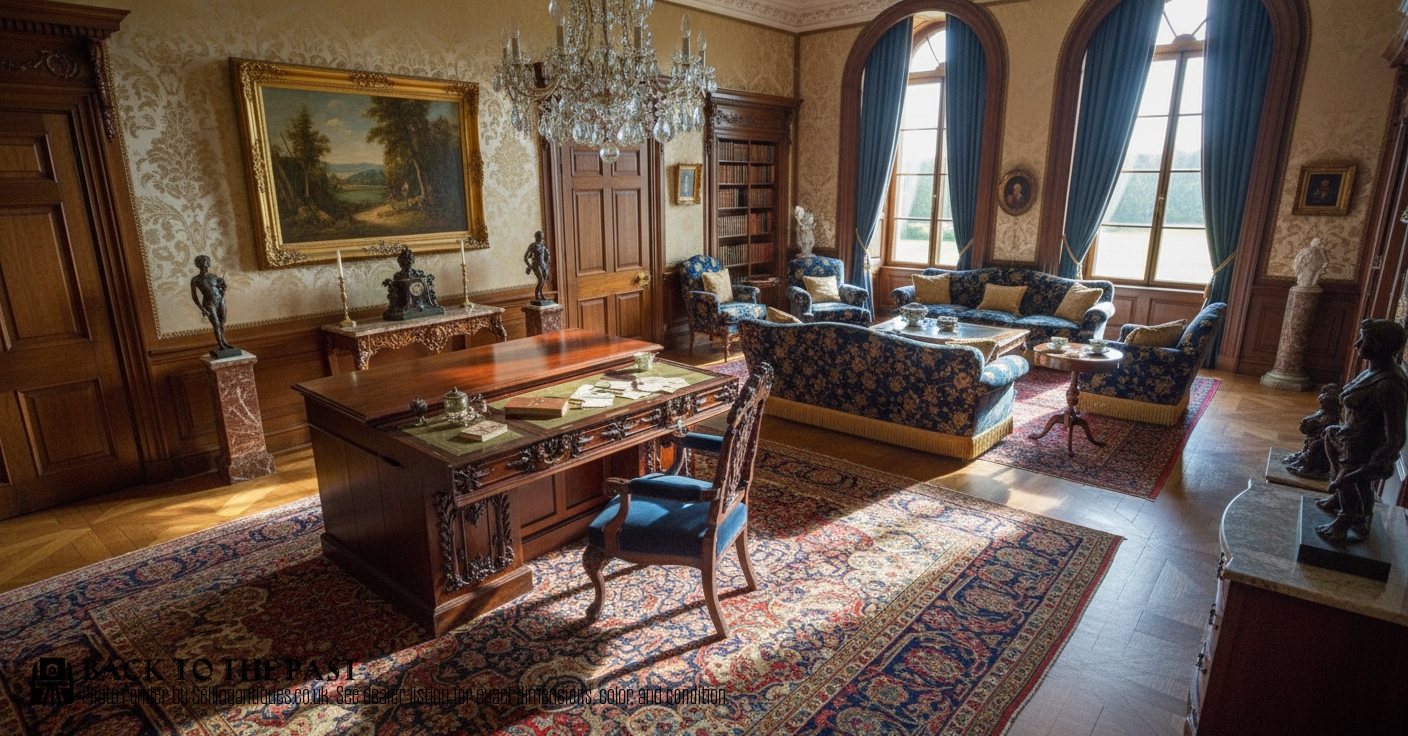
Carved Wood Bureau
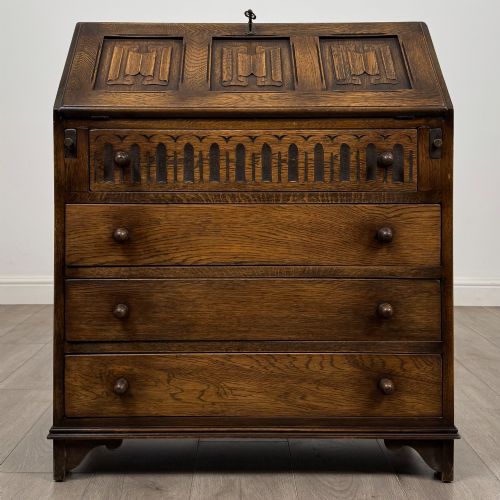
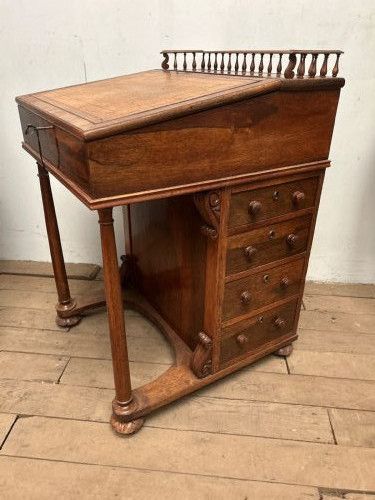
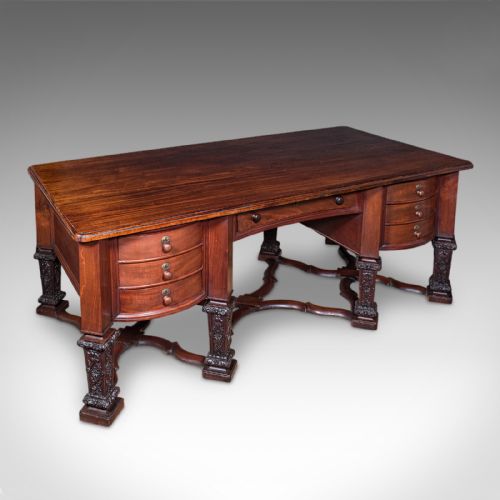
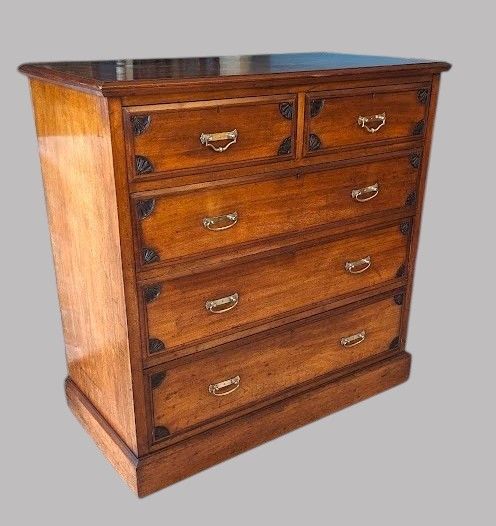
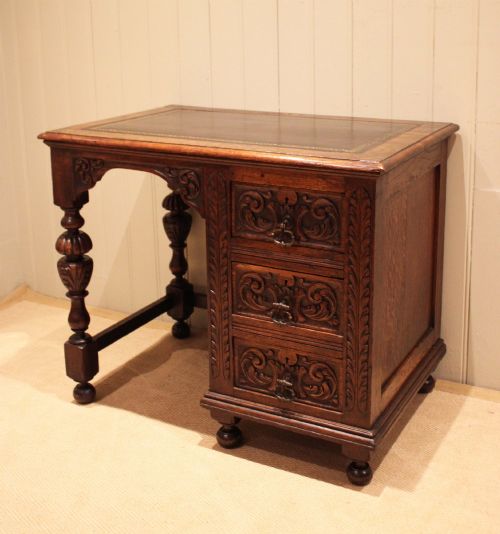
Oak and mahogany dominate the examples, often enhanced by elaborate carving, linenfold panels, or floral marquetry. Variants include bureau bookcases with upper shelving units and compact Davenport forms in rosewood.
Buyers encounter regional interpretations ranging from Dutch burr walnut designs to Chinese carved huali wood pieces. The domestic varieties focus heavily on solid oak and figured mahogany construction.
Materials and construction methods
Cabinet makers utilised dense hardwoods like oak, mahogany, and rosewood, applying veneers of burr walnut, amboyna, or flame mahogany for visual depth. Brass hardware, leather writing inserts, and glass cabinet doors complete the construction of these desks.
Carpenters joined structural elements using traditional techniques while incorporating decorative relief carving, floral inlay, and moulded linenfold panels directly into the timber.
Some writing desks conceal secret compartments behind pigeonholes for keeping letters safe.
Distinctions in craftsmanship
Quality rests in the selection of figured timber veneers and the precision of the joinery within the internal pigeonholes and drawer linings. Hand-carved relief work demonstrates greater depth and control than mechanical production.
The integrity of the fall-front hinges and the smoothness of the internal writing surface distinguish standard utility pieces from exhibition items.
George Faulkner Armitage·Étienne Kohlmann
The Carved Wood Bureau Glossary
- Bureau
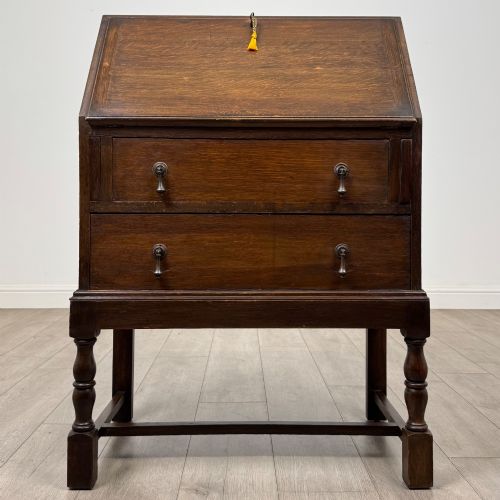
- A writing desk featuring a sloping hinged lid that covers fitted interior compartments. It often stands above a chest of drawers.
- Linenfold
- A style of relief carving that imitates folded linen cloth, frequently seen on oak panels. This decorative motif appears often on pieces from the Edwardian period.
- Marquetry
- Decorative patterns formed by fitting contrasting veneer slices onto a structural carcase. Floral and geometric designs illustrate this technique.
- Secretaire
- A piece of furniture containing a built-in writing drawer or drop-front writing compartment. It conceals small drawers and pigeonholes.
- Davenport
- A compact writing desk with a sloped top and drawers accessed from the side. Rosewood and mahogany serve as common timbers for this form.
Carved Wood Bureau: Frequently Asked Questions
What is a carved wood bureau?
A carved wood bureau is a traditional writing desk featuring a sloping fall-front lid that opens to form a writing surface above drawer storage.
These pieces range from oak vernacular furniture to mahogany examples incorporating intricate marquetry and relief carving.
How do I date a wooden bureau?
Dating relies on examining the timber species, secondary woods used in drawer construction, and stylistic revival motifs. Oak points towards earlier or revival periods, while mahogany and rosewood often indicate Georgian or Victorian eras.
Hardware styles and dovetail construction methods offer further clues to the manufacturing decade.
Where were bureaux placed?
Bureaux served as functional writing and storage furniture in domestic reception rooms, parlours, and private studies. The drop-front allowed owners to secure private correspondence and account books when closed.
Compact forms suited smaller chambers where a full-sized library desk proved impractical.
How do I maintain the wood surface?
Maintenance involves applying microcrystalline wax to nourish the timber and protect the polished finish from moisture and direct sunlight. Avoid placing wooden desks near direct heat sources to prevent veneer lifting.
Gentle dusting with a soft, dry cloth preserves the carved details and inlay.