

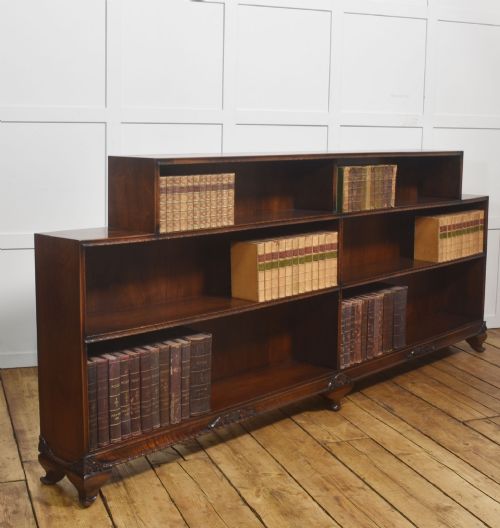
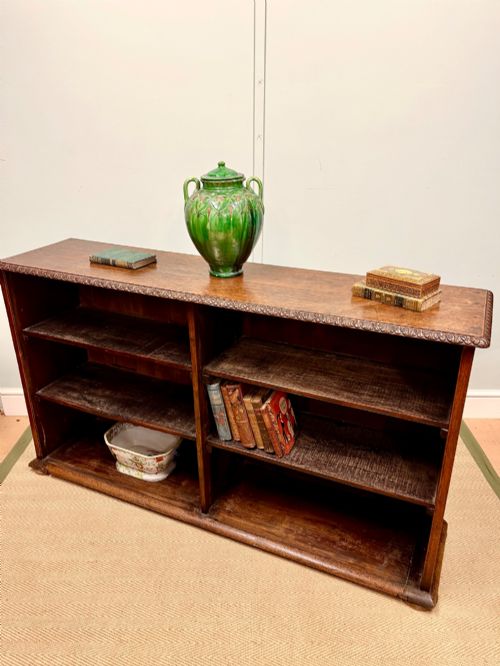
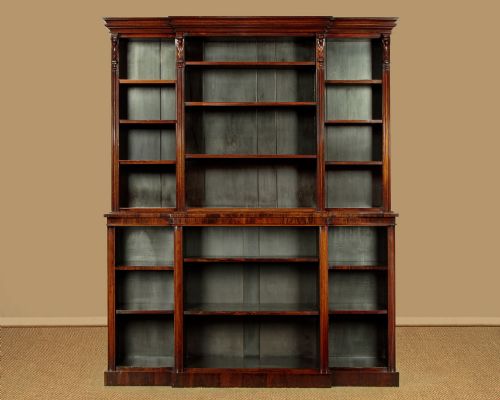
Carved Wood Bookcase Shelves
These carved wood bookcase shelves bring character to a room, offering practical storage alongside rich timber grain and period detail.
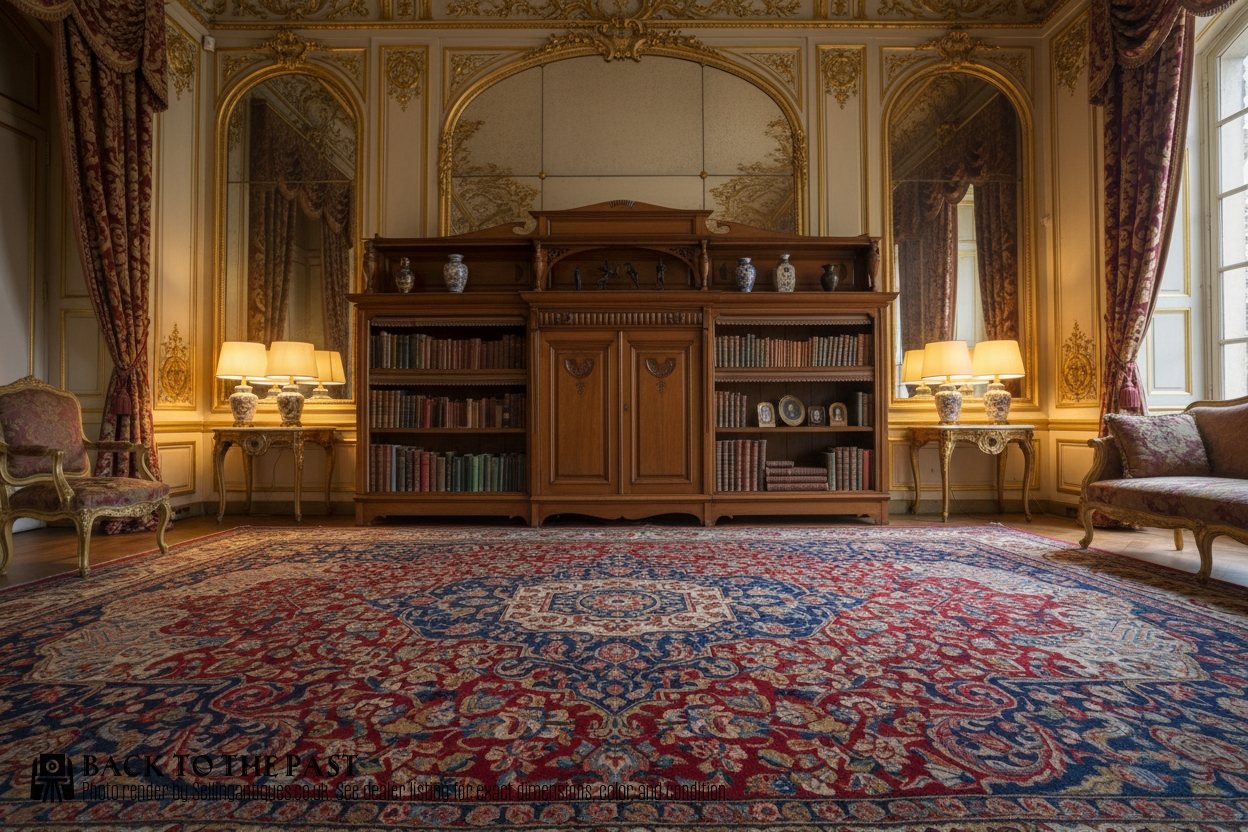
Carved Wood Bookcase Shelves
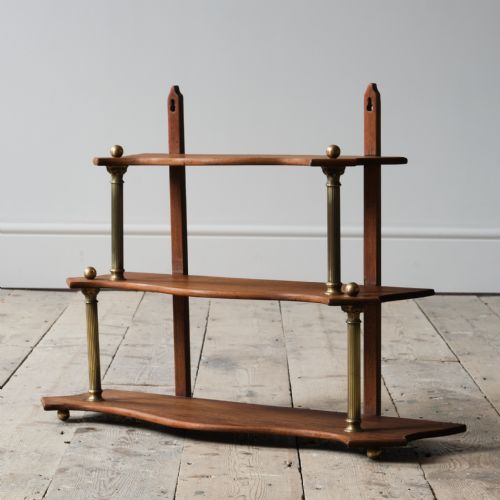
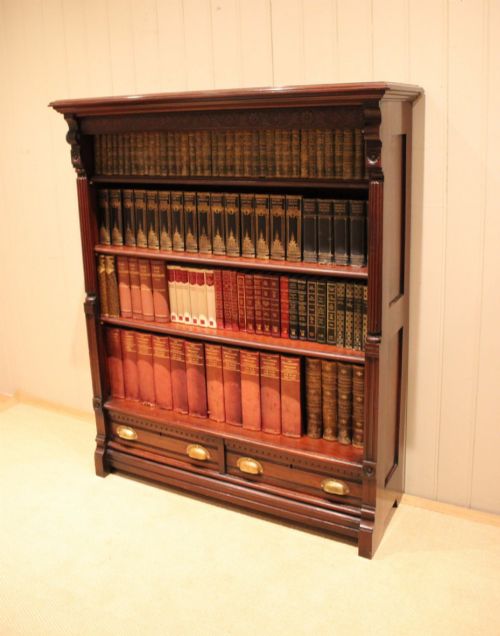
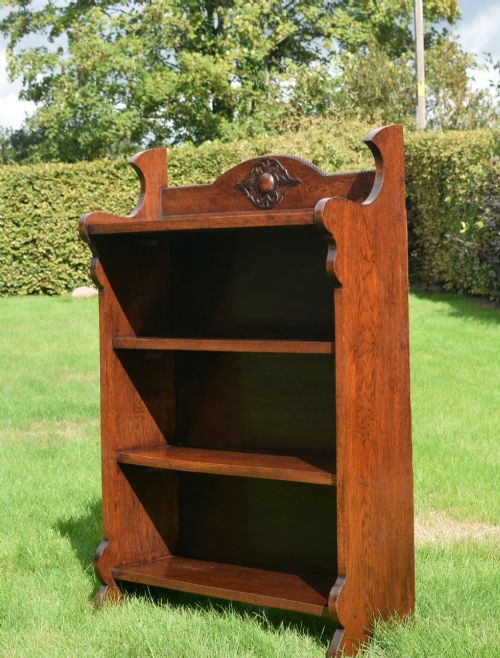
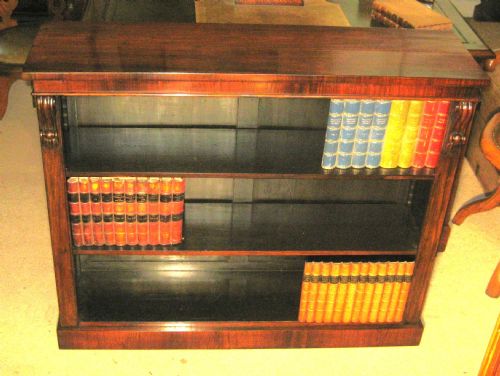
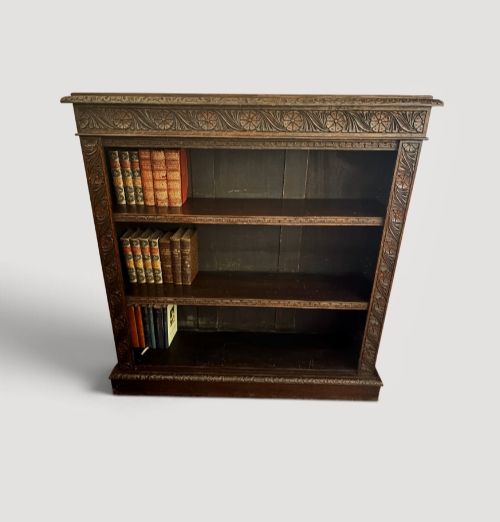
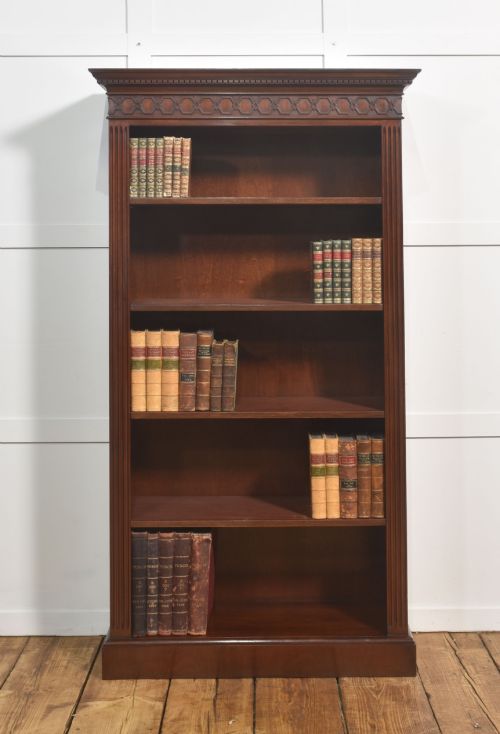
When you search for carved wood bookcase shelves, you find open fronted library furniture, tiered wall shelves, and low dwarf units designed to hold volumes while displaying decorative objects. The pieces appearing on this page span the nineteenth century into the early twentieth century, incorporating Victorian, Regency, and Edwardian periods.
Most examples you meet are open bookcases with adjustable shelving, wall hanging shelves, or tiered display cabinets. Timbers such as mahogany, rosewood, oak, and walnut dominate the selection, often complemented by brass fittings, glass panels, or flame mahogany veneer.
Origins range from British workshops to continental Europe and Anglo-Indian production. Buyers select these items for home libraries, studies, or living rooms where open access to books and a period aesthetic matter.
Materials and construction methods
Cabinet makers utilised solid hardwoods like oak, mahogany, and rosewood alongside walnut and exotic padauk, often selecting figured timbers for visible surfaces. Flame mahogany veneer provided striking grain patterns on drawer fronts and carcass panels while solid woods formed the structural uprights and shelves.
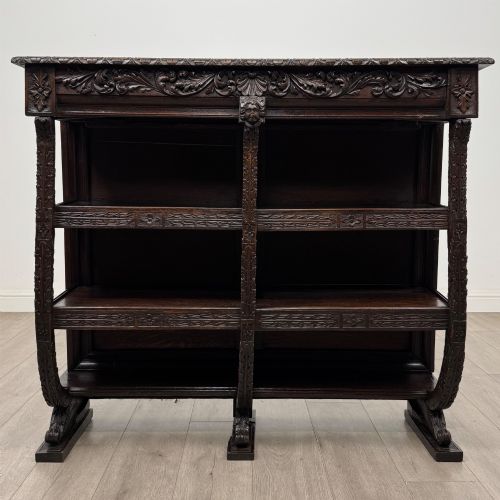
Carving was executed by hand directly into the timber, ranging from subtle line moulding and geometric motifs to deep relief work such as green man carvings. Brass brackets, mounts, and adjustable shelf ratchets added both functional strength and decorative contrast to the dark woods.
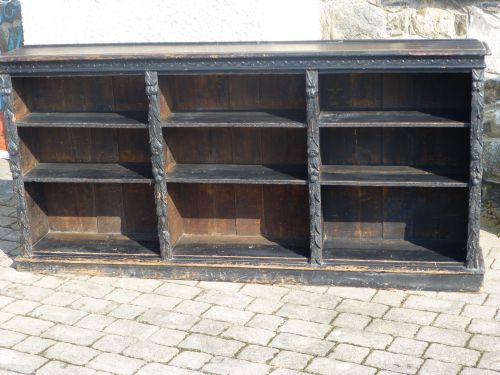
Among the carved woodwork, a solitary green man peers out from an ebonised dwarf bookcase, keeping watch over the volumes.
Judging quality and craftsmanship
Quality rests in the selection of timber and the precision of the joinery rather than mere surface ornamentation. Superior pieces employ dense, well-figured woods with tight joints, smooth running drawers where fitted, and cleanly carved details that retain crisp edges.
The engineering of internal elements separates standard utilitarian storage from finer items. Adjustable shelving mechanisms that operate smoothly and carcass structures that remain square under heavy loads indicate superior workshop standards during manufacture.
Gabriel Viardot·Gillows
The Carved Wood Bookcase Shelves Glossary
- Open bookcase
- A piece of library furniture without doors, designed for immediate access to books. These units frequently feature adjustable shelves supported by wooden ratchets or metal pins.
- Waterfall bookcase
- A set of shelves arranged in decreasing depths from bottom to top, creating a stepped profile resembling a cascading stream. This form became popular during the nineteenth century for display and book storage.
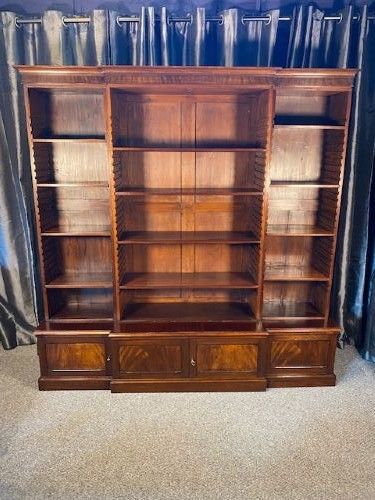
- Breakfront
- A cabinet or bookcase design where the central section projects forward from the flanking wings. This architectural arrangement creates depth and shadow play across the timber facade.
- Dwarf bookcase
- A low standing bookcase, typically waist high or lower, designed to sit beneath windows or picture rails. They provide accessible surface space on top in addition to lower shelf storage.
- Padauk
- A dense tropical hardwood displaying a rich reddish-brown colour, utilised in Anglo-Indian furniture production. It accepts fine carving and holds sharp detail well.
- Ormolu
- Gilded bronze mounts applied to furniture for decorative effect. Makers used these metallic accents to highlight corners, friezes, and panel borders.
Carved Wood Bookcase Shelves: Frequently Asked Questions
How do I adjust wooden shelves?
Most period bookcases use either vertical wooden ratchets with fixed support bars or simple rows of peg holes. You lift the shelf slightly, reposition the supports into the desired slots, and lower the board back into place.
Older mechanisms require care to avoid splitting dry timbers. Ensure the shelf rests evenly on all four supports before loading books onto it.
Where should I place wall shelves?
Wall hanging shelves suit smaller spaces such as studies, hallways, or above desks where floor area is limited. They anchor securely into masonry or timber studs using concealed brackets or visible brass plates.
Keep them away from direct heat sources and strong sunlight to prevent the timber from drying out or warping over time.
How do I date an antique bookcase?
Dating relies on combining timber choice, construction techniques, and stylistic clues. Regency and William IV pieces often feature rosewood and classical brass inlay, while late Victorian items show heavier carved oak or ebonised surfaces.
Examine the backboards and fixings as well. Hand-sawn boards and cut nails point to earlier nineteenth-century production, whereas later pieces introduce machine milling.
Can these shelves hold heavy books?
Solid hardwood shelves made from oak, mahogany, or walnut handle substantial book weight easily, provided the supports are secure. Adjustable timber shelves should be thick enough not to sag across wide spans.
Distribute heavier volumes across lower shelves to maintain stability, especially on taller or narrower standing units.