
Carved Wood Animal
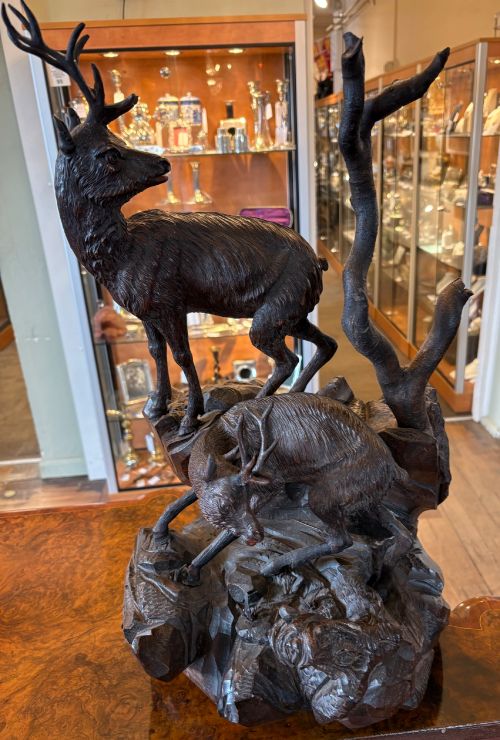
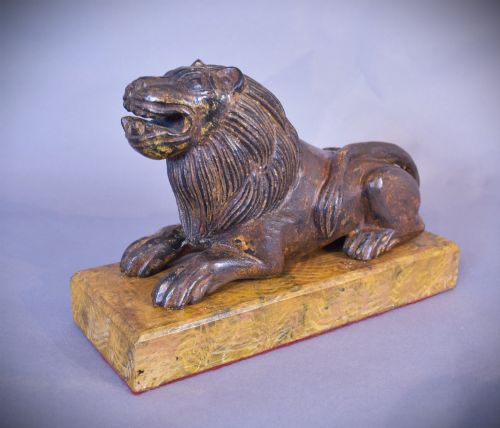
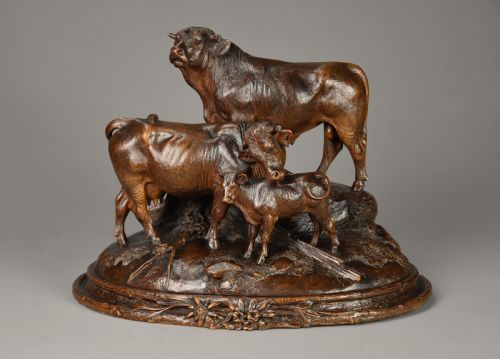
These carved wood animal pieces span centuries of regional workshops, bringing spirited bears, lions and birds directly into domestic interiors.
Carved Wood Animal
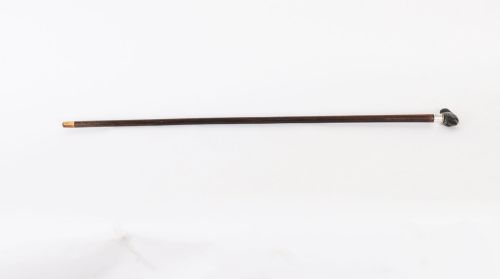
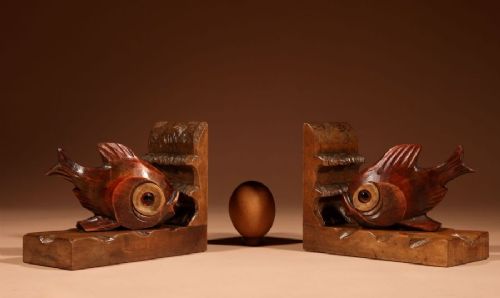
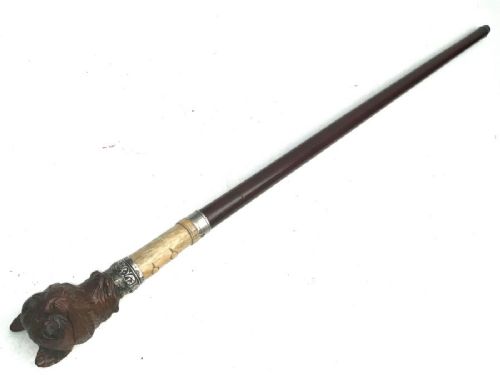
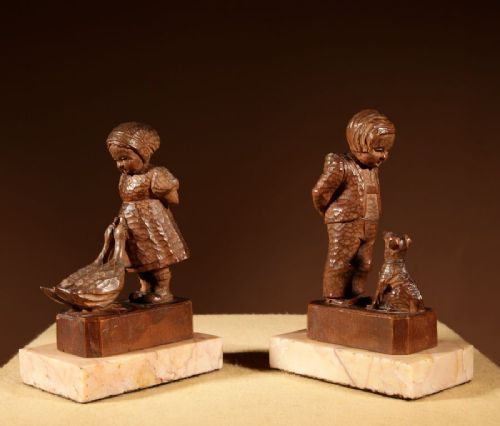
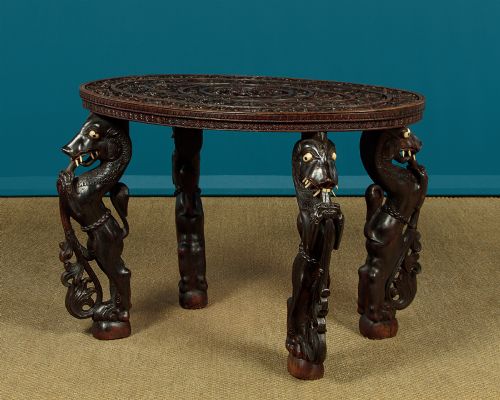
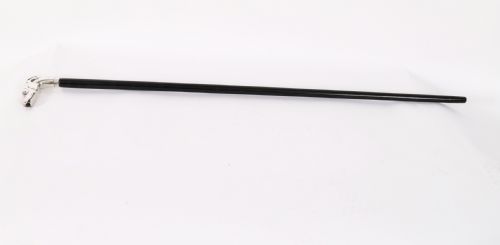
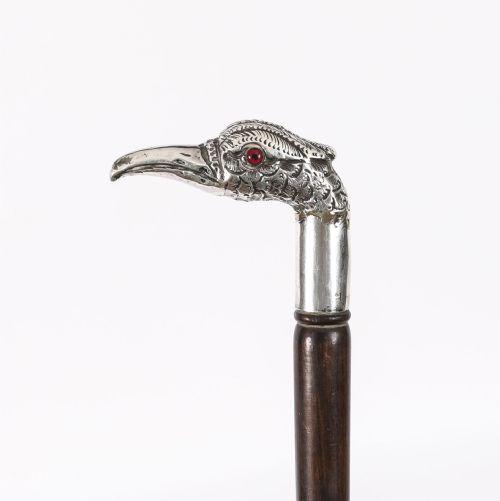
Every carved wood animal reflects the distinct hand of its maker, ranging from the dramatic naturalism of European alpine workshops to the stylized forms of Asian carving traditions. When exploring this selection, buyers encounter figures originating across the nineteenth and twentieth centuries, including domestic companions like bookends and walking stick handles alongside substantial free-standing sculptures.
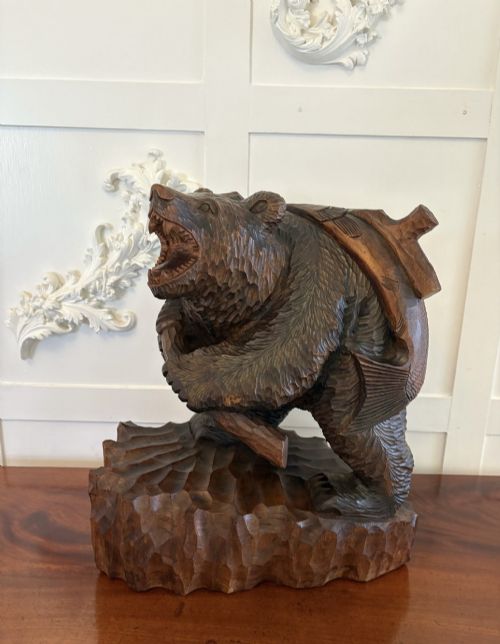
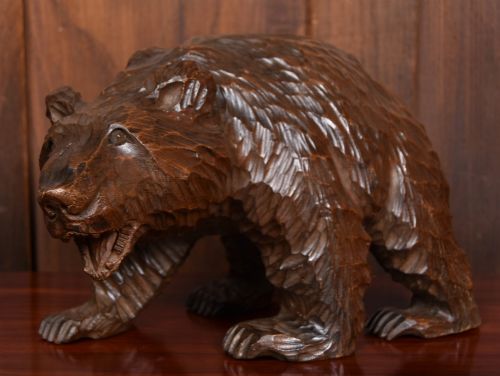
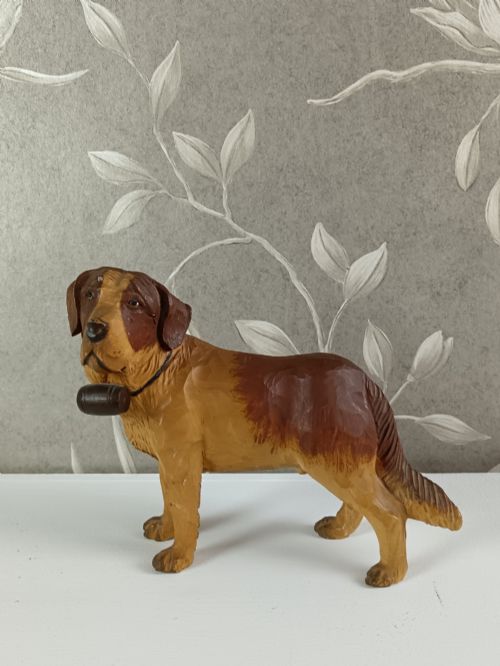
European alpine pieces dominate the selection, particularly the distinctive bears, deer and owls associated with regional mountain workshops. Alongside these functional items, such as inkwells and snuff boxes, collectors find folk art horses and intricately detailed Japanese subjects shaped from hardwood and linden wood.
Materials and Techniques
Makers shaped these figures predominantly from timber, utilising local linden wood, walnut and dense hardwoods suited to intricate carving. Artisans employed sharp gouges and chisels to render fur, feathers and musculature, occasionally applying paint, glass eyes or bone details to heighten realism.
Surface treatment varied according to regional practice, with some pieces left in the natural waxed timber while others received detailed polychrome paint or dark staining characteristic of specific decorative schools.
A remarkably focused menagerie where bears routinely double as bookends, reading glasses wearers, and guardians of inkwells.
Judging the Work
Distinctions in quality rest upon the anatomical conviction of the carving and the sensitivity shown to the grain of the wood. Superior examples demonstrate a secure grasp of posture and expression, whereas simpler pieces rely on naive charm and heavier tool marks.
The precision of finishing details, from the clean undercut of fur to the integration of functional elements like bookends or cane handles, separates standard workshop production from exceptional studio output.
J HUGGLER
The Carved Wood Animal Glossary
- Black Forest
- A style of wood carving originating from the mountain region spanning Switzerland and Germany, renowned for realistically rendered bears, deer and woodland fauna. Pieces from this tradition often incorporate practical elements such as clocks, inkwells and bookends.
- Linden wood
- A pale, fine-grained timber favoured by carvers for its soft texture and lack of prominent grain, allowing intricate detail work without splitting.
- Netsuke
- A small Japanese toggle carved from wood or other materials, secured to the end of a cord attached to a small pouch or basket worn on a traditional kimono sash.
- Folk art
- Objects created by self-taught or traditional artisans outside formal academic traditions, prioritising expressive character and utilitarian function over strict anatomical accuracy.
- Raj period
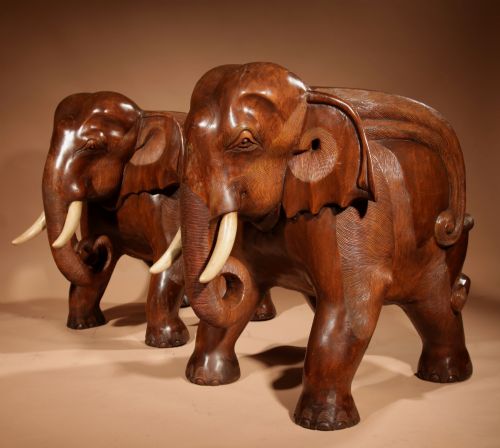
- The era of British crown rule in the Indian subcontinent, associated with decorative teak and hardwood carvings of elephants and horses produced for export.
Carved Wood Animal: Frequently Asked Questions
What animals appear most frequently?
Bears, deer, and dogs dominate the European alpine selection, particularly within the Black Forest tradition where wildlife subjects served as decorative inkwells, bookends, and freestanding studies.
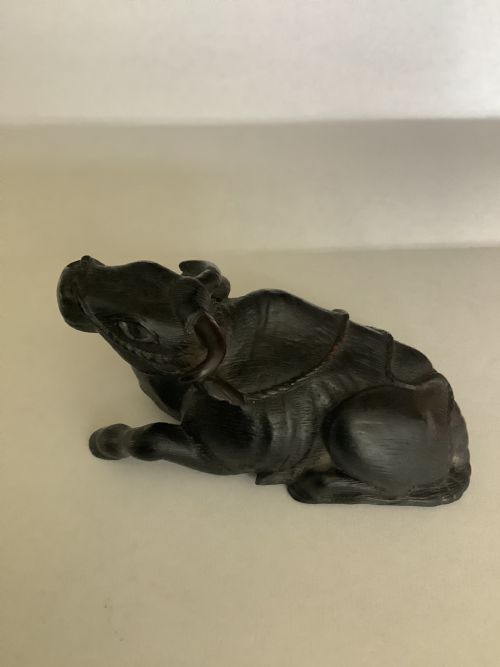
Elephant and horse figures also feature prominently, originating from regional workshops in India and China during the nineteenth century.
How were these items used originally?
Many figures served practical household functions, acting as bookends, walking cane handles, barometers, and desk accessories alongside pure sculptural ornaments.
Smaller carved items were designed to be carried or worn, while larger animal sculptures functioned as prominent interior decorations in studies and hallways.
How do I distinguish regional styles?
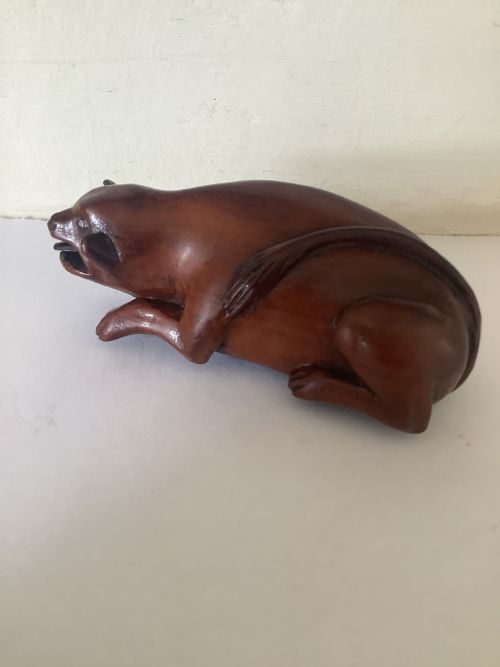
Alpine pieces usually show dense naturalistic foliage and wildlife carved in linden wood, whereas Japanese works display distinct attention to posture and fine linear detailing in hardwood.
Folk art examples rely on simpler, naive forms with visible tool marks and regional paint applications.
Are these pieces usually signed?
Most antique carved animals remain unsigned, reflecting their origins in regional cooperative workshops where individual attribution was secondary to collective trade output.
Occasionally, maker stamps or signatures appear on exceptional Swiss and German alpine figures, identifying specific family workshops.