

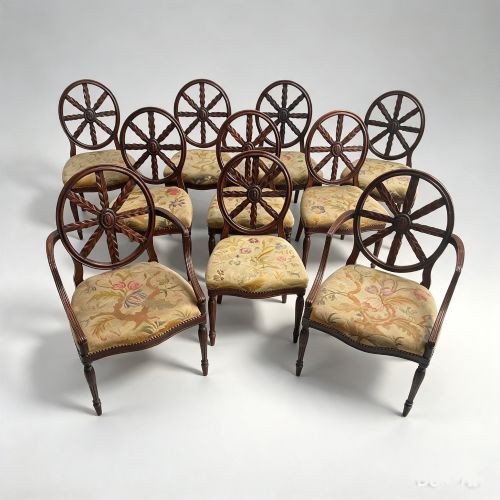
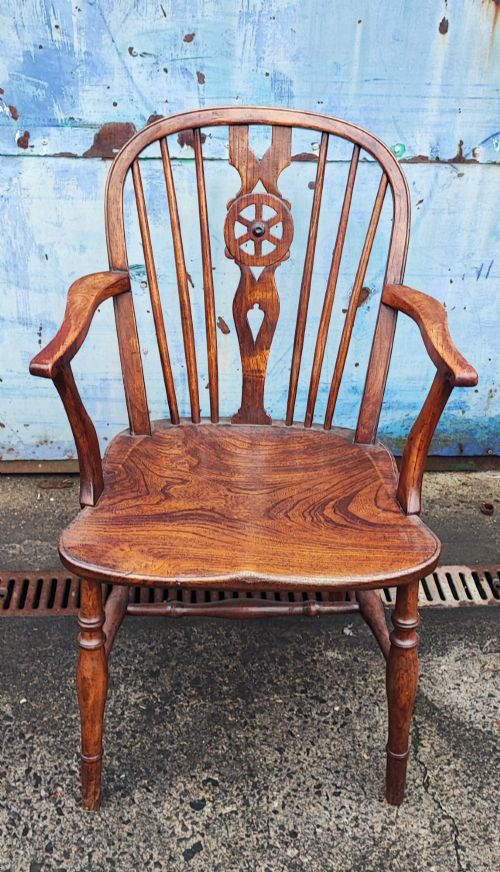
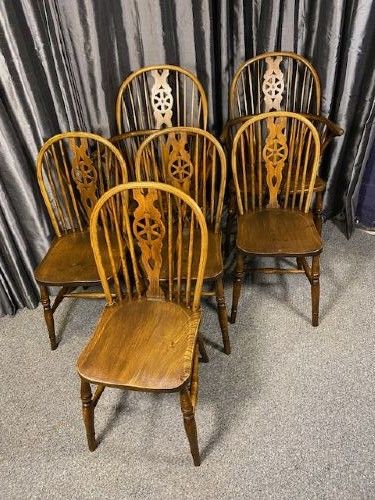
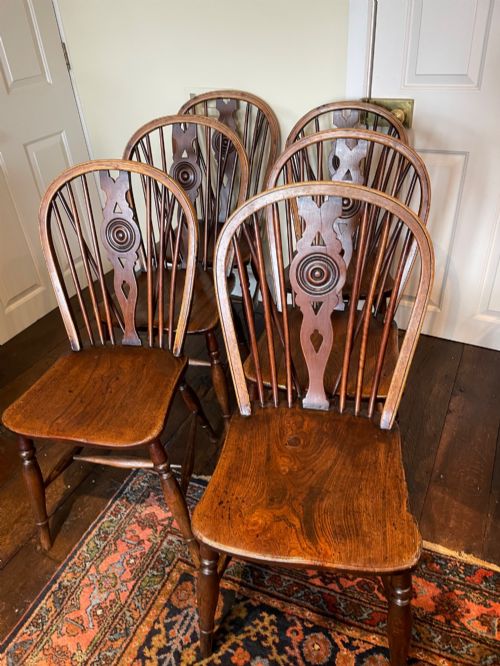





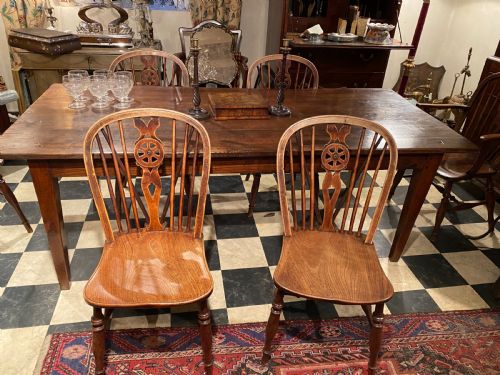
Carved Wheelback Chairs
Carved wheelback chairs are traditional wooden seating pieces valued for their distinctive pierced central splats and sturdy country craftsmanship.
Carved Wheelback Chairs
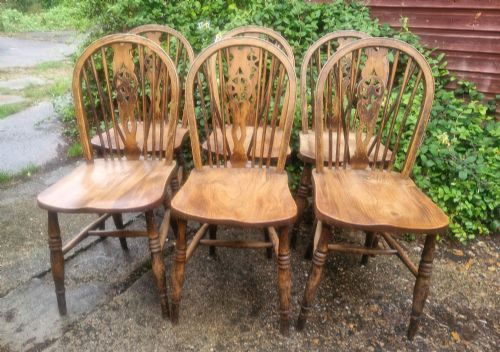
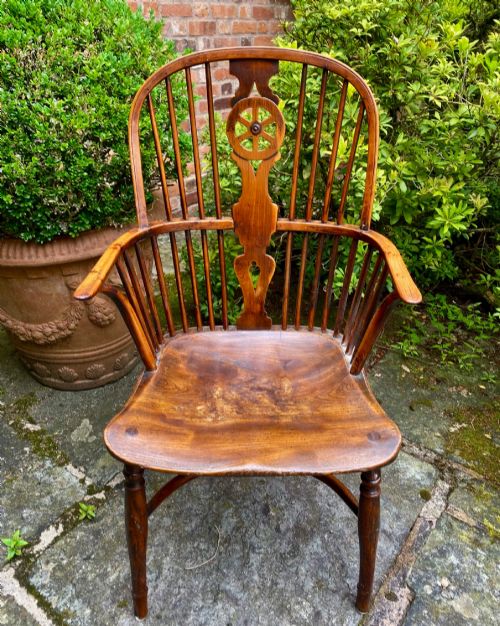
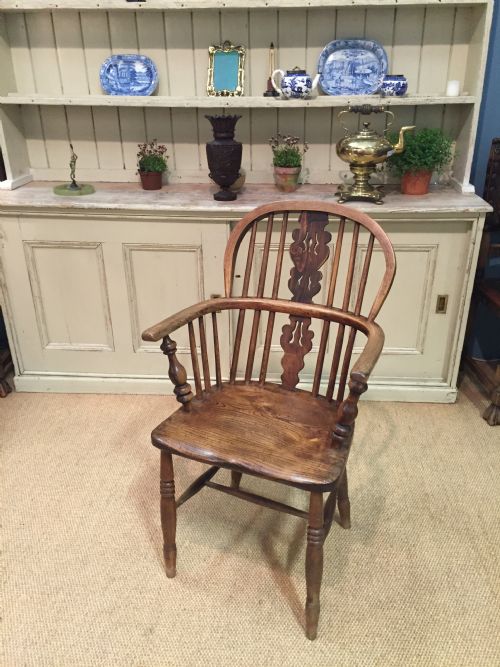
Carved wheelback chairs combine regional vernacular forms with sturdy Windsor construction, often featuring distinctive spoke-wheel splats. These pieces include dining sets, kitchen chairs, and occasional armchairs spanning the Georgian, Regency, and Victorian periods.
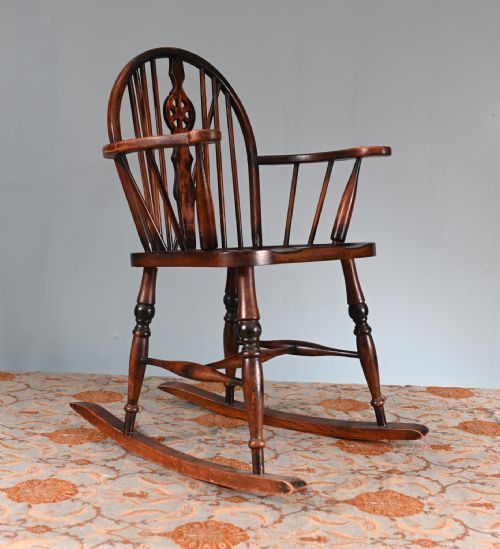
The version most commonly met on this page is the nineteenth century elm or beech kitchen dining chair, though larger sets and specialised desk or rocking variants also appear. British country makers produced these seats extensively using native hardwoods.
Origins range from Thames Valley workshops to general English country workshops, taking the form of side chairs, carvers, and expansive sets suitable for large tables.
How they were made
Makers utilised native timbers such as elm for solid, figured seats, combined with bent beech or ash for hoops, spindles, and arms. Yew wood also appears in finer regional examples, particularly from the Thames Valley.
Construction relied on traditional Windsor framing techniques, turning legs and spindles on a lathe and wedging them directly into heavy saddle-shaped wooden seats.
Carved Wheelback Chairs Retail Price Guide 2026
Typical asking prices for carved wheelback chairs among the pieces listed under this phrase on Sellingantiques today, from the lower quarter to the upper quarter. They describe what is for sale here now, not the wider market.
Some nineteenth century makers carved miniature tool marks beneath the seat, leaving a hidden signature of their lathe work.
What varies in quality
Quality rests in the choice of timber and the depth of figure in the seat plank, alongside the crispness of the pierced wheel carving in the back splat. Heavier Yew wood examples and matched sets command greater attention than mixed timber singles.
Structural integrity and the retention of original turned components without excessive replacement parts distinguish superior examples from heavily restored utility seating.
Mayhew & Ince
The Carved Wheelback Chairs Glossary
- Wheelback
- A chair back featuring a pierced central splat carved to resemble the spokes and rim of a cart wheel. This design became popular in British country furniture during the nineteenth century.
- Windsor
- A chair constructed with a solid wooden seat into which the legs, back spindles, and bow are separately fitted. This method provides robust stability without traditional framed joinery.
- Splatt
- The vertical central strip of wood in a chair back, which on these pieces takes the characteristic wheel motif. It provides structural support while offering space for decorative carving.
- Thumb back
- A chair back style where the top rail extends slightly past the outer upright spindles. It is a common regional detail found on vernacular seating.
Carved Wheelback Chairs: Frequently Asked Questions
What are carved wheelback chairs?
Carved wheelback chairs are traditional wooden seats featuring a distinctive pierced splat shaped like a wheel. They developed as a regional variation of the classic Windsor chair.
These pieces were produced primarily across the nineteenth century in British country workshops using native timbers like elm, beech, and yew.
How were they used?
These chairs served mainly as practical seating for kitchens, dining rooms, and farmhouse tables. Sturdier rocking and armchair variants were also placed in parlours.
Their solid construction made them durable enough for daily household use by families across generations.
How to live with them?
Wheelback chairs integrate easily into both traditional rustic interiors and modern dining spaces as accent or main table seating. Their natural wood tones bring warmth and texture to a room.
Keep them away from direct heat sources and sudden humidity changes to protect the solid timber seats and joined spindles.
How to tell periods apart?
Earlier Georgian and Regency examples often display refined timber selection and subtle proportions, sometimes utilising yew wood or mahogany. Later Victorian and nineteenth century pieces tend toward sturdy elm and beech construction intended for heavy kitchen use.
Examining the turning style of the legs and the thickness of the saddle seat helps indicate the manufacturing era.