


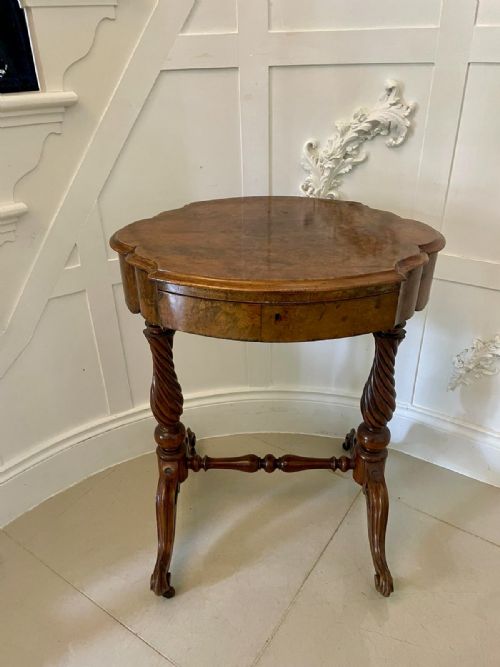


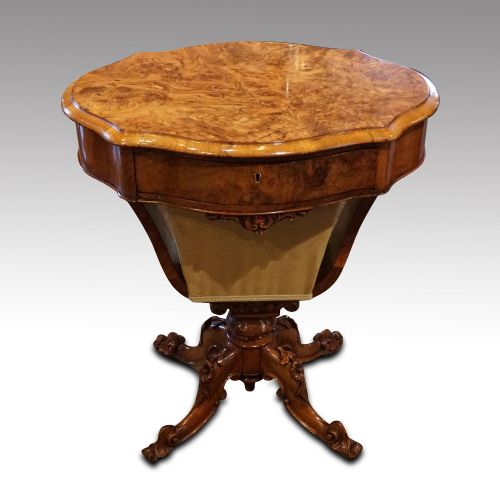


Carved Walnut Workbox
A carved walnut workbox brings nineteenth-century craftsmanship to your home, offering a neat vessel for sewing gear and small treasures.
Carved Walnut Workbox
When you search for a carved walnut workbox, you find a variety of nineteenth-century sewing tables, trumpet workboxes, and occasional tables designed for domestic use. These pieces hail principally from the Victorian era, spanning decades from the eighteen-fifties through the eighteen-eighties.
The selections on this page range from freestanding sewing and lamp tables to decorative French table boxes and tripod trumpet forms. Walnut and burr walnut dominate the selection, often complemented by boxwood or mixed wood inlay and fitted interiors.
Buyers meet multifarious forms that served utilitarian purposes for needlework and games alongside ornamental roles in the Victorian parlour. Their robust construction in solid walnut and figured veneers ensures they remain functional pieces of antique furniture today.
How they were made
Cabinet makers utilised solid walnut and burr walnut veneers to construct the main bodies of these workboxes and tables. The rich grain of the burr walnut provided a decorative surface for lids and tops.
Inlayers applied boxwood and mixed wood inlay to accent the timber surfaces with geometric or floral motifs. Interior compartments, fabric linings, and brass hardware completed the construction of these functional sewing containers.
What varies in quality
Quality separates the standard production items from pieces designated of fine quality through the choice of timber and the precision of the veneer work. Burr walnut with rich, highly figured grain patterns elevates the appearance of a workbox.
Fitted interiors with intact compartments and delicate boxwood inlay demonstrate superior craftsmanship compared to plain or heavily restored examples. The stability of tripod bases and the integrity of the original textile linings also distinguish finer specimens.
The Carved Walnut Workbox Glossary
- Burr walnut
- A veneer taken from the wart-like growths on walnut trees, prized for its swirling, highly figured grain patterns. Cabinet makers utilised this timber on the principal exterior surfaces of finer Victorian tables.
- Trumpet workbox
- A sewing container or table characterised by an octagonal or rounded body that flares outwards toward the base like the bell of a musical instrument. This form typically stands on a tripod base.
- Boxwood inlay
- The technique of embedding contrasting strips or shapes of pale boxwood into the darker walnut surface to create decorative borders. It frequently appears on Victorian table tops.
- Occasional table
- A small, versatile piece of furniture designed for general use in a reception room rather than a single specific purpose. These tables often double as work or lamp tables.
Carved Walnut Workbox: Frequently Asked Questions
What is a trumpet workbox?
A trumpet workbox is a nineteenth-century sewing table featuring a flared, octagonal body that resembles a trumpet bell. It usually contains internal compartments for needles, threads, and small accessories.
These pieces stand upon a central pillar supported by tripod legs. Their clever design allowed Victorian women to keep their needlework contained while adding an elegant furnishing to the parlour.
How do I date a walnut workbox?
Dating relies on observing the timber choice, decorative motifs, and overall form recorded across the Victorian period. Pieces from the eighteen-fifties often display simpler turned supports, whereas eighteen-eighties examples might incorporate intricate inlay.
Consulting the specific construction details helps narrow down the decade of origin. The transition from plain walnut to heavily figured burr walnut and complex boxwood inlay tracks the shifts in nineteenth-century taste.
Were these tables used only for sewing?
While primarily designed to hold sewing equipment and textiles, many of these tables served multiple domestic functions. The listings include combination pieces configured for chess, draughts, and general occasional use.
Owners utilised the fitted interior boxes for various small keepsakes and letters. Their compact size made them adaptable for placement beside chairs or lamps in Victorian drawing rooms.
How do I care for burr walnut veneer?
Burr walnut requires gentle maintenance to preserve the polished timber surface and prevent the veneer from drying out. Avoid placing the workbox near direct heat sources or in strong sunlight.
Regular dusting with a soft, dry cloth maintains the lustre of the wood. Conditioning the surface with appropriate furniture wax occasionally helps protect the antique finish without harming the grain.