





Carved Walnut Whatnot Stand
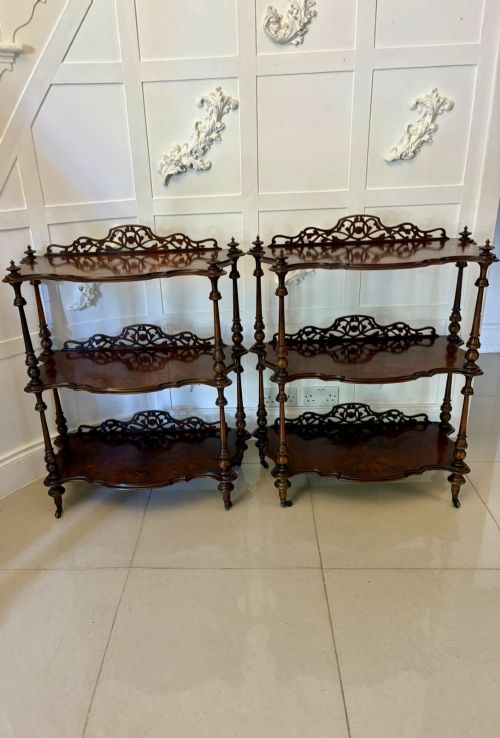
These carved walnut whatnot stand examples are multi-tiered display pieces that bring useful surface space and period character to a room.
Carved Walnut Whatnot Stand
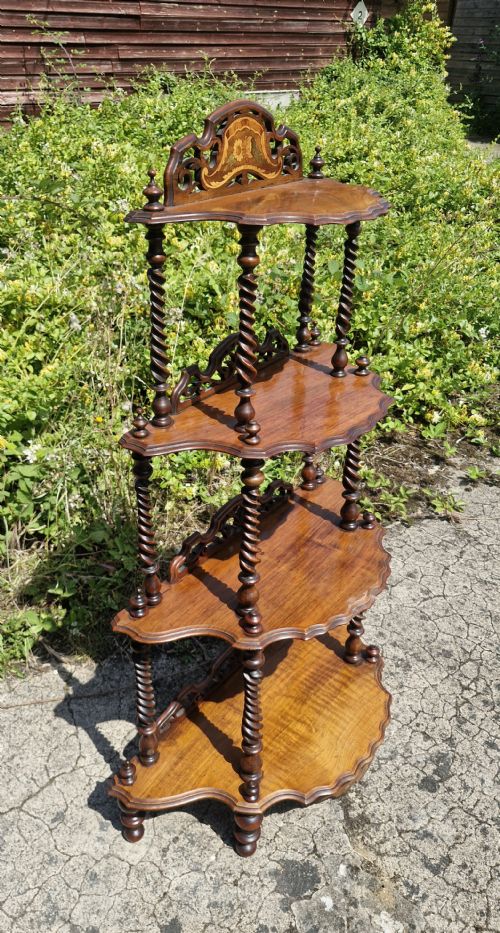
When you search for a carved walnut whatnot stand, you find tiered display furniture designed primarily for the Victorian interior. The pieces on this page appear predominantly from the nineteenth century, including specific dates across the eighteen-fifties, sixties, and eighties.
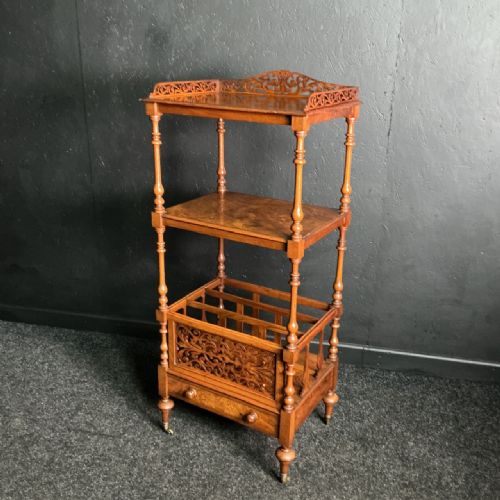
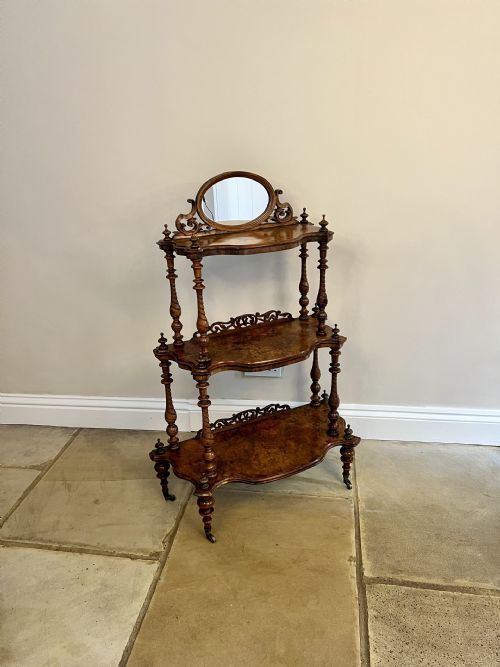
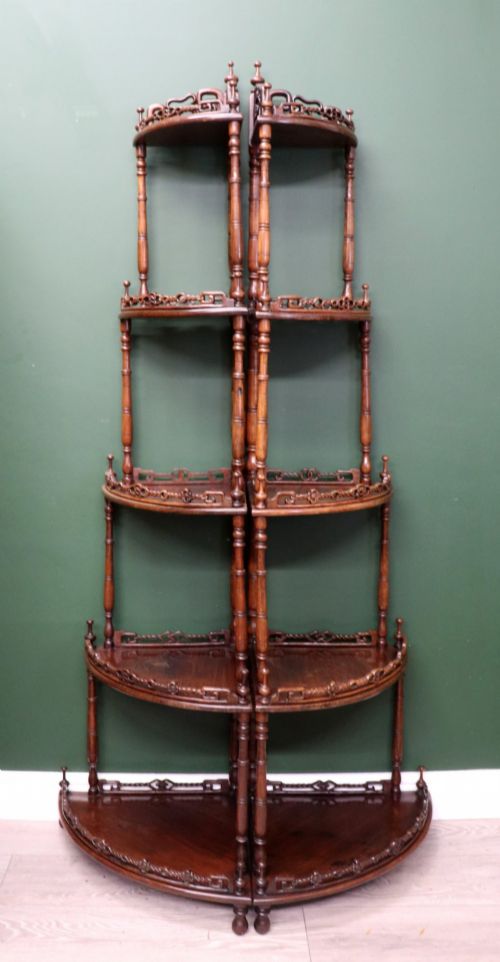
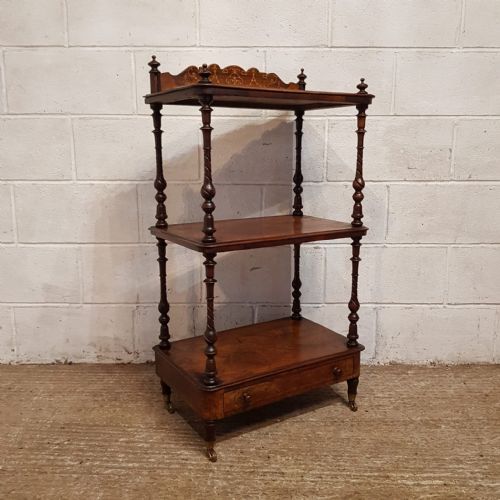
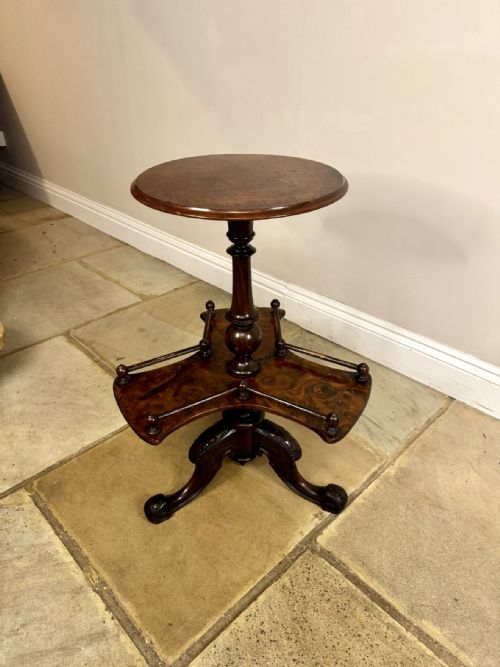
Freestanding multi-tier forms, corner models, and combinations with canterburys or lamp tables make up the core selection. These items function as shelving units and display stands, often utilising serpentine outlines or demi-lune shapes.
Origins stretch to English country houses and Irish workshops, showing how these stands served varied domestic settings. The primary forms include three, four, or five tiers supported by turned columns or carved uprights.
Gradations in quality
The distinction between standard domestic items and top-tier exhibition pieces rests on the choice of timber and the depth of carving. Highly figured burr walnut and intricate marquetry inlay separate ordinary shelving from exceptional display furniture.
Design complexity also sets pieces apart, with serpentine forms, multi-tiered configurations, and integrated canterburys demanding superior joinery. The crispness of carved wooden elements and the inclusion of fine brass or ceramic details indicate the maker's skill.
The inventory records corner shelves, canterburys, etageres, and multi-tiered display stands enhanced with marquetry inlay and mirror glass.
Gillows
The Carved Walnut Whatnot Stand Glossary
- Whatnot
- A multi-tiered piece of furniture designed for displaying ornaments, books, or small objects. It originated in the eighteenth century and remained popular throughout the Victorian era.
- Burr walnut
- Timber taken from the warted excrescences of walnut trees, yielding highly decorative grain patterns with swirling knots. Cabinetmakers prized this veneer for the most formal display surfaces.
- Canterbury
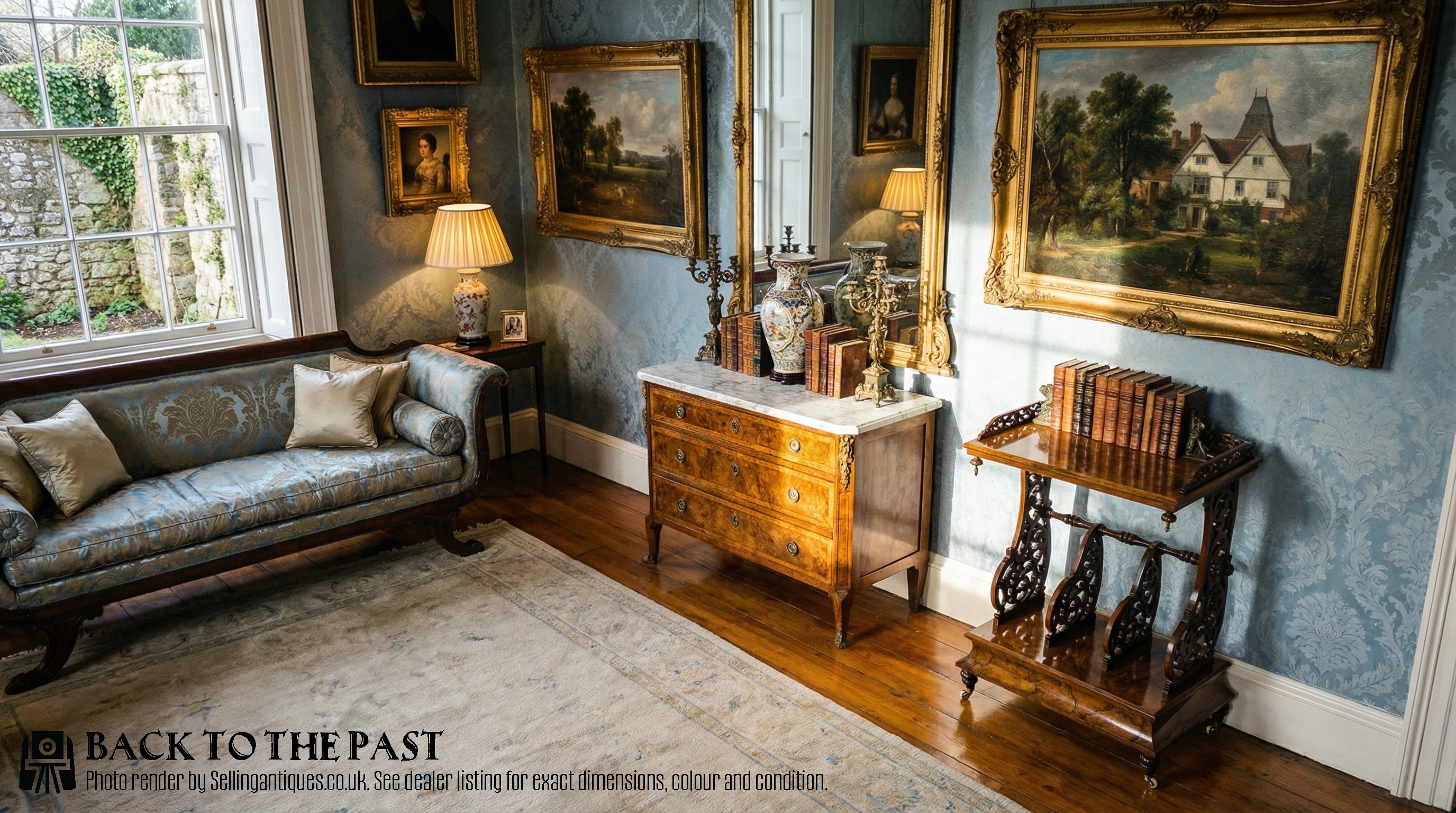
- A low stand featuring vertical partitions, originally built to hold sheet music or folios. Many Victorian examples combine this storage function with the tiers of a whatnot.
- Marquetry
- The art of applying small pieces of veneer to a structure to form decorative patterns or pictures. Craftsmen used contrasting timbers to create floral and geometric designs on tabletops and shelves.
- Demi-lune
- A half-moon shape used for console tables and corner stands. This outline allowed freestanding or wall-adjacent placement in tight Victorian drawing rooms.
- Serpentine
- A curved line that undulates inwards and outwards, commonly seen along the front edges of shelves and table tops. This contour adds visual movement to cabinetwork.
Carved Walnut Whatnot Stand: Frequently Asked Questions
What is a carved walnut whatnot stand?
It is a multi-tiered Victorian display piece made from walnut timber, designed to hold ornaments and decorative items in domestic interiors.
Most examples feature three to five shelves supported by turned or carved columns, sometimes incorporating marquetry inlay or corner designs.
How were these stands used originally?
Victorian households utilised these stands in drawing rooms and parlours to display ceramics, small sculptures, and books.
Some variants doubled as lamp tables, console units, or music stands when combined with a lower Canterbury section.
How do I identify a Victorian piece?
Look for characteristic nineteenth-century timber choices such as burr walnut veneers, mahogany secondary woods, and brass hardware.
Stylistic markers like Victorian Rococo Revival carving, marquetry inlay, and multi-tiered corner constructions point directly to this period.
Where should I place a whatnot in a modern home?
Corner models fit neatly into unused room angles, while freestanding rectangular or oval tiers serve well against living room walls.
They provide vertical display space for plants, books, and collections without occupying a large floor footprint.