

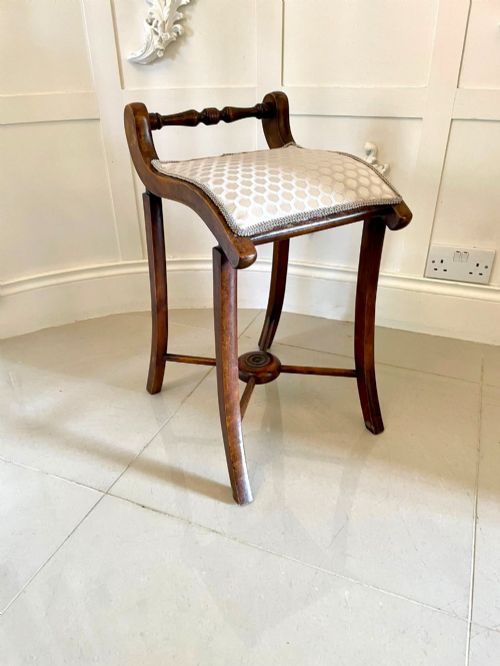
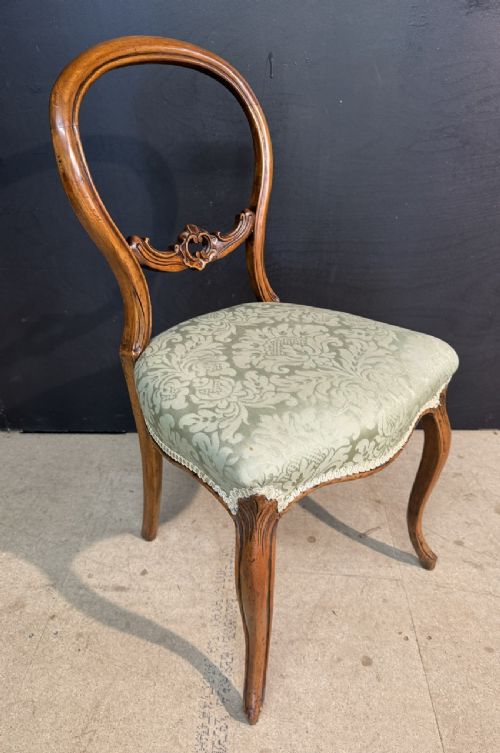


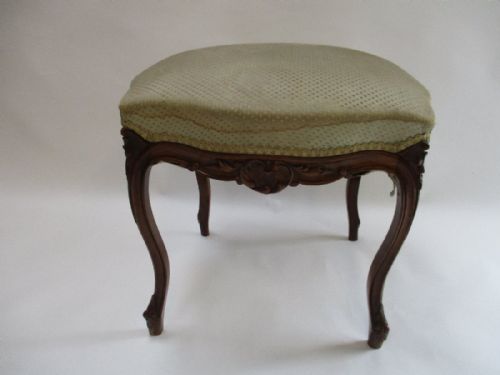
Carved Walnut Vanity Chair
These carved walnut vanity chair pieces offer period seating in rich timber, combining classical ornament with compact dressing room utility.
Carved Walnut Vanity Chair
A carved walnut vanity chair or dressing table stool provides low seating designed for bedrooms and dressing rooms, drawing on periods spanning the mid-eighteenth century to the Edwardian era. You will frequently encounter Victorian and late Victorian examples alongside pieces dated to the nineteen-twenties, eighteen-eighties, and the mid-eighteenth century.
The physical forms on this page include stools, side chairs, footstools, piano stools, nursing chairs, and occasional chairs. Many function as dressing table stools, music piano stools, or adjustable rise and fall piano stools, sometimes featuring cabriole legs, twisted rope legs, or tripod bases.
How they were made
Makers shaped these items primarily from walnut timber, often figuring the grain on the seat frames and applying hand-carved ornament to the backs and legs. Structural additions incorporate brass mechanisms for adjustable height piano stools.
Upholstery relies on a range of textiles including velvet, leather, standard fabric, and needlepoint. Restored examples feature new covers alongside pieces retaining original upholstery.
Carved Walnut Vanity Chair Retail Price Guide 2026
Typical asking prices for carved walnut vanity chair among the pieces listed under this phrase on Sellingantiques today, from the lower quarter to the upper quarter. They describe what is for sale here now, not the wider market.
Materials recorded on this site include walnut, brass, textile, fabric, upholstery fabric, leather, mahogany, and velvet.
What varies in quality
The crispness and depth of the hand-carved detail across the walnut frame separate standard production from finer workmanship. Elements like cabriole legs and X-framed structures display varying degrees of sculptural fluency.
The condition of the timber, the presence of adjustable mechanical elements that function properly, and the preservation or renewal of textile upholstery determine the overall integrity of each piece.
The Carved Walnut Vanity Chair Glossary
- Cabriole leg
- A furniture leg that curves out and then narrows inward, typically ending in a pad or claw foot. This form appears frequently on eighteenth-century and revival seating.
- Rise and fall stool
- A seat with an adjustable mechanism that alters the height, often operated by a threaded screw. These appear on piano and dressing stools from the Victorian period.
- Needlepoint
- Canvas worked with wool or silk yarn in counted stitches to create a patterned textile cover. This technique provides decorative seat upholstery on period stools.
- X-framed stool
- A seating form supported by intersecting diagonal legs that create an X shape when viewed from the side. This structural style offers both decorative presence and rigid support.
- Nursing chair
- A low-seated chair designed for comfort while nursing infants, typically featuring an upholstered seat and a supportive back. These pieces date across Victorian and Edwardian periods.
Carved Walnut Vanity Chair: Frequently Asked Questions
How do I date a walnut dressing stool?
Dating relies on stylistic markers such as cabriole legs, turned supports, and the specific carving techniques associated with periods like the Victorian era, the eighteenth century, or later revivals.
Material choices, upholstery textiles, and the presence of adjustable mechanical hardware also provide clues to the decade of manufacture.
Were these stools used only for vanity tables?
While many served at dressing tables, similar forms functioned as piano stools, music seats, or bedroom side chairs.
Adjustable examples with rise and fall mechanisms were specifically built for keyboard instruments as well as dressing rooms.
How do I care for walnut furniture?
Walnut timber benefits from consistent indoor humidity levels and protection from direct sunlight to prevent the wood from drying out or fading.
Regular dusting with a soft cloth maintains the finish, while leather and fabric upholstery require cleaning methods specific to the textile type.