
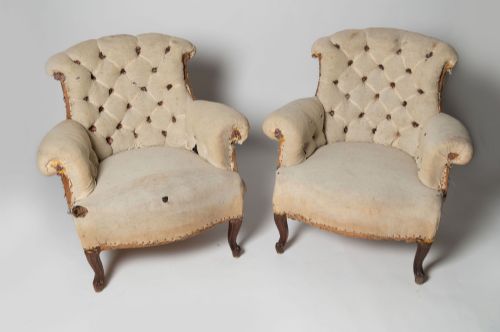
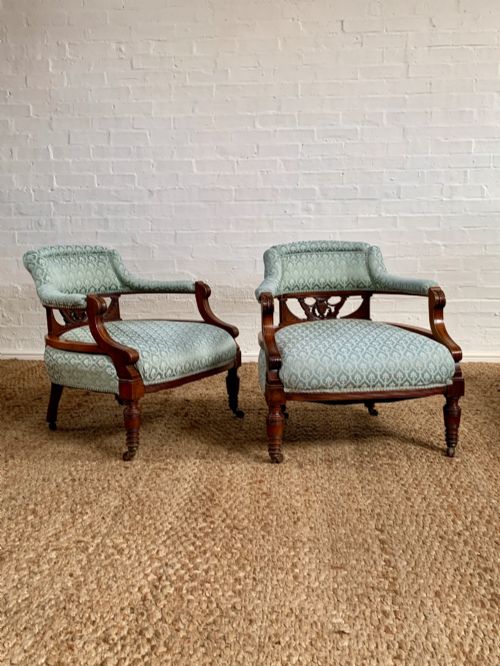
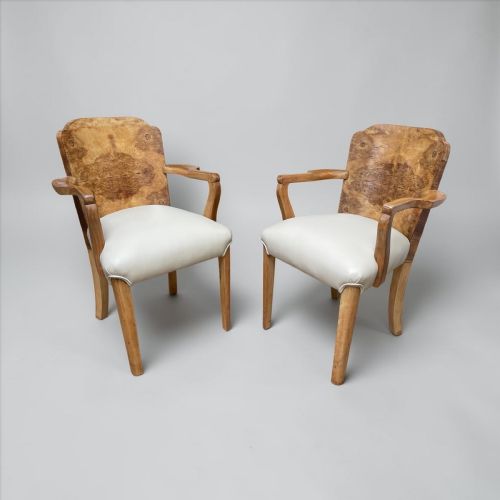
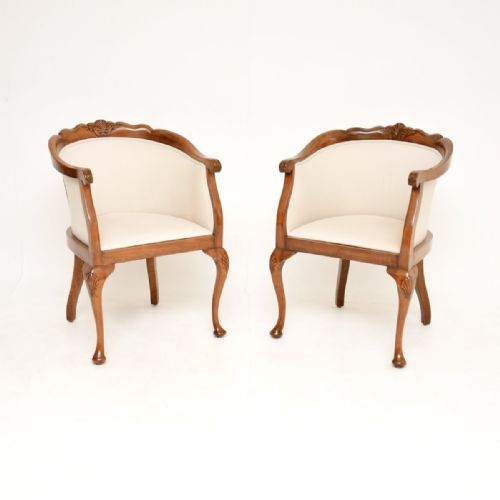

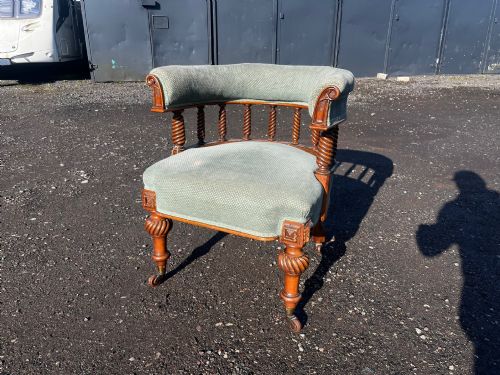


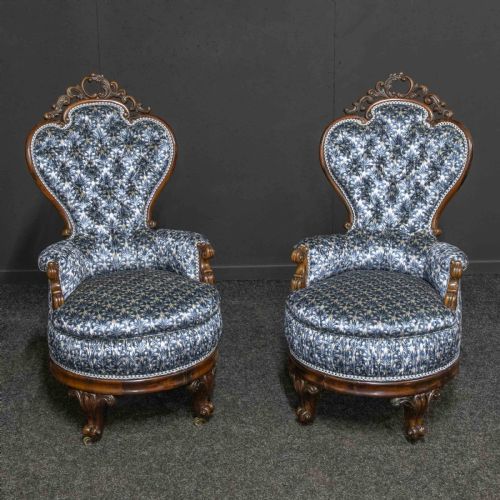

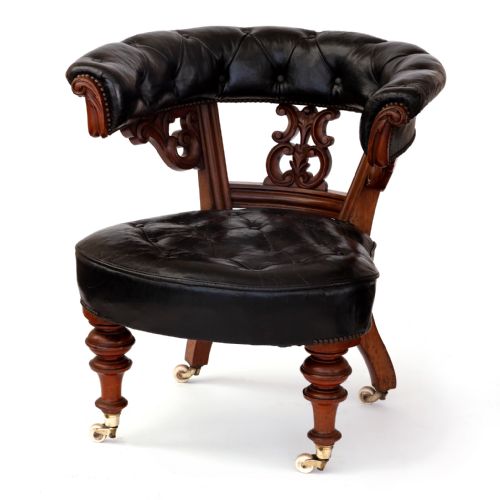
Carved Walnut Tub Chair
A carved walnut tub chair brings warmth and historic form into a room, offering deep curved backs and sturdy wooden frames.
Carved Walnut Tub Chair
The most common examples on this page date from the Victorian and Edwardian periods, alongside nineteenth century French pieces and occasional mid twentieth century interpretations. Buyers find these seating options rendered in distinct regional revivals, ranging from Louis XV curves to Moorish inlaid patterns and Italian Renaissance motifs.
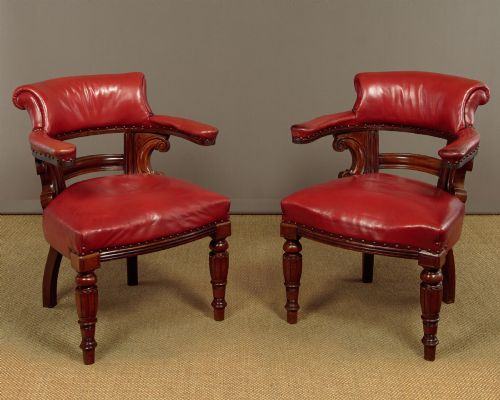
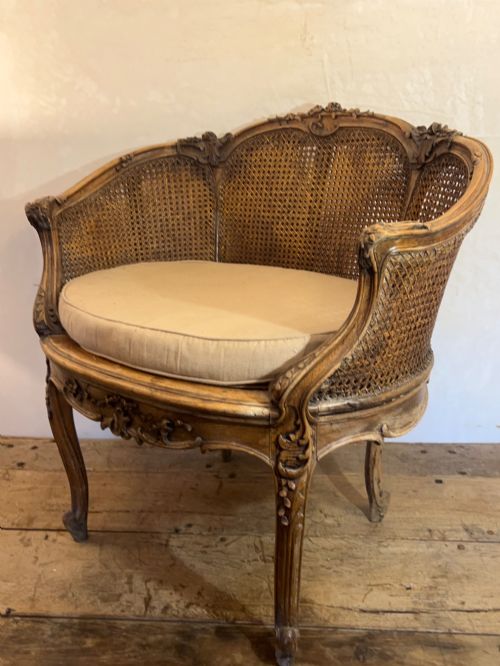
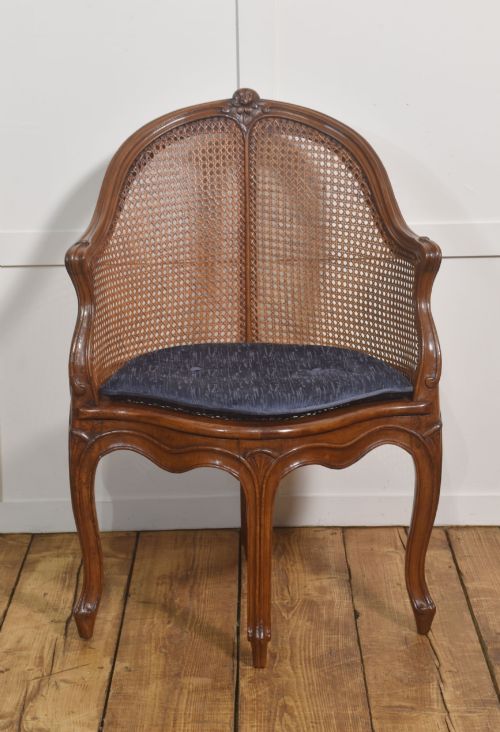
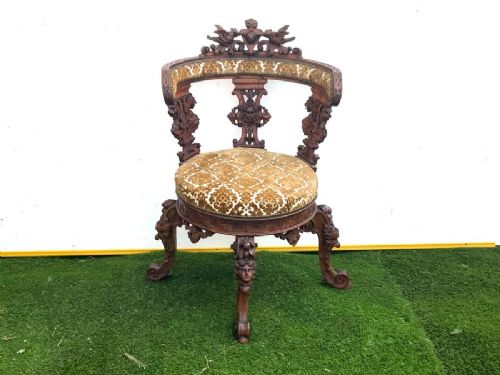
Makers utilised resilient timber frames, shaping the dense grain into scrolled knuckles, cabriole legs and elaborate crest rails. Whether configured as a library armchair, desk chair or fireside seat, the distinctive curved silhouette remains consistent across the varied historical styles.
Assessing quality in carved walnut tub chairs
The depth and crispness of the carving distinguish finer examples from simpler production, with skilled hand work visible in the sharpness of acanthus leaves, scrollwork and fluting. Timber selection also dictates grade, where dense, well figured walnut with minimal sapwood indicates a superior build.
Structural integrity of the curved backrest and arm joints determines longevity, since the continuous sweep endures considerable daily pressure. Original coverings, intact cane panels and high quality secondary materials like brass hardware further elevate the standing of a piece.
Listings span from seventeen hundred through the Victorian and Edwardian eras up to nineteen thirty, utilising walnut, cane, leather, velvet and bone.
The Carved Walnut Tub Chair Glossary
- Tub chair
- A fully upholstered armchair featuring a low, curved back that wraps around to form integrated arms. This enclosed shape was designed to keep out drafts in cooler rooms.
- Bergere
- An enclosed upholstered armchair with exposed wooden framing and cane or upholstered sides. French examples often follow Louis XV or Louis XVI decorative vocabularies.
- Corbeille
- A French term for a basket shaped seat, often applied to chairs with curved, enveloping backs similar to a tub chair.
- Cane
- Woven rattan or plant material used to form breathable panels in the backrests and seats of light framed chairs. It requires careful handling to prevent drying and breakage.
- Moorish revival
- A nineteenth and early twentieth century design movement incorporating geometric marquetry, bone inlay and complex Islamic architectural motifs into European furniture forms.
Carved Walnut Tub Chair: Frequently Asked Questions
What is a tub chair?
A tub chair is an armchair characterised by a single continuous curved piece that forms both the low back and the arms, wrapping the sitter in a secure, rounded enclosure.
Historically designed to block drafts in sitting rooms and libraries, these chairs combine solid timber framing with padded upholstery for daily comfort.
How do I date a walnut armchair?
Dating involves examining the carving style, construction methods, tool marks on the timber and the underlying upholstery webbing. Comparing the decorative motifs, such as Victorian scrolls or Edwardian restraint, helps narrow the decade.
Regional influences also provide clues, as French Louis XV revival pieces differ markedly in proportion from English library chairs of the same era.
Where should I place a tub chair?
These compact armchairs suit studies, bedrooms and living rooms where a deep, supportive seat is needed without occupying the footprint of a large sofa. Their finished backs allow them to sit away from walls in open spaces.
Desk variants work well in home offices, while upholstered fireside versions complement reading corners.
How do I care for antique walnut furniture?
Protect walnut surfaces by keeping them away from direct heat sources and strong sunlight, which can dry out the timber and fade the finish. Regular dusting with a soft cloth preserves the grain.
Condition leather or fabric upholstery according to its specific textile type, and avoid harsh chemical cleaners on the carved wooden frames.