

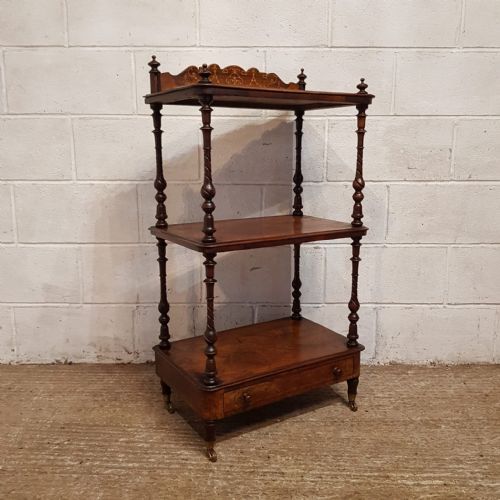
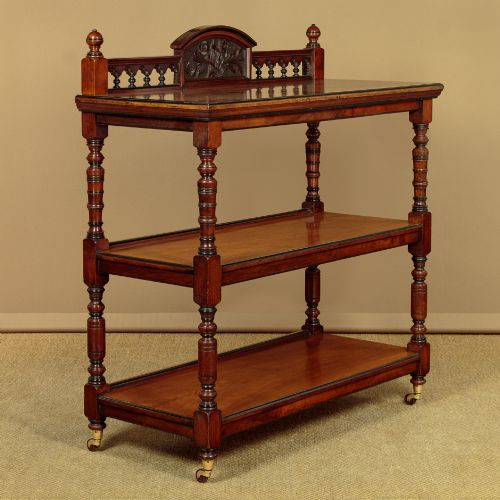


Carved Walnut Tier Shelf
A carved walnut tier shelf brings upright display and rich timber grain to a room, drawing the eye upwards through stacked tiers.
Carved Walnut Tier Shelf
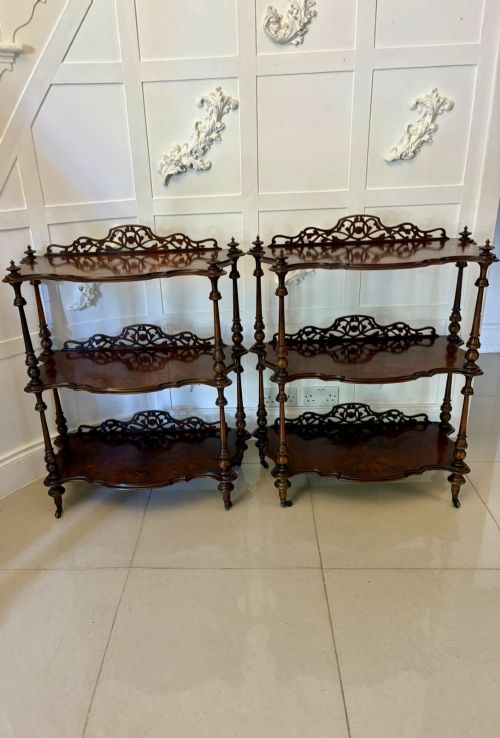
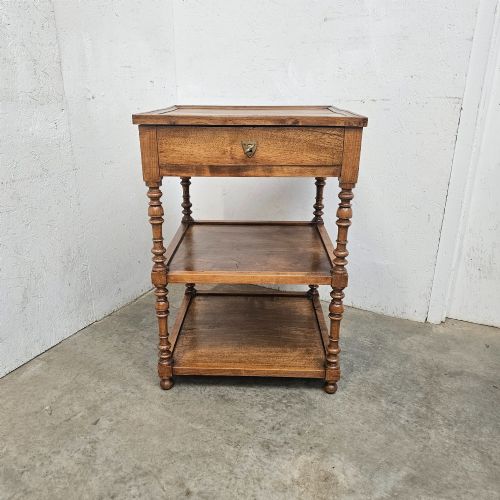
When you search for a carved walnut tier shelf, you encounter multi-tiered display furniture designed for vertical storage and ornament. The items grouped under this description span corner units, wall shelves, and freestanding multi-tier whatnots dating predominantly from the nineteenth century.
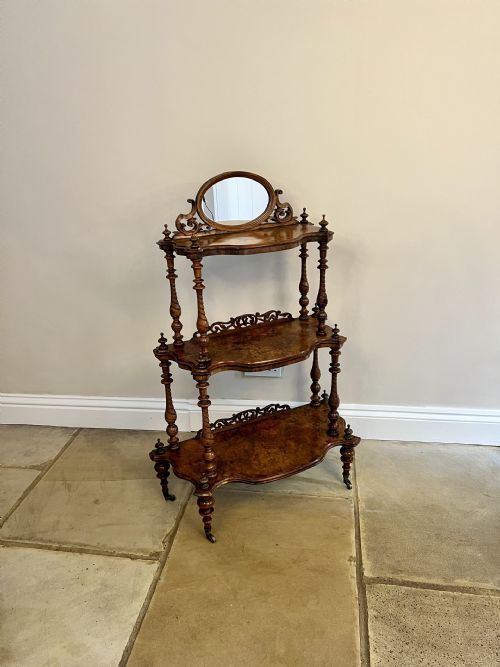
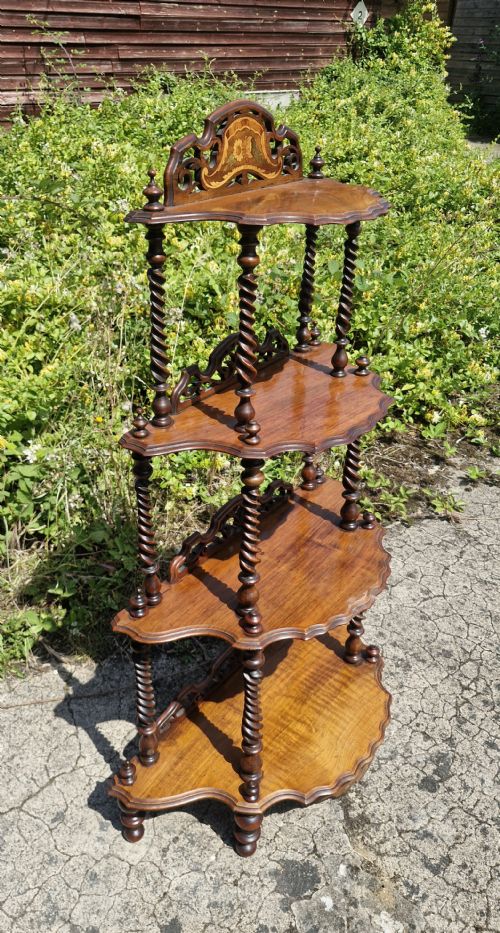
Victorian examples dominate the selection, often taking the form of three or four tier whatnots or etageres. Makers from this period utilised walnut and burr walnut to construct open shelving units meant for displaying books, ceramics, and ornaments in principal rooms.
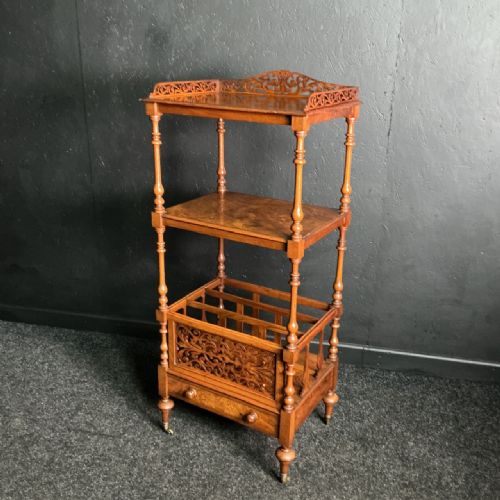
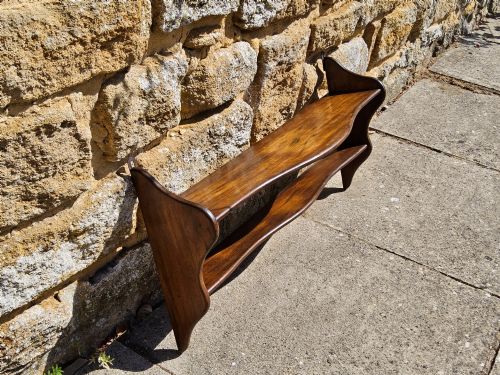
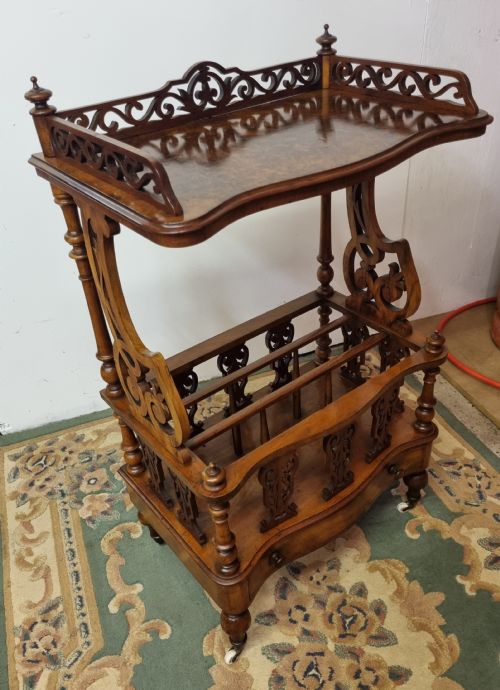
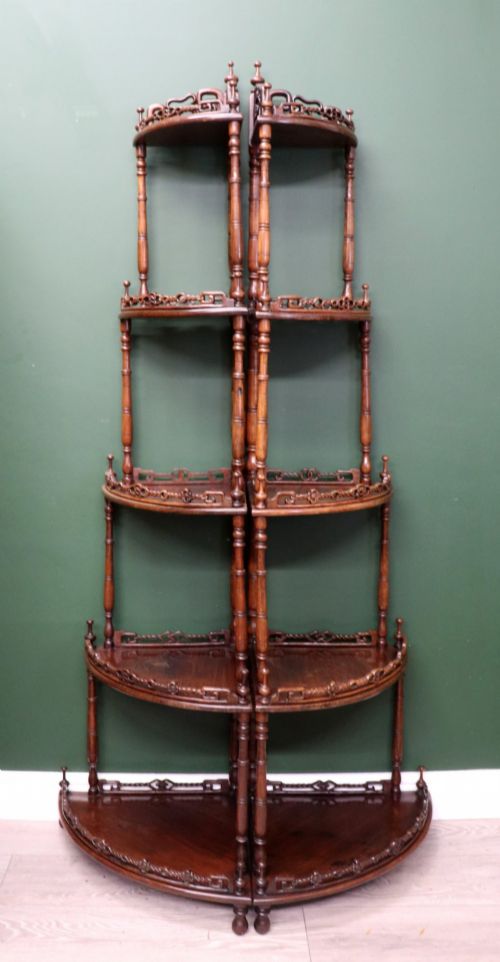
Alongside standard freestanding models, the listings include specialised variants such as corner shelves, demi-lune display consoles, and Canterbury combinations. These pieces reflect the nineteenth-century preference for utilising vertical space in domestic interiors.
What separates the tiers of quality
Quality in a carved walnut tier shelf rests upon the selection of timber and the precision of the carving. Exhibition pieces exhibit carefully matched burr walnut veneers and crisp, deeply carved wooden details that elevate them above standard commercial production.
Some Victorian whatnots feature fully adjustable shelves, allowing homeowners to rearrange their tiered displays on a whim.
Gillows
The Carved Walnut Tier Shelf Glossary
- Whatnot
- A piece of furniture consisting of a set of open shelves for displaying small objects. These items typically feature three or more tiers supported by turned columns or uprights.
- Etagere
- A French term for a piece of furniture with a set of open shelves for displaying ornaments. They often share a similar tiered function with whatnots.
- Burr Walnut
- A specialised wood cut from a tree growth or burl, yielding swirling, highly decorative grain patterns. Cabinet-makers prized this veneer for the top surfaces of quality furniture.
- Marquetry Inlay
- Decorative patterns formed by inserting small pieces of wood, brass, or other materials into veneer. This technique adorned shelves and tabletops with intricate geometric or floral designs.
- Canterbury
- A low stand with partitions for holding sheet music or books, occasionally combined with tier shelves on top. These units served domestic musical and reading habits.
Carved Walnut Tier Shelf: Frequently Asked Questions
What is a tiered wooden whatnot used for?
A whatnot provided open display space for ornaments, ceramics, and books in nineteenth-century parlours and drawing rooms.
Their stacked shelves allowed households to exhibit collections vertically without crowding table surfaces.
How do I identify a Victorian walnut shelf?
Victorian walnut shelves are identified by their characteristic dark timber grain, turned supports, and multi-tier construction.
Many examples incorporate burr walnut veneers, brass details, and carved woodwork typical of the mid to late nineteenth century.
Where should I place a corner whatnot?
A corner whatnot fits into unused room angles to maximise vertical display space.
These wedge-shaped units integrate neatly into corners of living rooms or hallways to hold small decorative items.
What is the difference between an etagere and a whatnot?
An etagere is typically of French origin and focuses heavily on decorative display in salons.
A whatnot is often of English manufacture, serving a similar multi-tiered shelving purpose with slightly varying nomenclature across the nineteenth century.