

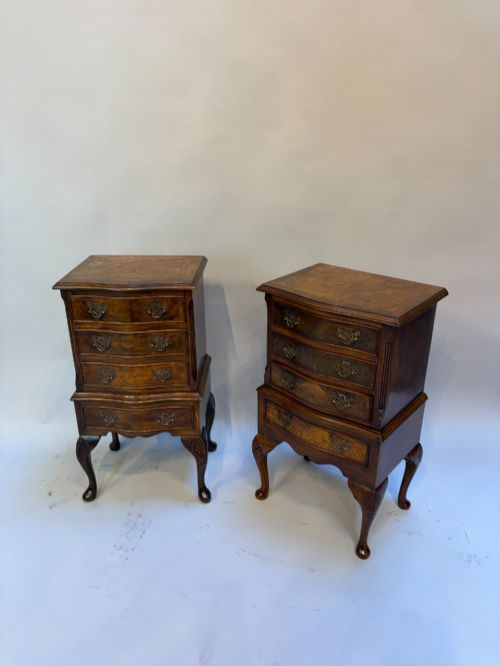
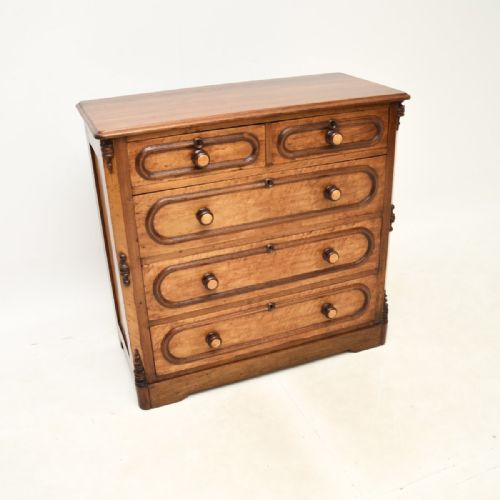
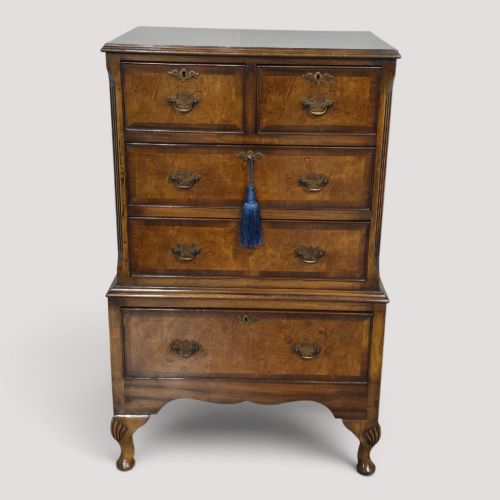
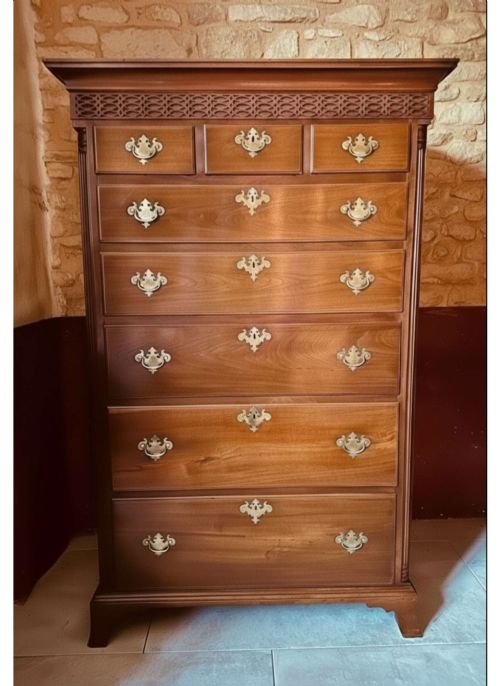
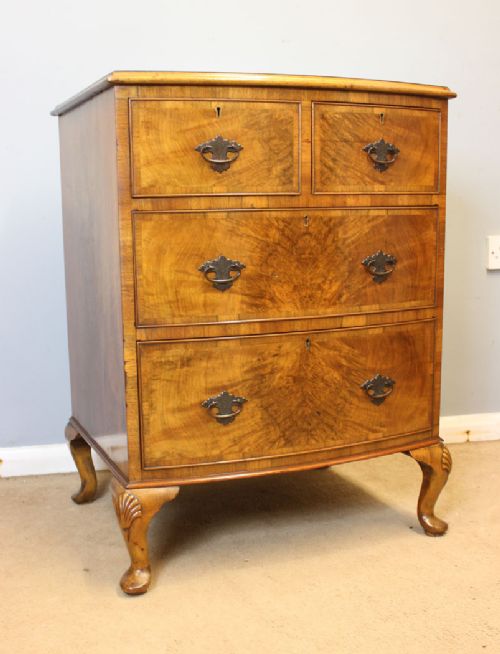
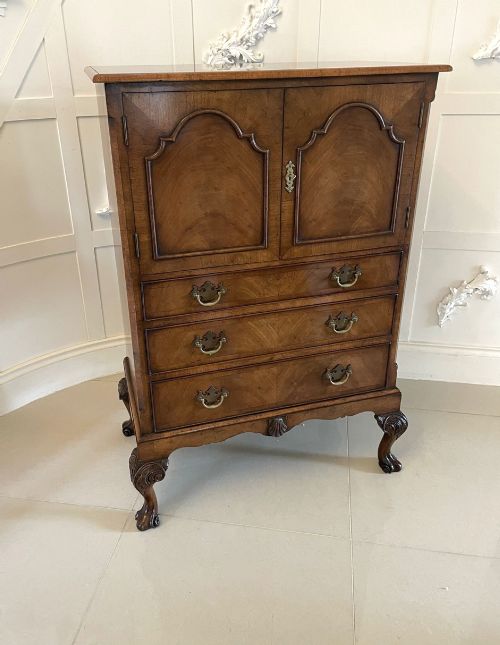
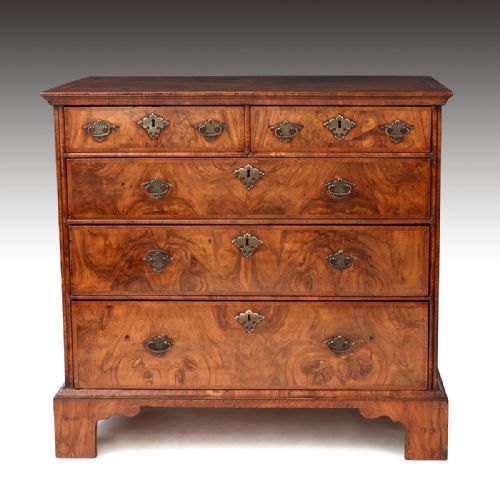
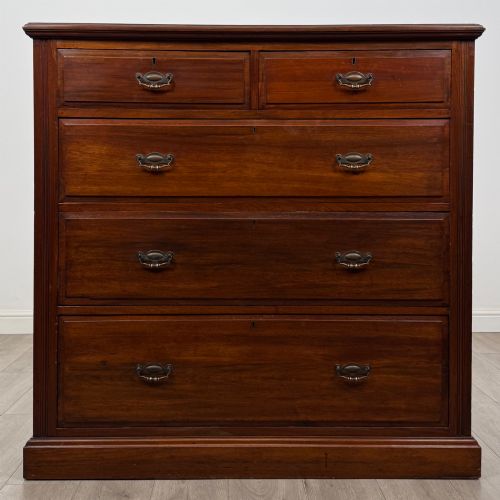
Carved Walnut Tallboy Chest
A carved walnut tallboy chest combines stately vertical presence with rich timber grain, offering serious storage wrapped in period elegance.
Carved Walnut Tallboy Chest
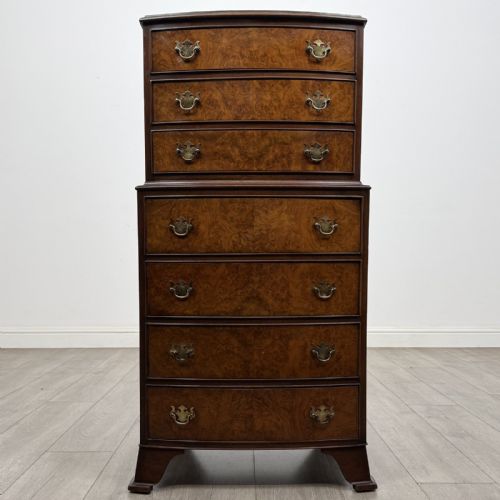
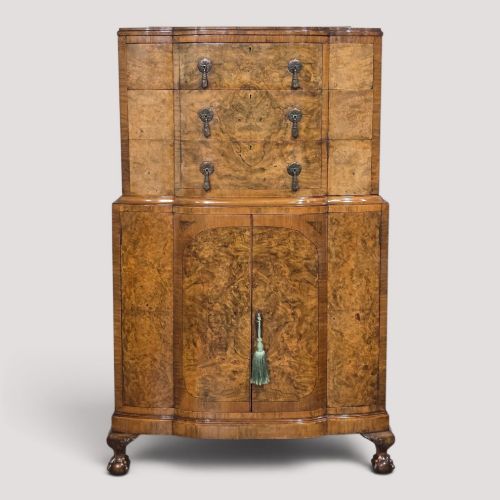
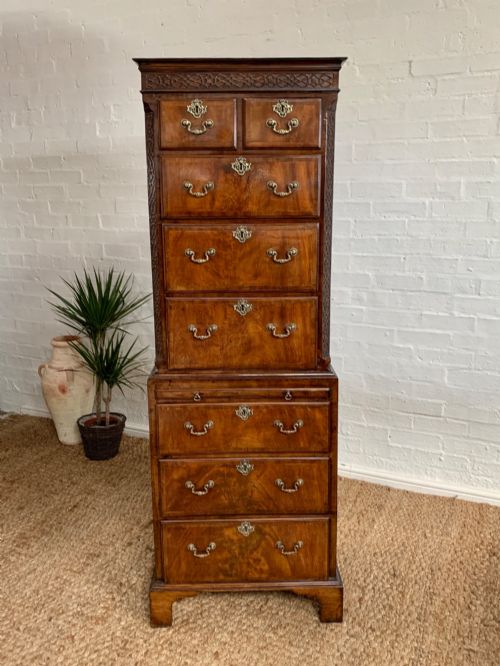
A carved walnut tallboy chest stands as a commanding piece of storage furniture, stacking drawers vertically to maximise capacity while keeping a compact footprint on the floor. Buyers seek these forms for their impressive height, combining upper and lower sections into a single grand cabinet or chest on chest.
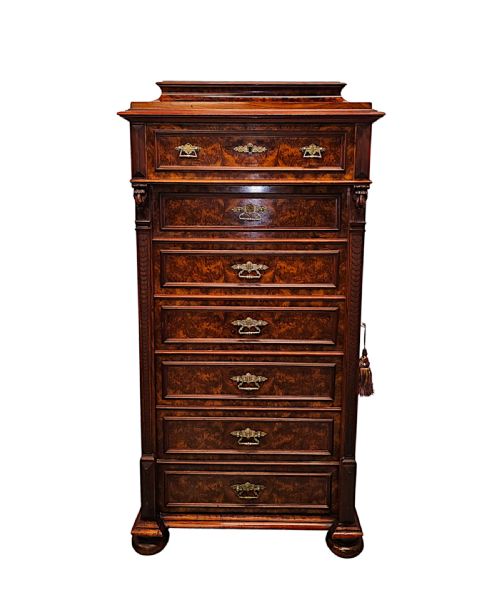
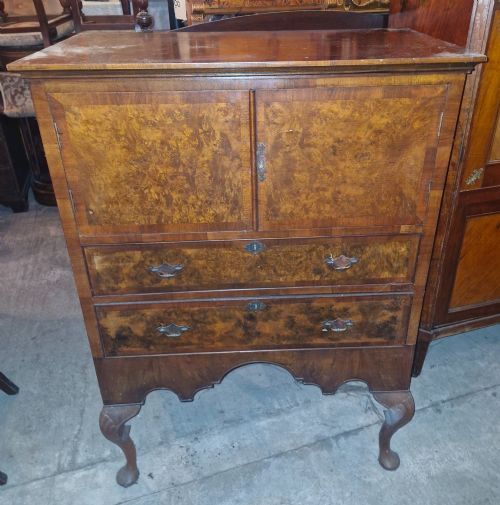
The selections available span from the 17th century through the Victorian era and into the early 20th century, capturing periods such as William and Mary, Queen Anne, and Georgian styles. Alongside traditional tallboys, related forms like chests on stands, Wellington chests, and secretaire chests appear frequently in the listings.
Makers and joiners utilised walnut timber in various forms, ranging from solid wood to decorative veneers and burr walnut figures. Marquetry inlay, arabesque patterns, and carved details distinguish the surfaces of these tall storage pieces, reflecting the stylistic shifts of their respective periods.
How they were made
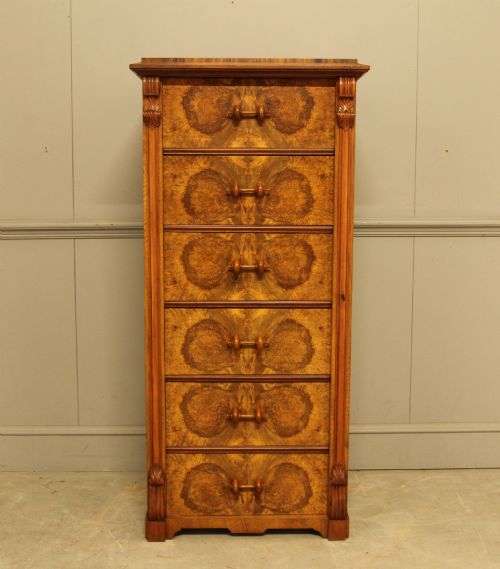
Cabinet makers built these pieces using solid walnut, oak framing, and intricate walnut veneers applied to secondary woods. Burr walnut sections provided dramatic, swirling grain patterns across drawer fronts, while contrasting timbers added structural stability.
Surface decoration involved delicate marquetry inlay, arabesque motifs, and precise hand-carving applied directly to the timber. Brass hardware, including drop handles and escutcheons, secured the drawers and added functional contrast to the dark wood.
Finishing techniques preserved the natural colour and grain of the walnut, sometimes incorporating ebonised wood details or marble tops on Continental examples. Joinery relied on traditional dovetailed drawer construction and sturdy panel frames designed to support the tall stacked weight.
Carved Walnut Tallboy Chest Retail Price Guide 2026
Typical asking prices for carved walnut tallboy chest among the pieces listed under this phrase on Sellingantiques today, from the lower quarter to the upper quarter. They describe what is for sale here now, not the wider market.
Listings feature walnut chests spanning from the 17th century through the Victorian era to the 1930s, incorporating oak, brass, and marble elements.
What varies in quality
The depth and crispness of the carving distinguish finer examples, as does the choice of timber figure. Burr walnut veneer selected for symmetrical grain patterns elevates a piece far above plain stock.
Proportion and architectural harmony dictate the standing of a chest, particularly how the upper and lower sections relate in a tallboy or chest on chest. Original brass hardware and intact marquetry or inlay work also mark the difference between standard production and exceptional craftsmanship.
The Carved Walnut Tallboy Chest Glossary
- Tallboy
- A tall chest of drawers, typically constructed as one chest stacked upon another, providing high-capacity vertical storage.
- Burr Walnut
- Timber taken from the abnormal growth of a walnut tree, yielding highly decorative, swirling grain patterns prized for drawer fronts.
- Marquetry
- The art of applying pieces of veneer to a structure to form decorative patterns, often seen in floral or arabesque designs.
- Wellington Chest
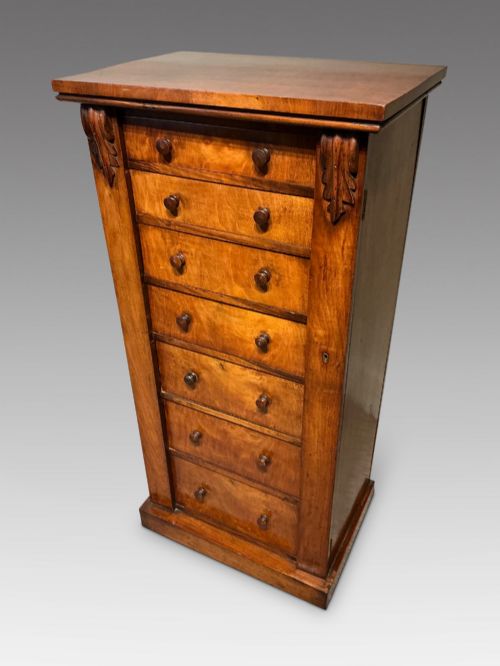
- A tall, narrow chest of drawers secured by a hinged locking side pilaster bar.
- Chest on Stand
- A chest of drawers elevated on a separate frame with legs, typical of earlier period furniture styles.
Carved Walnut Tallboy Chest: Frequently Asked Questions
How do I use a tallboy in a modern room?
A carved walnut tallboy chest provides exceptional vertical storage without occupying excessive floor space, making it ideal for bedrooms or hallways.
Its deep drawers accommodate folded garments or linens while the top surface offers a display area for lighting or decorative objects.
What is the difference between a tallboy and a Wellington chest?
A tallboy typically consists of a large chest stacked directly upon another lower chest, creating a substantial two-part cabinet.
A Wellington chest is narrower and taller, featuring a single bank of drawers secured by a hinged locking stile on the side.
How do I identify a William and Mary period chest?
William and Mary pieces date around the late 17th and early 18th centuries, often featuring geometric veneer panels, seaweed marquetry, and distinctive stand bases.
They display structured proportions and rich burr walnut surfaces distinct from later Victorian interpretations.
Are these chests made of solid walnut?
Most pieces combine solid structural framing in woods like oak with fine walnut veneers applied to drawer fronts and primary surfaces.
Burr walnut is almost exclusively utilised as a veneer due to its decorative swirling grain and irregular growth formation.