


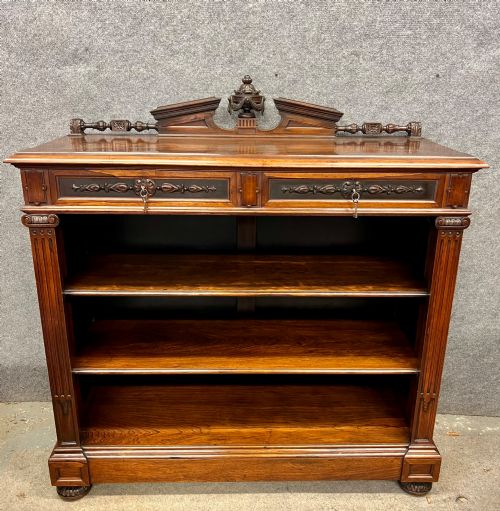
Carved Walnut Shelf
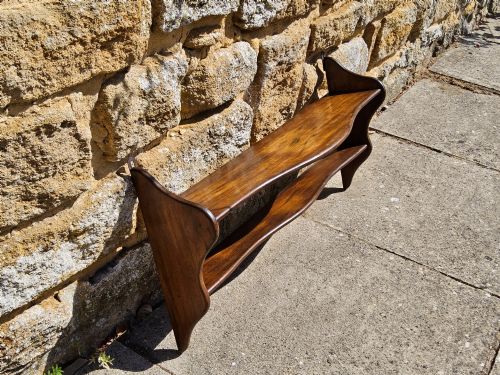
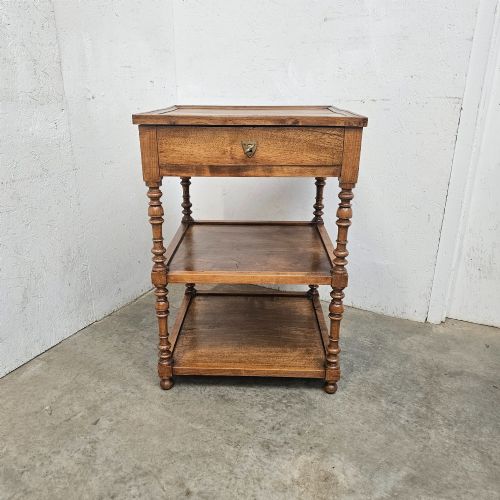
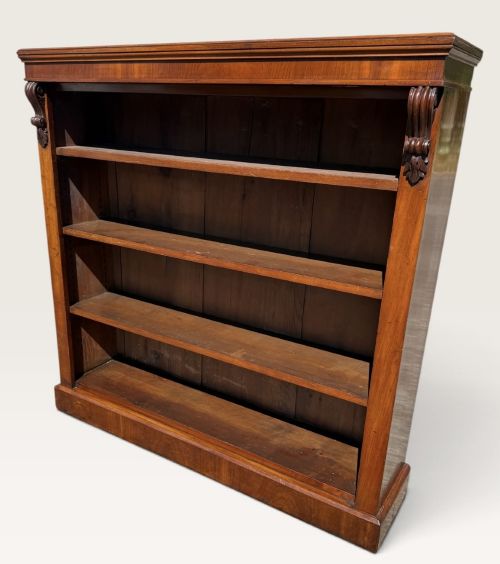
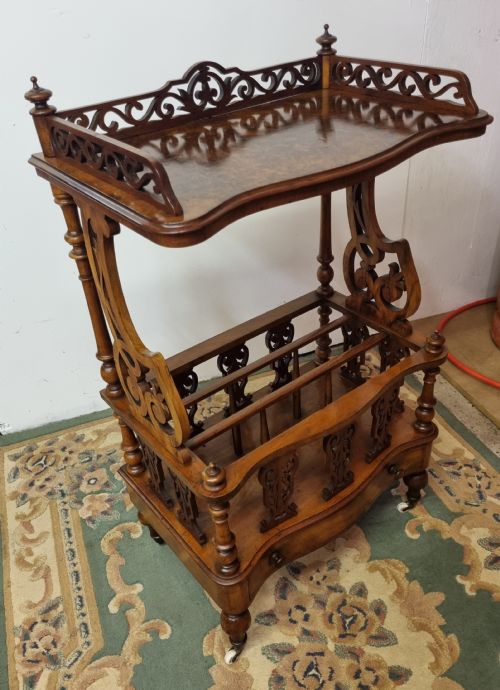
These carved walnut shelf pieces offer rich timber grain and architectural display space, bringing period character directly to your walls.
Carved Walnut Shelf
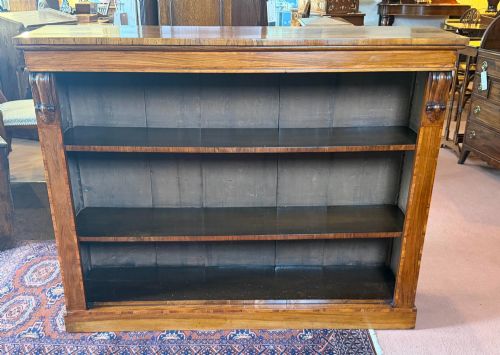
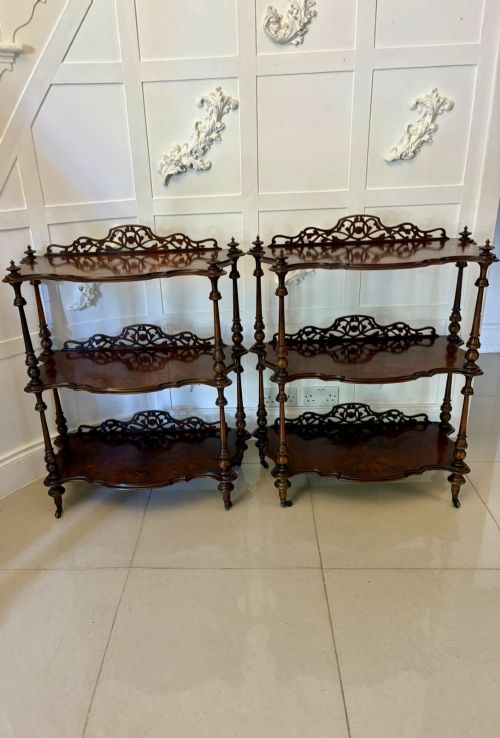
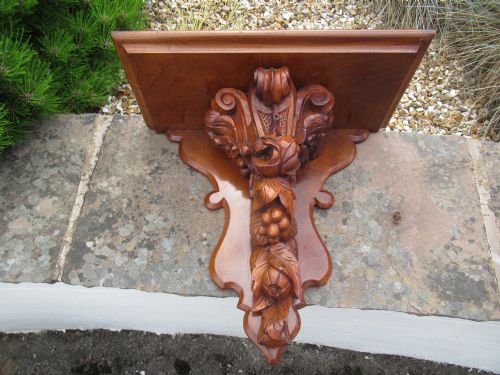
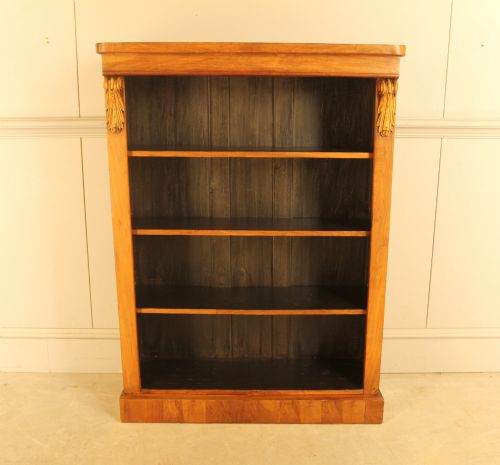
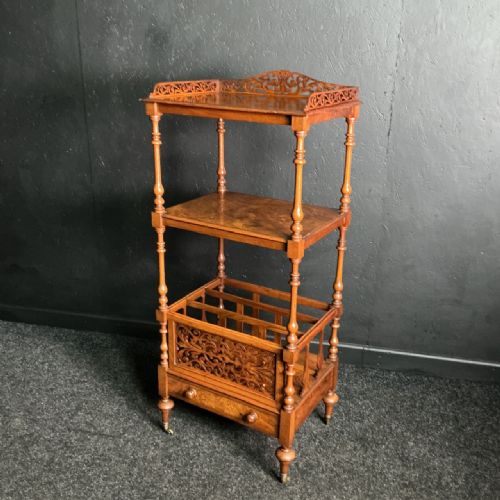
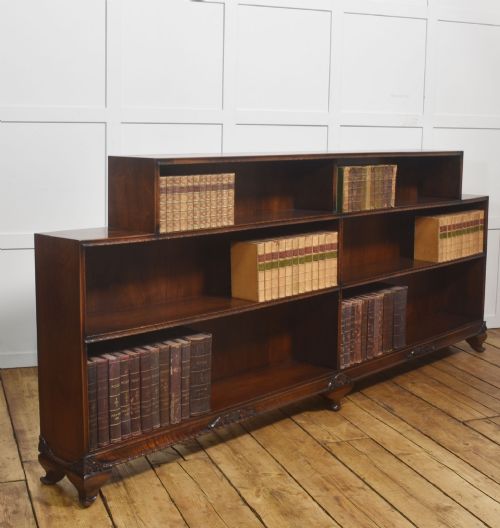
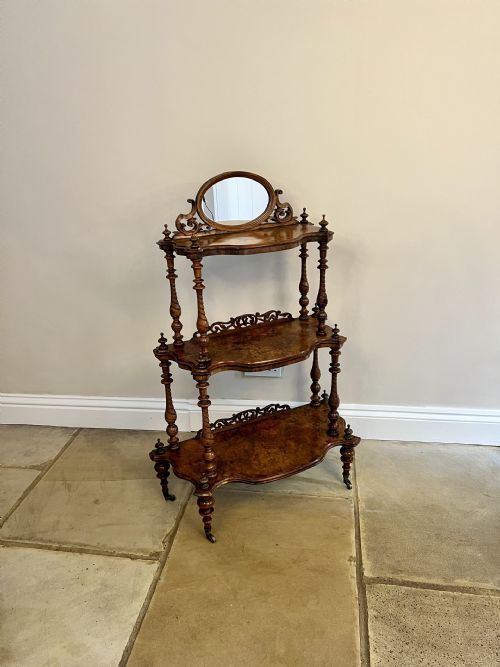
A carved walnut shelf provides sturdy and decorative wall storage, appearing most frequently in Victorian and Edwardian domestic interiors. These pieces range from simple single-tier wall brackets to multi-tiered whatnots and hanging cabinets designed to hold books or ornaments.
Originating largely from nineteenth-century workshops, these pieces reflect domestic trends for displaying decorative objects in hallways, reception rooms, and parlours. The selection spans distinct regional aesthetic movements, from French Provincial styles to robust English Victorian craftsmanship.
Materials and construction
Makers utilised solid walnut and figured burr walnut veneers over secondary woods like pine, applying careful hand-carving to create architectural corbels and decorative mouldings. Timber selection prioritised rich natural grain patterns, which were often polished to a warm lustre.
Metal components such as brass brackets, hinges, and mirror glass feature as secondary elements, supporting structural integrity and decorative appeal. Joinery techniques from the period ensured sturdy wall mounting and durable shelving construction.
The material record shows a strong preference for burr walnut and brass hardware across nineteenth-century English and French examples.
Assessing quality and craftsmanship
Superior examples distinguish themselves through depth of carving, crisply rendered architectural details, and the quality of the burr walnut veneer used across the surfaces. Finer pieces demonstrate precise joinery and well-balanced proportions that maintain stability under weight.
The integration of secondary materials, such as bevelled mirror glass or substantial brass fittings, often signals a higher tier of production. Pieces bearing workshop attributions or exhibition-quality finishing display a superior handling of the timber grain.
Gabriel Viardot·Maple & Co.·Connell of London·H.A.C.
The Carved Walnut Shelf Glossary
- Burr walnut
- A figured wood grain prized for its swirling patterns, cut from the abnormal growths on walnut trees. It was frequently utilised as a decorative veneer on high-end Victorian furniture.
- Corbel
- A structural piece of stone or wood projecting from a wall to carry a weight. In wall brackets, carved corbels provide both support and ornate aesthetic detail.
- Whatnot
- An open set of multi-tiered shelves used for displaying ornaments and small objects. These pieces became popular during the nineteenth century for parlour and drawing-room display.
- Aesthetic Movement
- A late nineteenth-century design style that emphasised visual beauty and artistic expression over strict historical revival. Pieces from this movement often feature refined carving and harmonious proportions.
- Etagere
- A piece of furniture consisting of a set of open shelves for displaying small objects. French examples often incorporate turned legs and delicate proportions.
Carved Walnut Shelf: Frequently Asked Questions
How do I mount an antique wall shelf?
Check the original hanging points and brackets on the back of the timber frame to determine the appropriate load-bearing fixings required for your wall type.
Ensure the fixings align securely with wall studs or utilise heavy-duty wall anchors suitable for the weight of solid walnut timber.
Where were these shelves placed in period homes?
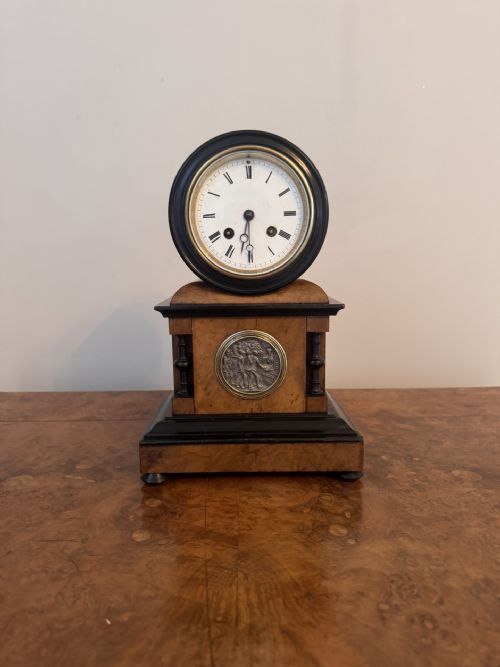
These pieces typically hung in reception rooms, hallways, and parlours to display clocks, ceramics, and small decorative ornaments.
Corner brackets and hanging cabinets were specifically chosen to utilise awkward wall spaces efficiently while adding architectural interest.
How do I clean and care for walnut?
Dust the carved surfaces regularly with a soft, dry cloth to prevent dirt from settling into the intricate recesses of the wood grain.
Avoid using silicone-based polishes or placing the timber in direct sunlight, which can dry out the historic finish and fade the burr walnut.
How do I distinguish Victorian from Edwardian pieces?
Victorian walnut pieces often feature heavier, darker finishes with dense, elaborate carving and robust architectural elements like corbels.
Edwardian examples tend to display lighter timber tones, cleaner lines, and simpler geometric forms suited to more open domestic spaces.