






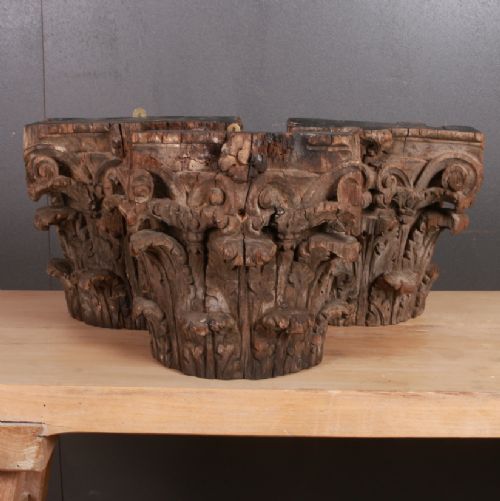
Carved Acanthus Corbels
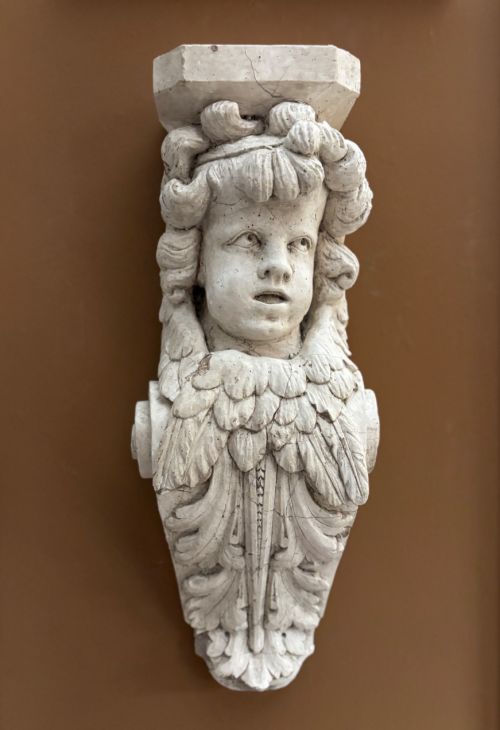
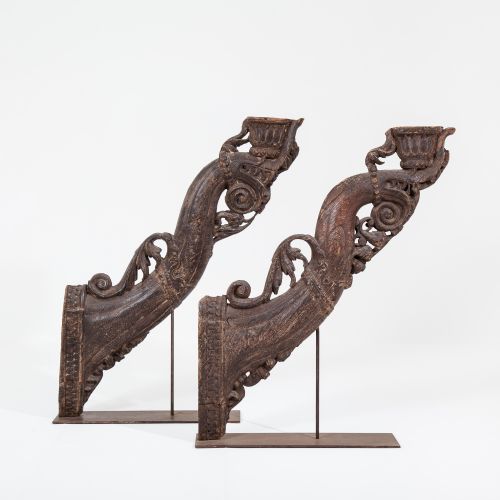
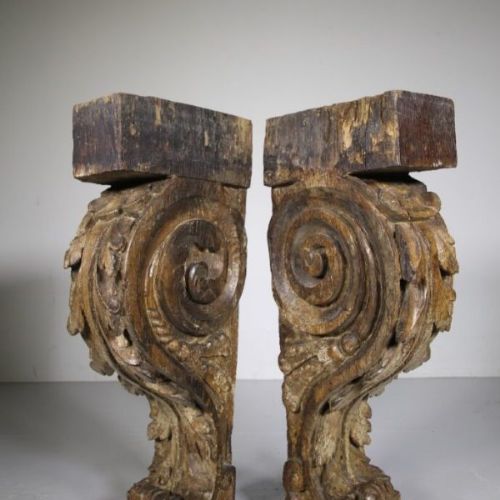
These carved acanthus corbels are architectural supports that bring bold relief and classical grace to any wall.
Carved Acanthus Corbels
Carved acanthus corbels serve primarily as ornamental wall brackets and architectural salvage, designed to support shelves, mantelpieces, or beams with sculptural weight. When exploring carved acanthus corbels, you encounter items shaped from substantial timber or moulded composition, emerging from periods ranging from the eighteenth century to the twentieth century.
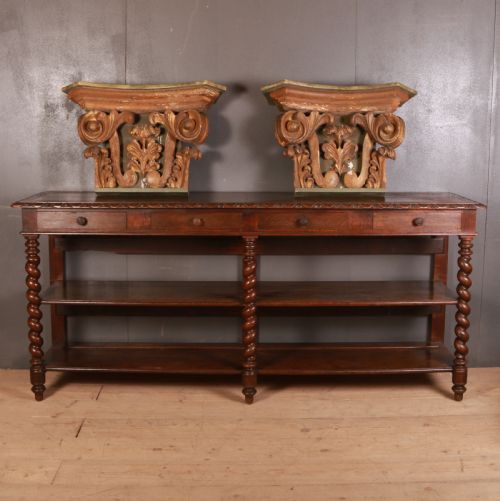
The selection on this page leans heavily toward eighteenth-century European pieces, Georgian oak examples, and later Victorian interpretations. Many take the form of paired wall brackets, though individual architectural capitals and French plaster figures also appear.
Makers and carvers utilised diverse materials, producing items finished in gold leaf, gesso, paint, or simply polished red walnut and limewood. These pieces reflect the enduring popularity of Baroque, Rococo, and Neoclassical styles in domestic interiors.
Materials and Construction
Makers fashioned these architectural supports from dense timbers such as oak, red walnut, and limewood, allowing for deep undercutting and sharp definition in the foliage. Carvers worked directly into the solid wood using gouges and chisels to build up the characteristic scrolling leaves.
Many examples received decorative surfaces of gesso and gold leaf over the carved wood, adding a reflective sheen suited to formal rooms. Other pieces utilised plaster or composition moulded elements, especially in larger French and Italian architectural fragments.
Current listings span the eighteenth century, the Victorian era, and the nineteen-thirties, utilising carved wood, plaster, and gold leaf.
Assessing Quality and Execution
The depth and crispness of the carving dictate the visual impact of each bracket, separating hurried workshop production from master craftsmanship. Superior pieces display naturalistic movement in the acanthus leaves with sharp undercutting, whereas simpler items present flatter, more stylised relief.
The integrity of the underlying material and the preservation of original surface treatments, such as early gilding or patinated walnut, influence the character of the piece. Surviving pairs matched in size and proportion command greater architectural presence than single brackets.
The Carved Acanthus Corbels Glossary
- Corbel
- A structural piece of stone, wood, or metal protruding from a wall to carry a weight. Most items listed function as decorative wall brackets rather than structural supports.
- Acanthus
- A Mediterranean plant whose leaves inspired classical ornamentation on columns and furniture. The stylized foliage forms the primary decorative motif of these brackets.
- Gesso
- A plaster mixture used as a smooth base for paint or gold leaf on wood. It allows for crisp secondary detailing before gilding.
- Capital
- The uppermost member of a column or pilaster, often carved with acanthus leaves. Several listings include architectural capitals adapted as wall brackets.
- Composition
- A moulded material made from Whiting, oil, and resin pressed into decorative shapes. It mimics hand carving on many later Victorian and twentieth-century brackets.
Carved Acanthus Corbels: Frequently Asked Questions
How do I mount a heavy corbel to the wall?
Most antique corbels require custom metal brackets or hidden screw fixings inserted into the flat rear surface. Ensure the wall structure can support the weight of dense timber or plaster.
Professional installation is recommended for larger eighteenth-century stone or wooden pieces to prevent wall damage.
Can these brackets support a heavy shelf?
Solid wood examples from the Georgian and Victorian periods generally offer robust support for timber shelves or mantels. Lighter plaster or composition versions serve mainly a decorative or visual purpose.
Check the rear fixing points and material density before placing heavy objects on top.
How do I clean gilded wood?
Dust gently with a soft, dry brush to remove surface particles without disturbing delicate gold leaf or gesso. Avoid water, harsh chemicals, and modern cleaning sprays entirely.
Professional conservation is advised if the surface shows active flaking or significant deterioration.
What is the difference between a corbel and a bracket?
A corbel traditionally projects from a wall to support a heavy load, often featuring a block-like solid form. A bracket typically describes a lighter protruding support with distinct open space underneath.
In antique terminology, the two words are frequently interchanged by dealers.