



French Architectural Brackets
French architectural brackets are substantial structural supports and wall mounts that anchor a room with classical presence.
French Architectural Brackets
When you search for french architectural brackets, you encounter robust structural fragments and decorative wall supports spanning several centuries of European craftsmanship. These pieces function primarily as heavy wall brackets, corbels, and console shelves designed to project from masonry or timber walls.
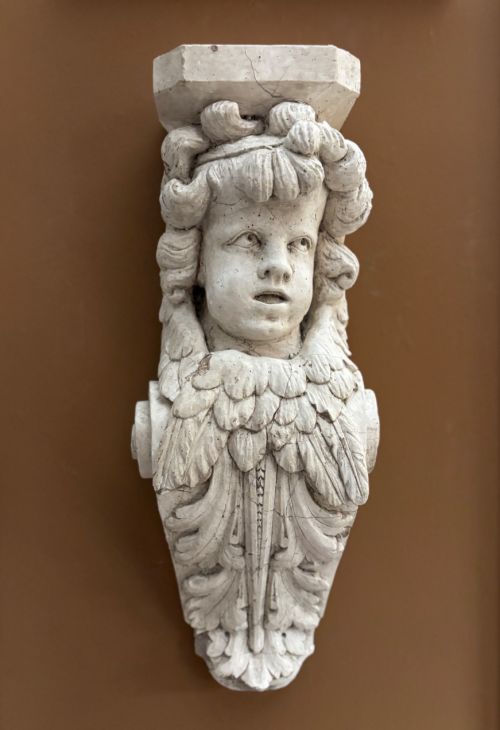
The selection on this page relies heavily on substantial examples from the eighteenth and nineteenth centuries, alongside complementary items such as decorative mantel clocks. You find both monumental stone corbels and carved timber brackets originating from continental workshops.
Many of these supports manifest distinct regional styles, ranging from Georgian and Victorian neoclassical designs to rustic French country and dramatic rococo revival forms. They appear in pairs or singular large formats, reflecting their original architectural placement.
How they were made
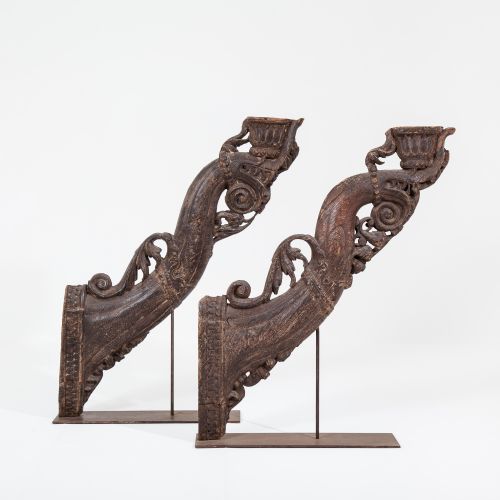
Makers shaped these supports using traditional dense materials including carved oak, carved timber, and solid stone, which were chiselled by hand to achieve deep relief. Plaster and composition provided an alternative medium for capturing intricate sculptural detail, often finished with surface paint or gesso.
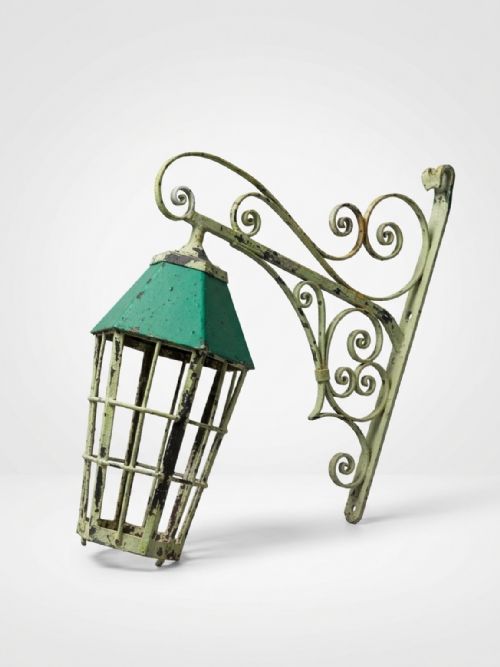
Metalwork pieces incorporate iron, bronze, and brass, demonstrating both structural forging and cast ornamentation. Surface treatments on the wooden and plaster variants rely on layered paint and historical patination to accentuate the underlying carving.
Listings feature periods spanning from the eighteenth century through to nineteen hundred, utilising materials such as carved oak, stone, plaster, and iron.
What varies in quality
Superior quality in these supports reveals itself through the depth and crispness of the hand carving, where organic motifs and figures retain sharp definition rather than softening into worn shapes. The integrity of the original material, whether dense carved oak or solid stone, dictates the presence and longevity of fine sculptural detail.
The sophistication of the period style further distinguishes the work, with refined neoclassical or rococo revival proportions holding greater visual weight than simpler utilitarian forms. Surface finish also plays a role, as intact historical paint layers and gesso retain more integrity than modern repainting.
The French Architectural Brackets Glossary
- Corbel
- A structural piece of stone, wood, or metal projecting from a wall to carry a weight. It often terminates in a carved scroll or figural motif.
- Gesso
- A plaster mix used as a base for painting on wood or canvas. It holds fine decorative detail before gilding or painting.
- Composition
- A moulded mixture of whiting, resin, and oil pressed into shape. This material allowed makers to produce ornate relief decoration efficiently.
- Neoclassical
- A style reviving classical antiquity during the eighteenth and nineteenth centuries. It emphasises symmetry, straight lines, and classical proportions.
- Rococo Revival
- A nineteenth-century movement emulating the ornate, asymmetrical curves of the French rococo period. It brings elaborate naturalistic motifs to architectural ornaments.
French Architectural Brackets: Frequently Asked Questions
How were french architectural brackets used originally?
These pieces functioned as heavy structural supports beneath ceiling beams, balconies, and overhanging masonry. They also served as decorative wall consoles for displaying sculptures, clocks, or heavy vases.
In domestic settings, large corbels anchored mantelpieces and heavy shelving, combining engineering necessity with ornate interior decoration.
How do I mount a heavy wall bracket safely?
Mounting requires fastening directly into solid masonry or securing heavy timber battens into wall studs. Because stone and carved timber pieces carry significant weight, standard plasterboard fixings are insufficient.
Consulting a professional builder ensures the wall substrate can bear the load of solid stone or dense oak supports.
How do I tell eighteenth-century pieces from nineteenth-century ones?
Eighteenth-century examples often display deeper, hand-chiselled tool marks and heavier proportions rooted in Georgian or continental building traditions. The stone and oak surfaces show centuries of natural wear and patination.
Nineteenth-century pieces frequently embrace revival styles like Victorian neoclassical or rococo revival, sometimes incorporating composition mouldings alongside traditional carved timber.
How should I clean painted plaster or wood brackets?
Dusting gently with a soft, dry brush preserves delicate surface paint, gesso, and historical patination. Avoid water or chemical solvents, which can lift old paint layers or soften plaster.
If the piece requires deeper attention, professional conservation advice prevents accidental damage to fragile antique finishes.