


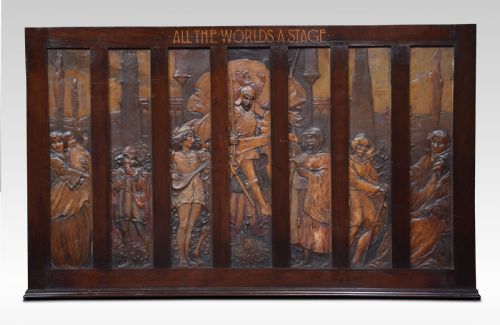

Carved Walnut Relief Carving
These pieces of carved walnut relief carving bring deep timber texture and historic figurative sculpture directly into domestic rooms.
Carved Walnut Relief Carving
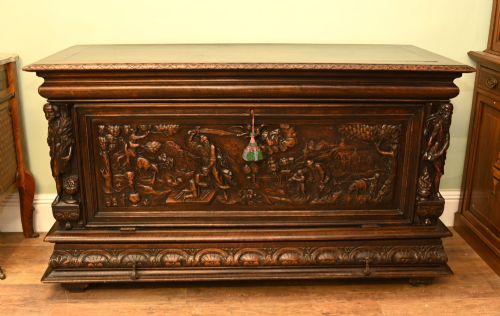
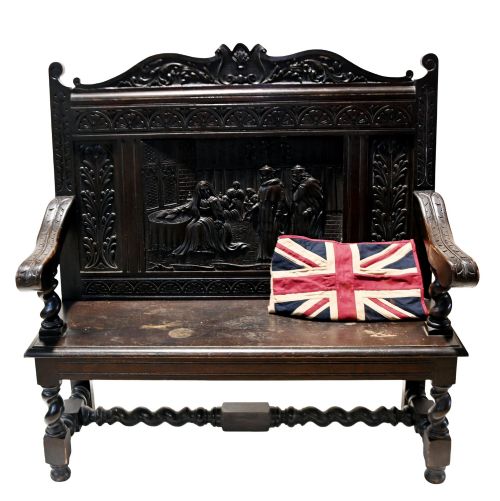
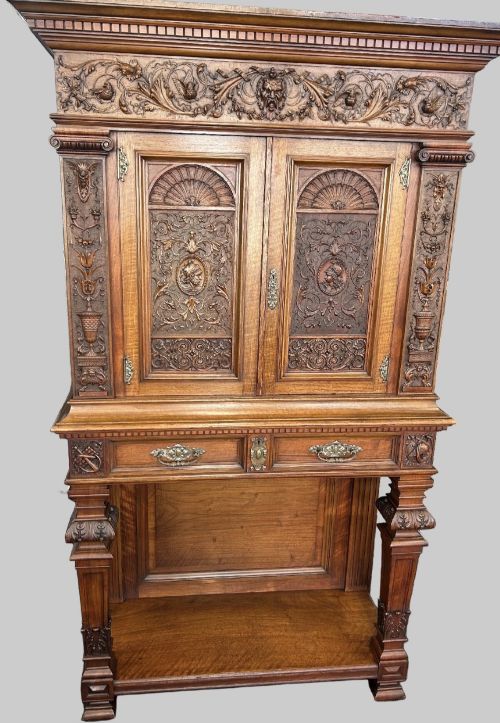
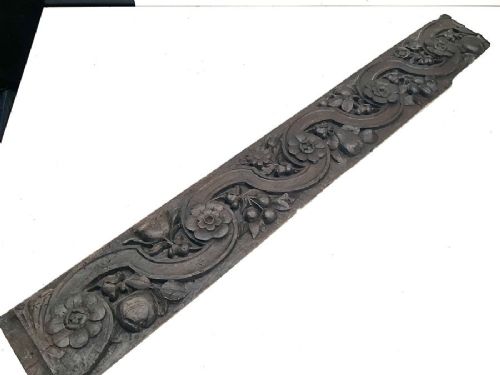
A carved walnut relief carving presents dimensional woodworking designed for vertical display or architectural integration. Pieces span wall plaques, panels, cabinets, and architectural salvage originating from diverse European and global workshops.
The selection ranges from 16th-century English Tudor panels and 17th-century Italian figural works to 19th-century Black Forest hunting scenes and Louis XIII revival cabinets. Buyers encounter both domestic decorative items and substantial architectural elements.
Dating primarily from the 17th through the 19th centuries, these objects capture historical revivalism, regional craftsmanship, and traditional wood sculpting techniques. The forms vary from intimate picture frames and snuff boxes to monumental furniture and wall sculptures.
Materials and methods
Makers utilised walnut, burr walnut, oak, and general timber as the primary substrates for sculptural depth. Selected woods offered tight grain structures suitable for intricate chiselling and long-term stability.
Artisans applied hand-carving techniques to raise figures and motifs from the background board. Secondary materials such as marble and oil paint occasionally supplemented the timber constructions.
The listings span eight distinct centuries, from the 16th century through the 19th century, alongside specific benchmark years like 1860, 1880, and 1890.
Judging quality in carved walnut
Quality rests in the depth of undercut details, the anatomical correctness of figural representations, and the crispness of the chisel work. Master carvers achieved subtle facial expressions and dynamic drapery folds that lesser hands rendered stiffly.
The choice of timber grain and the integrity of the original joints dictate structural longevity. Pieces preserving crisp surface texture without excessive softening from historic cleaning demonstrate superior preservation.
Hugues Sambin
The Carved Walnut Relief Carving Glossary
- Relief carving
- Sculpture where the figures project from a flat background plane. High relief projects significantly, while low relief stays closer to the surface.
- Tudor style
- An English architectural and decorative style spanning the 16th century, known for robust proportions and traditional ornamentation.
- Black Forest
- A regional style originating from Germany in the 19th century, frequently depicting naturalistic animals and hunting narratives in deep relief.
- Terme
- A tapering pedestal merging into a bust or figure, often utilised in Renaissance and revival furniture design.
- Armorial panel
- A carved wooden panel displaying a family crest or coat of arms, historically mounted in significant interiors.
Carved Walnut Relief Carving: Frequently Asked Questions
How do I hang a heavy wooden panel safely?
Substantial timber panels require robust wall fixings anchored directly into studs or masonry rather than standard plasterboard hooks. Weight distribution across multiple load-bearing points ensures the historic wood remains secure.
Consulting a professional installer is advisable for monumental pieces or architectural salvage items to prevent structural strain on the wall and the frame.
What distinguishes Black Forest carvings from other styles?
Black Forest pieces from the 19th century concentrate heavily on naturalistic flora and fauna, particularly dogs, stags, and hunting scenes. The carving style prioritises dynamic movement and deeply undercut foliage.
This German regional aesthetic contrasts sharply with the formal architectural symmetry found in French Louis XIII revival or English Tudor woodwork.
How should I clean historic carved walnut?
Dusting with a dry, soft-bristled brush removes particulate matter from recessed crevices without introducing moisture to the aged timber. Avoid modern liquid polishes or silicone sprays that leave residues on raw or waxed surfaces.
Maintaining a stable indoor humidity prevents the walnut from drying out, cracking, or warping over successive seasonal changes.
How do I identify a 17th-century panel from a 19th-century revival piece?
Seventeenth-century panels display tool marks consistent with early hand chisels, alongside natural timber oxidation and shrinkage patterns earned over centuries. Revival pieces from the 19th century often adopt earlier Renaissance or Louis XIII motifs but utilise mechanical aids or display different wear characteristics.
Examining the reverse side of the board for construction methods and fastening types frequently reveals the true age of the timber.