

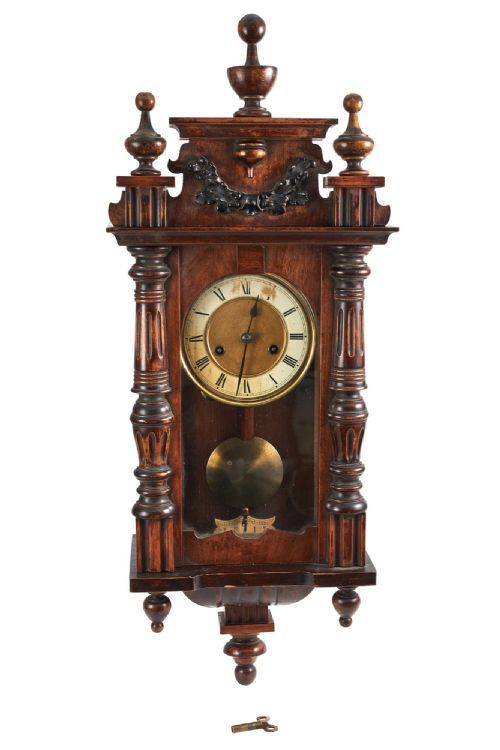

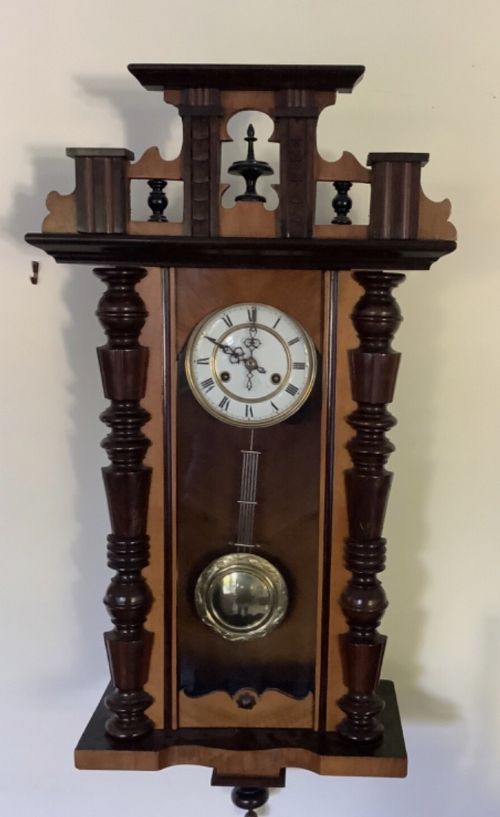


Carved Walnut Regulator Clock
A carved walnut regulator clock is a precise timekeeper housing a reliable movement within a handsome wooden case, prized for steady performance and handsome grain.
Carved Walnut Regulator Clock
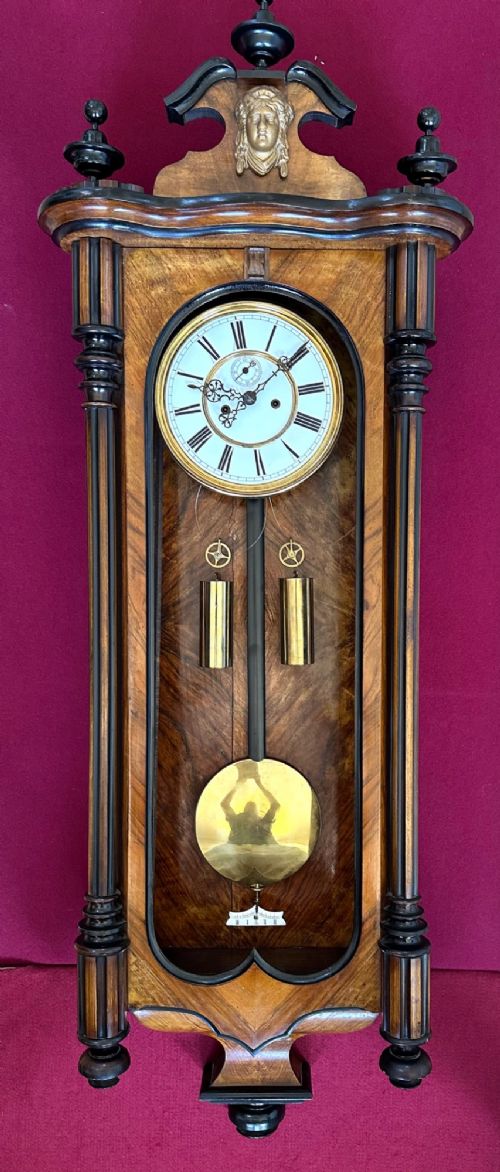
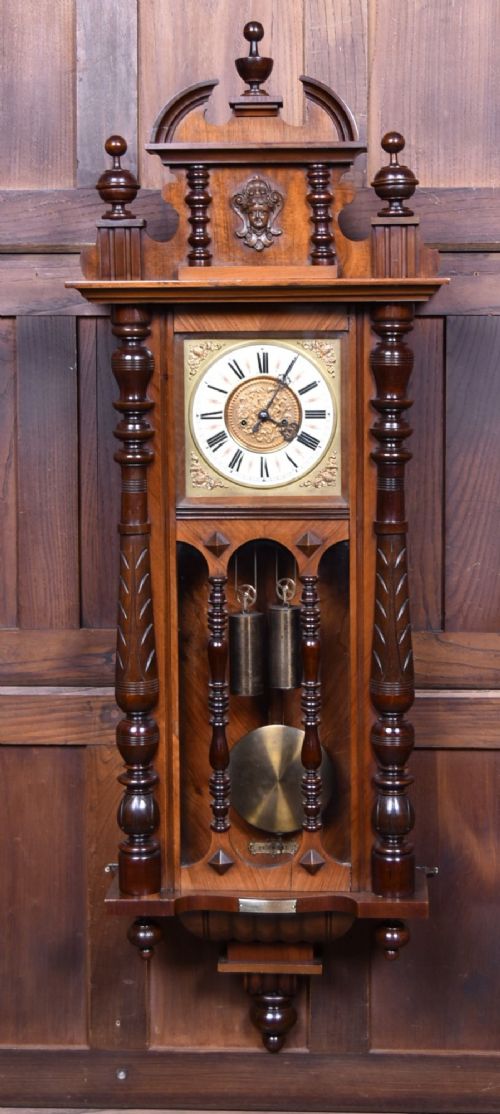
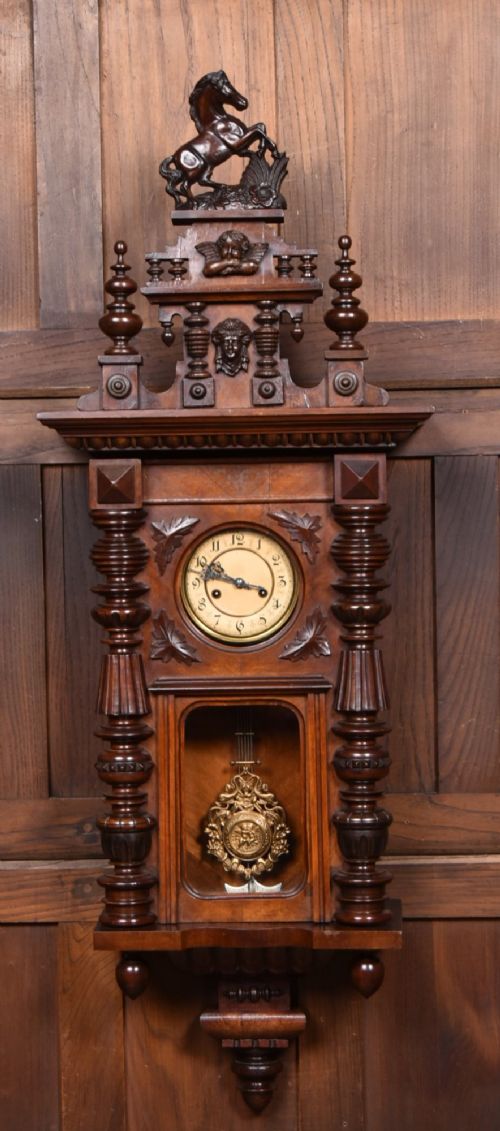
A carved walnut regulator clock brings architectural presence to a wall, combining precision timekeeping with rich cabinet work. These pieces emerge primarily from the nineteenth century, spanning Victorian and continental European workshops.
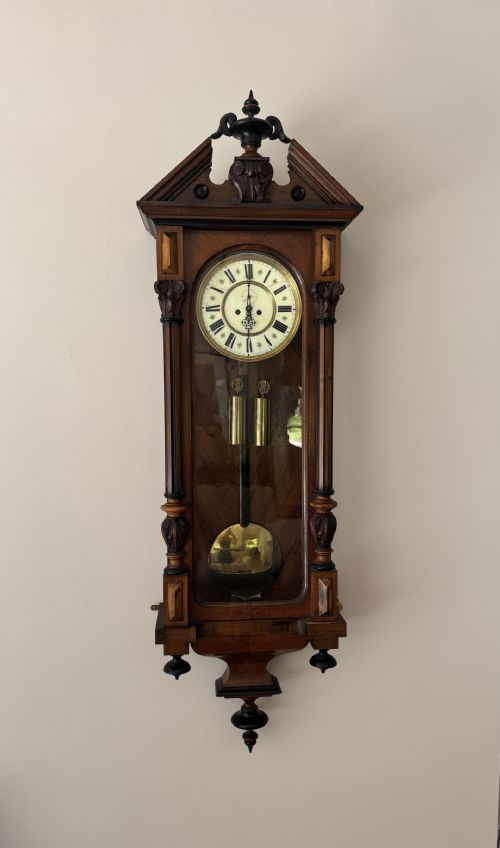
The most common examples on this page follow the Vienna wall clock tradition, featuring glazed doors and pendulum systems designed for steady accuracy. Makers utilised dense timber and detailed carvings to frame the white enamel or porcelain dials.
The selection ranges from simple eight day striking models to grander double and triple weight regulators. Each wall clock displays the distinct grain of walnut, often accented with ebonised wood details or burr walnut panels.
Materials and construction
Cases rely on solid walnut and burr walnut veneers applied to stable pine or secondary timbers, shaped with mouldings and hand-carved ornamentation. Ebonised wood often provides dark contrast to the warm brown tones of the primary grain.
Internal mechanisms combine brass gear trains with steel arbors, driven by lead or iron weights suspended by cords or chains. Pendulums incorporate brass bobs and wooden rods designed to counteract temperature changes and maintain accuracy.
Dials are constructed from white enamel over copper or segmented porcelain plates, featuring Roman or Arabic numerals. Bevelled or flat glass panels protect the face and allow a clear view of the swinging pendulum below.
Listings feature walnut, burr walnut, and ebonised wood cases housing brass and enamel movements across the nineteenth and twentieth centuries.
Markers of distinction
The sophistication of the movement largely determines the standing of a piece, moving from basic spring-driven timepieces to complex eight day striking trains and triple weight grande sonnerie systems. Heavier movements with sophisticated chiming capabilities require robust framing and precise escapement adjustments.
Cabinet work separates standard production from superior examples through depth of carving, symmetry of burr walnut veneers, and the crispness of turned pilasters. Original finishes and intact carved crests preserve the intended aesthetic and architectural proportions of the maker.
Gustav Becker·Johann Baptist Beha
The Carved Walnut Regulator Clock Glossary
- Regulator
- A high-precision clock designed to keep exact time and serve as a standard for setting other timepieces. These mechanisms prioritise mechanical accuracy and steady performance.
- Vienna regulator
- A specific style of wall-hung weight-driven clock developed in nineteenth-century Austria. They feature long glass-doored cases designed to display the swinging pendulum.
- Grande sonnerie
- A striking mechanism that sounds both the hours and the quarters on every quarter-hour. This complex gear train requires multiple weights or springs to operate.
- Ebonised wood
- Timber treated with a dark finish to imitate ebony. Makers used this technique to create sharp contrasts against the lighter walnut grain.
- Enamel dial
- A face made by fusing powdered glass to a metal plate at high temperatures. This creates a durable, glossy white surface for the painted numerals.
Carved Walnut Regulator Clock: Frequently Asked Questions
How do I wind a weight-driven wall clock?
Winding involves pulling the chains or using a key to raise the weights back to the top of the case. Care must be taken not to over-wind the movement.
Allow the weights to descend fully before resetting them, ensuring the cord or chain remains properly seated on the winding drum.
Where should I hang a regulator clock?
Choose an interior wall free from dampness, direct sunlight, and heavy vibrations from doors or traffic. A stable surface ensures the pendulum swings evenly.
Secure the clock case firmly to wall studs using appropriate fixings to support the combined weight of the timber and movement.
Why is the clock losing time?
Timekeeping variations often result from a shift in the wall position affecting the beat of the pendulum. Adjusting the small regulating nut below the pendulum bob usually corrects the rate.
Accumulated dust in the brass gear train can also slow the mechanism, indicating that professional cleaning may be necessary.