

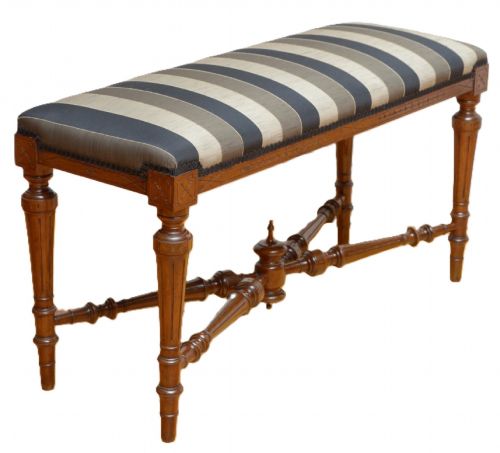


Carved Walnut Piano Stool
A carved walnut piano stool offers a sturdy seat designed for keyboard players, combining rich timber and adjustable height.
Carved Walnut Piano Stool
A carved walnut piano stool is a specialised seat built to support musicians at keyboards, dressing tables or organs. These pieces appear frequently across the Victorian era, alongside examples from the Regency period through to the early twentieth century.
How They Were Made
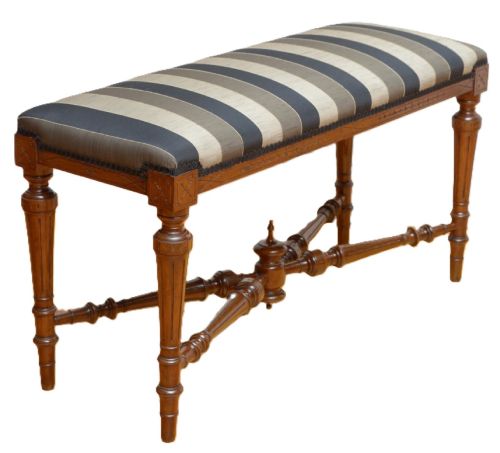
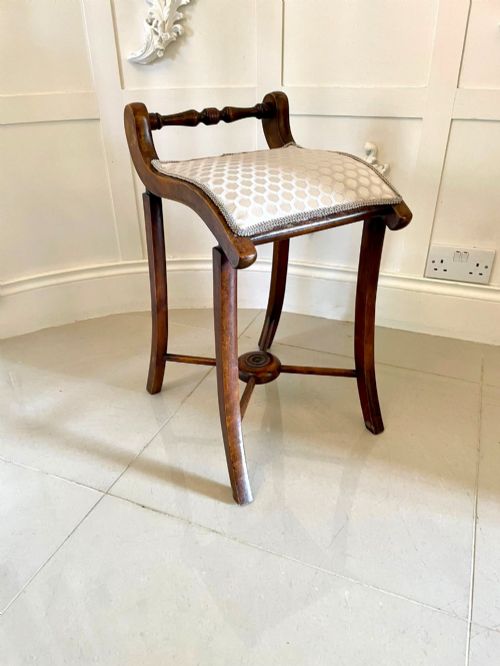
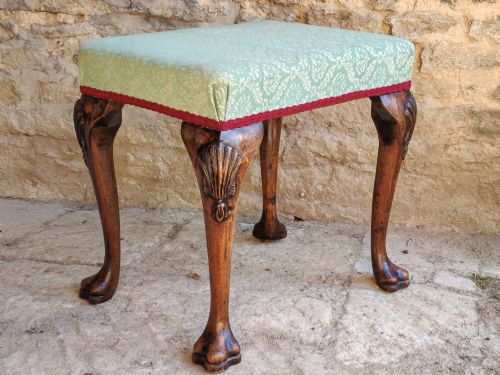
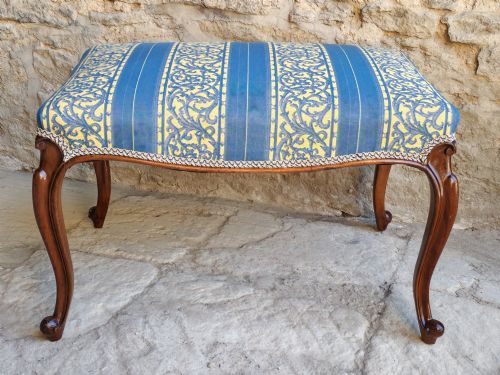
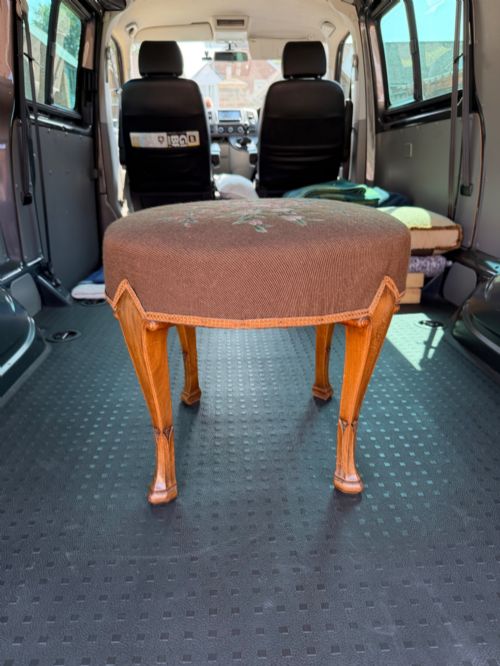
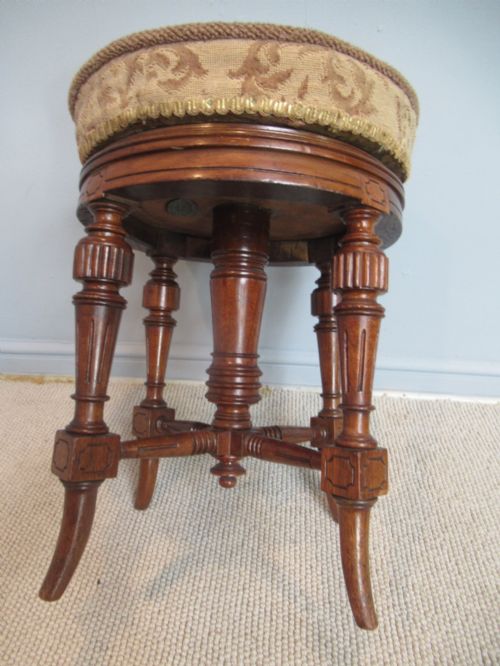
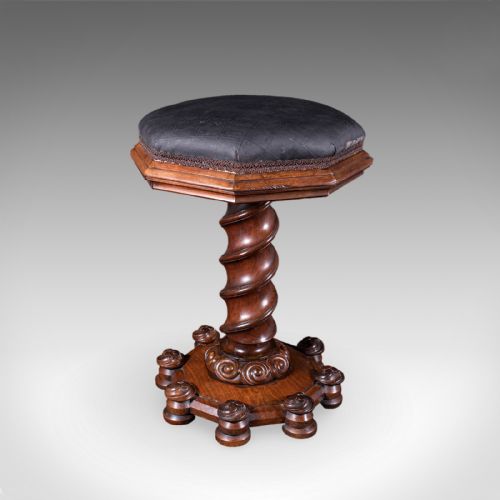
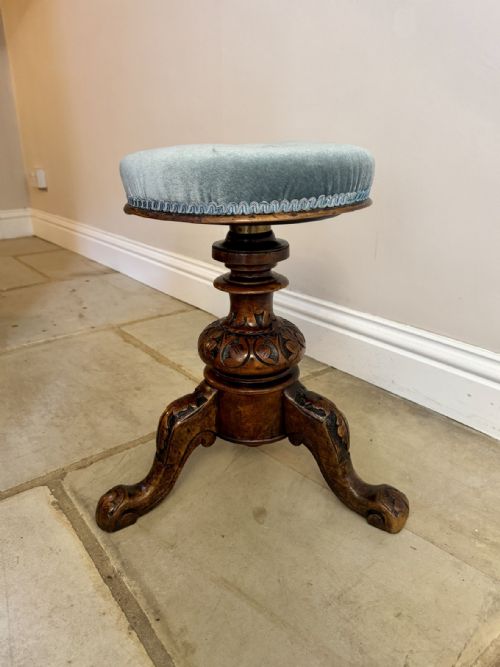
Cabinet makers utilised walnut timber for its strength and rich grain, often shaping it into cabriole legs or tripod pedestals. Carved ornamentation typically decorates the knees, frames and margins of the seats.
Mechanical components incorporate brass fittings to enable the rise and fall adjustments or swivel actions seen on music chairs and piano stools. Upholstery materials such as velvet, leather and needlework textiles were secured over padding to complete the tops.
Carved Walnut Piano Stool Retail Price Guide 2026
Typical asking prices for carved walnut piano stool among the pieces listed under this phrase on Sellingantiques today, from the lower quarter to the upper quarter. They describe what is for sale here now, not the wider market.
Listings feature walnut timber alongside hardwood, brass fittings, and upholstery in velvet, leather, tapestry and fabric.
What Varies in Quality
The crispness and depth of the carved walnut detail separate standard workshop output from finer cabinet work. Sharper lines on cabriole legs and pedestals indicate careful hand execution by the maker.
The smoothness of the mechanical adjustment mechanism dictates the utility of an adjustable stool. Solid timber construction and well-preserved original upholstery materials like tapestry or leather also distinguish superior examples.
The Carved Walnut Piano Stool Glossary
- Revolving stool
- A seat featuring a mechanism that allows the top to spin around on a central screw or pivot. This rotation helped players reach different pedals or turn towards sheet music.
- Cabriole leg
- A furniture leg that curves out in a convex shape at the top and tapers inward in a concave shape below, finishing in a foot. This profile appears frequently on Victorian walnut seating.
- Tripod base
- A three-legged support structure often utilised on revolving music stools and chairs. It provides stability on uneven floor surfaces while allowing space for the adjusting mechanism.
- Needlepoint
- A type of canvas work embroidery used for upholstery on stools and chairs. It adds decorative colour and texture to the top of the seat.
Carved Walnut Piano Stool: Frequently Asked Questions
How do adjustable piano stools work?
Adjustable piano stools typically operate via a threaded central wooden screw or metal spindle. Turning the seat clockwise or anti-clockwise raises or lowers the height to suit the player.
Fitted mechanisms inside the column lock the height in place during use. Brass components often assist this smooth vertical movement.
Where were piano stools placed?
These stools stood beside upright and grand pianos in domestic music rooms, parlours and drawing rooms. Organists also utilised dedicated chapel stools for practice and performance.
Due to their convenient size and upholstered tops, many double as dressing table seats or window benches.
What is a duet piano stool?
A duet piano stool is an extended bench built to seat two musicians playing a piano together simultaneously. They offer a wider surface area than standard single music stools.
These longer forms often incorporate hinged lids for storing sheet music inside or feature decorative carved wooden frames.
How do I date a walnut stool?
Dating relies on observing the stylistic details, such as Regency curves, Victorian cabriole legs or Edwardian frames. The construction methods and types of upholstery materials also provide clues.
Comparing the turning on the legs and the complexity of the carvings helps place the piece within the nineteenth or early twentieth century.