

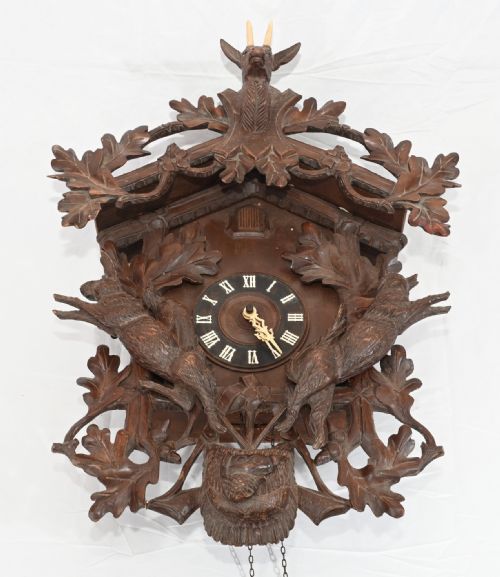


Carved Walnut Head
A carved walnut head brings tactile presence into a room, capturing human, animal or mythical forms through deep, textured relief.
Carved Walnut Head
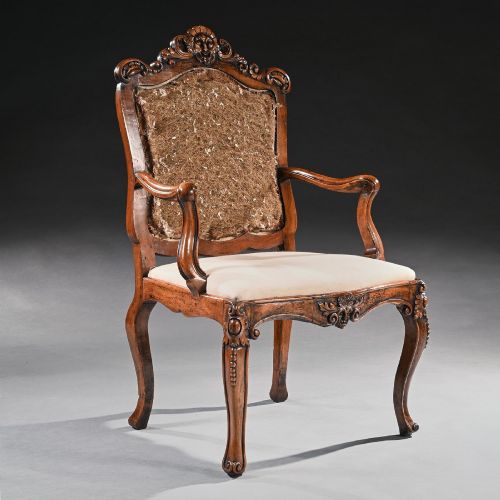
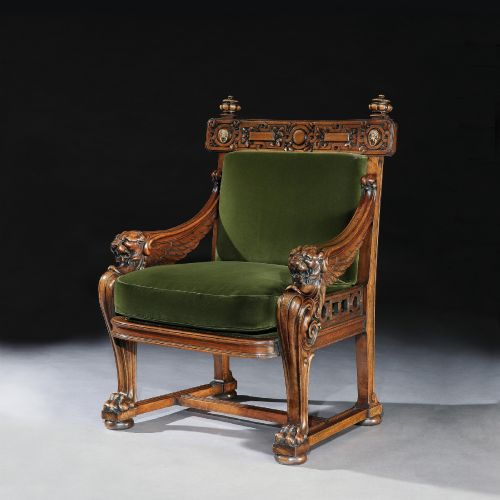
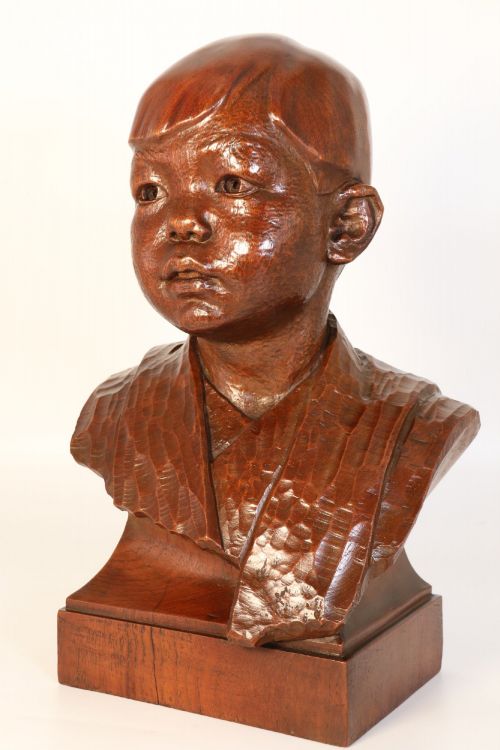
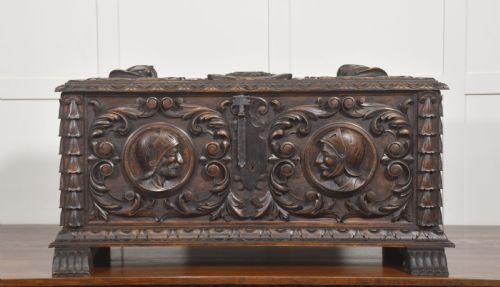
When searching for a carved walnut head, buyers encounter sculptures, architectural fragments, and furniture adornments originating primarily across the eighteenth and nineteenth centuries. These pieces appear as standalone busts, wall masks, pediment panels, and distinct animal representations including lions, tigers, deer, dogs, and monkeys.
The Black Forest tradition supplies a significant portion of these works, alongside Italian Rococo, Renaissance Revival, and seventeenth-century English or French workshops. Forms range from monumental architectural elements to smaller decorative panels and functional objects.
Collectors meet both individual sculptural studies and fragments salvaged from larger furnishings or buildings, each showing distinct regional carving traditions and period aesthetics.
Materials and technique
Makers utilised dense walnut timber, prized for its deep grain and stability under intricate chisel work. Craftsmen employed gouges and chisels to achieve high relief, rendering fur, mane, and expression with sharp depth.
Surfaces often received hand-waxing to nourish the timber and bring out the natural sheen of the walnut grain without obscuring the tool marks left by the carver.
Nineteenth-century carvers delighted in giving wooden lions and spaniels intensely human expressions.
Evaluating quality
Quality rests upon the confidence of the hand behind the chisel, distinguishing lively, anatomically convincing work from stiff repetition. Superior examples display depth in the undercutting and careful attention to the grain of the walnut.
Condition matters, particularly the preservation of ears, noses, and projecting relief elements against accidental knocks or historic woodworm activity.
George Henry Paulin RBS
The Carved Walnut Head Glossary
- Relief carving
- A sculptural technique where figures project from a flat background. High relief involves figures standing out significantly from the plane.
- Black Forest
- A nineteenth-century style originating in Switzerland and Germany known for naturalistic animal carvings in walnut and linden wood. Works often depict dogs, bears, stags, and lions.
- Pediment panel
- An architectural or furniture element placed above a door, window, or cornice. These panels frequently incorporate carved animal heads or figural medallions.
- Monopodia
- A furniture support consisting of a single leg ending in an animal paw, head, or wing. The form derives from classical antiquity.
- Caryatid
- A sculpted female figure serving as an architectural support taking the place of a column or pilaster. Figures often terminate in carved heads or busts.
Carved Walnut Head: Frequently Asked Questions
What were carved walnut heads used for?
These pieces served multiple functions, ranging from architectural pediments and furniture mounts to standalone portrait busts and decorative wall masks. Many originated as ornaments on grand cabinets, desks, or seating.
Others functioned as distinct animal sculptures or trade signs, reflecting the decorative tastes of the eighteenth and nineteenth centuries.
How do I identify Black Forest carvings?
Black Forest pieces typically depict naturalistic animals such as dogs, stags, lions, and bears rendered in walnut or similar timbers. They often exhibit deep, vigorous texturing representing fur and expression.
Many examples date from the nineteenth century and originate from Swiss or German carving centres.
How should I care for walnut carvings?
Keep wooden sculptures away from direct heat sources and strong sunlight to prevent the walnut timber from drying and splitting. Dust gently with a dry, soft brush.
Occasional application of microcrystalline wax helps protect the surface finish without building up heavy residue.
How are seventeenth-century heads told from nineteenth-century ones?
Earlier seventeenth-century carvings display tool marks and patination consistent with hand-forged irons and centuries of handling. Walnut surfaces develop a deep, dry sheen over long periods.
Nineteenth-century revival pieces often employ sharper machinery assistance alongside hand finishing, showing different wear patterns and construction methods.