

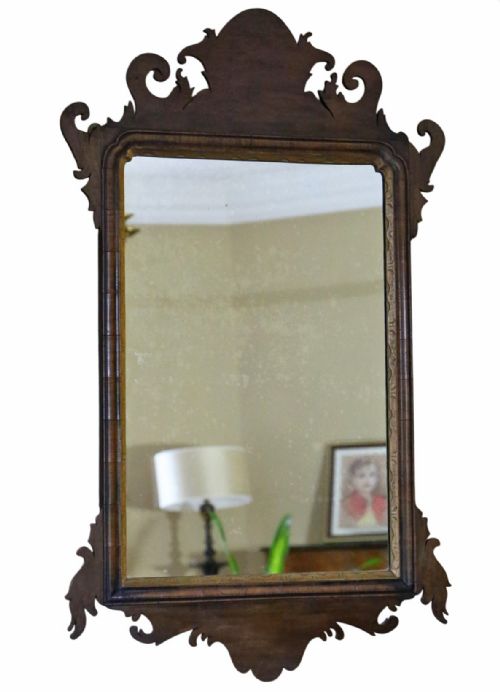


Carved Walnut Hanging Mirror
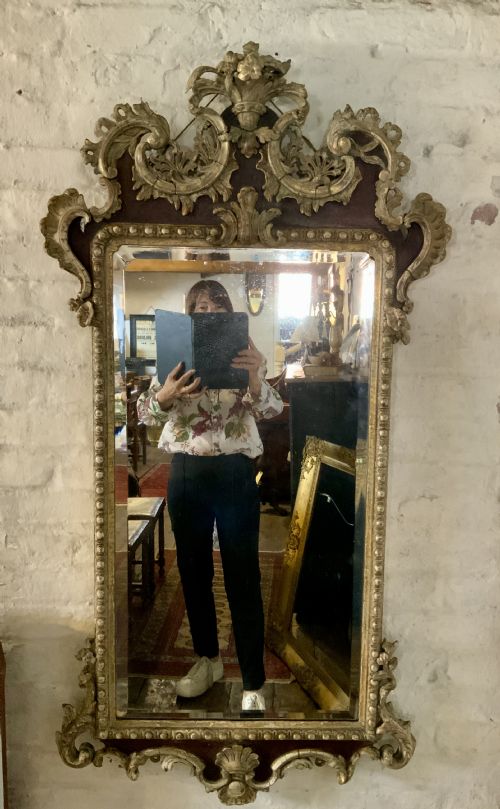
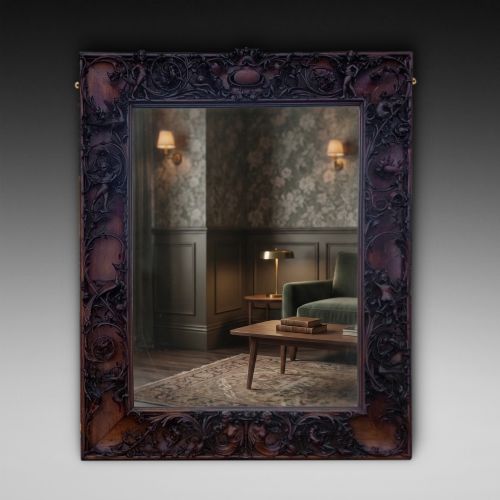
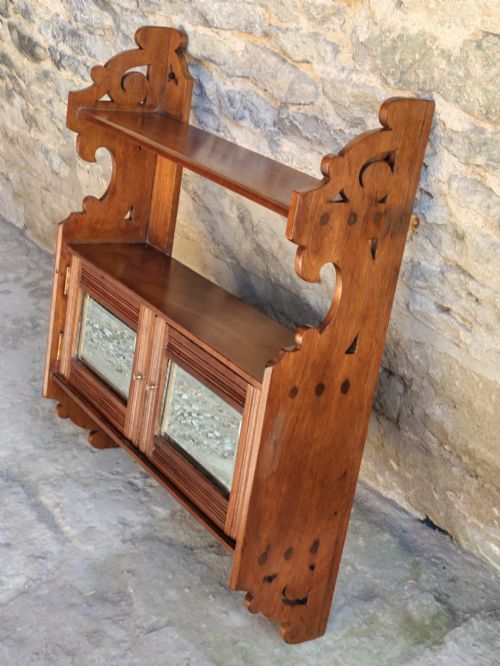
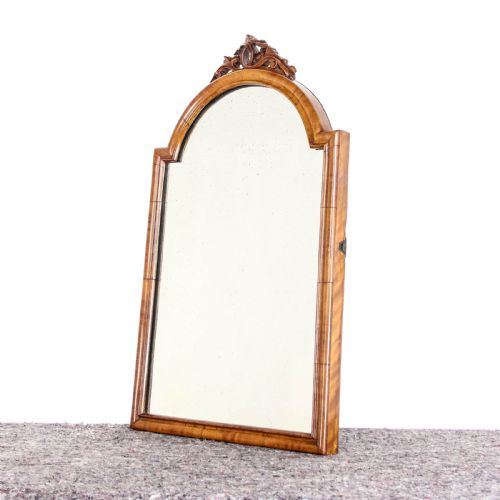
These carved walnut hanging mirror examples bring warmth and rich timber tone to an interior.
Carved Walnut Hanging Mirror
A carved walnut hanging mirror provides functional reflection while serving as a prominent wall decoration. The examples found here span several distinct eras, ranging from 18th century pieces to later revivals.
Origins stretch across British and continental workshops, incorporating architectural elements and classical motifs. Many display decorative giltwood accents complementing the dark grain of the timber.
How they were made
Cabinet makers utilised solid walnut and burr walnut veneers applied to supportive timber frames. The natural figuring of the wood provides the primary visual texture across the surfaces.
Carving was executed by hand, creating intricate fret cut borders, heraldic shields, and scrolling pediments. Gilding was often applied in thin layers to highlight specific carved details against the dark wood.
Mirror glass was set into the rebates behind wooden mouldings, sometimes secured with original backboards. Brass fixings and hanging loops were attached securely to bear the weight of the frame.
Listings include walnut materials, mirror glass, and brass hardware across 18th century, Victorian, and 1920s periods.
What varies in quality
The crispness of the hand carving distinguishes finer examples from simpler production pieces. Sharp, deeply undercut foliage and well-defined mouldings indicate superior workshop execution.
The choice of timber grain significantly impacts the overall presence of the object. Rich burr walnut veneers and well-matched timber sections demonstrate greater material cost and selection care.
The Carved Walnut Hanging Mirror Glossary
- Parcel gilt
- Partially gilded with thin gold leaf to highlight specific carved details. This technique creates a contrast between the dark walnut grain and bright metallic accents.
- Fret cut
- Wood pierced and shaped into intricate geometric or scroll patterns using a fine saw. It defines the decorative borders characteristic of many 18th century and revival frames.
- Burr walnut
- Timber taken from the warted growths on walnut trees, showing highly figured swirling patterns. It is typically sliced into veneers for decorative cabinet fronts and mirror frames.
- Giltwood
- Wood that has been coated with gold leaf or metallic paint for decorative effect. It frequently appears alongside walnut in Georgian and revival wall mirrors.
- Shield mirror
- A looking glass designed within a frame shaped like a heraldic shield. These pieces often feature carved crests or decorative hanging loops at the top.
Carved Walnut Hanging Mirror: Frequently Asked Questions
How do I hang a heavy walnut mirror safely?
Wall mirrors require sturdy fixings suited to the weight of the timber and glass. Ensure screws anchor directly into wall studs or utilise appropriate heavy-duty wall plugs.
Position the hanging wire or integrated brackets securely to distribute the load evenly across the structure.
Are these mirrors suitable for bathrooms?
Certain Edwardian and Victorian examples served functional roles in bathrooms or hallways. However, modern moisture levels require careful consideration to protect antique timber and silvered glass.
Ensure adequate ventilation if placing a historic wooden frame in a humid environment to prevent warping.
How can I tell a genuine 18th century mirror from a revival piece?
Examination of the timber backing, fixings, and glass bevelling reveals indicators of age. Older pieces often show hand-cut screws, oxidation on the mirror plate, and shrinkage in the wood.
Revival pieces from the Edwardian or 1920s eras typically employ machine-cut components while still utilising traditional carving styles.
How should I clean a carved walnut frame?
Dust the intricate carvings gently with a soft, dry brush to prevent accumulation in the recesses. Avoid chemical sprays or excessive moisture which can damage the polish and gilding.
Apply a microcrystalline wax periodically to nourish the walnut timber and maintain its natural sheen.