




Carved Walnut Desk Cabinet
A carved walnut desk cabinet brings together timber and writing compartments, offering a fitted workspace that sits neatly in a room.
Carved Walnut Desk Cabinet
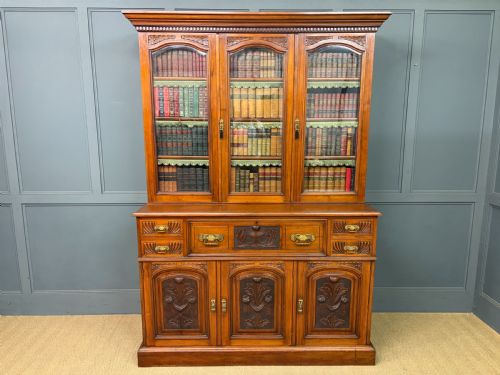
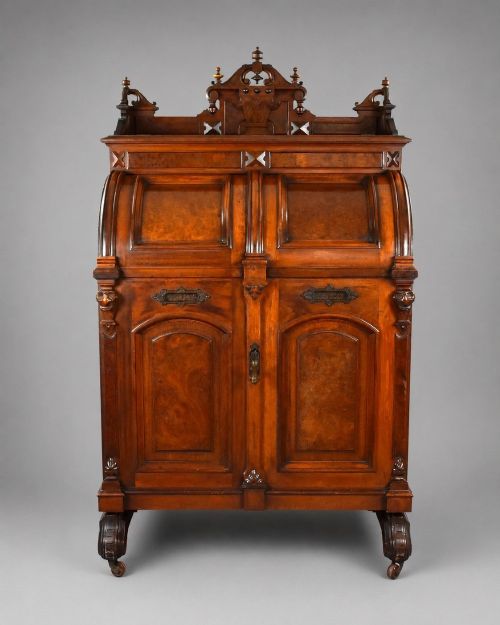
When you search for a carved walnut desk cabinet, you encounter a variety of forms designed for storage and correspondence. The selections span bureau bookcases, escritoires, secretaire cabinets, and davenports from several centuries.
The material palette centres on walnut and burr walnut, often paired with brass, leather, and glass. Pieces range from 17th-century Spanish and English examples to Victorian davenports and bureau bookcases.
How they were made
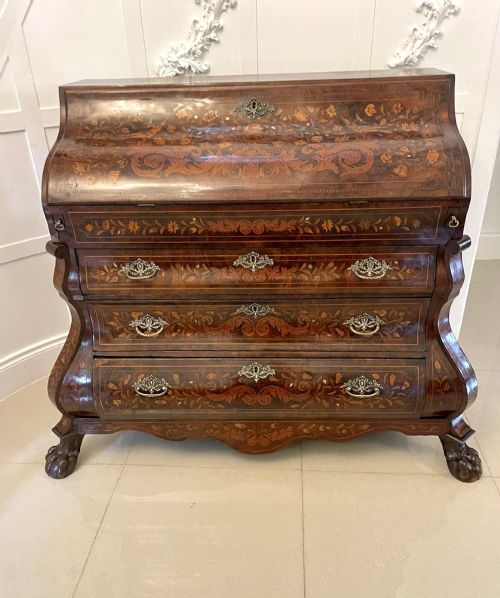
Cabinet makers utilised solid walnut and burr walnut veneers, applying intricate floral marquetry and grain matching to the exterior surfaces. Structural carcases frequently incorporated oak and mahogany to provide stable support for heavy writing drawers and folding desk flaps.
Metalwork played a functional and decorative role, with brass hardware, ormolu mounts, and specialised locking mechanisms fitted to drawers and compartments. Leather inserts were commonly worked into the writing surfaces of desks and davenports.
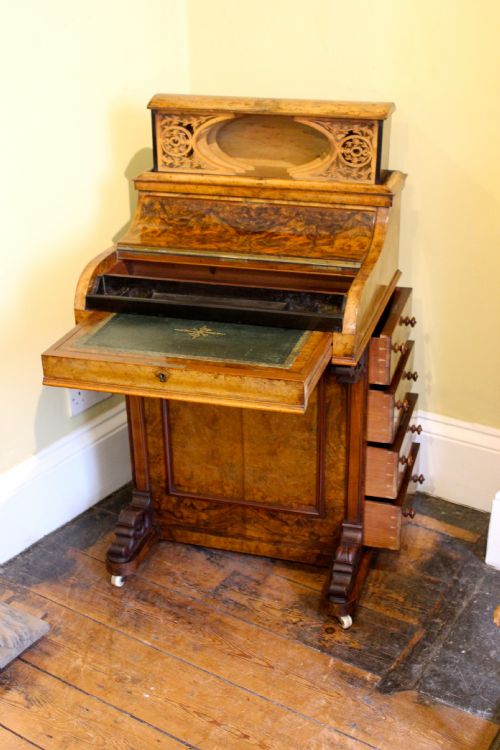
Several Victorian davenports include clever pop-up mechanisms designed to house stationery out of sight until needed.
What varies in quality
The refinement of the timber selection marks the difference between standard and exceptional pieces, particularly in the use of highly figured burr walnut veneers. Mastery of marquetry inlay and the precision of carved details on the cabinet frame distinguish finer examples.
Internal complexity also dictates the standard of a piece, observable in the arrangement of secret drawers, pigeonholes, and fitted stationery compartments. The integration of mechanical elements, such as pop-up mechanisms in davenports, reflects the skill of the original workshop.
Gregory & Co. of London·Waring & Gillow
The Carved Walnut Desk Cabinet Glossary
- Escritoire
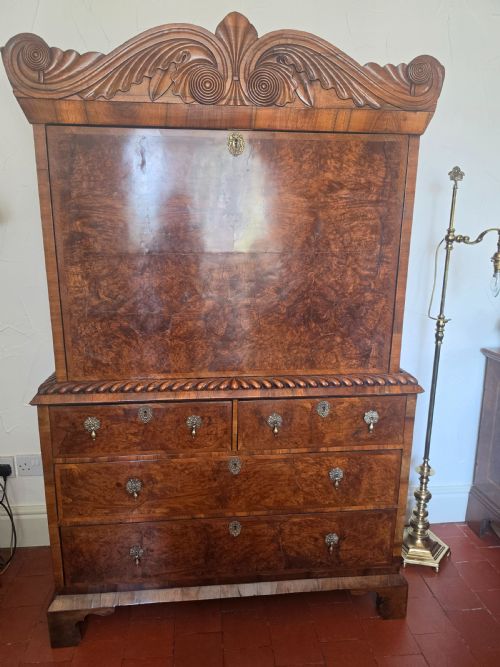
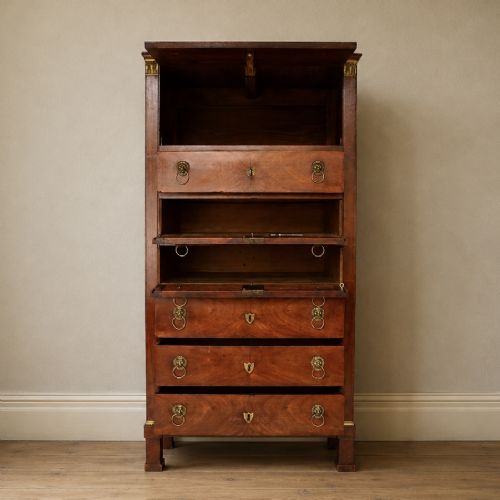
- A writing cabinet with a fall-front flap that conceals drawers and pigeonholes. These pieces date from the 17th century onwards and often feature elaborate walnut veneers.
- Davenport
- A compact writing desk featuring a sloped, leather-lined writing surface above a pedestal of drawers. They gained popularity during the Victorian era.
- Bargueño
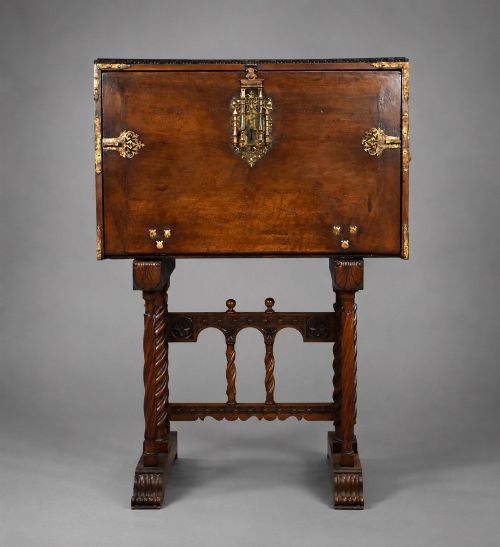
- A type of cabinet on a stand originating in Spain, featuring numerous small drawers behind a drop-front panel. Examples often date from the 17th century.
- Burr walnut
- A figured wood grain obtained from walnut tree growths, prized for its swirling patterns. It was frequently used for veneering cabinet fronts and desk surfaces.
- Marquetry
- The art of applying pieces of veneer to a structure to form decorative patterns. Floral motifs are common in 18th-century bureau examples.
Carved Walnut Desk Cabinet: Frequently Asked Questions
What is a davenport desk?
A davenport is a compact writing desk with a sloping top and drawers to the side. It provides a dedicated writing space without occupying a large footprint in a room.
Victorian makers produced numerous variations of this form, incorporating burr walnut and stationary compartments.
How do I identify an escritoire?
An escritoire is characterised by a fall-front writing flap that opens to reveal internal compartments. They often stand on a drawer base or a decorative stand.
Early examples frequently display William and Mary or 18th-century English styling in walnut.
What is burr walnut?
Burr walnut is a specialised timber cut from tree growths that produces highly decorative, swirling grain patterns. It served as a veneer on high-status cabinets and desks.
Cabinet makers utilised this veneer to create striking decorative panels on drawer fronts and fall-front desks.
Where were bargueño cabinets made?
Bargueño cabinets originated in Spain during the 17th century as portable writing and storage cabinets. They typically rested on decorative stands.
These pieces feature ornate internal drawer arrangements enclosed by a heavy drop-front lid.