

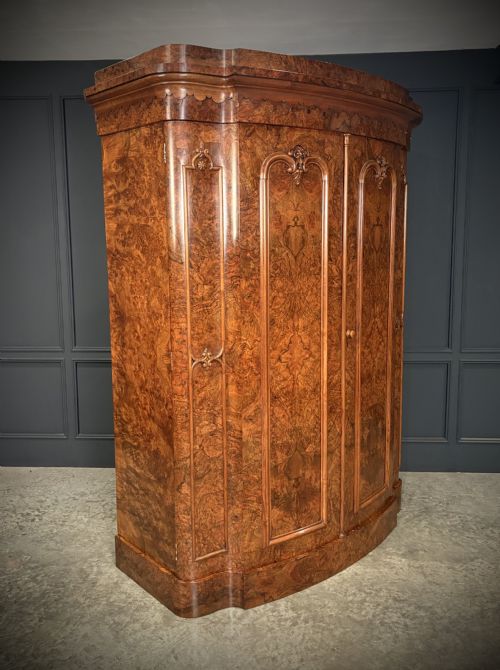


Carved Walnut Clothes Press
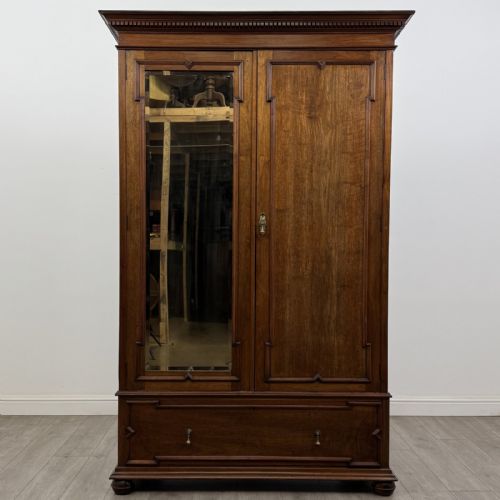
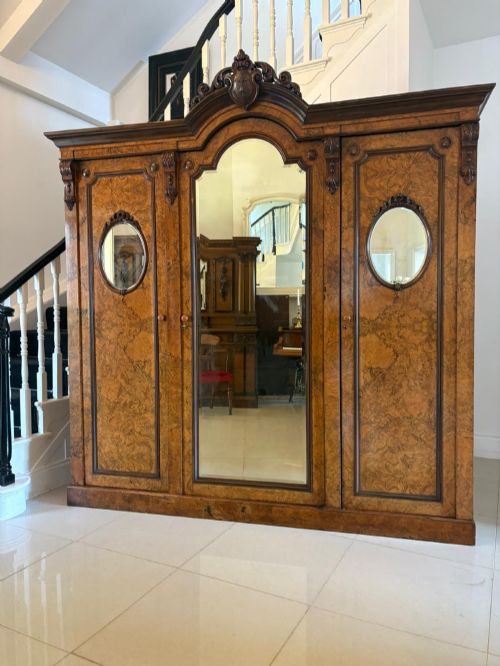
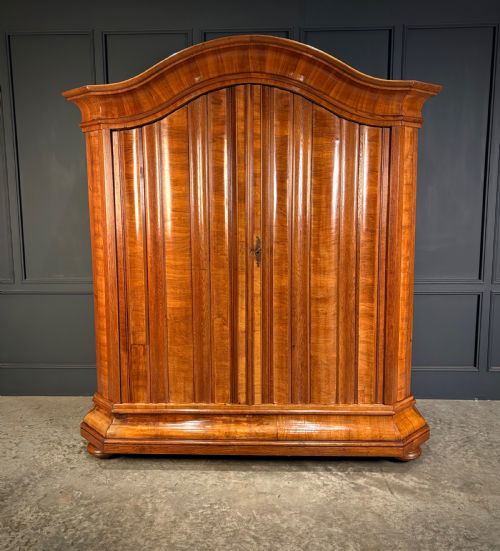
These carved walnut clothes press pieces offer serious storage capacity in rich timber, uniting heavy French and Victorian armoires with capacious triple wardrobes.
Carved Walnut Clothes Press
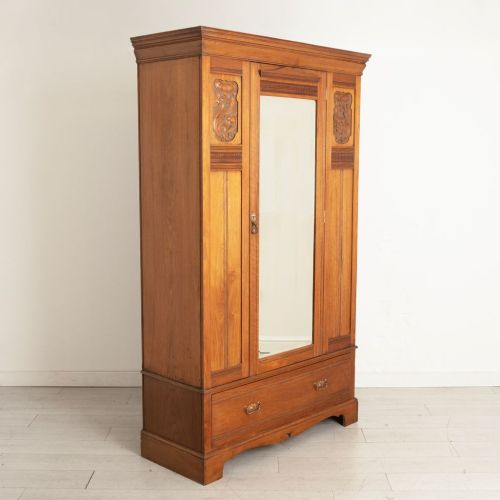
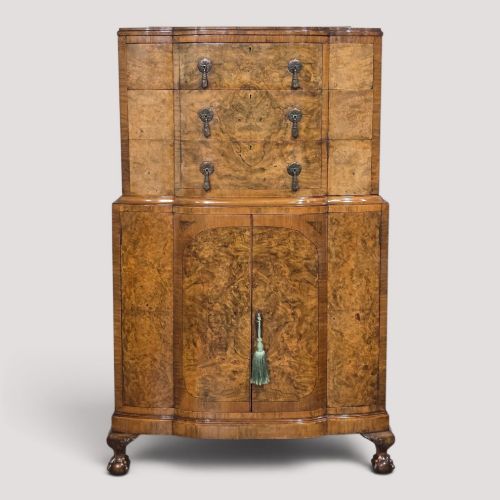
A carved walnut clothes press takes the form of large wardrobes, armoires, compactums, and storage cupboards designed to organise garments. The pieces catalogued here span periods from the mid nineteenth century through the Edwardian era up to the nineteen twenties, alongside continental examples.
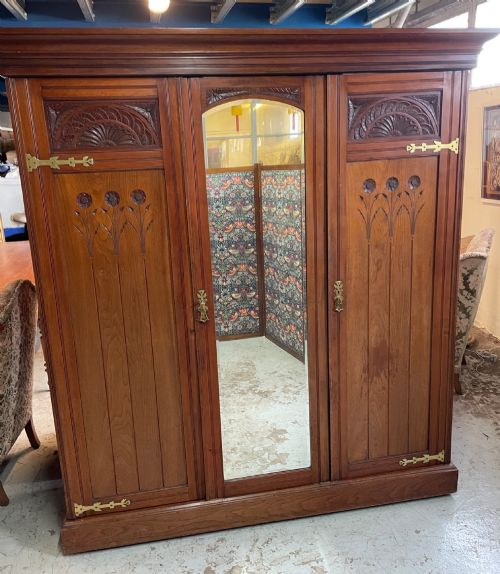
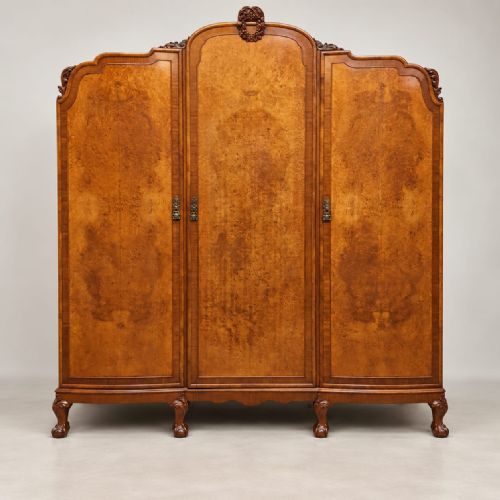
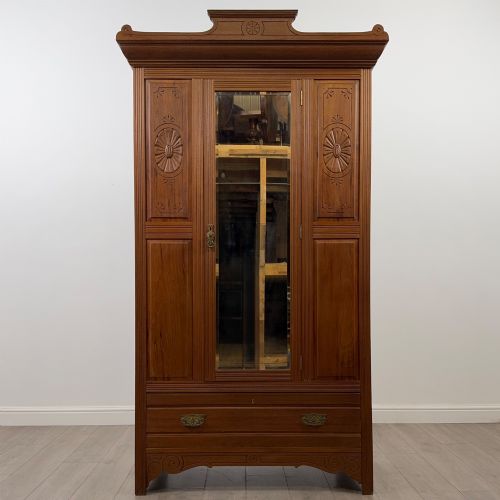
Buyers meet single mirrored wardrobes, grand triple wardrobes, and regional armoires shaped by French Provincial, Baroque, and Art Deco influences. Solid walnut and burr walnut dominate the forms, frequently paired with internal hanging space and shelving.
Origins stretch across British Victorian workshops, continental cabinet makers, and French regional centres like Burgundy and Brittany. Selecting a piece involves weighing the proportions of a large armoire against the fitted interior of a compactum wardrobe.
Materials and construction
Cabinet makers utilised walnut timber, burr walnut veneers, and oak as a secondary wood to build these heavy storage frames. The application of walnut veneer over solid carcases created elaborate grain patterns across large door panels.
Metal components such as brass hinges, iron fittings, and ormolu mounts secure the heavy doors and adorn the facades of continental armoires. Glass and mirror glass panels are integrated into single and triple wardrobe doors, reflecting light into bedroom spaces.
Carved Walnut Clothes Press Retail Price Guide 2026
Typical asking prices for carved walnut clothes press among the pieces listed under this phrase on Sellingantiques today, from the lower quarter to the upper quarter. They describe what is for sale here now, not the wider market.
Listings feature walnut and burr walnut surfaces alongside mirror glass, brass, and iron hardware across Victorian and Edwardian periods.
Distinguishing quality in walnut furniture
The selection of timber grain sets apart standard production from exceptional examples, with highly figured burr walnut veneers demanding superior cabinet making skill. The depth and crispness of carved ornamentation on door panels and cornices demonstrate the hand of a skilled carver.
Internal configuration and joinery integrity dictate utility and longevity, separating simple hanging cupboards from elaborate multi-drawer compactums. Original hardware, intact mirror glass, and fire-gilded or ormolu mounts preserve the physical integrity and historical weight of each piece.
The Carved Walnut Clothes Press Glossary
- Burr walnut
- A veneer sliced from the knotty growth of a walnut tree, prized for its swirling grain patterns. It creates a highly decorative surface on wardrobe doors.
- Compactum
- A fitted wardrobe designed to hold a wide variety of clothing through a combination of hanging space, drawers, and sliding trays. This form maximises internal storage within a single footprint.
- Armoire
- A large standing cupboard with doors, originating in continental Europe. These pieces often feature deep carved panels and substantial cornice mouldings.
- Grunderzeit
- A nineteenth-century central European architectural and design period associated with historicist revival styles. Furniture from this era draws heavily on Baroque and Renaissance motifs.
- Ormolu
- Gilt bronze mounts applied to the exterior of furniture for decorative effect. These metallic accents catch the light and frame the walnut timber panels.
Carved Walnut Clothes Press: Frequently Asked Questions
How do I fit a large wardrobe in a modern bedroom?
Measure your ceiling height and floor space carefully before delivery, noting that many nineteenth-century pieces were constructed to be dismantled for transport. Ensure clearance for doors to swing fully open, particularly on triple wardrobes and wide armoires.
Position the piece away from direct heat sources and sunlight to prevent the walnut timber and burr veneers from drying out or splitting over time.
How should I clean burr walnut veneer?
Dust the exterior regularly with a soft, dry cloth to prevent particles from settling into the intricate grain patterns of the burr walnut. Avoid chemical polishes and silicone sprays that can build up a residue and dull the natural finish of the wood.
Apply a traditional beeswax sparingly once or twice a year to nourish the timber and maintain a soft, protective sheen across the surface.
Can I adjust the internal hanging space?
Many nineteenth-century pieces feature fixed internal partitions, hanging rails, and linen slides built into the original carcase. Altering these interior elements requires careful carpentry to preserve the structural stability of the wardrobe walls.
Consider utilising freestanding storage boxes or shelves that fit inside the compartments without permanently altering the historical fabric of the piece.