


Carved Walnut Chaise
A carved walnut chaise offers long, reclining nineteenth-century elegance, combining rich timber frames with generous upholstered lounging space.
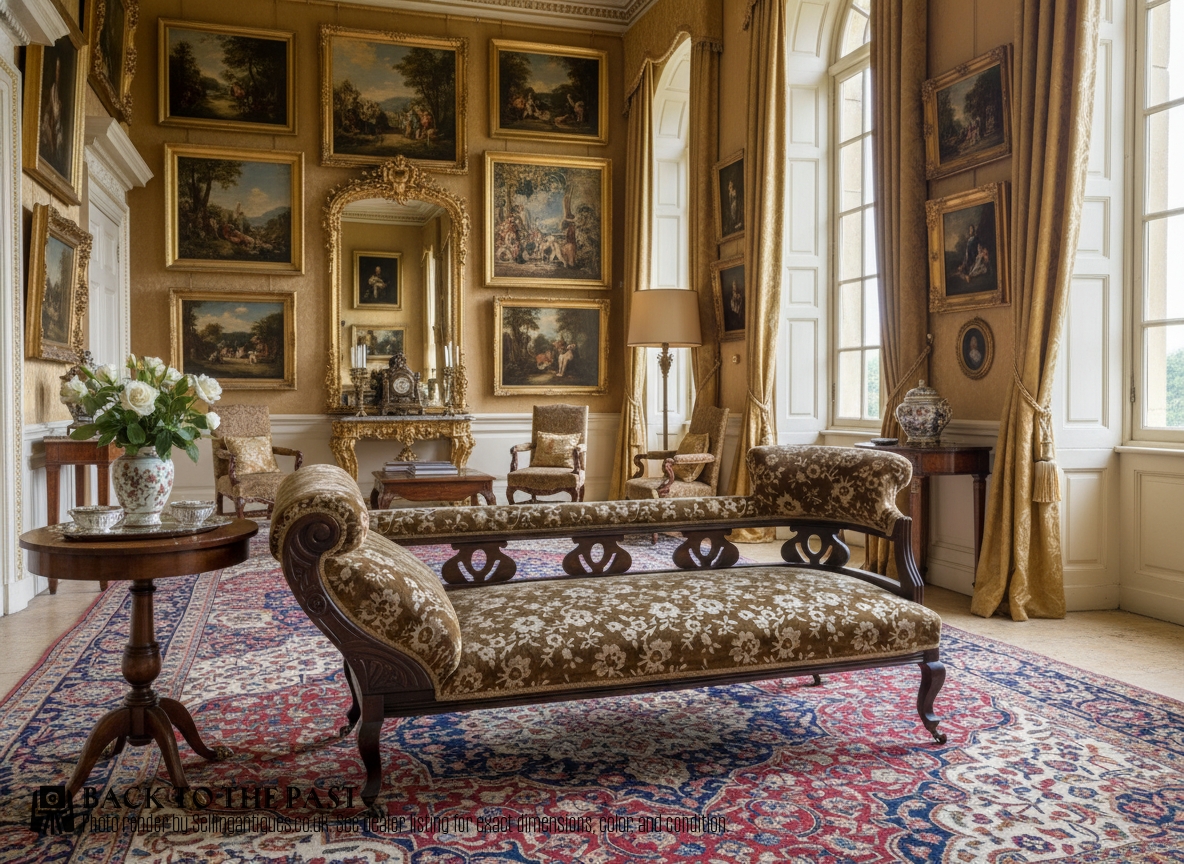
Carved Walnut Chaise
When you search for a carved walnut chaise, you encounter nineteenth-century reclining seats designed for formal drawing rooms and country houses. Victorian examples dominate the selection, often taking the form of double-ended settees or scroll-back loungers.
The assortment includes French Rococo styles alongside English Victorian iterations, spanning periods from the Regency era through to the turn of the twentieth century. Alongside traditional single-ended daybeds, you find conversation seats and salon suite components sharing the same timber and carving vocabulary.
Materials and construction methods
Frames are constructed from solid walnut, selected for its rich grain and capacity to hold deep, crisp hand-carved ornamentation. Cabinetmakers shaped the scroll ends and show-wood rails to follow flowing Rococo or classical outlines.
Upholstery techniques involve traditional stuffing secured over springs and webbing, finished with textiles such as velvet, leather, or modern replacement fabrics. Brass castors frequently support the legs, allowing these heavy timber daybeds to move across carpets.
Textile choices span traditional leather and velvet alongside modern replacement upholstery fabrics.
Distinctions in execution and design
The distinction between ordinary and exceptional pieces rests upon the depth and vigour of the carved walnut foliage and scrollwork. Finer frames display crisp, undercut ornamentation executed by skilled hands rather than mechanical replication.
Proportion and structural integrity also separate the grades, with superior daybeds maintaining balanced symmetry across double-ended frames and retaining tight joints in the show-wood chassis.
Thomas Hope
The Carved Walnut Chaise Glossary
- Chaise longue
- An elongated upholstered chair designed for reclining, literally translating from French as long chair. These seating forms combine the backrest of a sofa with the extended seat of a daybed.
- Double end
- A seating configuration featuring raised backrests or scrolls at both ends of the frame rather than a single headboard. This symmetrical arrangement allows a person to recline facing either direction.
- Rococo revival
- A mid-nineteenth-century decorative style reviving eighteenth-century asymmetrical curves, floral motifs, and C-scrolls. Walnut frames from this period exhibit exuberant, curving woodwork.
- Show-wood
- Exposed timber framing left visible around the upholstered portions of a seat. Carved walnut rails and legs define the silhouette of the piece.
- Scroll back
- A frame termination shaped into a spiral or curved scroll resembling a rolled scroll of paper. This feature provides structural support for the upholstered headrest.
Carved Walnut Chaise: Frequently Asked Questions
How do I date a carved walnut chaise?
Dating relies on stylistic markers within the carved walnut frame, such as the exuberant scrolls of Victorian Rococo revival pieces versus the cleaner lines of earlier Regency examples. Comparing the joinery methods and turning styles provides further chronological evidence.
Secondary indicators include the form of the wooden show-frame and the presence of original brass castors or specific upholstery ground fabrics noted in historical records.
Where were these chaises placed originally?
These seating pieces occupied formal drawing rooms, ladies boudoirs, and country house reception spaces where residents relaxed during daytime hours. They served as both decorative furnishings and functional loungers for reading or receiving visitors.
Larger double-ended daybeds often stood away from walls to allow all-round appreciation of the carved walnut show-wood and balanced silhouette.
How should I care for the walnut frame?
Maintain the polished walnut surface by dusting regularly with a soft, dry cloth and applying occasional quality beeswax to nourish the timber. Avoid placing the daybed near direct heat sources or strong sunlight to prevent wood splitting.
Inspect the joints periodically to ensure the heavy upholstered frame remains stable and secure upon its legs and castors.