
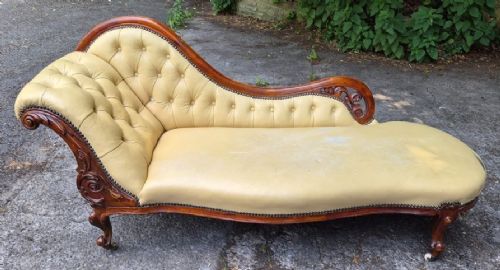
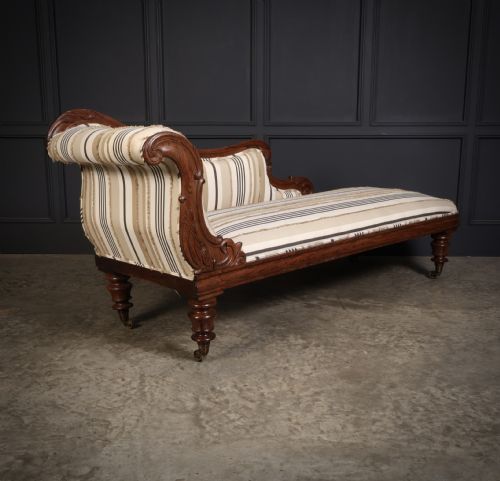


Carved Wood Fainting Sofa
A carved wood fainting sofa brings elegant posture and Victorian charm to a room, offering a place to recline in comfort.
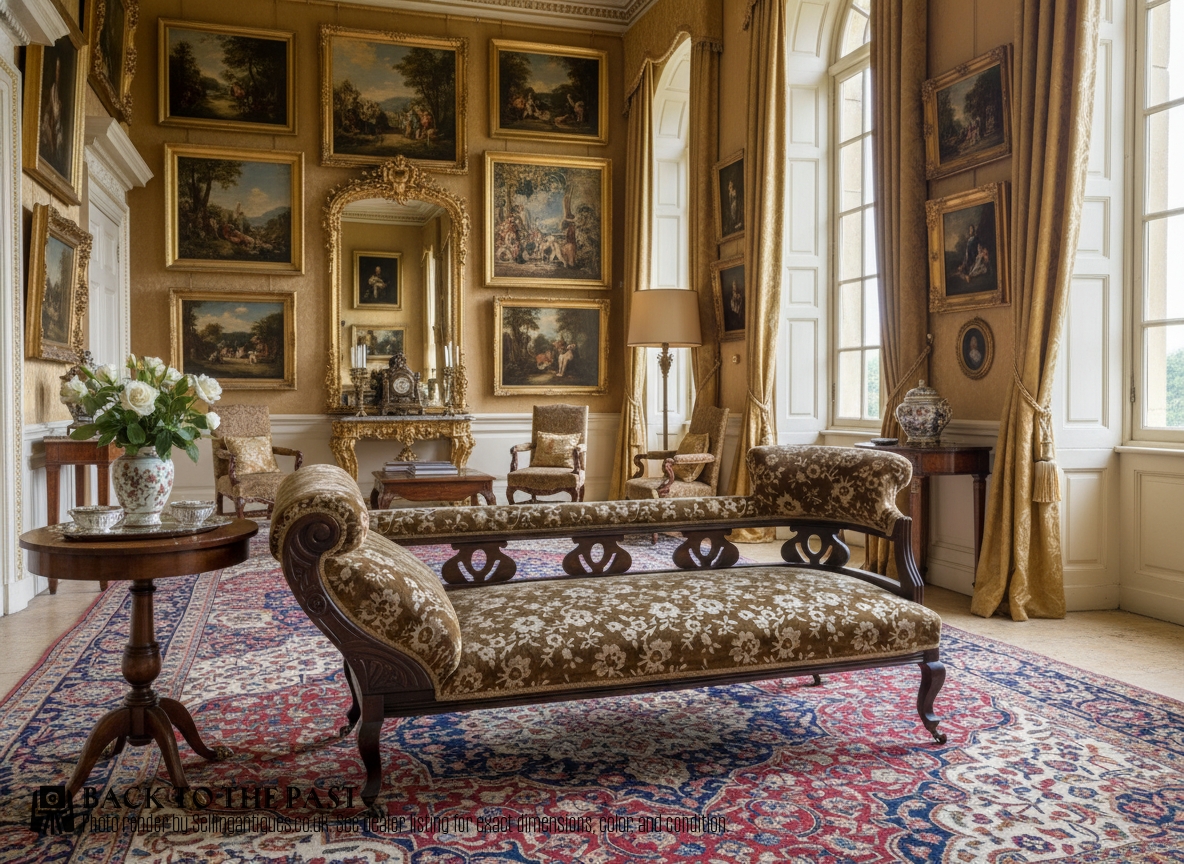
Carved Wood Fainting Sofa
A carved wood fainting sofa, also known in the listings as a chaise longue, daybed, or settee, provides a sloping backrest designed for half-sitting and resting. These pieces trace back primarily to the Victorian and 19th Century periods, alongside examples from the Regency and Edwardian eras.
The forms span full-sized frames in mahogany, rosewood, walnut, and oak, down to miniature furniture and French decorative daybeds. Visitors will most frequently encounter Victorian mahogany and walnut frames among the current selection.
Makers and craftsmen shaped these daybeds in styles ranging from William IV and Louis XVI to plain Victorian, balancing structural timber with upholstered seating surfaces.
How they were made
Cabinetmakers constructed the foundational frames using dense timbers like mahogany, rosewood, walnut, and solid oak, occasionally incorporating ebonised finishes. These structural woods support the curved backs and ornate woodwork characteristic of the period.
Makers applied fabric, velvet, and other textiles over iron, brass, and timber underpinnings to create the cushioned lounging surfaces. Carved details give shape to the wooden crest rails and legs.
At least one maker scaled down their ambition entirely, producing a tiny ebonised miniature chaise lounge for a very small aristocrat.
What varies in quality
The refinement of the carved wood ornamentation on the frame distinguishes standard production from finer work. Richer timbers like rosewood and mahogany generally carry deeper natural grain and more ambitious shaping.
The integrity of the timber frame and the cohesion of the upholstery style dictate the overall presence of the piece. Miniature pieces and full-sized frames each display distinct levels of joinery skill.
The Carved Wood Fainting Sofa Glossary
- Chaise longue
- An elongated chair for reclining, literally translating from French as long chair. These form the primary grouping within this search.
- Daybed
- A couch that can be used for lounging or sleeping, sharing a similar form to the chaise longue. French decorative examples appear in this format.
- Ebonised
- Timber stained or painted black to imitate ebony. This dark finish creates a dramatic contrast on miniature frames.
- William IV
- A British architectural and furniture style spanning the 1830s, known for bold scrolling woodwork. Pieces from this era utilise heavy rosewood and mahogany.
Carved Wood Fainting Sofa: Frequently Asked Questions
What is a fainting sofa?
A fainting sofa is a nineteenth-century term for a chaise longue or daybed with a raised, scroll-shaped backrest at one end. They were designed to support women wearing restrictive corsets who needed to recline.
Today, they function as statement seating in bedrooms, living rooms, or hallways, combining decorative woodwork with a comfortable sloping back.
How do I date a chaise longue?
Dating relies on examining the timber species, carved styles, and structural forms present in the frame. Victorian and nineteenth-century pieces often feature mahogany or walnut, while Regency and William IV pieces display distinct scrolling motifs.
Checking whether the frame is solid oak, rosewood, or mahogany helps narrow down the period of manufacture alongside stylistic cues.
Where should I place a daybed?
These pieces suit spaces where a traditional sofa might feel too heavy or block light, thanks to their open, asymmetric profile. Placing one perpendicular to a wall allows the carved timber back and frame to remain visible from multiple angles.
They work well in large bedrooms, reading corners, or drawing rooms as an accent seat.
What woods were used for frames?
Cabinetmakers primarily utilised dense hardwoods such as mahogany, rosewood, walnut, and solid oak for these seating frames. Some smaller or decorative pieces feature ebonised finishes over the base timber.
These materials provided the structural strength required to support the curved backrests and elaborate carvings.