
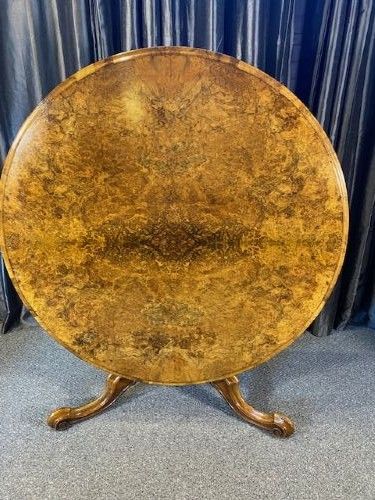
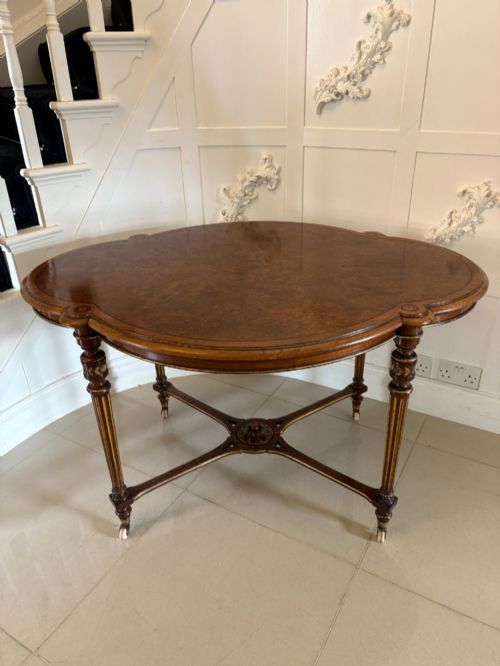
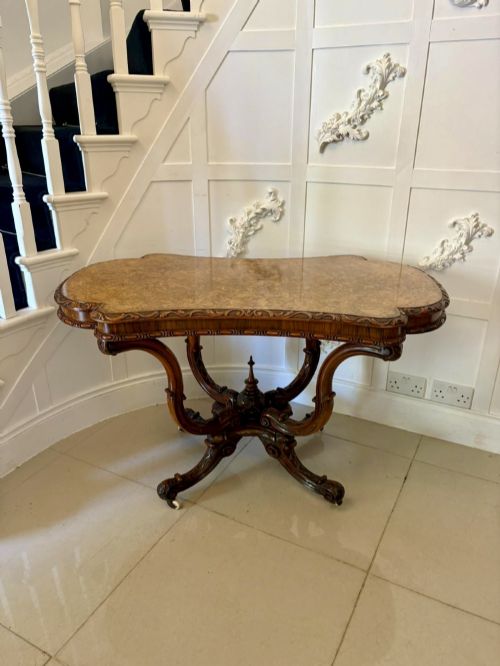
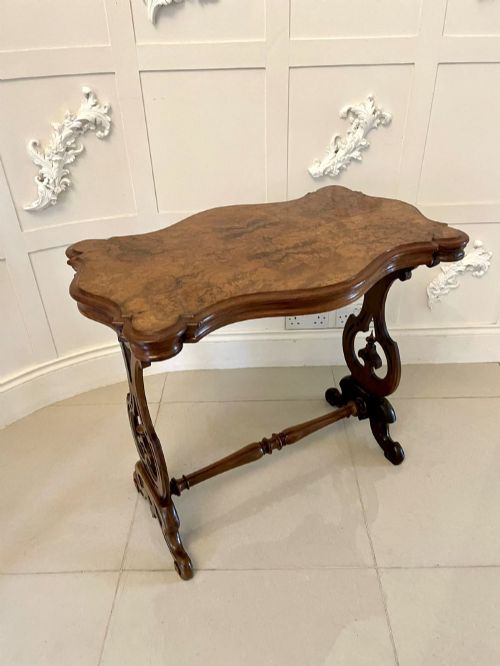
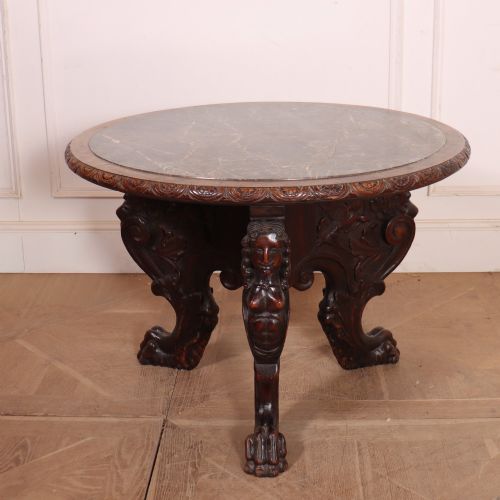
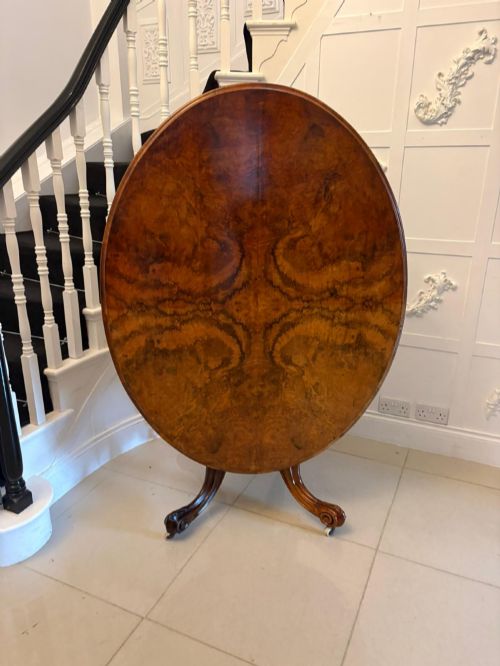

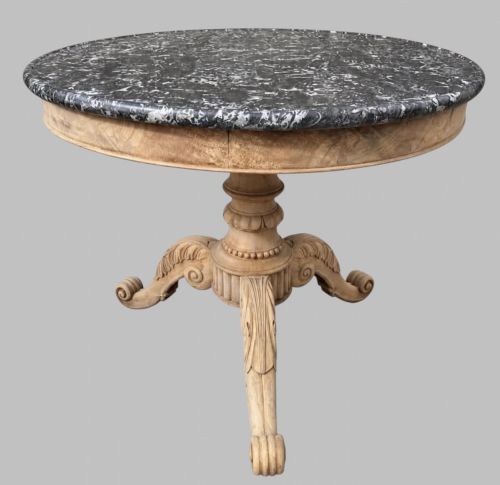
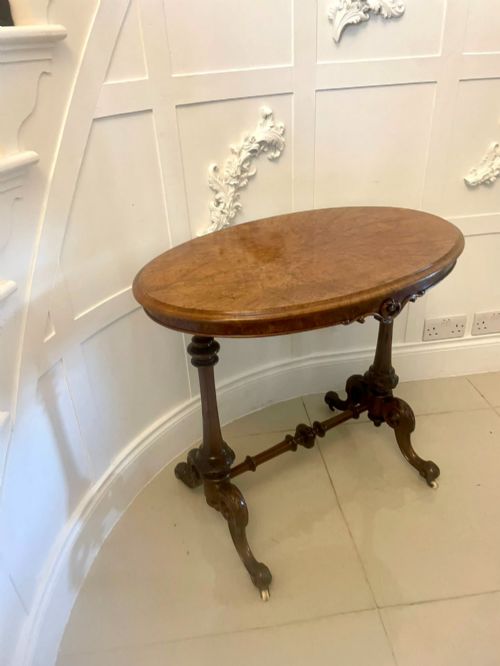
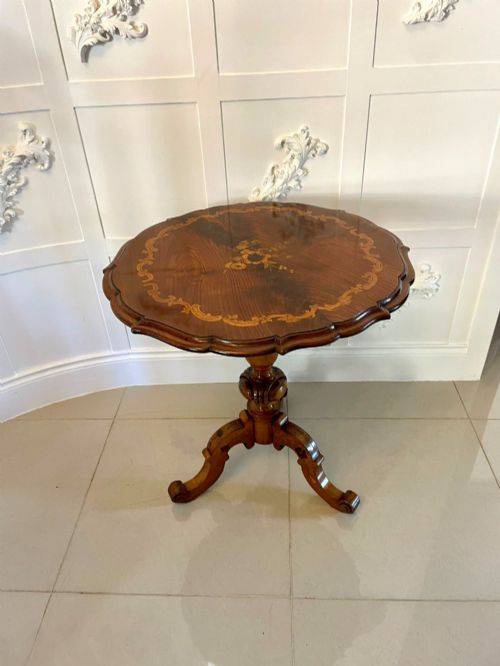
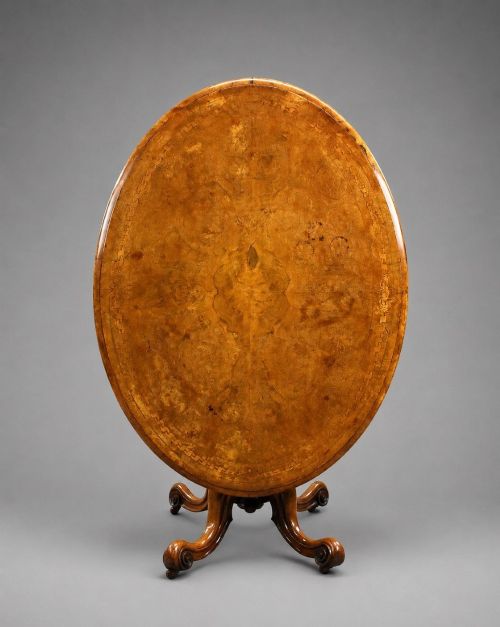
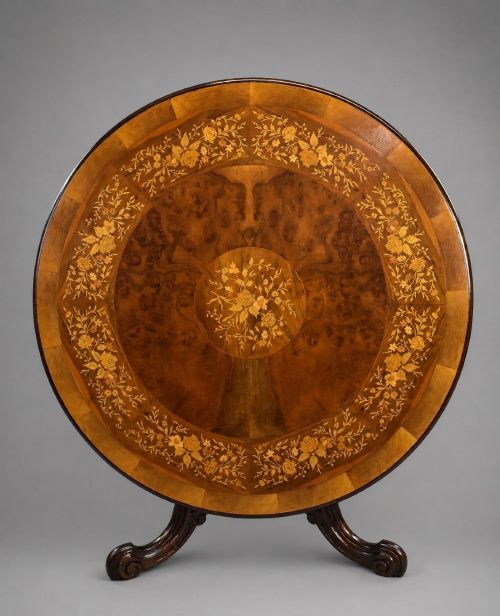
Carved Walnut Center Table
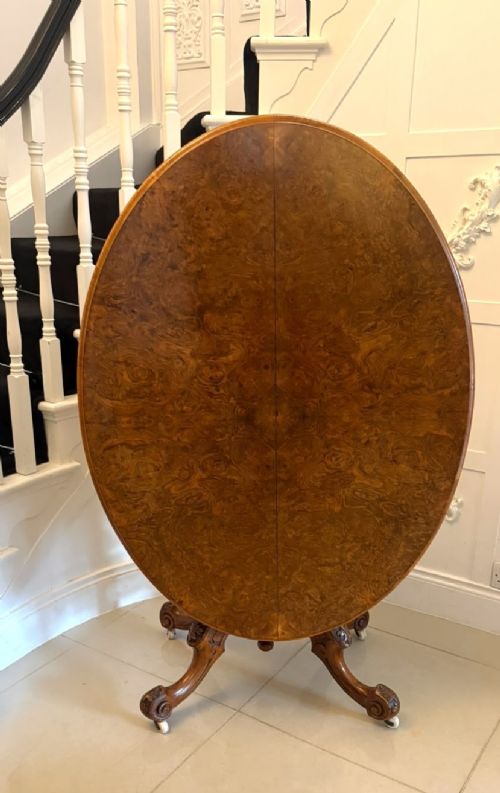
A carved walnut centre table brings rich timber grain and sculptural nineteenth-century design straight to the middle of a room.
Carved Walnut Center Table
A carved walnut centre table stands independently in a room, designed to be viewed from all sides rather than pushed against a wall. The pieces met here span the Victorian period and the nineteenth century, alongside French and Italian examples.
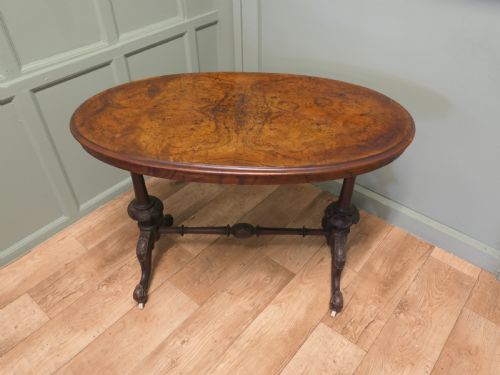
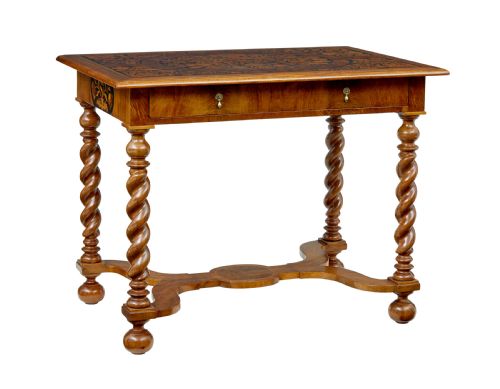
Most entries take the form of lamp tables, occasional pieces, or larger loo and breakfast tables with tilt tops. Makers also produced coffee tables and writing tables from the same timber stock.
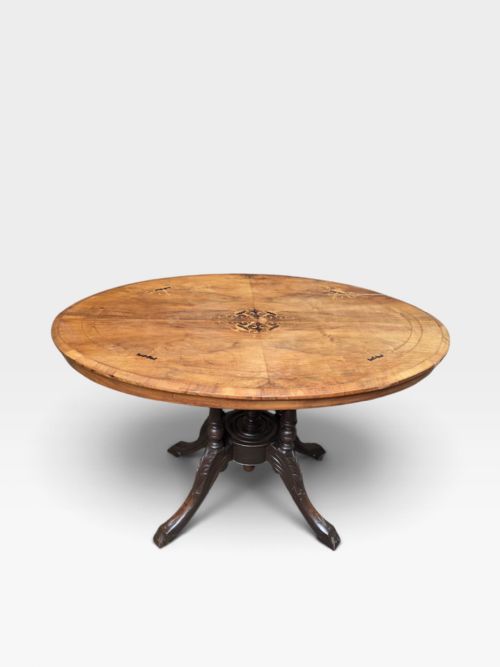
Makers drew on diverse design vocabularies, ranging from Queen Anne revival and Gothic influences to French Louis XV and Italian Sorrento styles. Walnut and burr walnut dominate these forms, often accented with marquetry and boxwood inlay.
Materials and construction methods
Workshops utilised solid walnut and highly figured burr walnut veneers to achieve deep, variegated grain patterns across table tops. Artisans paired this timber with contrasting boxwood inlay and marquetry work.
Carvers shaped structural supports by hand, including pedestal bases, quadrapod legs, and scissor actions. Tops frequently incorporated marble, leather inserts, or specialised chess surfaces.
Joiners integrated functional details such as secret drawers into Regency frames and tilt-top mechanisms for larger dining and loo tables.
Cabinet makers applied diverse styles, ranging from French Louis XV revival and Italian Sorrento to Queen Anne revival and Gothic.
Distinctions in grade and execution
The value of a table rests upon the liveliness of the burr walnut veneer and the crispness of the hand carving on the base. Tighter, more complex grain patterns and deeply undercut floral or scrollwork separate superior examples from plain ones.
Construction methods dictate longevity, seen in the stability of the pedestal mounts and the precision of the boxwood marquetry inlay. Tables bearing documented workshop attribution command attention for their verified cabinet-making standards.
Holland & Sons Of London
The Carved Walnut Center Table Glossary
- Burr Walnut
- A timber harvested from the wart-like growths on walnut trees, yielding swirling, knotty grain patterns prized for decorative table tops. It offers rich visual depth that plain timber lacks.
- Marquetry
- The art of applying pieces of veneer to a structure to form decorative patterns and pictures. Craftsmen utilise contrasting woods like boxwood against walnut.
- Tilt Top
- A table mechanism allowing the top to pivot vertically when not in use, saving space in a room. This feature appears frequently on nineteenth-century loo and breakfast tables.
- Gueridon
- A small French table supported by one or more columns, often topped with marble. Originating in the seventeenth century, these forms persisted into the Victorian era.
- Quadrapod Base
- A heavy pillar support resting on four carved feet or legs. It provides stability for large oval breakfast and dining tables.
Carved Walnut Center Table: Frequently Asked Questions
Where should a centre table go?
Place a carved walnut centre table in the middle of a room where it can function independently as a focal point. Because these pieces are finished on all sides, they suit open spaces rather than perimeter walls.
They work particularly well in larger reception rooms, libraries, or entrance halls where people circulate around them.
What is the difference between a loo table and a coffee table?
A loo table is a large nineteenth-century dining or card table, typically featuring a tilt top and a sturdy pedestal base. They were originally built at standard dining height for evening games and gatherings.
Coffee tables sit much lower to the floor and are proportioned for use alongside modern seating. Many examples seen today are nineteenth-century occasional or lamp tables adapted to lower heights.
How do I care for walnut veneer?
Protect walnut veneer by keeping tables away from direct heat sources and strong sunlight, which can dry out the timber and fade the grain. Dust regularly with a dry cloth and avoid silicone-based polishes.
Treat marble or leather inserts according to their specific materials, using damp cloths for stone and specialised leather dressings for writing surfaces.