
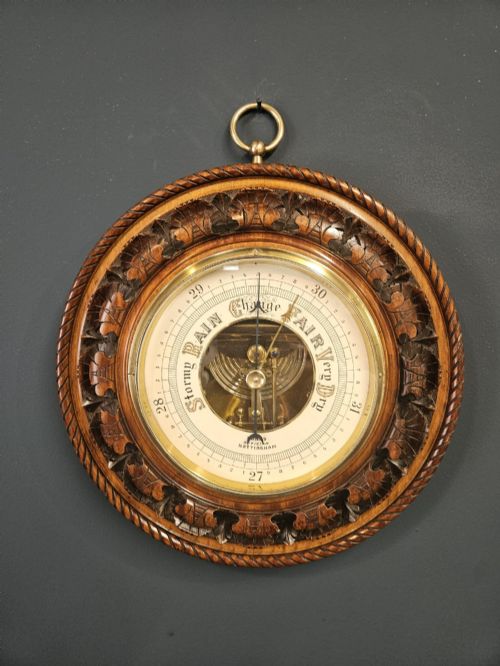
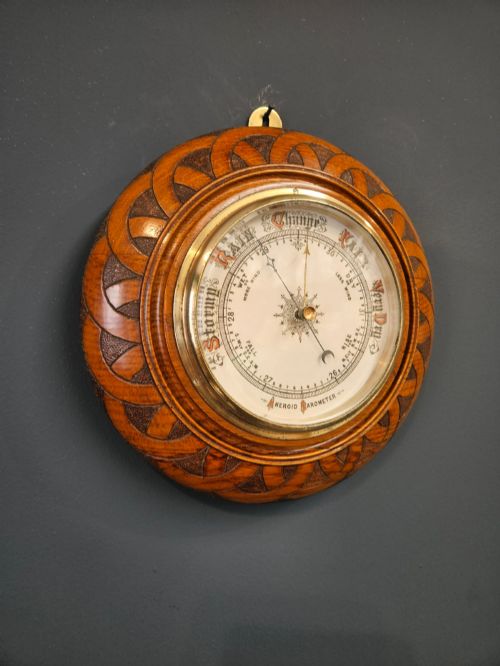
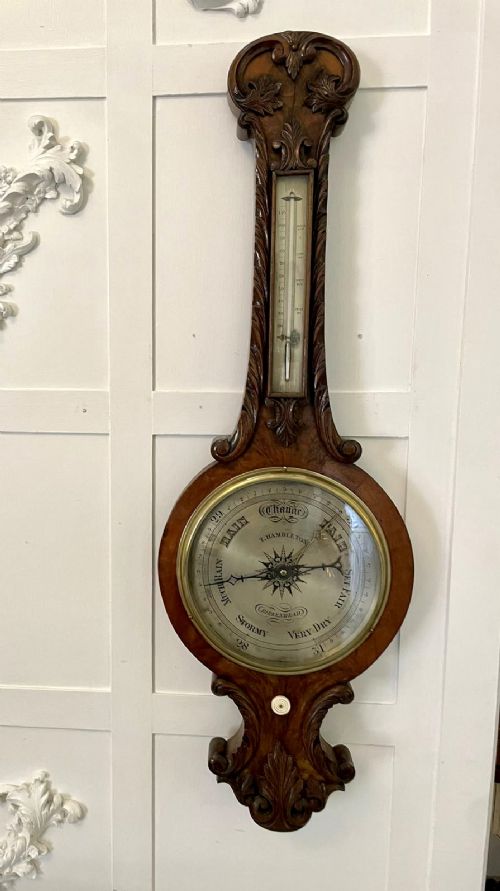
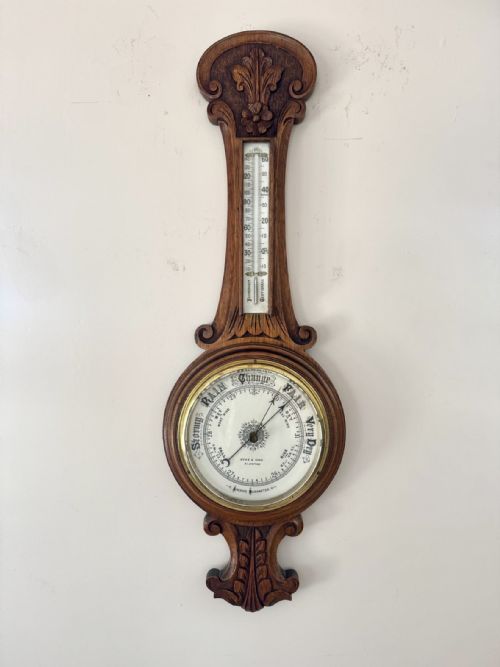


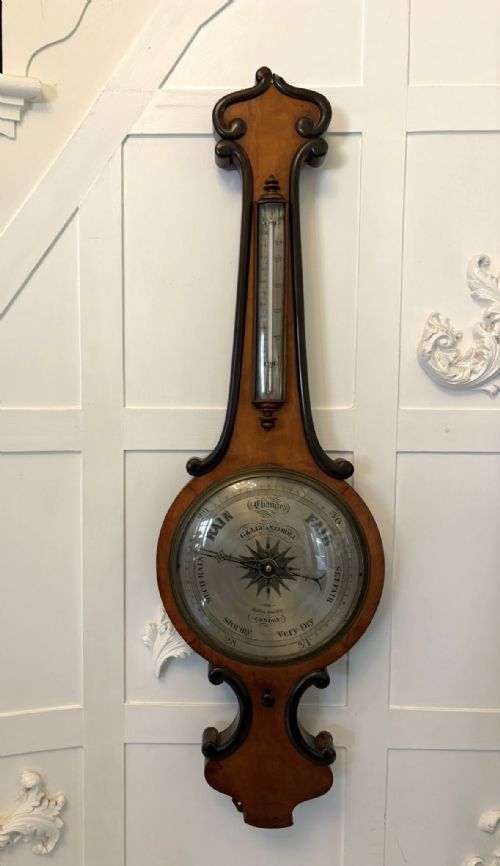
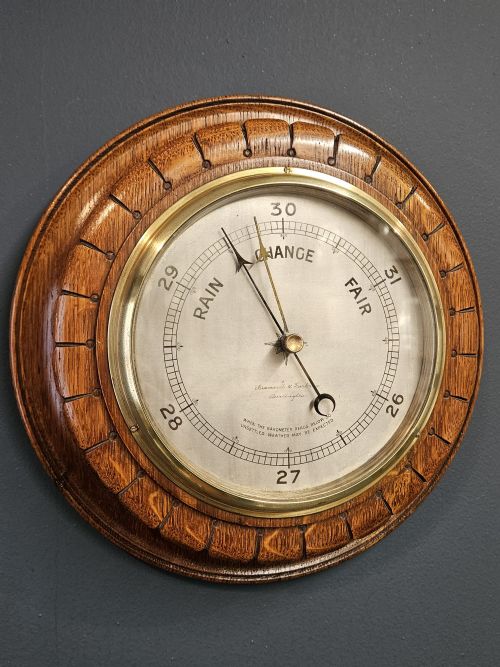
Carved Wall Barometer
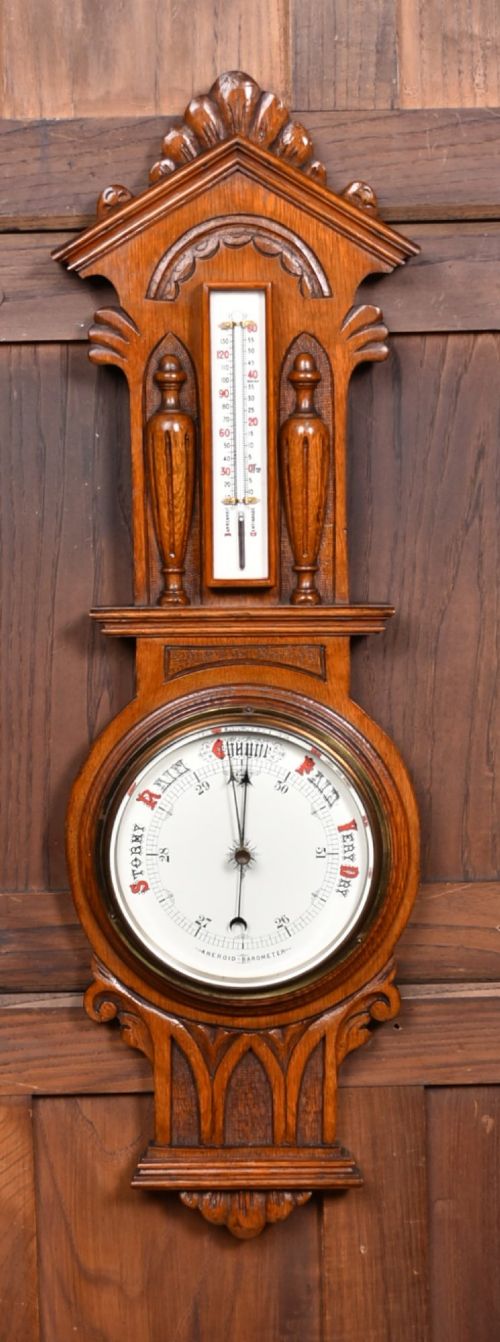
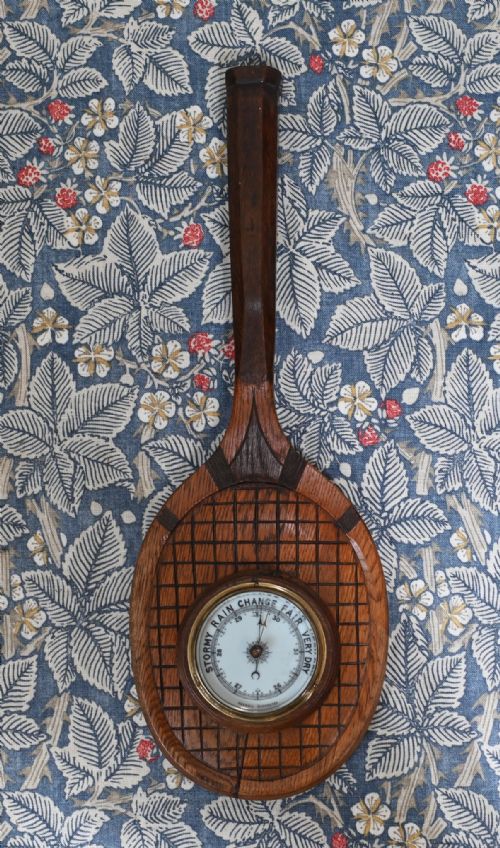
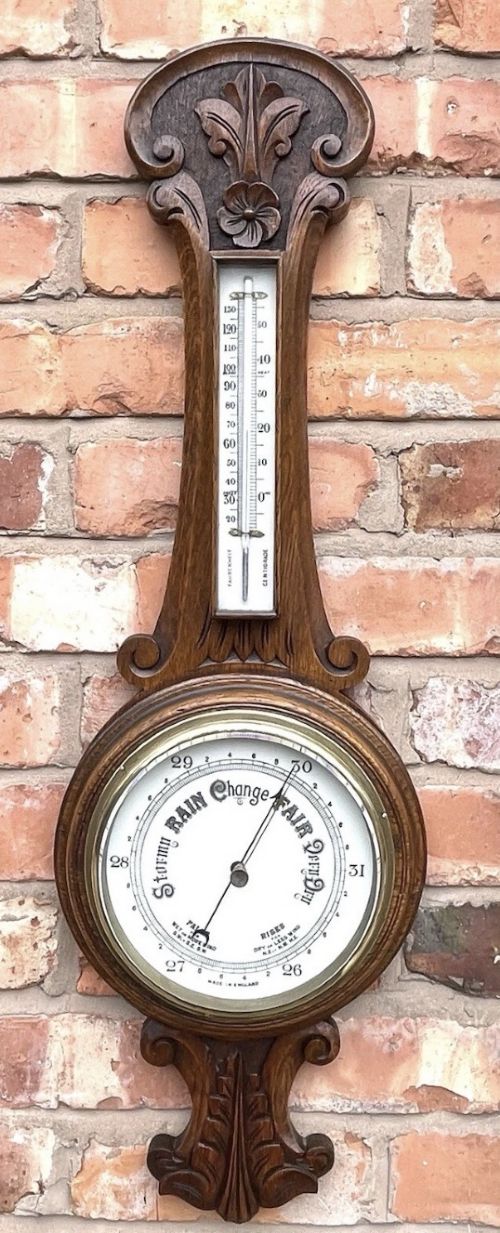
A carved wall barometer measures atmospheric pressure while displaying the deep grain of walnut, oak or mahogany shaped by Victorian and Edwardian hands.
Carved Wall Barometer
A carved wall barometer hangs in domestic hallways and libraries to indicate shifts in weather through mechanical pressure readings. These domestic instruments appear most frequently in Victorian and Edwardian designs fashioned from carved oak, walnut and mahogany.
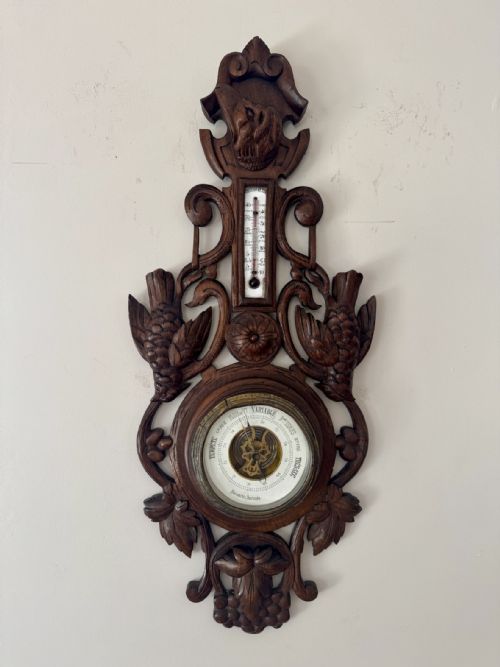
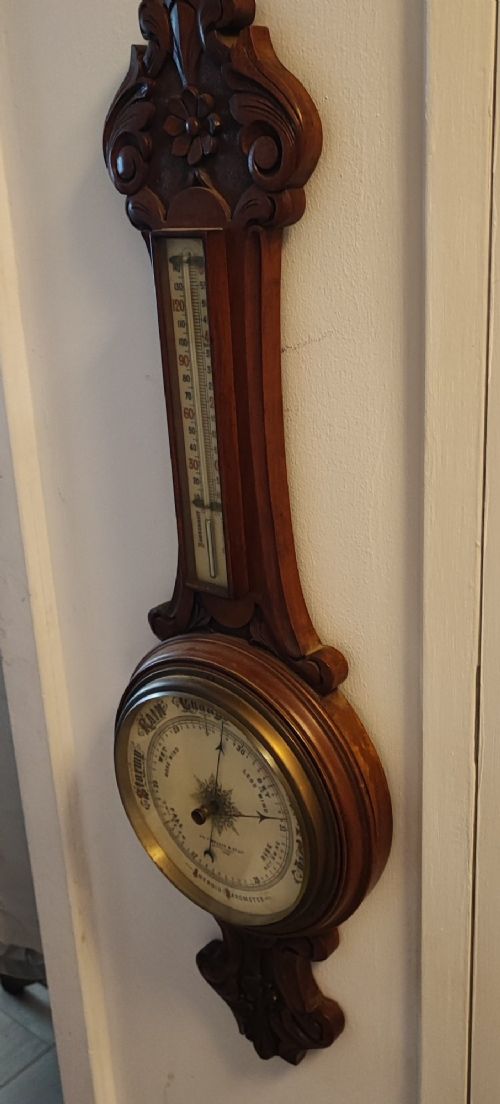
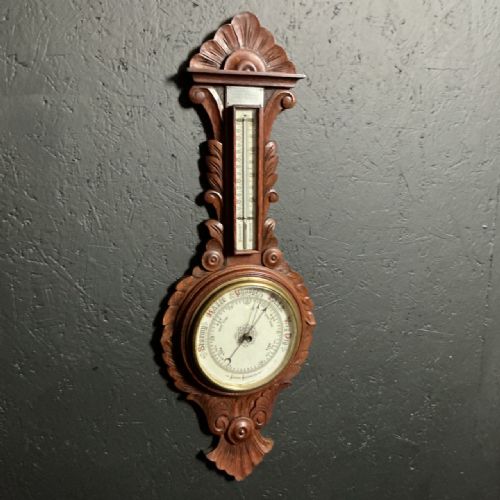
The selection ranges from compact banjo cases to substantial Black Forest carvings featuring detailed animal or leaf motifs. Many examples integrate a thermometer or clock alongside the main dial to form a multi-functional wall piece.
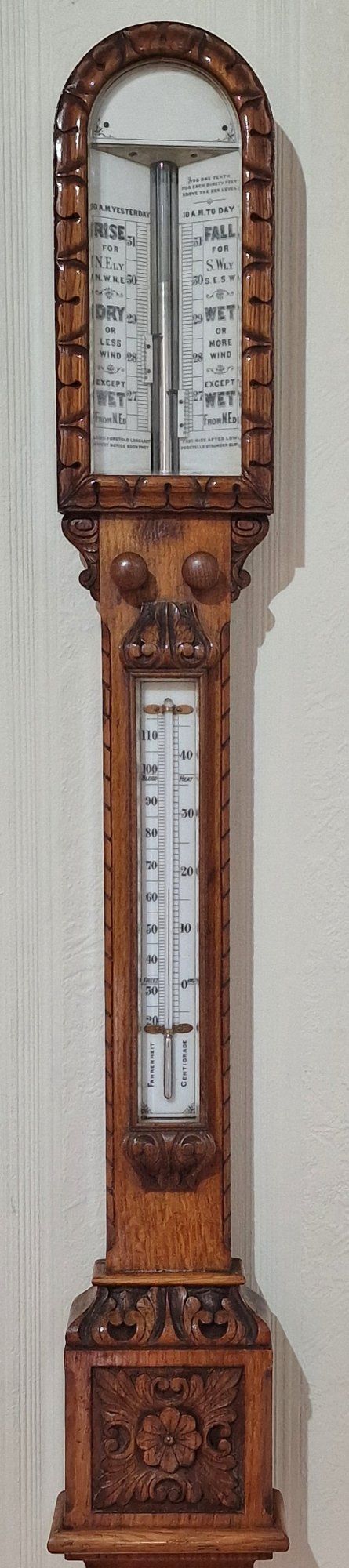
Makers housed these movements in varied regional styles, from English wheel barometers with silvered dials to continental Black Forest walnut frames. Buyers encounter both mercury-filled stick barometers and later aneroid mechanisms within these timber surrounds.
Materials and construction
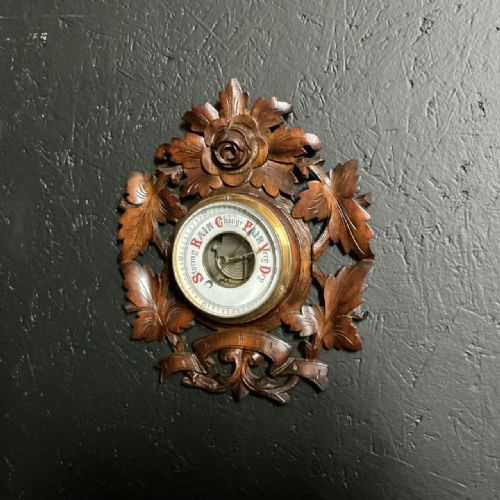
Cabinetmakers shaped dense hardwoods including oak, walnut and mahogany into cases using hand chisels for deep relief carving and turning tools for circular bezels. Black Forest workshops utilised golden walnut and softwoods to model intricate birds, leaves and architectural scrolls.
Instrument makers fitted brass bezels, glass face covers and engraved silvered or ceramic dials into the timber housings. Aneroid movements relied on sealed metal bellows connected to internal linkages, while stick barometers utilised traditional mercury columns in glass tubes.
Carved wooden birds peer out from deep Black Forest foliage frames to watch the weather change.
Assessing quality and execution
Quality rests in the depth and crispness of the timber carving, where deep relief work on oak and walnut separates superior pieces from flat, machine-cut decoration. The complexity of the case design, such as combined clock and barometer complications or fully skeletonised dials, elevates the standard.
The precision of the engraved silvered dial and the legibility of the maker's signature indicate the workshop's standing. Intact glass, original mercury tubes or well-preserved aneroid mechanisms maintain the integrity of the instrument.
Hyde & Sons Sleaford·G & L Guanziroli London·Bramwell & Harbron of Darlington·Negretti & Zambra
The Carved Wall Barometer Glossary
- Aneroid barometer
- An instrument that measures atmospheric pressure using a small, flexible metal box called an aneroid cell, without employing liquid mercury. This design allowed makers to mount barometers in varied wall-hanging wooden cases.
- Banjo barometer
- A wall barometer shaped like a banjo, featuring a circular dial at the top for pressure readings and a longer trunk below that frequently houses a thermometer or mirror.
- Stick barometer
- A tall wall instrument containing a vertical glass tube filled with mercury, mounted against a wooden backboard with a visible scale for reading atmospheric height.
- Silvered dial
- A brass dial treated with silver powder to produce a matte white metallic surface, which makers then engraved with weather descriptions and numbers.
- Black Forest style
- A carving tradition originating in central Europe, characterised by deeply carved naturalistic foliage, game birds and animals rendered in walnut or oak.
Carved Wall Barometer: Frequently Asked Questions
How do I read a barometer?
Read the main pointer against the engraved numbers on the dial, noting whether the pressure is rising or falling by using the manual set needle.
Changes in the pressure indicate impending weather shifts, with rising pressure generally pointing towards fair conditions and falling pressure suggesting rain or wind.
Can I hang a barometer on any wall?
Hang your barometer securely from a sturdy wall plug or heavy screw, as carved timber cases possess considerable weight. Avoid placing the instrument near direct heat sources or damp areas that could warp the timber or affect the internal movement.
What is the difference between aneroid and mercury?
Aneroid barometers use an internal sealed metal vacuum chamber that expands and contracts with air pressure changes, making them safe and stable for domestic hanging. Mercury stick barometers contain an open column of liquid metal that responds directly to atmospheric weight.
Mercury models require careful handling and transport to avoid breaking the glass column or introducing air bubbles into the tube.
How do I date an antique barometer?
Examine the timber species, the style of the case carving, and the typography on the dial to determine the likely manufacturing era. Victorian examples often feature heavy oak or walnut scrollwork, while Edwardian pieces display lighter proportions and different lettering styles.
Signatures or addresses engraved on the dial or scale plate can cross-reference with historical trade directories to narrow down the active years of the maker.