


Carved Vine Leaf
These carved vine leaf pieces bring centuries of crisp botanical woodwork and gilt ornamentation into your home.
Carved Vine Leaf
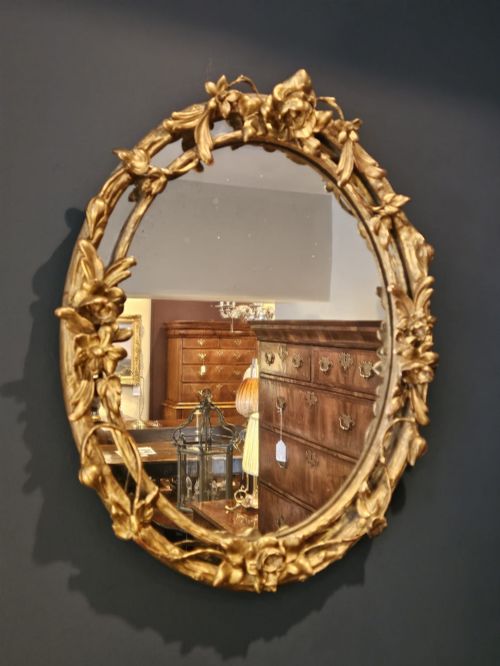
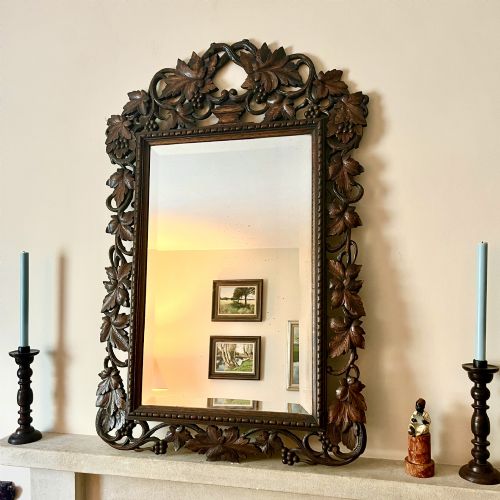
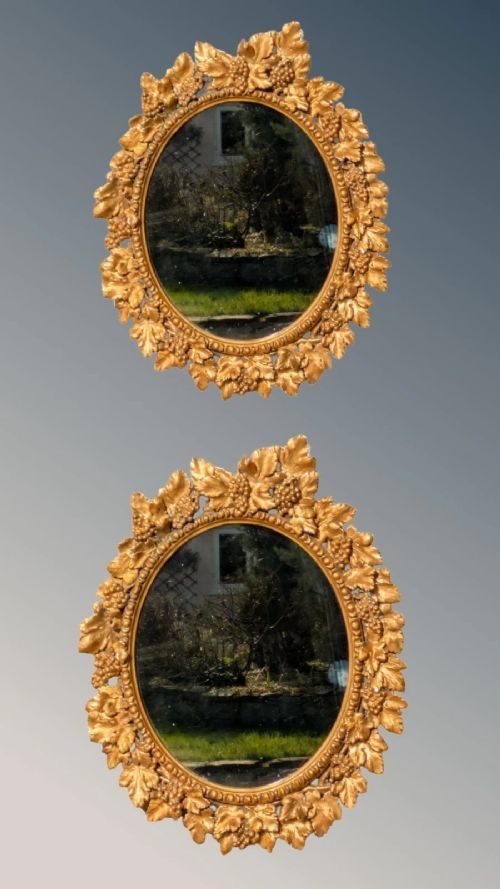
A carved vine leaf design typically appears on decorative wooden objects, furniture mounts, and household accessories from the nineteenth century and the Edwardian era. You will most frequently encounter wall mirrors embellished with gilded foliage or timber frames, alongside smaller carved wooden items such as jewellery boxes and treen.
The selection ranges from Swiss folk art and Black Forest cuckoo clocks to Italian Rococo Revival mirrors and Victorian side tables. Makers drew heavily on naturalistic motifs, rendering grapevine tendrils and fruit in both deep relief and delicate surface carving.
How they were made
Woodcarvers utilised native and exotic timbers including oak, walnut, mahogany, yew-wood, and various softwoods. Artisans shaped these materials using hand gouges and chisels to create three-dimensional clusters of leaves, grapes, and scrolling branches.
Gilded pieces combined carved wood with gold leaf or giltwood finishes, often paired with bevelled mirror glass or clock movements. Folk art items such as lovespoons relied purely on precise knife work and local timber selection without additional surface decoration.
What varies in quality
The distinction between ordinary and exceptional work lies in the depth and crispness of the carving. Superior examples display undercut leaves and naturalistic movement in the vines, whereas lesser pieces show flat, mechanical detailing with rounded edges.
Material choice and finish integrity also separate tiers of production. Original gold leaf surfaces and unblemished mirror glass command greater appreciation than later repainted finishes or replacement components.
The Carved Vine Leaf Glossary
- Black Forest
- A style of woodcarving originating from the mountainous region of Central Europe, known for realistic representations of animals and foliage. Pieces often include clocks, boxes, and wall mirrors.
- Giltwood
- Timber that has been coated with a thin layer of gold leaf or gold paint. This finish was widely utilised on nineteenth-century Rococo Revival frames to catch and reflect light.
- Treen
- Small handmade wooden household objects of utility and ornament. Examples range from carved spoons to decorative boxes made by regional artisans.
- Rococo Revival
- A nineteenth-century design movement that revived the asymmetrical scrolls, C-curves, and naturalistic plant motifs of the eighteenth century. It appears frequently on mirrors and furniture tables.
Carved Vine Leaf: Frequently Asked Questions
What periods do carved vine leaf items come from?
The pieces span the nineteenth century and the Edwardian period, encompassing Victorian, Swiss folk art, and Black Forest traditions.
Most items date from the eighteen-sixties onwards, reflecting a widespread nineteenth-century fascination with naturalistic ornamentation.
How were carved vine leaf mirrors used?
Large giltwood and timber mirrors served as focal points above mantelpieces and sideboards in Victorian and Edwardian reception rooms.
Smaller oval mirrors functioned as decorative wall hangings in hallways and private chambers.
What types of wood were used for these carvings?
Artisans selected timbers based on the intended function and regional tradition, utilising oak, walnut, mahogany, and yew-wood.
Softer woods were frequently chosen for heavily gilded frames because they accepted the gesso and gold leaf preparation smoothly.
How do I care for antique carved wooden frames?
Keep carved wooden objects away from direct heat sources and strong sunlight to prevent the timber from drying out and cracking.
Dust gently with a dry, soft brush to protect delicate undercut leaves and gold leaf surfaces from abrasion.