
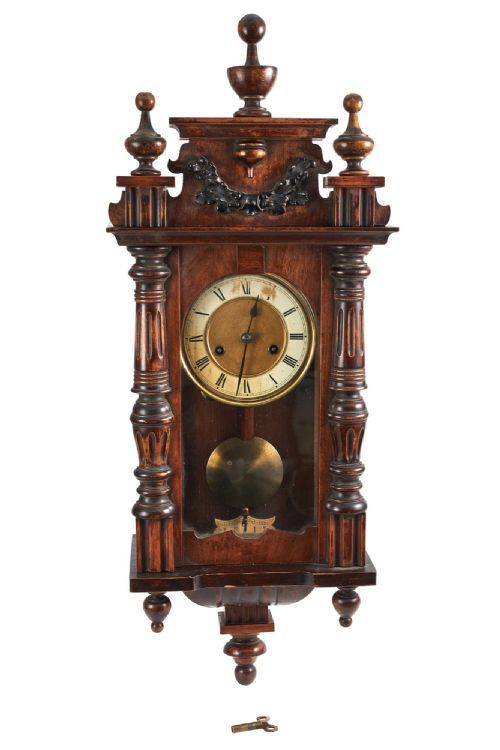

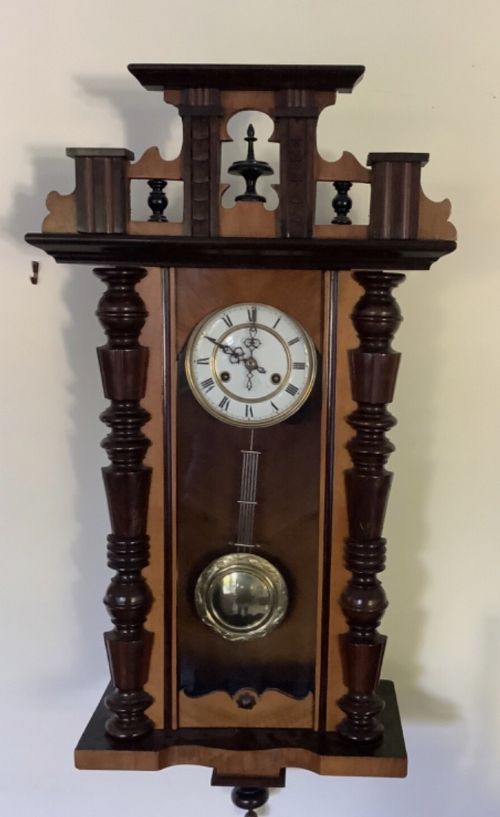


Carved Vienna Wall Clock
A carved vienna wall clock brings mechanical precision and nineteenth-century presence to a room, offering rhythmic movement alongside rich wooden cabinetry.

Carved Vienna Wall Clock
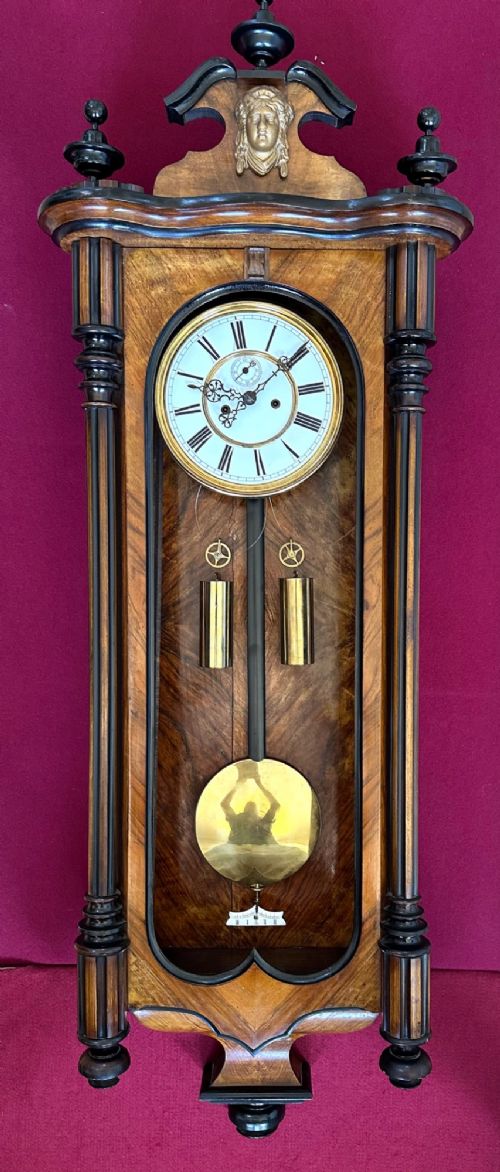
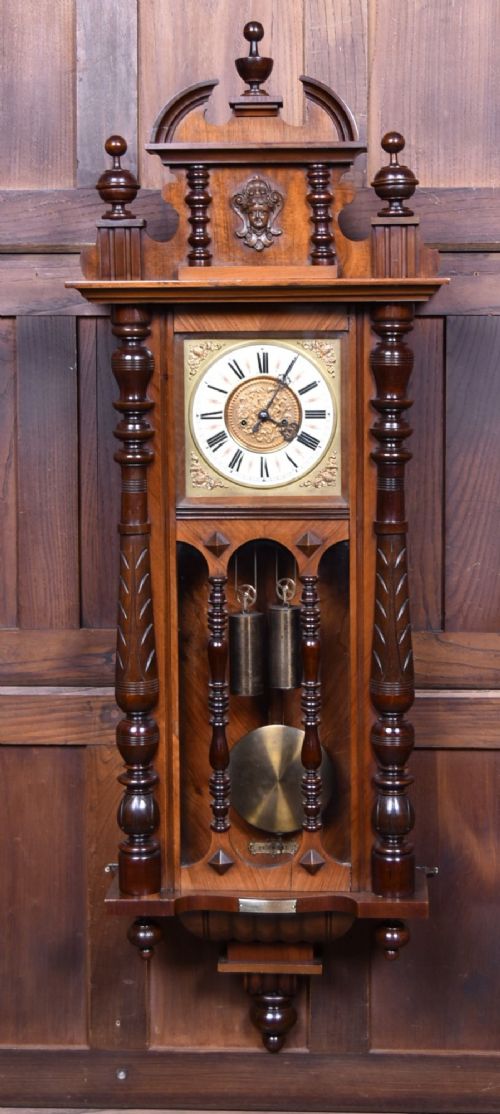
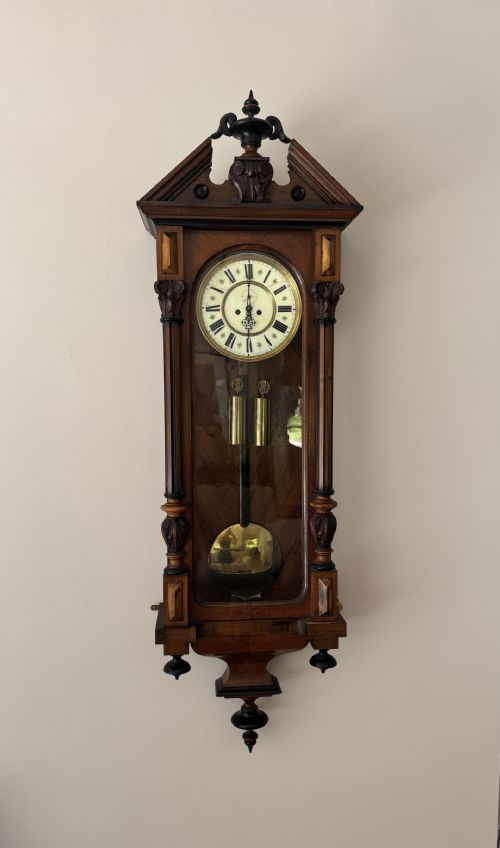
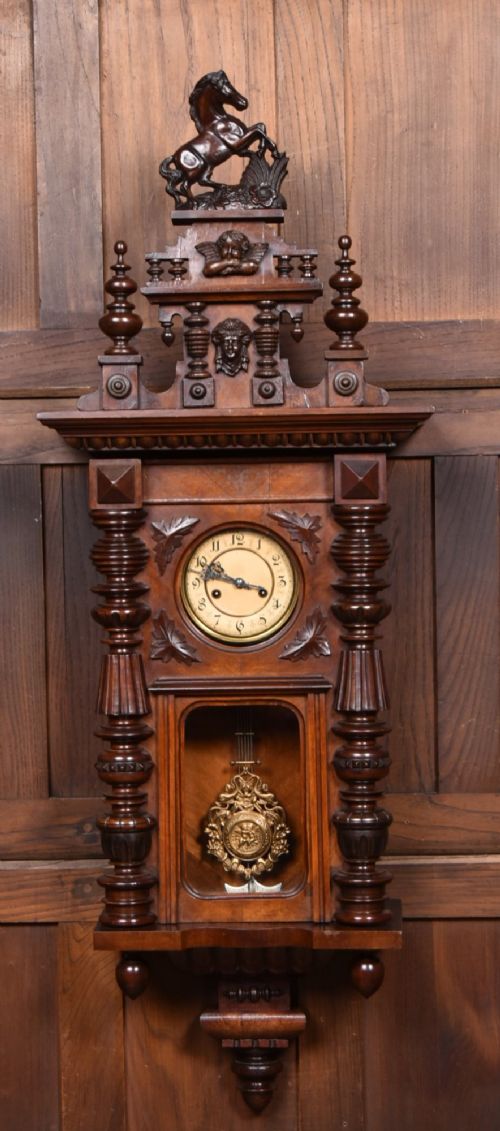
When you search for a carved vienna wall clock, you examine tall, pendulum-regulated timepieces originating from Austrian and German workshops during the nineteenth century. These clocks typically display architectural timber cases decorated with carved ornaments, holding white enamel dials beneath glazed doors.
The pieces on this page lean heavily towards walnut and burr walnut constructions from the Victorian era, spanning decades such as eighteen-eighty and eighteen-ninety. You will encounter single, double, and triple weight systems alongside spring-driven movements, often housed in tall regulator cases.
Originating as precision timekeepers for formal interiors, these wall clocks combine decorative wood carving with functional complexity. Their long pendulums and visible weights create an imposing vertical presence on domestic walls.
Materials and construction methods
Cabinetmakers utilised solid walnut, oak, and ebonised wood to build the architectural cases, frequently applying burr walnut veneers to enrich the visual texture of the backboards and pediments. Glass panels protect the delicate enamel dials and allow a clear view of the swinging pendulum and hanging weights.
Brass components form the intricate gear trains and movement plates inside, driving the striking mechanisms and eight-day timekeeping systems. Skilled carvers shaped the crests and corbels by hand, attaching ornamental pediments and finials to the main trunk of the clock.
The listings here feature walnut, oak, and ebonised wood across Victorian and nineteenth-century Austrian periods.
Judging the standard of execution
The standard of a carved vienna wall clock rests on the depth and crispness of the timber carving and the selection of figured veneers. Clocks featuring burr walnut and elaborate architectural pediments demonstrate greater ambition than plain models.
Movement complexity further separates examples, with double and triple weight weight-driven mechanisms or grande sonnerie striking arrangements indicating higher production tiers. The legibility and condition of the enamel dial complete the assessment of overall grade.
GUSTAV BECKER·JOHANN BAPTIST BEHA
The Carved Vienna Wall Clock Glossary
- Vienna Regulator
- A precision pendulum clock developed in nineteenth-century Austria, designed for extreme accuracy and housed in a glazed wooden case. These clocks rely on weight-driven movements visible behind a glass door.
- Enamel dial
- A metal face coated with fused glass powder, providing a durable white surface for painted numerals. They often feature delicate black minute tracks and subsidiary seconds.
- Double weight
- A movement powered by two suspended weights that drive separate trains for timekeeping and striking. This system requires a taller case to accommodate the downward travel of the weights.
- Grande Sonnerie
- A complex striking train that chimes the hours and quarters on every quarter hour. This mechanical feature demands sophisticated gear work within the clock movement.
Carved Vienna Wall Clock: Frequently Asked Questions
Where should I hang a heavy wall clock?
You must mount a heavy nineteenth-century wall clock directly into a solid wall stud or use robust masonry fixings to support the substantial weight of the timber case and movement. Hanging it securely prevents vibrations that can disrupt the pendulum beat.
Ensure the wall is flat so the back of the case rests evenly without twisting the wood. Proper mounting keeps the movement level, which is essential for consistent timekeeping.
Why does the clock keep stopping?
A stopping clock usually indicates that the case is no longer plumb against the wall, throwing the pendulum escapement out of beat. Adjusting the small leveling screws on the back of the case often restores the regular tick.
Accumulated dust in the brass gear trains or old oil can also halt the movement over time. Professional cleaning restores smooth operation to nineteenth-century mechanisms.
What is an eight day movement?
An eight day movement requires winding only once a week, utilising a longer gear train and greater drop for the weights or power reserve in the springs. This innovation reduced the frequency of maintenance for households.
Most nineteenth-century wall clocks adopted this standard to balance convenience with reliable timekeeping. The extended power reserve relies on precise gear ratios within the brass plates.