
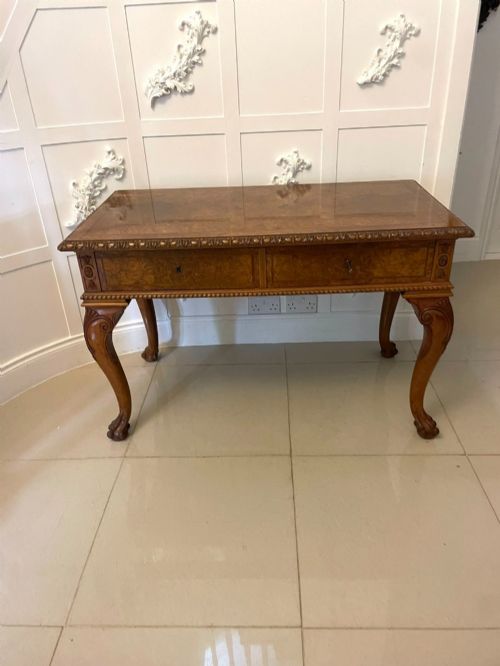

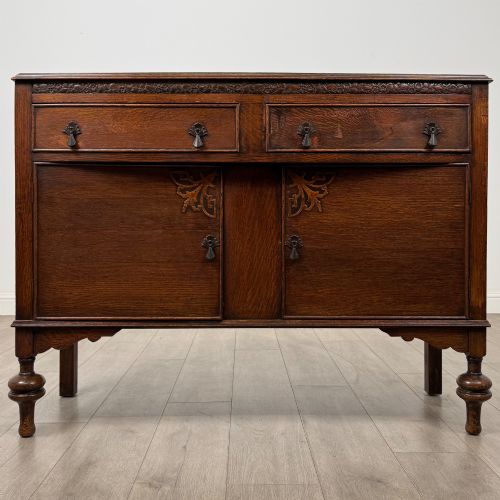
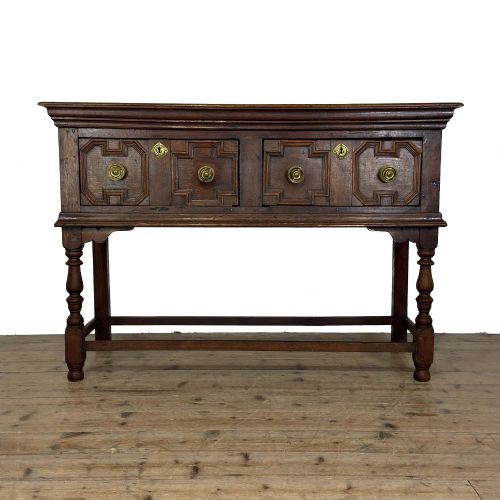
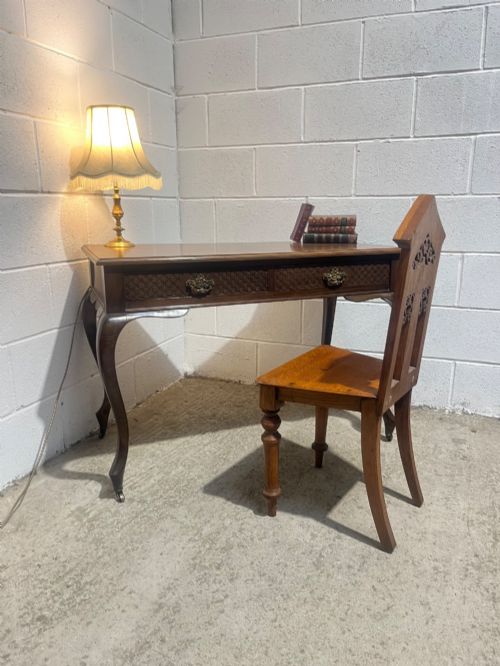
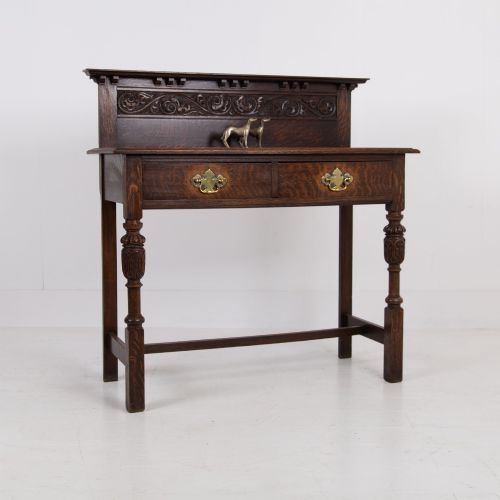

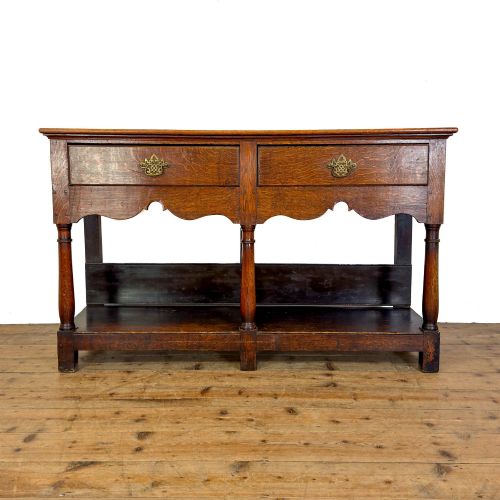
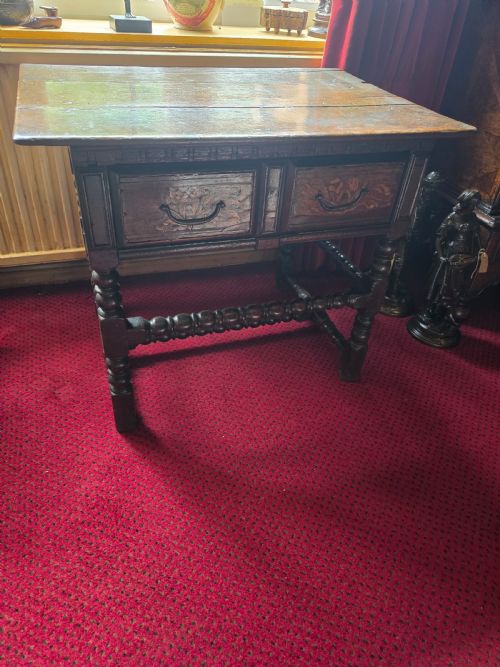
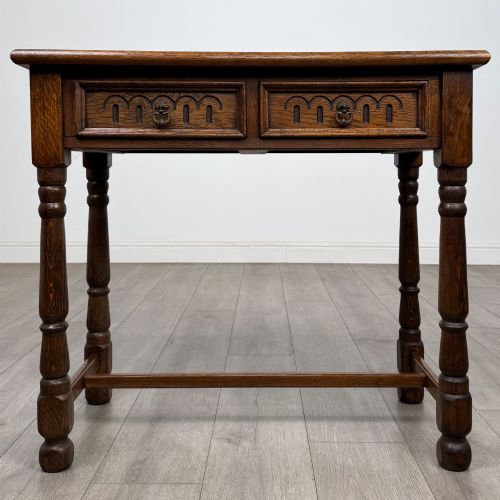

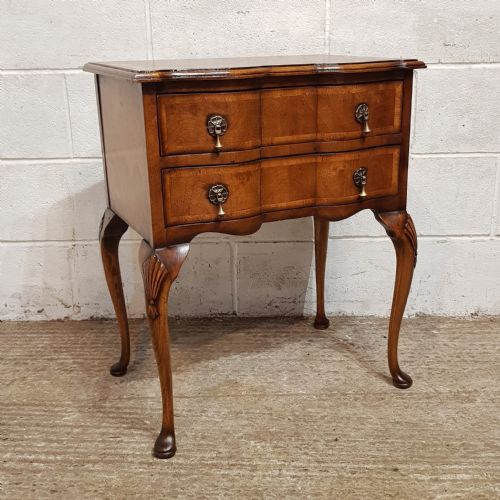
Carved Two Drawer Table
A carved two drawer table combines practical storage with decorative detail, appearing across various centuries in mahogany, oak and walnut.
Carved Two Drawer Table
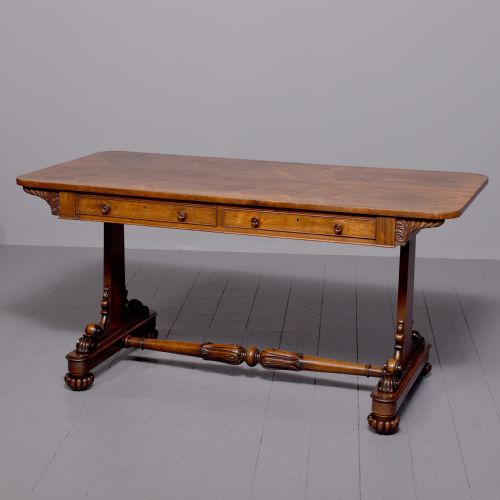
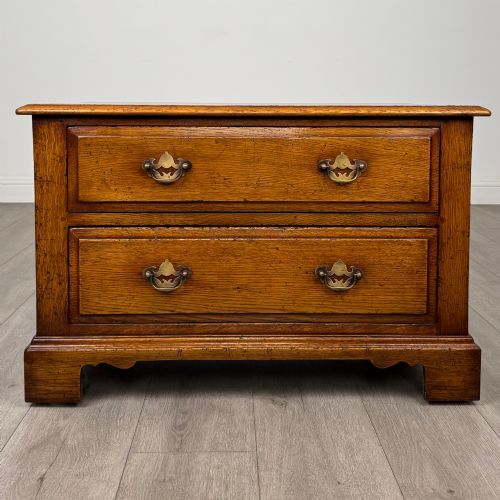
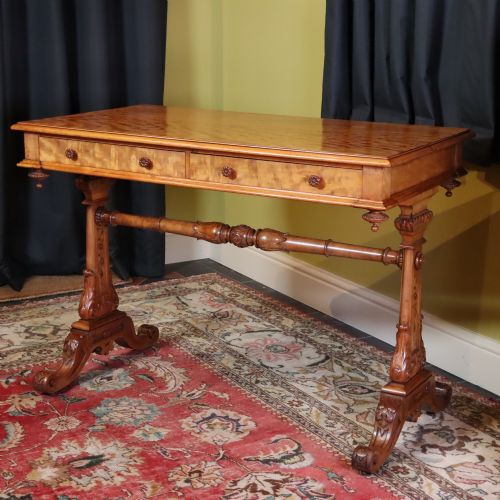
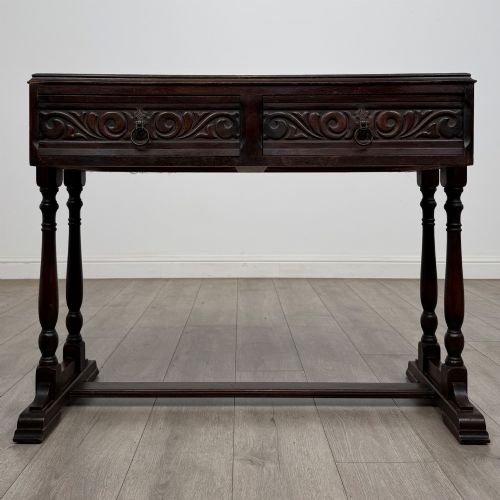
A carved two drawer table serves multiple domestic roles, appearing in the evidence as side tables, library tables, writing desks, console tables and dresser bases. These pieces span from the seventeenth century through to the Edwardian period and the nineteen-twenties.
Oak and mahogany form the backbone of the selection, accompanied by walnut, burr walnut, rosewood and satinwood. Styles range from Jacobean Revival and Queen Anne Revival to Victorian, Edwardian and Regency.
The most common iterations on this page are Victorian and Edwardian side tables and desks in oak and mahogany, often featuring carved aprons or drawer fronts alongside brass handles.
Markers of distinction in construction and finish
Quality rests upon the selection of timber figure, such as richly grained burr walnut or dense Cuban mahogany, and the crispness of the hand-carved detail on drawer fronts and legs. Secondary timbers used inside drawer boxes and the precision of the dovetail joints further separate standard production from superior workshops.
Proportion and surface finish dictate the overall appeal. Pieces retaining a polished patina developed through age demonstrate better preservation than those with stripped or heavily refinished surfaces.
Recorded forms extend from library tables and writing desks to dresser bases, console tables and bedside cabinets.
Gillows·Gillows of Lancaster·Mein of Kelso
The Carved Two Drawer Table Glossary
- Dresser base
- A low utilitarian table fitted with drawers, originally utilised in kitchens or dining rooms for storage and serving.
- Library table
- A freestanding centre table designed for reading or writing, typically finished with a leather inset top and drawers on the frieze.
- Frieze
- The horizontal architectural band situated directly beneath the table top, which houses the two drawers on these tables.
- Dovetail
- A traditional interlocking joint used at the corners of drawer boxes to ensure structural strength without mechanical fasteners.
- Patina
- The surface sheen and softening of colour acquired by timber over decades of handling, exposure and polishing.
Carved Two Drawer Table: Frequently Asked Questions
How were two drawer tables used originally?
These tables served diverse functions depending on their room of placement. In libraries and studies, they held writing materials and books, while in dining spaces or hallways they acted as serving surfaces or console tables.
The inclusion of two drawers provided enclosed storage for correspondence, cutlery or household documents, keeping tabletops clear for daily tasks.
Where should I place a carved two drawer table?
Freestanding library and centre tables suit the middle of a room because their backs are finished to the same standard as the front. Side tables and console versions anchor well against hallway walls or beneath windows.
Their compact proportions also allow them to function effectively as bedside chests or small writing desks in bedrooms.
How do I distinguish between Victorian and Edwardian examples?
Victorian pieces generally display heavier proportions, darker finishes and denser carvings, often utilising mahogany or heavily figured walnut. Edwardian furniture frequently lighter in build, incorporating lighter oak or satinwood with refined, restrained decorative motifs.
Hardware styles and secondary timber choices also assist in separating the two periods during close inspection.
What is Jacobean Revival style?
Jacobean Revival furniture emulates the heavy, geometric styles of the early seventeenth century, featuring bold mouldings and strapwork carving. Pieces from this movement are typically constructed in solid oak.
While many examples date from the nineteenth or early twentieth century, they capture the architectural seriousness of the earlier Stuart era.