




Carved Trestle Writing Table
A carved trestle writing table is a substantial timber desk featuring sturdy end supports, built for serious study and handsome enough to anchor a proper library.
Carved Trestle Writing Table
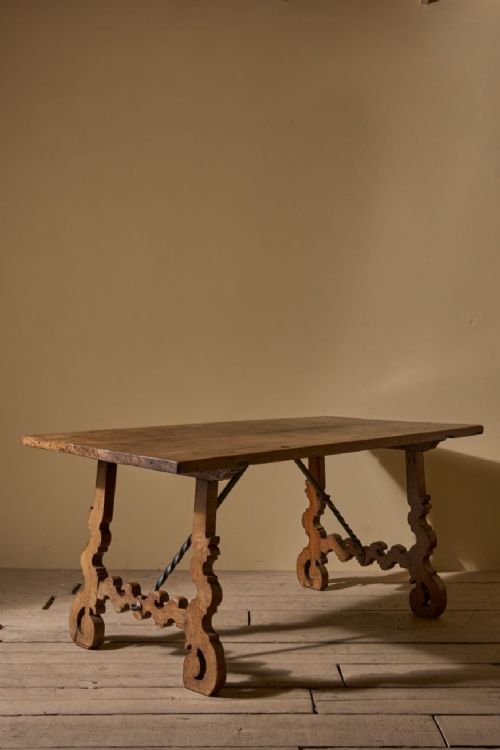
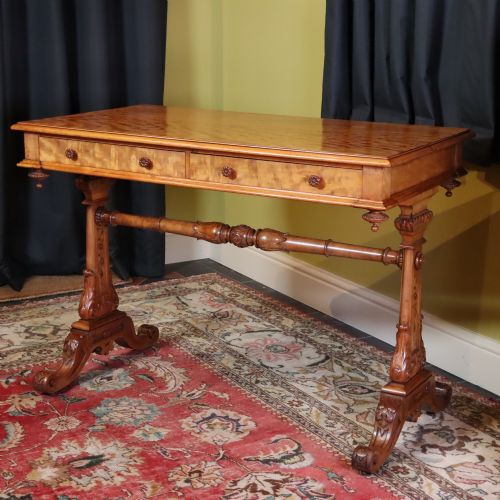
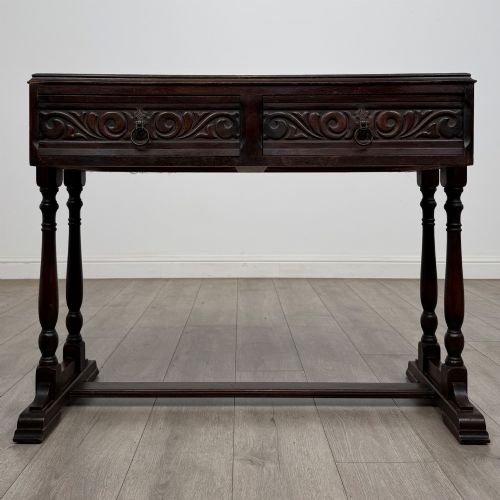
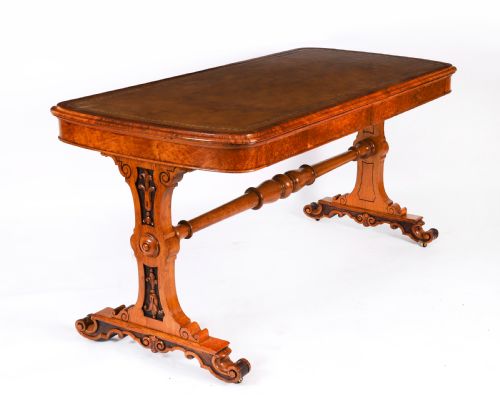
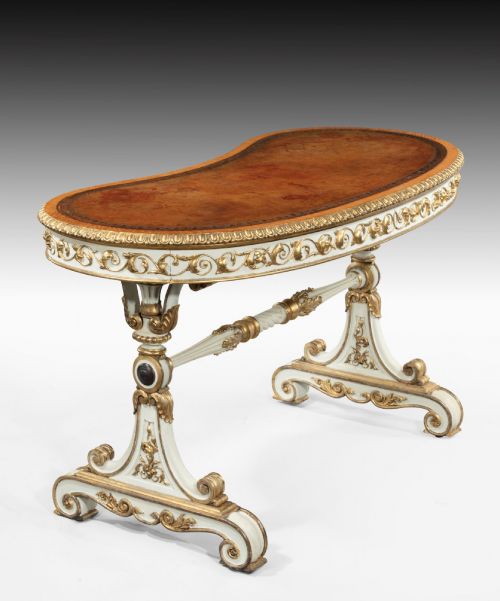
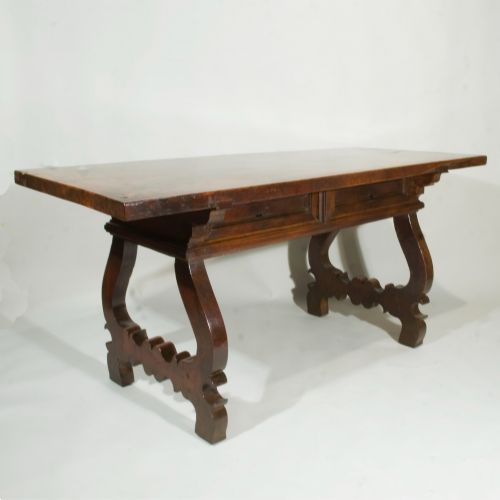
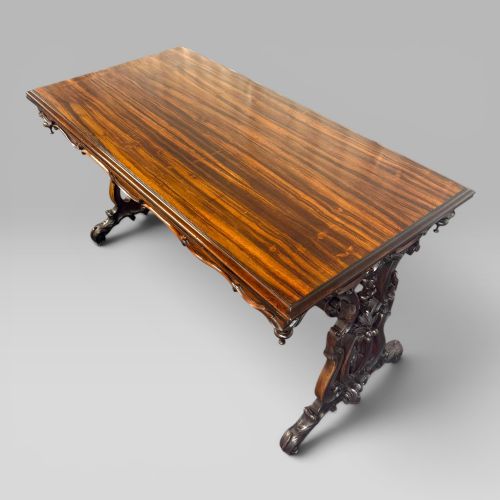
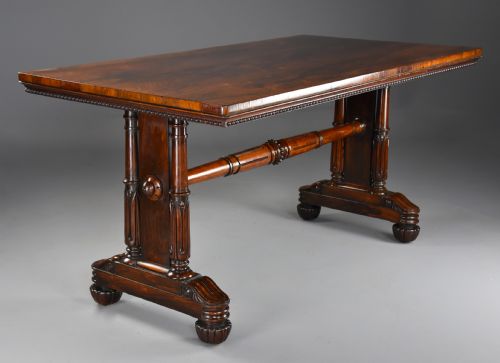
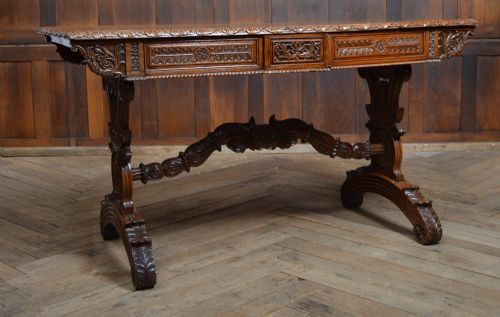
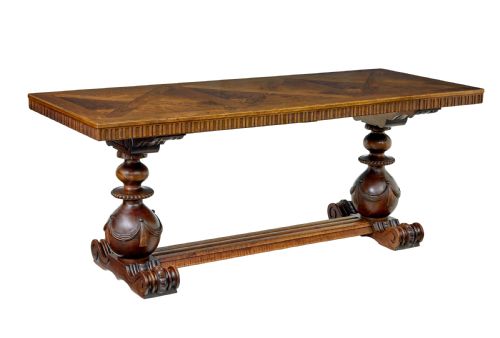
A carved trestle writing table combines a broad surface for correspondence with robust end frames braced by stretchers. These pieces emerge in formats ranging from formal Regency rosewood designs to substantial 19th Century oak library tables.
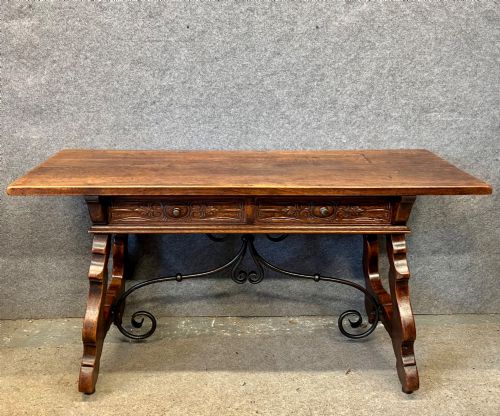
Buyers meet examples shaped by various periods, including William IV, Victorian, and Spanish Baroque styles. The form often crosses over with centre tables and library desks, maintaining a freestanding profile finished on all sides.
How they were made
Cabinetmakers constructed these tables using dense hardwoods such as mahogany, walnut, rosewood, and pollard oak, often selecting veneers like burr walnut and flame mahogany for prominent surfaces. Structural elements relied on mortise and tenon joints to support heavy working loads.
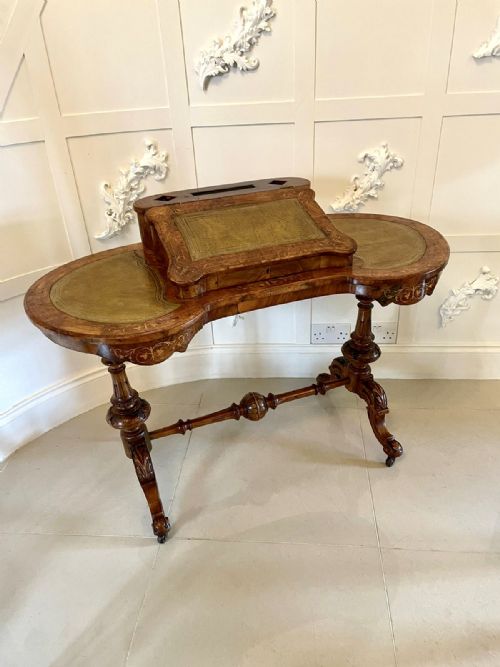
Carving was executed directly into the timber frame, embellishing the trestle ends and stretchers with mouldings and foliate motifs. Secondary materials such as brass fittings, wrought iron braces, and inset leather writing surfaces completed the construction.
Periods represented span from the 17th Century to the early 20th Century.
What varies in quality
Quality rests in the selection and figure of the timber, where richly grained pollard oak or matched rosewood elevates a piece above standard utility furniture. The depth and crispness of the hand carving on the trestle supports similarly distinguish workshop standards.
Proportion and structural honesty define the superior examples, showing thoughtful scaling between the expansive top and the supporting legs. The integration of secondary details, such as finely turned stretchers and well-fitted drawer linings, marks the distinction between ordinary production and master craftsmanship.
Gillows·Holland and Son·Gillingtons of Dublin
The Carved Trestle Writing Table Glossary
- Trestle
- A supporting framework consisting of a horizontal beam balanced on two pairs of slanted legs. This construction provides robust support without requiring traditional corner posts.
- Library Table
- A large freestanding desk designed for books and papers, finished on all sides to sit centrally in a room. These pieces typically offer deep proportions and spacious working surfaces.
- Pollard Oak
- Timber harvested from oak trees that have been pollarded, producing wood with a dense, clustered grain pattern. Cabinetmakers prized this figure for decorative table tops.
Carved Trestle Writing Table: Frequently Asked Questions
Where should a trestle writing table go?
These tables are designed to stand away from walls because their trestle ends and rear panels are finished for display. Placing them centrally in a study or library allows the carved details to be seen from all angles.
Ensure there is sufficient clearance around the trestle feet and stretchers for chairs and movement. Their substantial scale requires a room with adequate floor space to avoid crowding other furniture.
How do I care for leather writing inserts?
Leather surfaces benefit from occasional dusting with a soft, dry cloth to prevent grit accumulation. Avoid using harsh chemical cleaners or excess moisture, which can damage the old hide.
Applying a specialist leather balm helps maintain flexibility and prevents cracking over time. Keeping the desk out of direct sunlight preserves both the leather and the surrounding timber polish.
How do I identify Regency period tables?
Regency tables often display classical restraint combined with rich woods like rosewood and mahogany. Look for architectural proportions, brass inlay, and reeded or sabre legs.
Hardware tends to be restrained, and construction methods reflect early 19th-century cabinetmaking standards. These pieces bridge Georgian elegance and the heavier Victorian aesthetic.
What is the difference between a side table and a library table?
Side tables are typically smaller and designed to stand against a wall or beside seating. Library tables are substantially larger and built for freestanding use with finished backs.
Library tables often incorporate drawers for writing materials and offer deeper surfaces suited for spreading out documents. Their robust trestle or pedestal frames provide the stability needed for heavier loads of books.