


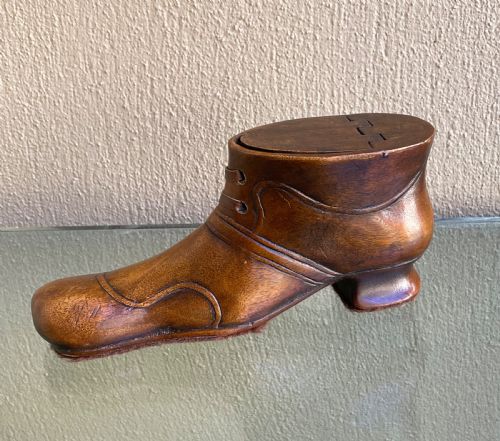


Carved Treen Box
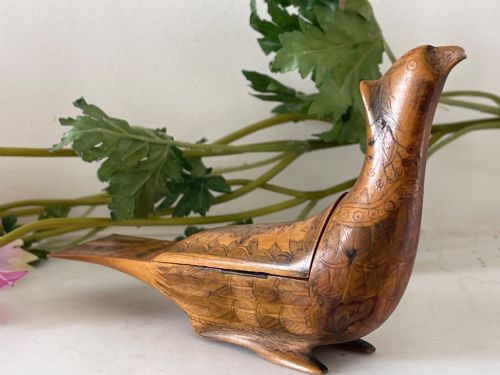
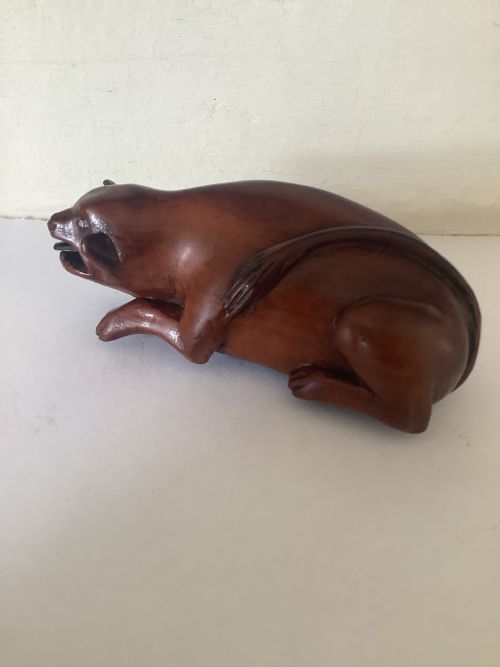
These small carved treen boxes are clever pieces of pocket folk art, shaped as shoes, hands, fruit and animals to hold snuff, tobacco or nutmeg.
Carved Treen Box
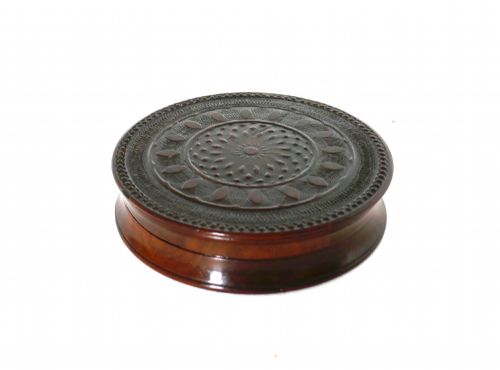
A carved treen box represents small-scale domestic woodworking from the eighteenth and nineteenth centuries, taking forms designed for daily personal use. Buyers seeking a carved treen box encounter pocket containers such as snuff boxes, patch boxes and nutmeg graters shaped with distinct personality.
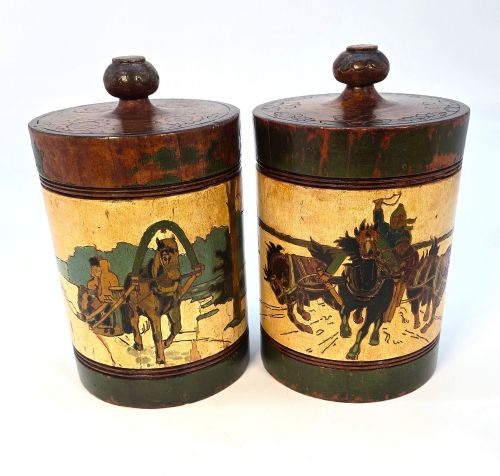
The objects span Georgian, Victorian and Edwardian periods, reflecting regional styles from English workshops to Welsh chip-carving and Russian folk art. Snuff shoes and figural containers in fruitwood, oak and coquilla nut dominate the range available.
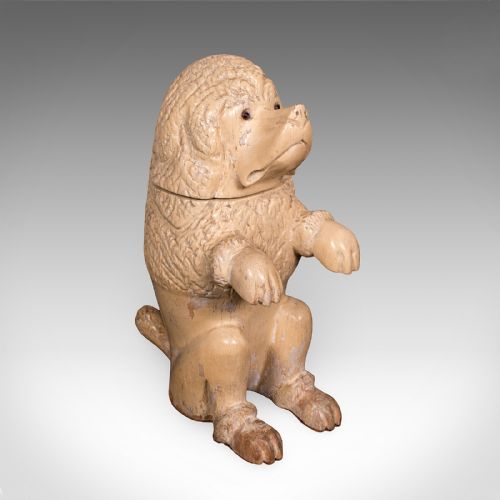
Makers often turned utilitarian items into sculptural curiosities, using natural burr walnut or fashioning timber into hands, dogs and shoes. These pieces functioned as portable containers that travellers carried in pockets or displayed on tables.
Materials and construction
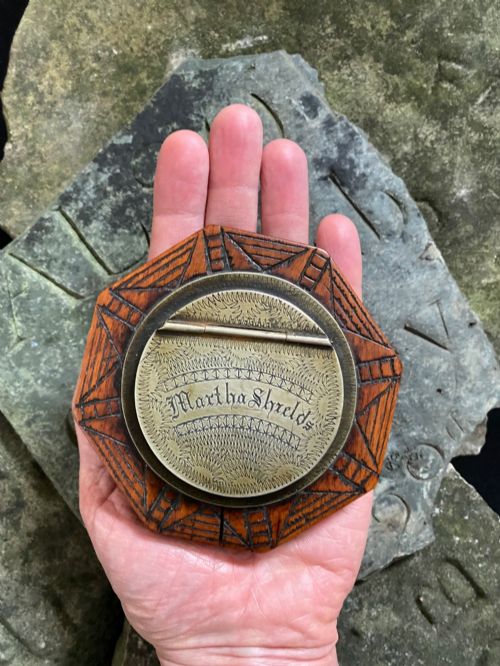
Woodworking techniques combined lathe turning with hand carving, chip carving and engine turning to decorate dense timbers like fruitwood, laburnum, mahogany and oak. Artisans selected close-grained hardwoods that allowed crisp detail in small formats.
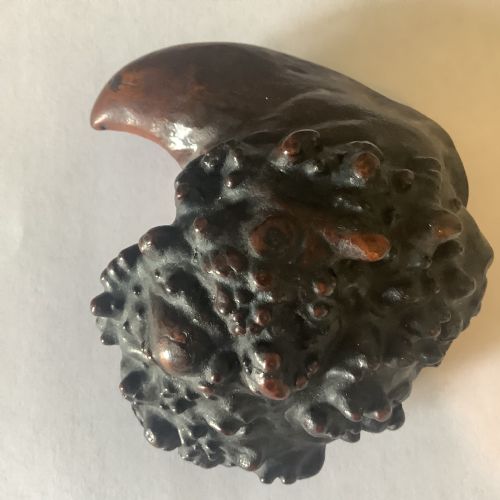
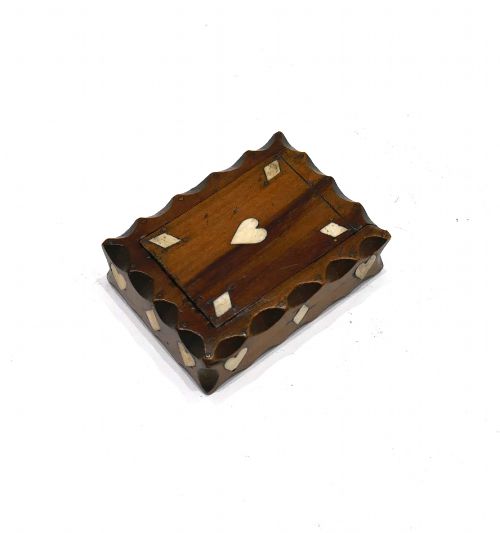
Makers integrated contrasting materials into the wooden surfaces, using bone hearts and diamond shapes for inlay work alongside metal hinges and glass elements. Coquilla nut provided a hard, naturally figured shell that accepted fine miniature carving without splitting.
Carved Treen Box Retail Price Guide 2026
Typical asking prices for carved treen box among the pieces listed under this phrase on Sellingantiques today, from the lower quarter to the upper quarter. They describe what is for sale here now, not the wider market.
Current listings feature items in fruitwood, oak, mahogany, laburnum and coquilla nut, spanning Georgian, Victorian and Edwardian periods.
Judging quality in carved treen boxes
Quality rests on the crispness of the carving and the cleverness of the form, distinguishing spirited folk art from standard turned cylinders. Superior pieces exhibit sharp detail in figural shapes like hands or shoes, maintaining proportion and balance.
The integrity of the timber and the preservation of original surface patination dictate value. Examples retaining integrated sliding lids, original bone inlay or untouched natural grain show greater fidelity to their original state.
The Carved Treen Box Glossary
- Treen
- Small handmade wooden objects for domestic use. The term derives from the old word for tree.
- Chip carving
- A method of removing small triangles of wood from a surface to create geometric patterns. Welsh boxes often display this technique.
- Coquilla nut
- The hard, aromatic seed of a South American palm tree. Carvers utilised it for small containers because it polishes to a smooth finish.
- Engine turning
- A mechanical decoration method producing precise geometric patterns on wood or metal surfaces. Scottish laburnum boxes frequently exhibit this work.
- Snuff shoe
- A pocket container shaped like a clog or shoe with a sliding or hinged lid. These form a distinct group within antique treen.
Carved Treen Box: Frequently Asked Questions
What did people keep in a carved treen box?
These small containers held powdered tobacco known as snuff, dried nutmeg for flavouring drinks, or small cosmetic patches.
Owners carried them in pockets or waistcoats for daily access during social occasions.
How old are these wooden boxes?
The examples on this page span from the eighteenth century through the Victorian era to the early twentieth century.
Georgian and Victorian periods produced the highest concentration of figural and chip-carved pocket items.
Which woods were used for carved treen boxes?
Carvers utilised dense hardwoods such as fruitwood, laburnum, oak, mahogany and burr walnut.
Exotic materials like coquilla nut also appear, chosen for their ability to hold intricate detail.
How do I care for antique treen?
Keep wooden boxes away from direct sunlight and sudden changes in central heating to prevent the timber from splitting.
An occasional gentle application of microcrystalline wax helps protect the historical surface polish.